

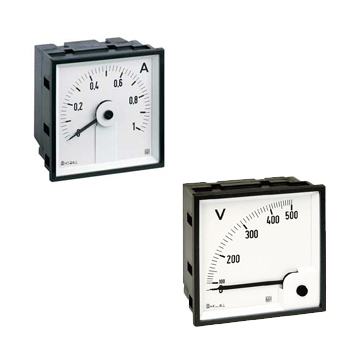
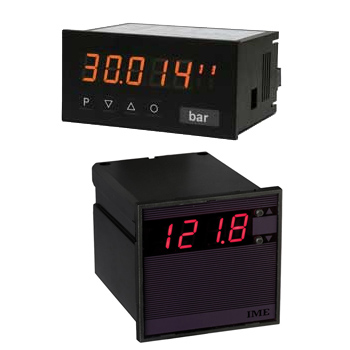
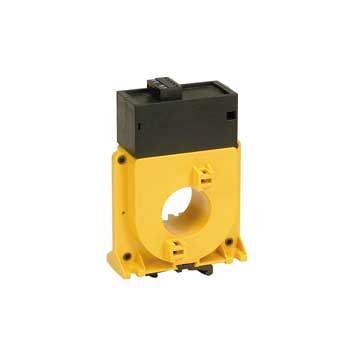
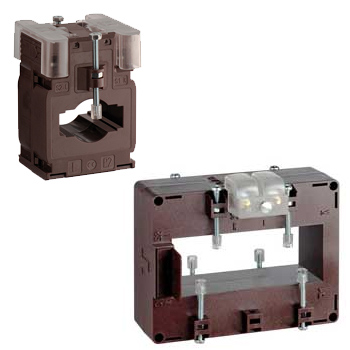
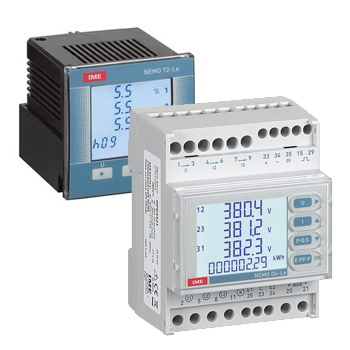
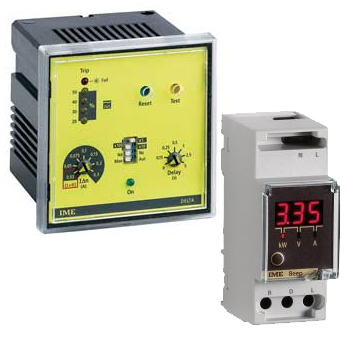
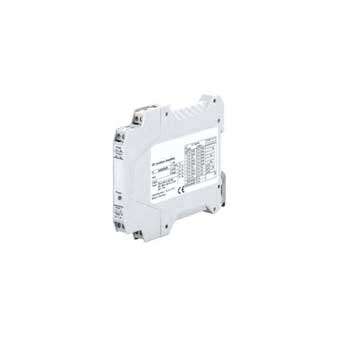
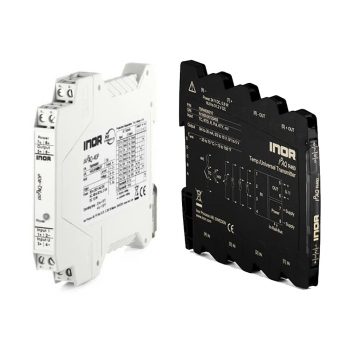
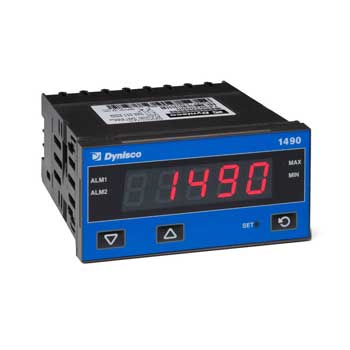
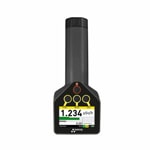

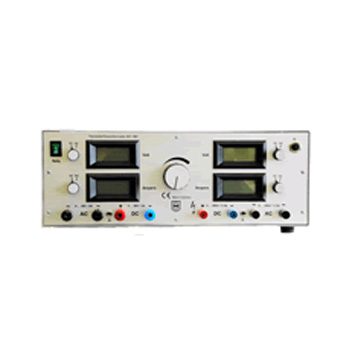


























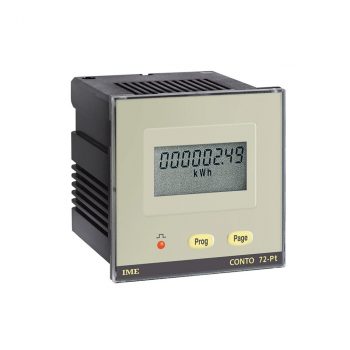
Multifunction CT connected active (class 1) and reactive (class 2) energy meter

AUX Selfsupplied
OUTPUT RS485 communication, protocol JBUS/MODBUS
FORMAT 72x72 mm
CURRENT 1 and 5 A
VOLTAGE 190...440 V (phase-phase)
VOLTAGE OPTIONS direct
CURRENT OPTIONS from CT (programmable ratio)
TYPE Multifunction CT connected active (class 1) and reactive (class 2) energy meter
MAIN single or three-phase 3/4 wire balanced or unbalanced load
Datasheet
User Manual

Total and partil active energy, Total and partial reactive energy, Power demand, Power max. demand
Datasheet
User Manual


Panel-Mount Energy Meters 72 × 72 mm

A 72 × 72 mm panel-mount energy meter is a compact meter designed to be flush-mounted into a panel cut-out of 72 mm width and 72 mm height — common for control panels, distribution boards or machine front plates. Such meters are ideal when a clean panel design and minimal front space is required. After preparing the cut-out, the device is inserted and secured, typically using spring clips or retaining brackets.

These meters measure electrical energy and often additional network parameters (e.g. voltage, current, power, power factor) and can provide output via pulses, analog signals or digital communication. They are commonly used for energy monitoring, load tracking, branch-circuit metering or integration into building or machine control systems.

Questions & Answers on 72×72 Panel-Mount Energy Meters

What does “72×72 mm” refer to?

It defines the front cut-out size (width × height) needed in the panel for flush mounting the meter.

Where are such meters typically used?

In small to medium-sized electrical installations, distribution boards, machine control panels, feed-in points or any setup where front-panel space is limited and a tidy installation is required.

Which electrical values do these meters typically measure?

Energy consumption (kWh) and often additional data such as voltage, current, power, power factor and possibly frequency or other grid parameters — depending on the model.

How is a 72×72 meter installed?

By cutting a 72×72 mm opening in the panel or cabinet front and mounting the meter flush with the surface using provided clips or brackets.

How compact are they compared to DIN-rail energy meters?

They are much more compact in front — ideal for shallow enclosures or when a clean control-panel look is desired — but have less space for wiring and modules behind the panel.

Can they be used with high currents?

Yes, if the device is rated accordingly and, if necessary, used with external current transformers. However, attention must be paid to wiring space behind the panel.

What are the main advantages of panel-mount meters?

Space-saving panel front, clean appearance, simple retrofitting, straightforward front-end reading and good suitability for control panels or distribution boards with limited depth.

Are there disadvantages compared to DIN-rail meters?

Rear wiring space is limited, expansion or modification is more difficult, and in complex installations wiring clarity can suffer compared to modular DIN-rail solutions.

In which applications are 72×72 panel-meters especially useful?

In building installations, machine control cabinets, distribution boards with limited space, retrofit panels, feed-in meters, sub-metering applications or wherever a compact, front-mounted energy meter is preferred.

Diese Website benutzt Cookies. Wenn du die Website weiter nutzt, gehen wir von deinem Einverständnis aus.