









































-
Wide range of rated loads available
-
High degree of protection
-
Legal-for-tr
-
High accuracy classes
Datasheet
|
-
legal for trade
-
extremely compact design
-
easy and quick installation with SIWAREX mounting units
Datasheet
|
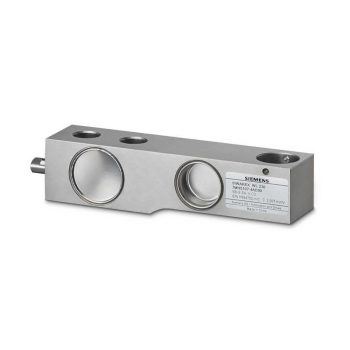
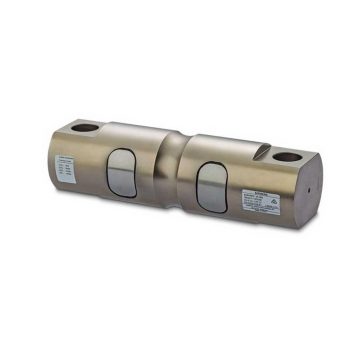
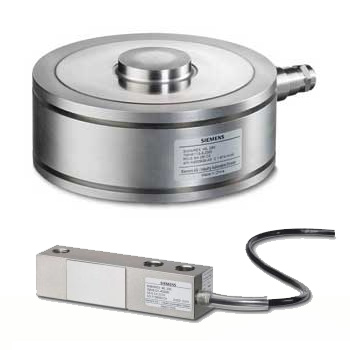
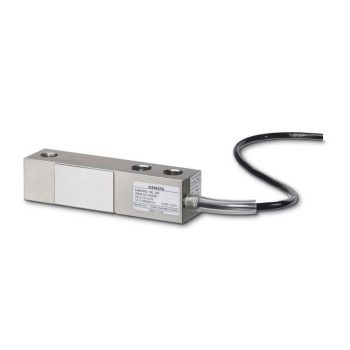
Siemens Shear Beam Load Cells
Shear beam load cells from Siemens (or similar strain-gauge-based types) are designed with a dedicated shear zone in a machined metal body. When a compressive load is applied, this shear zone deforms slightly, and strain gauges mounted there convert that deformation into a proportional electrical signal. Thanks to this design, shear beam cells offer high structural stability, good resistance to side- or eccentric loads, and are well suited for medium to heavy duty industrial weighing applications.
FAQ
What distinguishes a shear beam load cell?
A shear beam cell uses a narrow shear web as sensing zone instead of relying on bending. Under load the web experiences shear stress; the strain gauges detect this cleanly, resulting in a stable and accurate electrical output.
In which applications are shear beam cells particularly useful?
They are ideal for industrial applications such as platform scales, tank/silo weighing, container or hopper scales, belt scales, and vehicle scales — especially where loads are high or uneven and side forces may occur.
What load ranges are typical for shear beam cells?
Depending on design, they cover from several hundred kilograms up to multiple tons, making them suitable for medium to high capacity systems.
How must shear beam cells be mounted and wired?
The cell must be installed so that the shear zone is correctly loaded (typically in compression), ensuring vertical load application. Electrical wiring uses shielded 4- or 6-wire cables, and proper grounding and shielding are important in industrial environments.
How do shear beam cells perform under off-center or side loads?
Shear beam cells handle side loads and eccentric loading significantly better than many bending- or single-point cells — measurement integrity remains high even when the load is not perfectly centered.
Can multiple shear beam cells be used in parallel?
Yes — in larger weigh modules or tanks often several shear beam cells are arranged in parallel; their outputs are summed to achieve the required total capacity and ensure even load distribution.
What about precision and repeatability?
When properly installed and calibrated, shear beam cells deliver high precision, good linearity, minimal hysteresis and stable repeatability — even under dynamic loads or environmental variations.
How is calibration performed for shear beam systems?
Calibration is done using defined test loads. In multi-cell setups, each individual cell should be verified and a corner/load-point adjustment performed if required, to ensure total accuracy.
For which environmental conditions are shear beam cells suited?
Many are made of alloyed or stainless steel and have robust protection, making them suitable for dusty, humid or industrial environments. For harsh or corrosive media, appropriate protection (e.g. IP-rated housing) must be ensured.
What are the advantages over other types of load cells?
Compared to bending-beam or single-point cells, shear beam cells provide higher load capacity, better resistance to side loads and off-center loading, and offer more stable, reliable measurements under heavy or uneven loads — ideal for demanding industrial applications.


Datasheet