



Checking Corner Load on Platform Scales: Correctly Balancing Four Load Cells
The zero point and central calibration can therefore be correct while the scale displays different...

Pressure Balances and Local Gravity: Correctly Adjusting the Reference Pressure
If a nominal test point of 100 bar is set, the same mass does not...
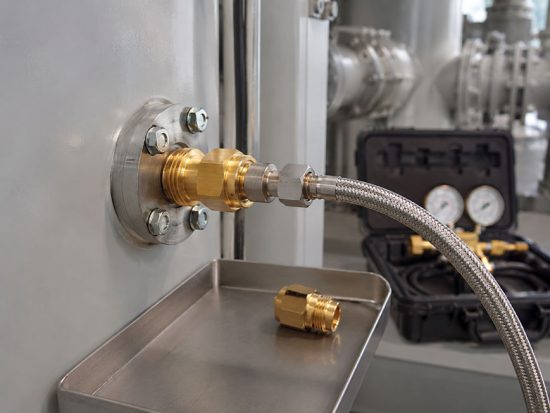
Selecting SF₆ Service Couplings: Plan Self-Sealing Function and Dead Volume for Minimal Gas Loss
An SF₆ service unit is to be connected to a gas-insulated switchgear system. The system...

Modbus RTU in the Control Cabinet: Correctly Setting Termination, Biasing and Addresses
Several Modbus I/O modules are mounted on the DIN rail, the supply voltage is present...

THD or TDD: Correctly Interpreting Harmonic Values Under Varying Load
A frequency converter is operating at low load. The power quality analyzer suddenly shows: THD-I...
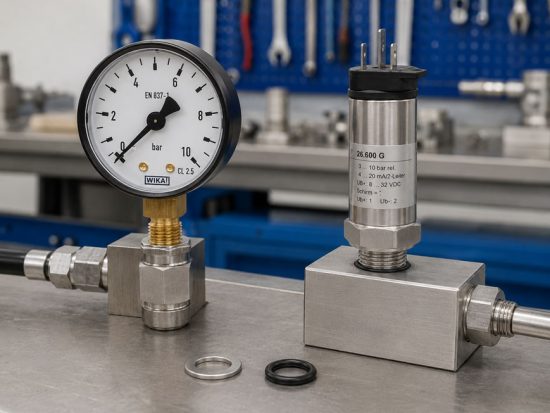
G1/4 EN 837 or G1/4 DIN 3852: Correctly Distinguishing the Sealing Principle on Pressure Gauges
A pressure gauge is marked: G 1/4 and the existing connection on the machine also...

Thermocouple Cold Junction Compensation: Avoiding Connection Errors at Terminals
A Type K thermocouple measures, for example: 500 °C in the process and is connected...

Sizing an Orifice Plate: Balancing Beta Ratio and Permanent Pressure Loss Correctly
An orifice plate is intended to measure the flow rate in a pipeline. This quickly...

Using Sight Glass Level Indicators Safely with Hot Media
A sight glass level indicator provides a particularly simple way of checking the level: the...

Statically Testing a Torque Sensor: Using Force and Lever Arm as a Reference
A torque sensor is to be tested at 100 Nm. A second torque transducer is...