


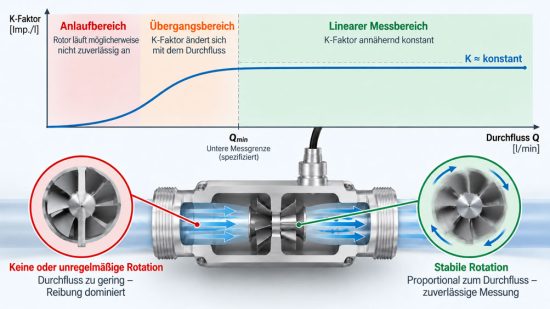
Turbine Flow Meter Near the Lower Flow Limit: Correctly Assessing Start-Up Behavior, K-Factor and Linearity
A turbine flow meter can provide highly stable and repeatable flow values in the middle...
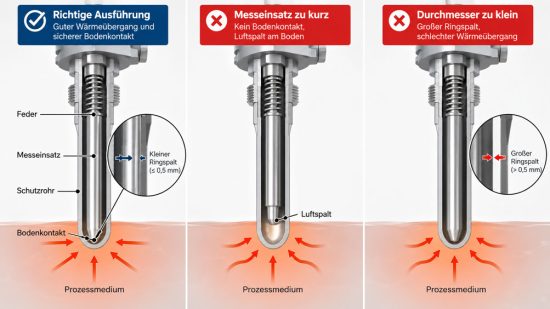
Spring-Loaded Measuring Insert in a Thermowell: Ensuring Proper Heat Transfer and Bottom Contact
A resistance thermometer can be electrically completely correct and still respond significantly more slowly than...
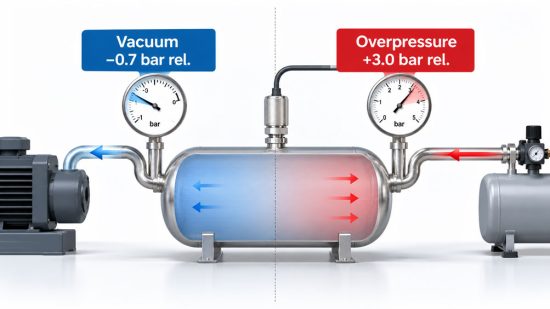
Pressure Sensor for Vacuum and Overpressure: Selecting the Correct Compound Measuring Range and Reference Side
Many pressure applications can be clearly assigned to one direction. A hydraulic line operates exclusively...

Wipe Test or Direct Measurement for Contamination: Distinguishing Removable and Fixed Activity
A work surface is checked with a contamination monitor and shows a significantly elevated count...
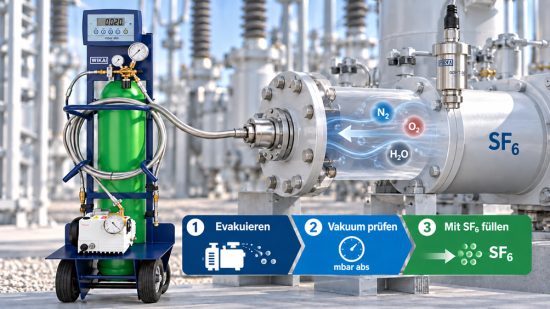
Evacuating an SF₆ Gas Compartment Before Filling: Correctly Controlling Residual Air, Vacuum Level and Gas Quality
If an SF₆ gas compartment has been opened for installation, repair or maintenance work, ambient...

Do Not Confuse Redox Potential and pH: Which Measured Variable Provides Which Process Information?
A water sample has a pH value of 7.2. At the same time, an ORP...
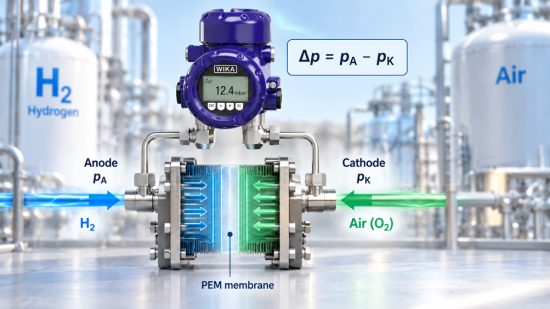
Protecting the PEM Fuel Cell Membrane: Reliably Monitoring Differential Pressure Between Anode and Cathode
In a PEM fuel cell, two completely different gas spaces are located on opposite sides...
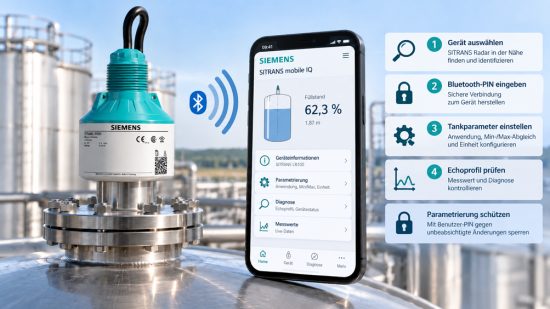
Commissioning SITRANS Radar via Bluetooth: Safe Parameterization Directly at the Tank
Radar sensors for continuous level measurement are often installed in locations that are inconvenient for...
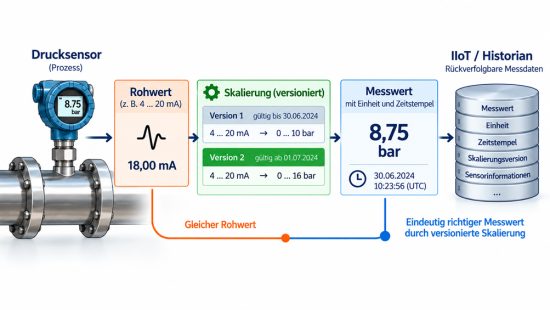
Versioning Units and Scaling in Measurement Data: Permanently Avoid Errors with bar, Pa and Raw Values
Industrial measurement data is often used for much longer than the measuring instrument itself. A...
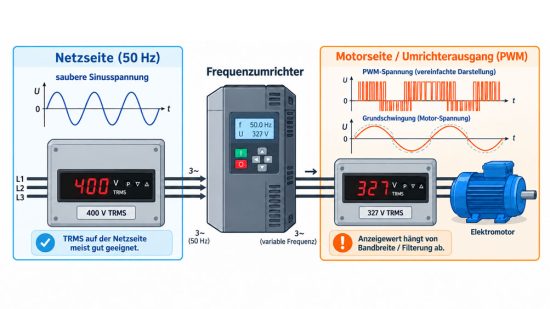
True-RMS Panel Meter on a Frequency Inverter: Consider Distorted Voltages and Frequency Range
A digital panel meter in a control cabinet is often used to continuously display the...