


Photo by Edge2Edge Media on Unsplash
➔ What Does Traceability Actually Mean?
In industrial measurement technology, the term "traceability" is central to quality assurance and compliance with international standards. Traceability means that the result of a measurement can be traced back to national or international standards — through a complete, documented chain of calibrations, each with known measurement uncertainties.
Definition according to ISO/IEC 17025:
"A measurement result is traceable if it can be related to a reference through a documented, unbroken chain of calibrations, each contributing to the measurement uncertainty."
ISO 9001 also states in section 7.1.5.2 that measuring equipment must be calibrated at regular intervals — and traceable to international or national standards.
Why is traceability essential in industrial measurement?
In virtually all industries — from pharmaceuticals and mechanical engineering to the energy sector — measurements serve as the foundation for:
-
Product safety
-
Process control
-
Quality documentation
-
Legal compliance
Without traceable calibrations, measurement results may not be legally valid — particularly during audits, liability cases, or certification processes. Therefore, traceability is not just a "nice-to-have" but a fundamental requirement for any quality-controlled production.
Traceability vs. Factory Calibration – What's the Difference?
Many manufacturers deliver their sensors and measuring devices with a factory calibration certificate. This confirms that the device was tested before shipment — but often without full traceability to national standards or without clearly defined measurement uncertainty.
In contrast, a traceable calibration ensures that:
-
Certified reference equipment is used (e.g., with DAkkS or ISO/IEC 17025 certificate),
-
All measurements are documented and verifiable,
-
The entire measurement chain complies with standards (e.g., ISO/IEC 17025).
Only traceable calibrations meet the requirements for audit readiness, quality assurance, and international comparability.
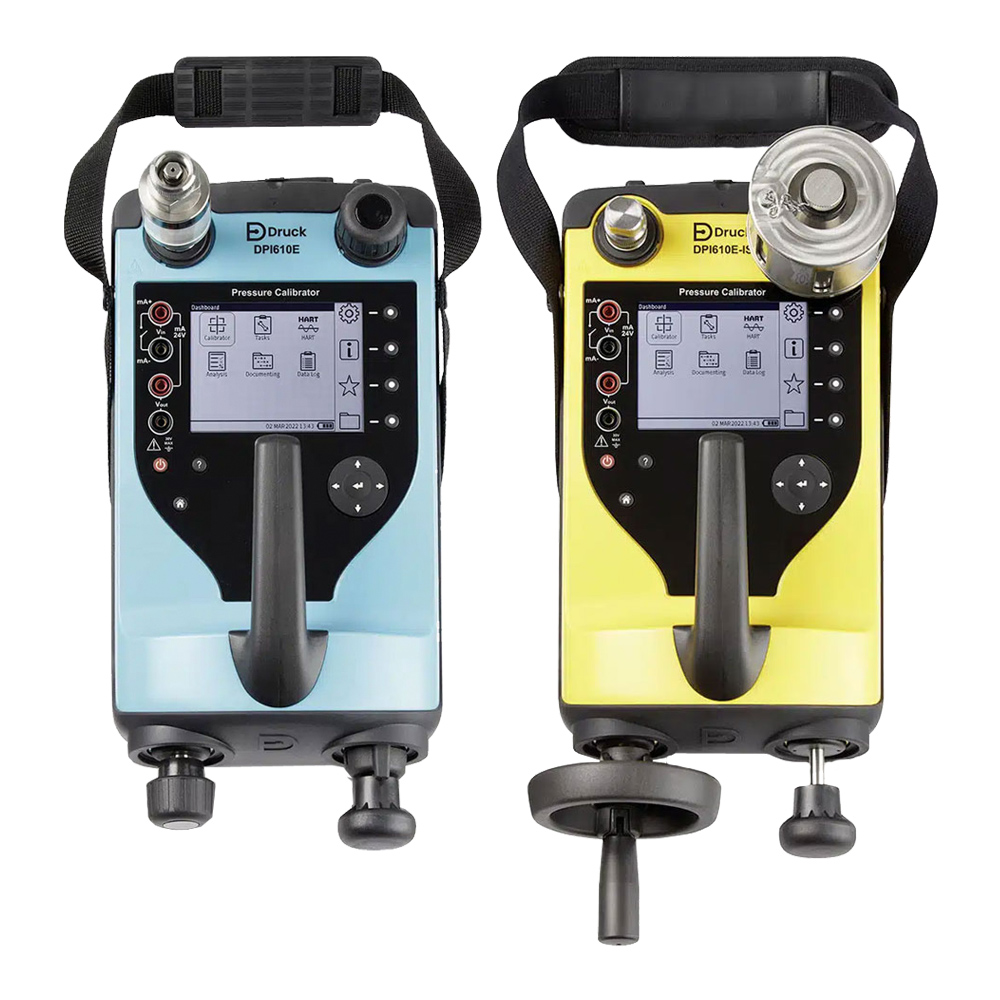
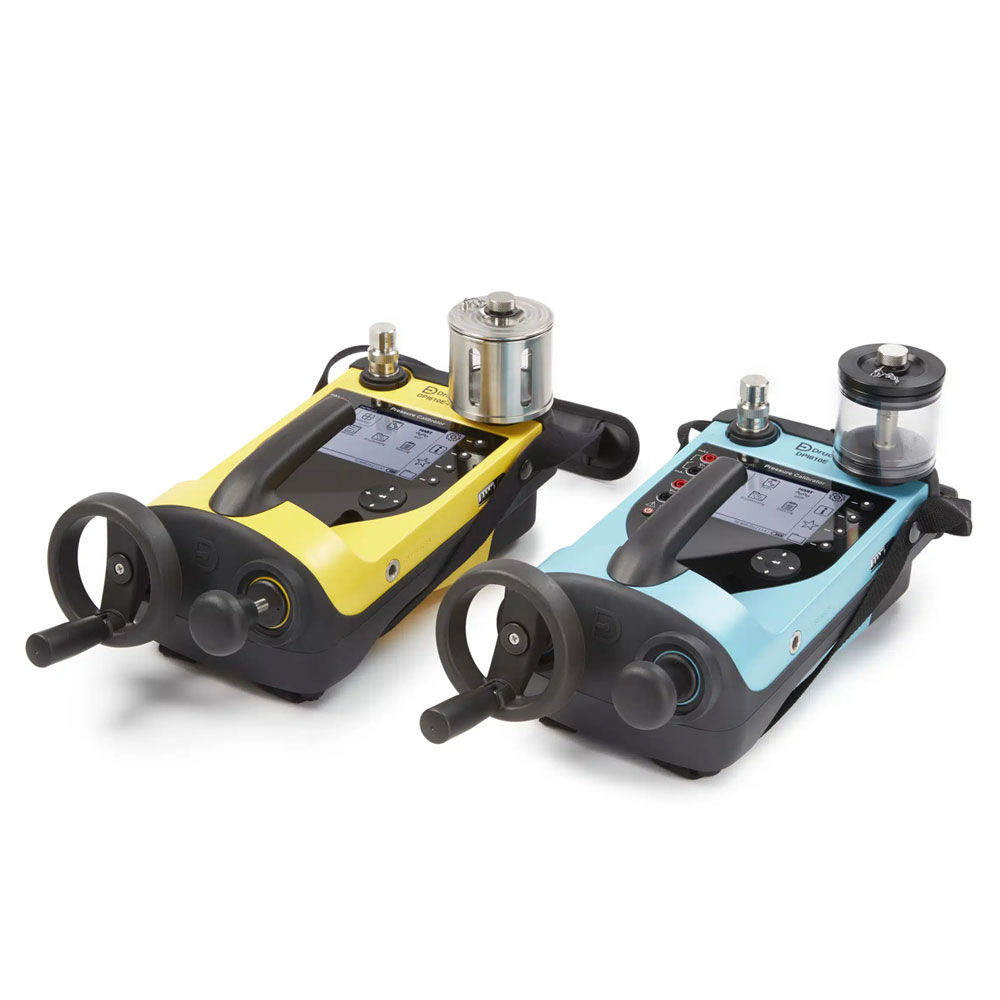
DPI610E – Mobile Calibration with Precision and Durability
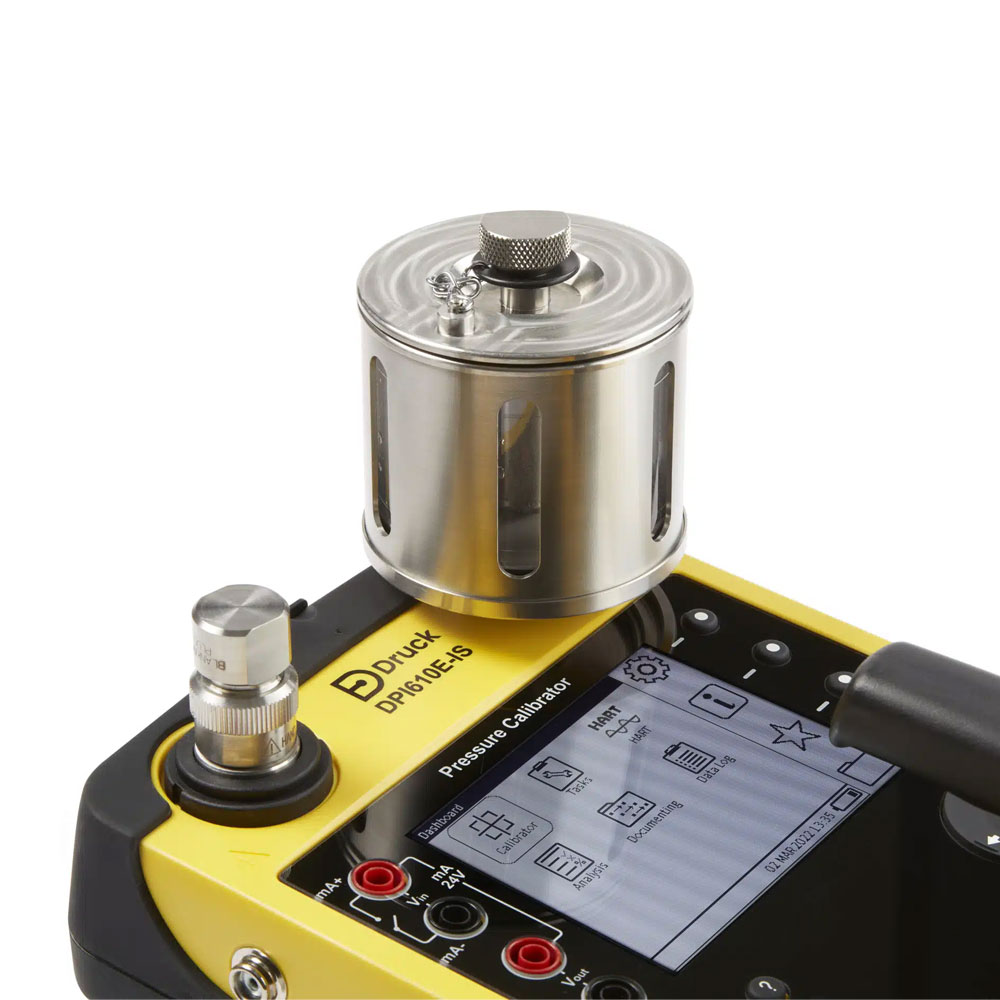
The DPI610E is a compact, portable pressure calibrator specifically designed for field use. Whether in industrial plants, remote locations, or hard-to-reach measurement points, this device combines pressure generation, precise measurement, guided operation, and documentation in a robust all-in-one system.
Integrated Pressure Generation – Without External Equipment
Depending on the model, the DPI610E can internally generate pneumatic or hydraulic pressure, such as:
-
Pneumatic: from -0.95 to 20 bar (optionally up to 35 bar)
-
Hydraulic: up to 1000 bar
This makes the DPI610E ideal for on-site calibrations, as no external pump or pressure source is required.
Typical Use Cases
The DPI610E is especially suitable for technicians who need to check and calibrate pressure instruments during ongoing operations. Common applications include:
-
Chemical and pharmaceutical plants: Calibration of process pressure sensors under GMP or FDA conditions
-
Mechanical and plant engineering: Testing of pressure transmitters or switches in series production
-
Energy and environmental engineering: Maintenance and adjustment of pressure sensors in power plants, waterworks, or biogas facilities
Thanks to its robust design and user-friendly interface, the DPI610E is well suited for harsh industrial environments — from cleanrooms to field service.
DPI610E – Key Advantages at a Glance
| Feature | Benefit |
|---|---|
| Rugged housing (IP54/IP67) | Dust and splash-proof – ideal for field applications |
| Integrated pressure pump | No additional devices or hoses required |
| Large color display & touchscreen | Intuitive operation – even with gloves |
| Guided operation with automation | Step-by-step guidance through the calibration process |
| Data storage & export | Calibration data exportable as PDF or CSV (USB, WLAN optional) |
| Calibration history | Traceability of DUTs through automatic logging |
| Battery operation with long runtime | Independent use in the field for several hours |
Traceable Measurements with Certified Modules
The DPI610E can be used with interchangeable, traceably calibrated pressure modules. Each module is individually certified and thus enables full traceability in accordance with ISO/IEC 17025. The calibration certificates include:
-
Serial number
-
Measuring range
-
Calibration date & interval
-
Declared measurement uncertainty
This makes the DPI610E a fully audit-compliant calibration system that meets both the technical and documentation requirements in the field.
PACE5000E / PACE6000E – High-Precision Pressure Control for Laboratory and Test Bench Applications
The PACE Series (Pressure Controller & Indicator) from Druck / Baker Hughes offers a modular, flexible, and extremely precise solution for demanding calibration and testing applications. It is specifically designed for use in calibration labs, R&D departments, and automated QA test stands—anywhere highest accuracy, repeatability, and system integration are required.
Typical Applications
PACE devices enable precise generation and control of both static and dynamic pressure, making them ideal for:
-
Calibration laboratories: Traceable calibration of pressure transmitters, sensors, and switches with highest precision
-
R&D test benches: Automated testing of pressure components under realistic process conditions (e.g., sensor development)
-
Quality assurance test stations: Pressure testing with digital data logging, archiving, and standard-compliant documentation
Technical Features of the PACE Series
| Feature | Description / Benefit |
|---|---|
| Pressure module accuracy up to ±0.005 % FS | Ideal for high-precision calibrations—even in narrow tolerance ranges |
| Controllable pressure profiles & ramps | Defined pressure sequences for repeatable testing |
| PACE5000E: Single pressure channel | For standard lab and QA applications |
| PACE6000E: Up to 3 pressure channels configurable | Simultaneous calibration of multiple DUTs or pressure ranges |
| Automated pressure control | Time- and cost-efficient for long-term tests or serial calibrations |
| Digital interfaces (Ethernet, GPIB, USB) | Seamless integration with PCs, test software, or calibration management systems |
| Optional remote control via SCPI commands | Ideal for automated procedures and software connectivity |
Flexible Pressure Modules – Certified and Traceable
PACE systems use interchangeable INTELLIGENT Pressure Modules (IDMs) that offer the following advantages:
-
Each sensor is traceably calibrated (e.g., with DAkkS certificate)
-
Modules are automatically recognized by the system
-
Wide selection of pressure ranges (e.g., vacuum, differential, gauge up to 210 bar)
-
Easily expandable without recalibration of the base unit
This allows PACE systems to meet not only technical, but also the documentation requirements for ISO-compliant calibrations.
Benefits in Daily Operation
-
Highest accuracy in its class of pressure controllers – ideal for demanding validations
-
Modular system design: one base unit, many applications
-
Future-proof through software updates and expandability
-
Suitable for 24/7 operation in automated test environments


Traceable Pressure Modules with Calibration Certificate
Both DPI610E and PACE devices operate with interchangeable pressure modules that:
-
Are factory-calibrated or calibrated by accredited laboratories (e.g., DAkkS)
-
Include traceable certificates (with serial number & measurement uncertainty)
-
Can be easily swapped and recognized by the device
This ensures that every calibration process is supported by a certified, traceable reference standard—a basic requirement for ISO-compliant quality assurance.
➔ Practical Example: How a Traceable Calibration Process Works – Seamlessly Documented with 4Sight2
A traceable calibration process ensures that each measurement result of a device under test can be traced back to a recognized national or international standard—fully documented, with known measurement uncertainty and fully audit-compliant.
Below we show how such a process works in practice—using the example of a pressure transmitter calibrated with the PACE6000E or the DPI610E and seamlessly managed using 4Sight2.
Step-by-Step Guide: Traceable Calibration of a Pressure Sensor
| Step | Description |
|---|---|
| 1. Preparation | Select the DUT (e.g., 0–10 bar transmitter), choose a traceable pressure module (e.g., PACE module with DAkkS certificate), set up devices in 4Sight2 |
| 2. Connection Setup | Connect the DUT pressure- and signal-wise; device data is auto-detected in 4Sight2 or retrieved from the database |
| 3. Zero & Leak Check | Perform a leak test and atmospheric zero point adjustment – optionally logged in the system |
| 4. Apply Reference Pressure | Generate defined pressure stages (e.g., 0 → 2 → 4 → 6 → 8 → 10 bar) via PACE or DPI610E, either automated or manual |
| 5. Compare Target vs. Actual | The DUT's actual value is compared live with the reference value, tolerances are checked and visualized in 4Sight2 |
| 6. Evaluation & Decision | Automatic evaluation via 4Sight2: Pass / Adjustment required / Out of tolerance |
| 7. Documentation | All calibration data automatically recorded: device data, calibration date, reference module, ambient conditions, operator |
| 8. Export & Integration | Output as PDF, CSV, or XML – optionally direct upload into ERP or CAQ systems via 4Sight2 |
Integration into a Modern Quality Management System – with 4Sight2 as the Control Center
A professional calibration process doesn't end with the measurement but with the secure and traceable archiving of all data – this is where 4Sight2 excels:
Export Formats:
- PDF: Automatically generated, audit-proof calibration certificates with logo and signature
- CSV: For Excel evaluation or import into existing CAQ systems
- XML/JSON: Machine-readable for automated data import
Interfaces to Third-Party Systems:
- ERP systems such as SAP PM
- CAQ solutions such as Babtec, Böhme & Weihs
- External calibration databases (e.g., WIKA-Cal, Excel/Access)
- REST API for system integration (e.g., into maintenance or test software)
Long-Term Archiving:
4Sight2 enables centralized, secure, and standards-compliant archiving, including full-text search, filtering by serial number, user, or device type – audit-proof and always ready for inspection.
A traceable calibration process using devices like DPI610E or PACE6000E meets the highest technical standards.
4Sight2 complements this process as a powerful software platform, intelligently combining documentation, management, and integration.
This creates a closed, digital, and standards-compliant calibration loop – perfectly prepared for internal QA and external audits.
➔ Tips for Documentation & Proof with 4Sight2
Calibration is only complete when documentation is gap-free and audit-proof. In audits, undocumented steps are considered not done.
This is where the 4Sight2 by Druck software offers great value to companies wanting to manage their calibration workflows digitally, efficiently, and in compliance.
Proper Archiving of Calibration Certificates
Calibration certificates must be:
- Traceable: Assigned to a specific instrument (serial numbers!)
- Accessible for years: Typically 5–10 years depending on the standard
- Tamper-proof: Stored securely without manipulation
4Sight2 supports this by:
- Central storage of all calibration data and test records
- Linking each certificate to the relevant instrument
- Automatic versioning & change tracking
- Export to PDF or digital archive formats
This eliminates error-prone manual filing of paper or spreadsheets.
Digital vs. Paper-Based Management – Why 4Sight2 Wins
| Aspect | Paper-Based Management | Digital Management with 4Sight2 |
|---|---|---|
| Access | Manual, local, often slow | Centralized, multi-user, globally accessible |
| Search & Filter | Time-consuming, error-prone | Seconds by serial number, date, device type |
| Archiving & Backup | Needs physical storage space | Built-in backup, long-term archiving |
| Audit Readiness | Gaps or media breaks possible | Complete history, securely documented |
| Day-to-Day Efficiency | High administrative effort | Automated workflows and calibration plans |
With 4Sight2, not just individual certificates are managed – a complete calibration management system emerges, including schedules, reminders, and responsibilities.
Dealing with Audit Deviations
Auditors check:
- Are calibration certificates complete and traceable?
- Are overdue calibrations systematically flagged and addressed?
- Are deviations documented, assessed, and followed up?
4Sight2 actively helps avoid audit risks:
- Traffic light system and auto-notifications for overdue calibrations
- Out-of-tolerance findings are logged, commented, and optionally linked to actions
- Full calibration history with technician, timestamp, and result
This way, audits are not only passed – they are confidently managed, without paper chaos or lost records.
With 4Sight2, documentation becomes a strength in the calibration process:
Instead of isolated spreadsheets or hard-to-find paper certificates, the software enables centralized, audit-proof, and compliant management of all calibration data – ideal for companies with strict quality or compliance demands.
➔ In Summary
Traceability in calibration is not optional – it's a requirement for compliant, safe, and quality-conscious operations in all industries dealing with pressure measurement. Only if each result can be traced to a national or international standard – fully documented and with known uncertainty – the calibration process meets standards such as ISO 9001 or ISO/IEC 17025.
Our Recommendation: Standards-Compliant Calibration with DPI610E & PACE
For companies looking to calibrate independently, efficiently, and audit-compliantly, we recommend a combination of:
- DPI610E: Portable field calibrator with integrated pressure generation – ideal for on-site calibration
- PACE5000E / PACE6000E: High-precision pressure controller for lab or test bench use
- Traceable pressure modules: Certified to DAkkS or ISO/IEC 17025, identified directly by the device
- 4Sight2 Software: Central solution for managing, planning, and logging all calibration workflows
This system solution ensures traceability is not only implemented technically, but also transparently documented – ready anytime for internal or external audits.