


Water treatment and wastewater purification are essential processes to ensure water supply and environmental protection. One of the most important measurement parameters in these systems is flow rate, as it directly impacts the efficiency and control of facilities. This article provides a comprehensive overview of flow measurement technology in water treatment and wastewater plants.
Importance of Flow Measurement
Flow measurement is crucial for:
-
Monitoring the water cycle in treatment plants
-
Regulating chemical dosing
-
Controlling clarification basins and aeration systems
-
Ensuring compliance with legal regulations for wastewater discharge
Without precise measurement systems, water treatment plants could operate inefficiently, leading to increased costs and environmental impacts.
Flow Measurement Methods
There are various methods for flow measurement used in water treatment plants and wastewater facilities. The choice of the right method depends on factors such as medium, pipe diameter, temperature, and pressure.
1. Electromagnetic Flow Meters (EMF)
Principle of Operation: Electromagnetic flow meters use Faraday’s law of electromagnetic induction. When a conductive liquid flows through the measuring tube, a voltage is induced, which is proportional to the flow velocity.
Advantages:
-
High measurement accuracy
-
No moving parts, minimizing wear
-
Suitable for conductive media such as drinking water and wastewater
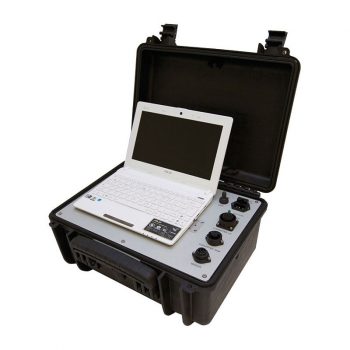
- Simple, automated verification
- Autonomous, supply via battery
- Functional testing of the measuring instrument without interrupting the flow
- No additional costs for installation and removal
 Datasheet Datasheet |
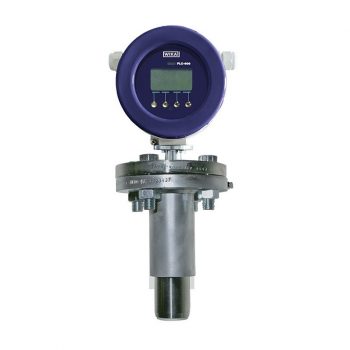
- No interference with flow due to low insertion depth
- For pipe diameters of up to 2,000 mm
| Datasheet |
| User Manual |
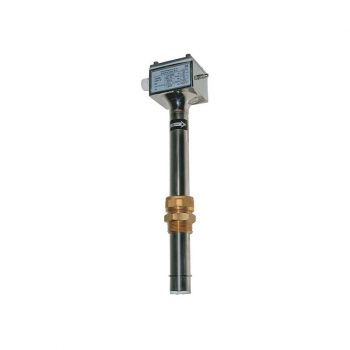

2. Ultrasonic Flow Meters
Principle of Operation: Ultrasonic flow meters use sound waves to measure flow velocity. There are two main types:
-
Transit-time method: Measures the time difference of ultrasonic signals with and against the flow.
-
Doppler method: Utilizes the frequency shift of reflected sound waves.
Advantages:
-
Non-contact measurement
-
Suitable for large pipe diameters
-
Ideal for wastewater treatment plants with suspended solids in water

- Measurement of two independent streams
- Narrow-band high-speed (NBHS) burst measurement
- Innovative HMI (Human-Machine Interface) with touch and gesture control
- Integrated high-capacity data logger
- Embedded “WIKA WebApp” configuration (no external software needed)
| Datenblatt |
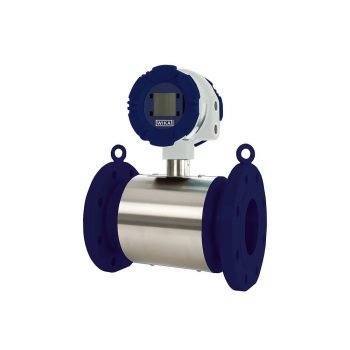
- Patented broadband continuous-wave technology
- Simultaneous transmission on two or more paths
- No pressure drop and no wear parts
- Intrinsically safe design
- Approved for custody transfer (MID MI-001, OIML R137-1 and -2)
| Datasheet |
| User Manual |

SITRANS FS290 flexible, versatile, practical
- Check metering, temporary and test measurements
- Compensation of flow disturbances through the anomaly compensation
- Long battery life, simple battery replacement
- Measurement accuracy of 1% under good conditions
|
Datenblatt
|
3. Mechanical Flow Meters
Principle of Operation: Mechanical flow meters, such as paddle wheel or turbine meters, measure flow through the rotation of a mechanical element in the water stream.
Advantages:
-
Cost-effective
-
Easy to install
-
Suitable for clean water
Disadvantages:
-
Mechanical parts can wear out
-
Not ideal for dirty wastewater
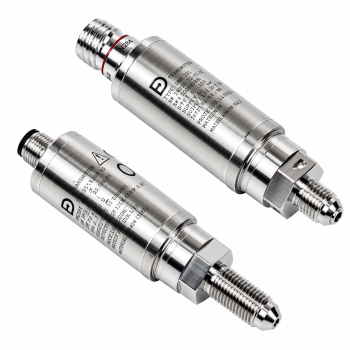
The Druck UNIK5000F is a high-performance pressure sensor specifically designed for critical oxygen and oxygen-enriched applications where safety, measurement accuracy, and long-term reliability are essential. Built on Druck's proven UNIK5000 platform, it combines oxygen-compatible wetted materials, specialized Halocarbon fill fluid, and advanced piezoresistive sensing technology for dependable pressure measurement.
With pressure ranges up to 350 bar, accuracy up to ±0.04% FS, and typical long-term stability of ±0.05% FS per year, the UNIK5000F is particularly suitable for aerospace applications, liquid oxygen systems, rocket propulsion testing, oxygen generation facilities, and industrial gas supply systems.
- Pressure ranges up to 350 bar
- Absolute and sealed gauge pressure configurations
- High measurement accuracy up to ±0.04% FS
- Typical long-term stability of ±0.05% FS/year
- Frequency response up to 3.5 kHz
- Temperature compensation options ranging from -40 to +80 °C
- Oxygen-compatible wetted materials
- Specially selected Halocarbon fill fluid suitable for oxygen service
- Cleanable wetted flow paths designed to avoid particle traps and sharp corners
- Calibration using dry gas or deionized/pure water only, with no oil used
- Suitable for integration into customer-defined oxygen cleaning procedures
- Ideal for aerospace, oxygen supply, and industrial gas applications
| Datasheet |
 Configurator Configurator |
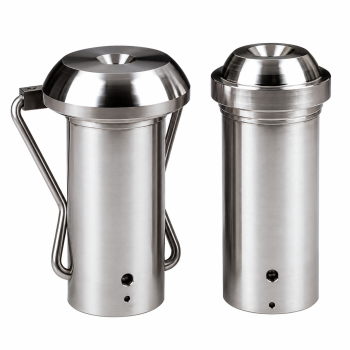
The Druck PTX661 is a rugged, high-performance Hammer Union Pressure Transmitter specifically designed for pressure measurement in extremely harsh oil and gas drilling environments. Engineered for onshore and offshore drilling operations, it provides exceptional resistance to high shock, severe vibration, and dynamic pressure fluctuations.
Featuring ±0.1% full-scale accuracy, a fast frequency response exceeding 2 kHz, and proven 4–20 mA electronics, the PTX661 is particularly suitable for drilling mud pressure monitoring and demanding high-pressure hydraulic applications.
- Pressure ranges up to 15,000 psi (approx. 1,034 bar)
- High measurement accuracy of ±0.1% FS
- Fast frequency response exceeding 2 kHz
- Rugged Hammer Union design for drilling operations
- Proven 4–20 mA output electronics
- Advanced high-accuracy silicon pressure sensing technology
- Excellent resistance to high shock and vibration
- Wetted materials: 316L stainless steel, Inconel X750, and Inconel 625
- NACE MR0175-compatible materials
- Overpressure capability of 1.5 x FS, maximum 20,000 psi
- Reverse polarity, overvoltage, and EMC protection
- Intrinsically safe versions with ATEX, IECEx, NEPSI, and FM approvals
- Repairable construction
|
Datasheet
|
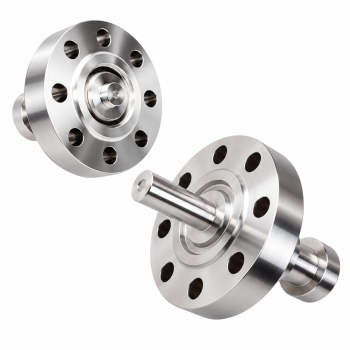
The Druck PTX400 Series comprises high-performance pressure, temperature, and combined pressure/temperature transmitters specifically designed for reliable long-term operation in demanding subsea and offshore environments. These sensors enable accurate process measurements directly on subsea wellheads and production manifolds.
With standard pressure ranges up to 690 bar, temperature measurement from -40 to +150 °C, and external pressure resistance for water depths up to 3,000 m, the PTX400 Series delivers reliable performance in deepwater applications. Its fully welded construction is designed for more than 25 years of continuous subsea operation.
- Standard pressure ranges up to 690 bar
- Temperature measurement from -40 to +150 °C
- Pressure, temperature, and combined pressure/temperature versions
- Measurement accuracy better than 0.1%
- External pressure capability up to 3,000 mH₂O
- Proof pressure: 1.5 times full-scale pressure
- Secondary pressure containment exceeding 1,035 bar
- Micromachined piezoresistive silicon pressure sensing technology
- Integrated platinum resistance temperature sensor
- Fully welded construction with high-pressure containment
- Designed for continuous subsea operation exceeding 25 years
- Design based on API performance requirement PRI and product specification level PSL3
- Customized sensor designs available
|
Datasheet
|
Comparison of Measurement Methods
The following table provides an overview of the advantages and disadvantages of the main flow measurement methods:
| Measurement Method | Advantages | Disadvantages |
|---|---|---|
| Electromagnetic Flow Meters | High accuracy, no moving parts | Only suitable for conductive media |
| Ultrasonic Flow Meters | Non-contact, suitable for large pipes | Measurement accuracy can be affected by air bubbles |
| Mechanical Flow Meters | Cost-effective, easy installation | Wear on moving parts, less suitable for wastewater |
Applications in Water Treatment
Drinking Water Treatment
In drinking water treatment, precise flow measurements are essential for:
-
Regulating water supply
-
Optimizing chemical dosing, such as chlorine
-
Monitoring the efficiency of filtration systems
Electromagnetic flow meters are generally preferred since drinking water has sufficient conductivity.
Wastewater Treatment Plants
Wastewater treatment plants use flow measurement systems for various purposes:
-
Monitoring the inflow of wastewater
-
Controlling aeration systems
-
Checking treated water before discharge into natural water bodies
Ultrasonic flow meters are particularly useful here, as they provide non-contact measurement and have no moving parts that could be obstructed by suspended solids in wastewater.
Future of Flow Measurement in Water Treatment
Measurement technology continues to evolve. Modern flow measurement systems increasingly offer:
-
Digital connectivity: Integration into IoT systems for remote monitoring
-
Automatic calibration: Reduced maintenance effort
-
Combined sensors: Additional parameters such as temperature and pressure measurement
The following table provides an overview of modern technologies in flow measurement:
| Technology | Advantages |
| IoT-enabled Flow Meters | Real-time data and remote maintenance |
| Self-calibrating Sensors | Reduced maintenance effort |
| Multisensor Systems | Additional measurement parameters such as temperature and pressure |
Conclusion
Flow measurement plays a central role in water treatment and wastewater technology. Different measurement methods offer specific advantages depending on the application. The advancement of measurement technology leads to even more precise and efficient systems, contributing to sustainable water supply.