



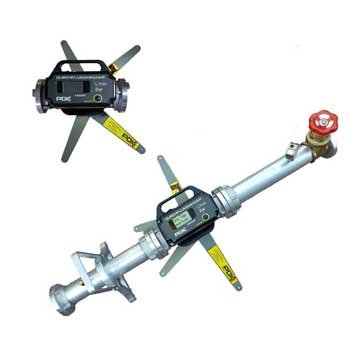
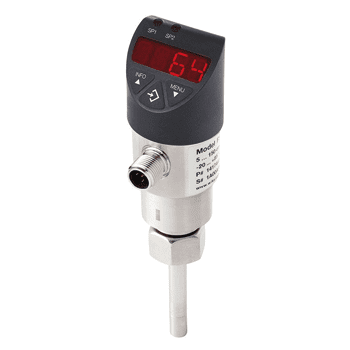
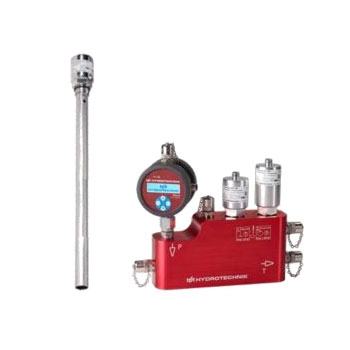
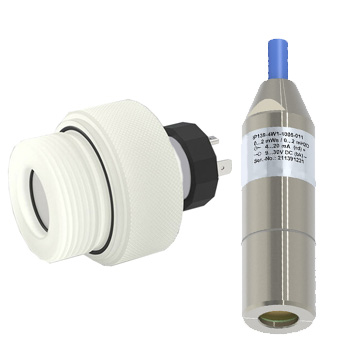



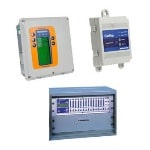
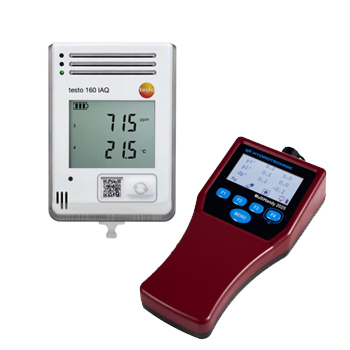
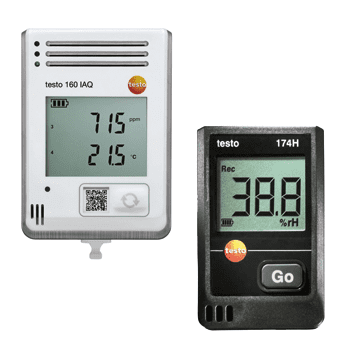
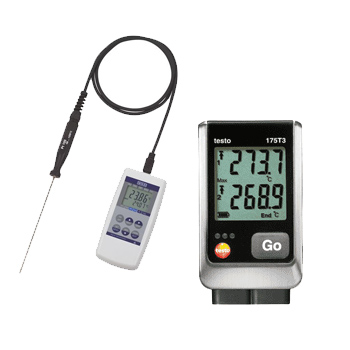
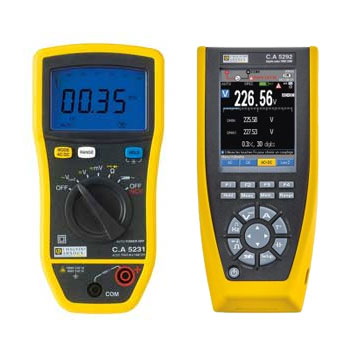
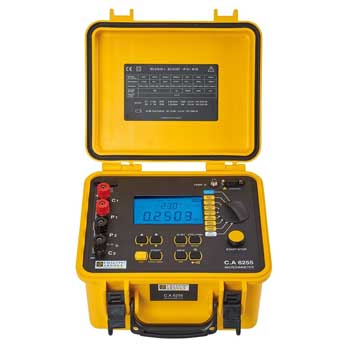
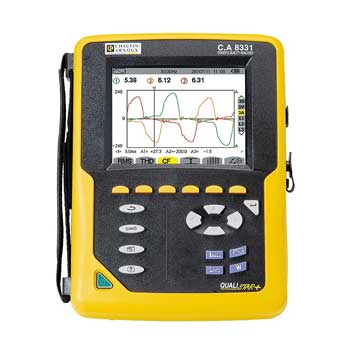
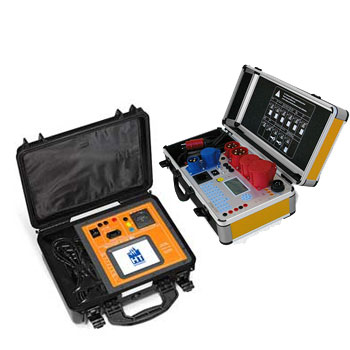
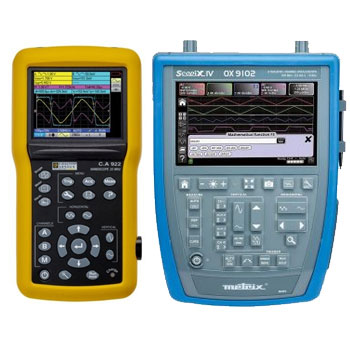
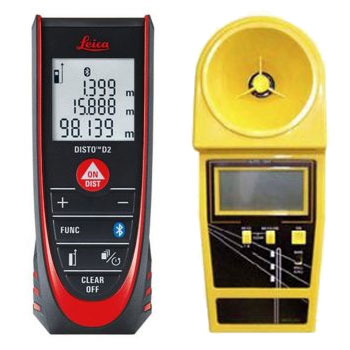
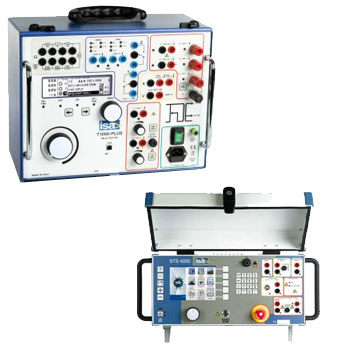
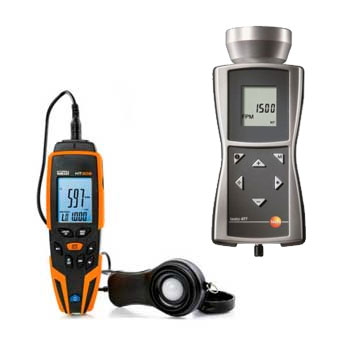


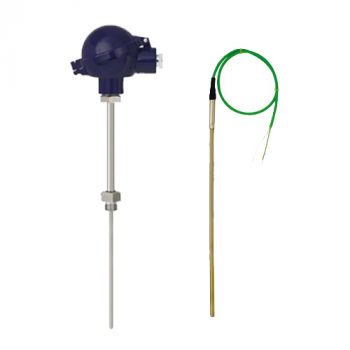
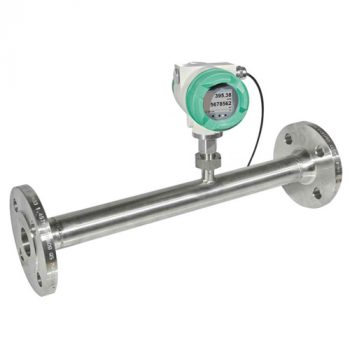



























Measurement technology for heating, air conditioning and HVAC systems
Foto by Illia Horokhovsky on Unsplash
Heating systems Solar thermal systems Combined Heat and Power Plants (CHP) Heat Pumps Gas wall heaters Heat transfer and distribution stations Industrial Boiler Systems Room air handling systems (RLT)
Heating, air conditioning and ventilation form the essential pillars of a holistic building supply system – they determine comfort, well-being and energy efficiency in residential, commercial and industrial buildings. In times of increasing environmental requirements, growing importance of sustainable energy solutions and rising demands on indoor air quality, the professional planning, installation and control of these systems are becoming ever more important.
Modern heating systems no longer provide only warmth, but combine innovation with efficiency: They can be flexibly integrated — for example with solar thermal energy, heat pumps or combined heat and power plants — enabling sustainable and energy-efficient building operation. Air conditioning and ventilation systems (HVAC) complement this setup by regulating air quality, temperature and indoor climate — because today it’s no longer just about heating, but about achieving a healthy and comfortable indoor environment overall.
Our goal with the area of “Heating, air conditioning and ventilation” is to present you with application-oriented, modern and reliable solutions that optimise comfort, energy efficiency and sustainability in your buildings. In doing so, we rely on proven technology, carefully selected components and a broad portfolio — from classic heating systems to modern, intelligently controlled ventilation solutions.
Heating systems
Modern heating systems are a central component of technical building equipment and contribute significantly
to efficiency, cost-effectiveness and comfort. While traditional heat generators such as gas and oil heating systems
are still common in many existing buildings, innovative technologies such as heat pumps, solar thermal systems or
combined heat and power units are becoming increasingly important. Today, the focus is no longer solely on heat generation,
but on the optimal interaction of intelligent control, precise sensor technology and efficient heat distribution.
Heating systems are increasingly understood as integrated energy systems. They automatically adjust their output
to actual demand and use modern components for measurement and control — such as temperature sensors, pressure sensors,
flow meters or heat meters. This allows energy consumption to be transparently monitored, systems to be operated safely
and unnecessary costs to be avoided. Especially with rising requirements for energy efficiency and sustainability,
these measurement and control components play a decisive role.
Another trend is the increased use of hybrid solutions that combine different heat generators. For example, a gas
condensing boiler can be combined with a heat pump or solar thermal system to utilize environmental heat while ensuring
peak load coverage. These systems combine cost-efficiency, safety and environmental compatibility in a single, intelligent
overall concept. For operators, this means a long-term reliable and flexible solution that can be adapted to changing
requirements.
Modern heating systems also offer significant advantages in terms of building comfort. Precise temperature control,
better heat distribution and reduced maintenance requirements ensure pleasant and stable operation. By using high-quality
measurement and sensor products, operating times can be extended, malfunctions reduced and key parameters integrated
into higher-level systems — from simple local displays to full integration into building management or IoT structures.
Finally, cost-effectiveness throughout the entire lifecycle plays a decisive role. Although the initial investment
in modern heating technology may be higher than for conventional systems, the costs often pay off within a few years
thanks to lower energy consumption, reduced emissions and potential subsidy programmes. At the same time, building value
is significantly increased through modernization.
Whether new construction, renovation or modernization — selecting the right heating system requires a careful analysis
of building characteristics, user profile and energy requirements. With a broad range of solutions and precise measurement
and control technology, ICS Schneider Messtechnik offers the right components to design heating systems that are efficient,
safe and future-oriented.
Advantages of modern heating systems at a glance
- Increased energy efficiency through optimized control and demand-based power adjustment
- Reduced operating costs through transparent monitoring of consumption and operating conditions
- Higher comfort thanks to precise temperature control and even heat distribution
- Improved operational safety through continuous monitoring of key measurement parameters
- Future-proof thanks to the ability to integrate renewable energy and hybrid concepts
- Increase in building value through modern, sustainable heating technology
Typical heating systems and relevant measurement parameters
| Heating system | Typical application | Relevant measurement parameters | Special features |
|---|---|---|---|
| Gas condensing boiler | Residential buildings, multi-family homes, small commercial properties | Flow/return temperature, system pressure, gas consumption, heat quantity | Proven technology, high efficiency, easily combined with solar thermal |
| Heat pump (air/water, brine/water) | New buildings, energy-renovated buildings, low-energy houses | Source temperature, flow temperature, volume flow, electrical power consumption | Uses environmental heat, very low operating costs, ideal for surface heating systems |
| Solar thermal system | Support for heating and domestic hot water production | Collector temperature, storage temperature, flow rate, generated heat quantity | Reduces fuel consumption, especially effective in combination with condensing technology |
| Combined heat and power unit (CHP) | Commercial, industrial, residential complexes with high heat and electricity demand | Temperatures, heating circuit pressure, generated heat quantity, electricity production | Combined heat and power, high overall efficiency, ideal for continuous operation |
| Hybrid heating systems | Existing buildings and renovation projects with variable requirements | Control of multiple heat generators, switching points, flow temperature, consumption data | Combination of different energy sources, flexible operating strategies, high reliability |
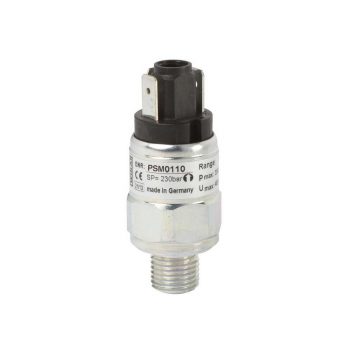
- Setting ranges: 0.2 … 2 bar [3 ... 30 psi] to 30 ... 320 bar [450 ... 4,600 psi] and -0.85 ... -0.15 bar [-25 inHg ... -5 inHg]
- Non-repeatability of the switch point: ≤ 2 % of span
- Switching functions: Normally closed, normally open or change-over contact
- Media: Compressed air, neutral and self-lubricating fluids and neutral gases
 Datasheet Datasheet |

- Adjustable switch hysteresis
- Setting ranges: 0.2 … 2 bar [3 ... 30 psi] to 30 ... 320 bar [450 ... 4,600 psi] and -0.85 ... -0.15 bar [-25 inHg ... -5 inHg]
- Non-repeatability of the switch point: ≤ 2 %
- Switching functions: Normally closed, normally open or change-over contact
- Media: Compressed air, neutral and self-lubricating fluids and neutral gases
 Datasheet Datasheet
|
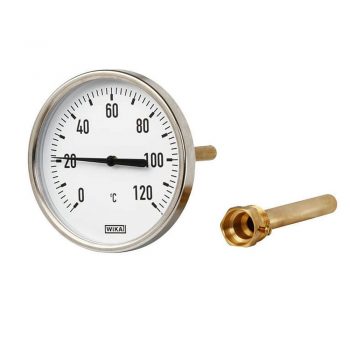
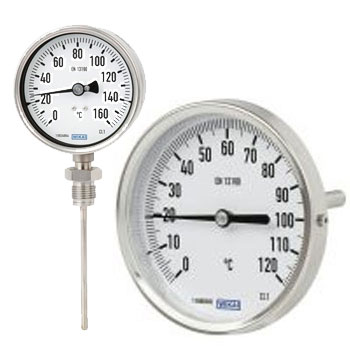
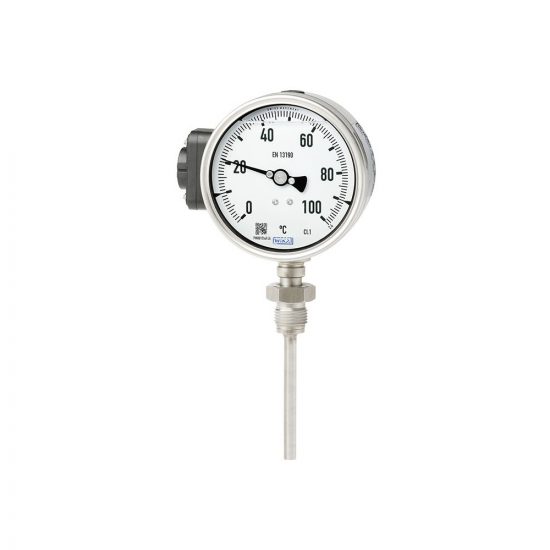
- Accuracy class 2 per EN 13190
- Nominal size 63, 80, 100 and 160
- Scale ranges from -30 ... +200 °C
| Datasheet |
| User Manual |
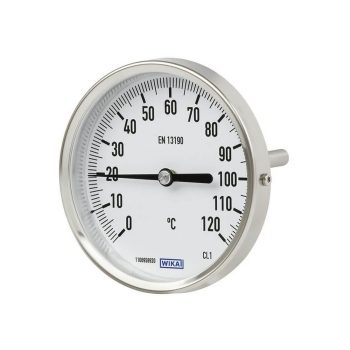
- Scale ranges from -30 ... +500 °C
- Large choice of nominal sizes from 25 ... 160 mm
- Case and stem from stainless steel
- 5 different connection designs
|
Datasheet
|
|
User Manual
|

- Combined indication for pressure and temperature
- Scale ranges to 0 … 10 bar [ 0 ... 150 psi] and 0 ... 120 °C [32 ... 248 °F]
- Shut-off valve included in delivery
| Datasheet |
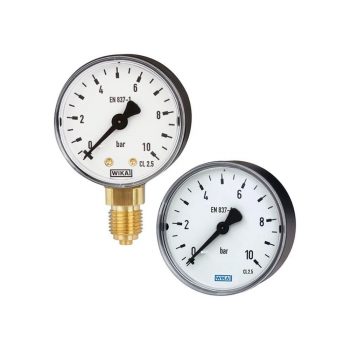
- Reliable and cost-effective
- Design per EN 837-1 or ASME B40.100
- Nominal size 40 [1 ½"], 50 [2"], 63 [2 ½"], 80 [3"], 100 [4"] and 160 [6"]
- Scale ranges to 0 ... 400 bar [0 ... 6,000 psi]
|
Datasheet |
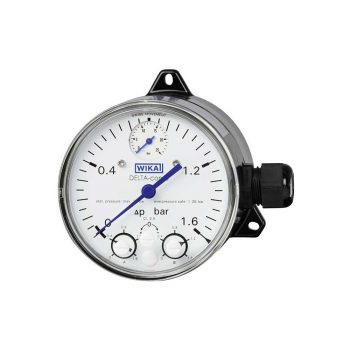
- With one or two adjustable microswitches
- Shatterproof window and robust aluminium or stainless steel measuring chamber for increased requirements
- Optionally with approvals for hazardous areas
- High ingress protection, IP65, for outdoor use and processes with high condensation
- Low measuring range from 0 ... 250 mbar

| Datasheet |
| User Manual |
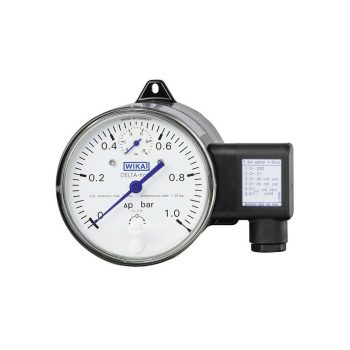
- Transmission of process values to the control room (e.g. 4 ... 20 mA)
- Shatterproof window and robust aluminium or stainless steel measuring chamber for increased requirements
- Optionally with approvals for hazardous areas
- High ingress protection, IP65, for outdoor use and processes with high condensation
- Low measuring range from 0 ... 160 mbar
| Datasheet |
| User Manual |
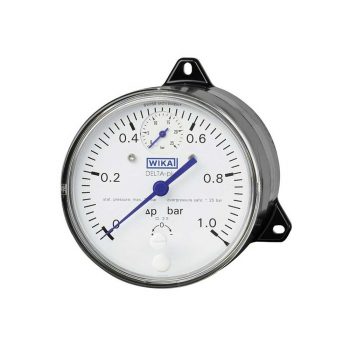
- Shatterproof window and robust aluminium or stainless steel measuring chamber for increased requirements
- Low scale ranges from 0 ... 160 mbar
- High accuracy down to 1.6 %
- Optionally with approvals for hazardous areas
- Helium leak tested
| Datasheet |
| User Manual |
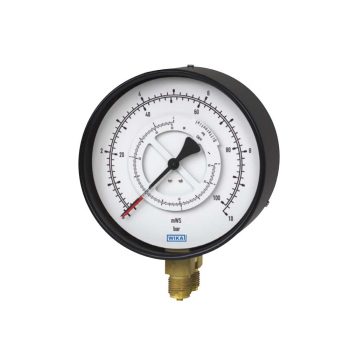
- Scale ranges from 0 ... 0.6 bar to 0 … 1,000 bar
- Two process connections and two independent pointers
- Differential pressure display with moving dial
- Cost-effective and reliable
| Datasheet |
| User Manual |
|
Datasheet
|
|
User Manual
|
|
User Manual
|
|
User Manual
|
|
User Manual
|
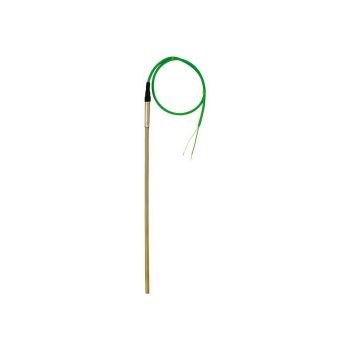
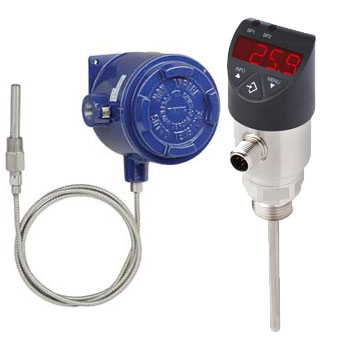
- Sensor ranges from -40 ... +1,200 °C (-40 ... 2,192 °F)
- For insertion, screw-in with optional process connection
- Cable from PVC, silicone, PTFE or glass fibre
- High mechanical strength
- Explosion-protected versions
| Datasheet |
| User Manual |
| User Manual |
| User Manual |
Solar thermal systems
Solar thermal systems use the sun’s energy to provide heat for domestic hot water or to support heating systems.
They are among the most efficient forms of renewable heat generation and make a significant contribution to reducing
CO2 emissions as well as lowering energy costs. Thanks to mature technology, durable components and
intelligent control systems, solar thermal systems can today be used economically in both new buildings and existing properties.
The basic principle of solar thermal energy is simple: sunlight heats the heat transfer medium in the collectors, which
transports the heat via a heat exchanger into the storage tank. Modern systems use precise temperature and flow sensors
to optimise energy yield while ensuring safe operation.
By combining them with condensing boilers, heat pumps or hybrid heating systems, high efficiency levels can be achieved throughout the year.
Advantages of solar thermal systems
- Significant reduction in heating and hot water costs
- Use of renewable energy sources and reduction of CO2 emissions
- Long service life and low maintenance requirements
- High efficiency through modern sensor technology and intelligent control systems
- Flexible integration into existing heating systems and hybrid solutions
- Increase in building energy standards and long-term value enhancement
Solar thermal systems are characterised by low maintenance requirements, long service life and stable operating costs.
They are particularly attractive for users who wish to permanently reduce their energy costs and significantly increase
the share of renewable energy in their buildings.
With proper system design — taking into account roof area, collector orientation, storage capacity and heat demand —
high solar coverage rates can be achieved.
High-quality measurement and sensor products are used for performance monitoring and control:
temperature sensors on collectors and storage tanks, flow meters in solar circuits, and heat meters for yield monitoring.
These components are essential for optimising operation, detecting faults at an early stage and transparently displaying the actual energy yield.
Typical solar thermal systems and relevant measurement parameters
| System type | Typical application | Relevant measurement parameters | Special features |
|---|---|---|---|
| Flat-plate collector system | Single-family homes, multi-family houses, domestic hot water | Collector temperature, storage temperature, flow rate, heat output | Proven technology, robust, good annual efficiency, economically attractive |
| Vacuum tube collector system | Buildings with higher heat demand, heating support, commercial properties | Tube temperature, flow/return temperature, volume flow, yield measurement | Very high efficiency, ideal for higher operating temperatures, space-saving |
| Solar thermal heating support system | Single-family homes, renovation projects, combined hot water and heating systems | Storage stratification, collector output, return temperatures, heat yield | Significantly higher energy yield, ideal in combination with condensing boilers or heat pumps |
| Large solar thermal system | Industry, residential complexes, district heating networks, commercial buildings | Flow rates, system pressures, temperature distribution, total heat yield | High coverage rates, major impact on energy efficiency, high monitoring requirements |
| Hybrid solar thermal system | Buildings with combined electricity and heat demand | Temperatures, performance data, switching points, system efficiency | Combines solar thermal with other generators, flexible and efficient |
- Setting ranges: 0.2 … 2 bar [3 ... 30 psi] to 30 ... 320 bar [450 ... 4,600 psi] and -0.85 ... -0.15 bar [-25 inHg ... -5 inHg]
- Non-repeatability of the switch point: ≤ 2 % of span
- Switching functions: Normally closed, normally open or change-over contact
- Media: Compressed air, neutral and self-lubricating fluids and neutral gases
| Datasheet |
- Adjustable switch hysteresis
- Setting ranges: 0.2 … 2 bar [3 ... 30 psi] to 30 ... 320 bar [450 ... 4,600 psi] and -0.85 ... -0.15 bar [-25 inHg ... -5 inHg]
- Non-repeatability of the switch point: ≤ 2 %
- Switching functions: Normally closed, normally open or change-over contact
- Media: Compressed air, neutral and self-lubricating fluids and neutral gases
|
Datasheet
|
- Accuracy class 2 per EN 13190
- Nominal size 63, 80, 100 and 160
- Scale ranges from -30 ... +200 °C
| Datasheet |
| User Manual |
- Scale ranges from -30 ... +500 °C
- Large choice of nominal sizes from 25 ... 160 mm
- Case and stem from stainless steel
- 5 different connection designs
|
Datasheet
|
|
User Manual
|
- Combined indication for pressure and temperature
- Scale ranges to 0 … 10 bar [ 0 ... 150 psi] and 0 ... 120 °C [32 ... 248 °F]
- Shut-off valve included in delivery
| Datasheet |
- Reliable and cost-effective
- Design per EN 837-1 or ASME B40.100
- Nominal size 40 [1 ½"], 50 [2"], 63 [2 ½"], 80 [3"], 100 [4"] and 160 [6"]
- Scale ranges to 0 ... 400 bar [0 ... 6,000 psi]
|
Datasheet |
|
Datasheet
|
|
User Manual
|
|
User Manual
|
|
User Manual
|
|
User Manual
|
- Sensor ranges from -40 ... +1,200 °C (-40 ... 2,192 °F)
- For insertion, screw-in with optional process connection
- Cable from PVC, silicone, PTFE or glass fibre
- High mechanical strength
- Explosion-protected versions
| Datasheet |
| User Manual |
| User Manual |
| User Manual |
Combined heat and power units (CHP)
Combined heat and power units (CHP) are among the most efficient systems for decentralized energy supply.
They operate on the principle of combined heat and power (CHP), generating both electricity and heat simultaneously.
As a result, the fuel used is significantly better utilized compared to separate generation systems.
Their use is particularly economical where a constant heat demand exists throughout the year – for example in
multi-family buildings, commercial enterprises, hotels or municipal facilities.
The heart of a CHP unit is an engine that drives a generator. The waste heat generated during the combustion process
is transferred into the heating system via heat exchangers and used for space heating or domestic hot water.
For safe and efficient operation, precise measuring instruments are essential: temperature and pressure sensors
monitor the heating circuit, flow meters control heat transfer and heat meters document the actual energy yield.
Typical applications and advantages
- Use in buildings with constant heat demand (e.g. hotels, residential complexes, commercial properties)
- Simultaneous generation of electricity and heat significantly increases overall energy efficiency
- Reduction of energy and operating costs through self-consumption of electricity
- High security of supply and stable economic performance
- Can be combined with condensing boilers, heat pumps or solar thermal systems
- Possible integration into district heating networks or hybrid energy systems
Depending on output range and application, the design and operation of a CHP unit vary.
While micro and mini CHP units are mainly used in residential settings, larger units serve
commercial and industrial applications. Key factors for selection include heat demand, operating hours,
fuel type and integration into existing heating systems.
Typical CHP variants and relevant measurement parameters
| CHP type | Field of application | Important measurement parameters | Special characteristics |
|---|---|---|---|
| Micro-CHP | Single-family homes, small residential buildings | Temperatures, volume flow, electrical output | Very compact, quiet, high self-consumption share |
| Mini-CHP | Multi-family houses, small commercial enterprises | Gas consumption, system pressure, heat quantity | Proven technology, ideal supplement to peak-load boilers |
| Commercial/industrial CHP | Hotels, swimming pools, production facilities | Exhaust temperature, heat output, electricity production | High efficiency during long operating periods, robust design |
| Biogas CHP | Agriculture, municipal facilities | Gas quality, engine temperatures, electrical and thermal output | CO2-neutral operation, optimal use of renewable energy |
| Hybrid CHP systems | Modern energy management systems | Energy flows, switching points, efficiency indicators | Combination of CHP, heat pump, solar thermal or buffer storage systems |
For long-term economic operation, precise monitoring of all relevant measurement parameters is essential.
Modern sensor technology enables continuous performance analysis, identification of optimization potential and
early fault detection. This extends operating times, reduces maintenance costs and significantly increases
the overall economic efficiency of a CHP unit.
- Setting ranges: 0.2 … 2 bar [3 ... 30 psi] to 30 ... 320 bar [450 ... 4,600 psi] and -0.85 ... -0.15 bar [-25 inHg ... -5 inHg]
- Non-repeatability of the switch point: ≤ 2 % of span
- Switching functions: Normally closed, normally open or change-over contact
- Media: Compressed air, neutral and self-lubricating fluids and neutral gases
| Datasheet |
- Adjustable switch hysteresis
- Setting ranges: 0.2 … 2 bar [3 ... 30 psi] to 30 ... 320 bar [450 ... 4,600 psi] and -0.85 ... -0.15 bar [-25 inHg ... -5 inHg]
- Non-repeatability of the switch point: ≤ 2 %
- Switching functions: Normally closed, normally open or change-over contact
- Media: Compressed air, neutral and self-lubricating fluids and neutral gases
|
Datasheet
|
- Accuracy class 2 per EN 13190
- Nominal size 63, 80, 100 and 160
- Scale ranges from -30 ... +200 °C
| Datasheet |
| User Manual |
- Scale ranges from -30 ... +500 °C
- Large choice of nominal sizes from 25 ... 160 mm
- Case and stem from stainless steel
- 5 different connection designs
|
Datasheet
|
|
User Manual
|
- Reliable and cost-effective
- Design per EN 837-1 or ASME B40.100
- Nominal size 40 [1 ½"], 50 [2"], 63 [2 ½"], 80 [3"], 100 [4"] and 160 [6"]
- Scale ranges to 0 ... 400 bar [0 ... 6,000 psi]
|
Datasheet |
|
Datasheet
|
|
User Manual
|
|
User Manual
|
|
User Manual
|
|
User Manual
|
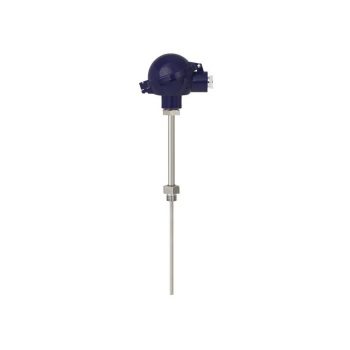
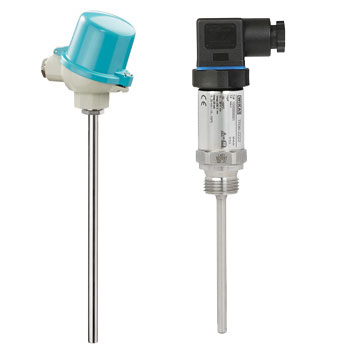
- Sensor ranges from -196 ... +600 °C (-320 ... +1.112 °F)
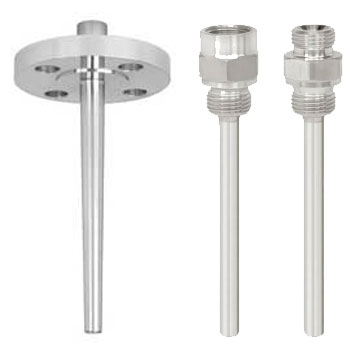
- For mounting in all standard thermowell designs
- Spring-loaded measuring insert (replaceable)
- Pt100 or Pt1000 sensors
- Explosion-protected versions
|
Datasheet
|
|
User Manual
|
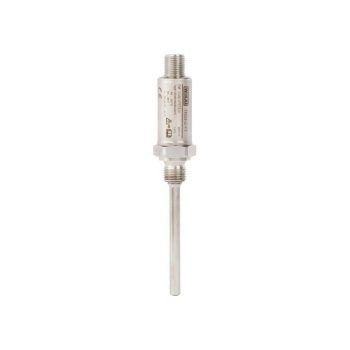
|
Datasheet
|
|
User Manual
|
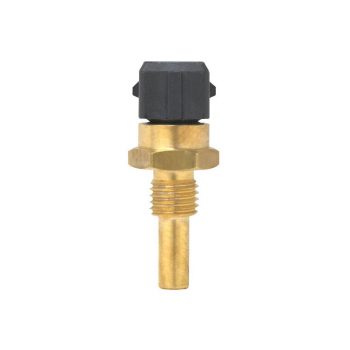
|
Datasheet |
| User Manual |

- Excellent load-cycle stability and shock resistance
- All stainless steel construction
- German Lloyd approva
- Scale ranges up to 0 … 1,600 bar
| Datasheet |
| User Manual |
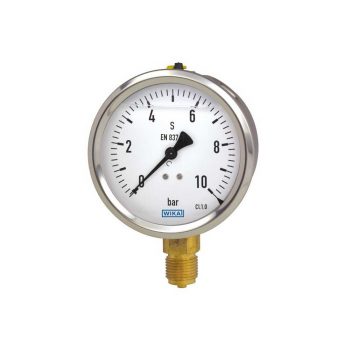
- Very good vibration and shock resistance
- Especially robust design
- Type approval for the shipbuilding industry
- Scale ranges to 0 ... 1,000 bar or 0 ... 15,000 psi
 Datenblatt Datenblatt
|
|
Bedienungsanleitung
|
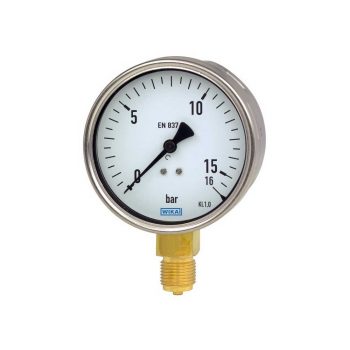
- Long service life, robust
- Cost-effective and reliable
- To combine with WIKA diaphragm seals
- German Lloyd approval
- Scale ranges up to 0 … 1,000 bar
| Datasheet |
| User Manual |
- With one or two adjustable microswitches
- Shatterproof window and robust aluminium or stainless steel measuring chamber for increased requirements
- Optionally with approvals for hazardous areas
- High ingress protection, IP65, for outdoor use and processes with high condensation
- Low measuring range from 0 ... 250 mbar
| Datasheet |
| User Manual |
- Transmission of process values to the control room (e.g. 4 ... 20 mA)
- Shatterproof window and robust aluminium or stainless steel measuring chamber for increased requirements
- Optionally with approvals for hazardous areas
- High ingress protection, IP65, for outdoor use and processes with high condensation
- Low measuring range from 0 ... 160 mbar
| Datasheet |
| User Manual |
- Shatterproof window and robust aluminium or stainless steel measuring chamber for increased requirements
- Low scale ranges from 0 ... 160 mbar
- High accuracy down to 1.6 %
- Optionally with approvals for hazardous areas
- Helium leak tested
| Datasheet |
| User Manual |
- Scale ranges from 0 ... 0.6 bar to 0 … 1,000 bar
- Two process connections and two independent pointers
- Differential pressure display with moving dial
- Cost-effective and reliable
| Datasheet |
| User Manual |
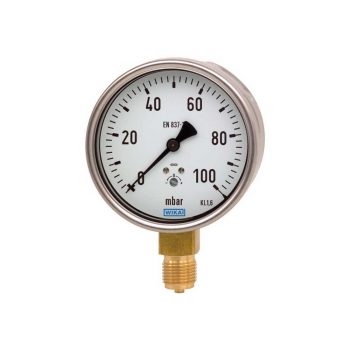
- Zero point correction in front
- Case from stainless steel
- Robust design and ingress protection IP54
- Low scale ranges from 0 ... 6 mbar to 0 ... 600 mbar or 0 ... 2.4 inH2O to 0 ... 240 inH2O
| Datasheet |
| User Manual |
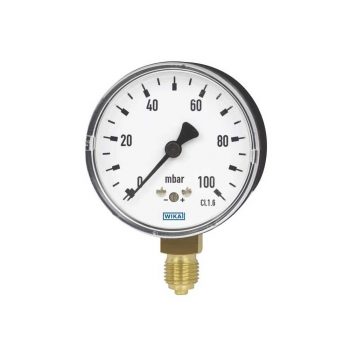
- Zero point setting in front
- Special connection location on request
- Low scale ranges from 0 ... 25 mbar
|
Datasheet |
| User Manual |
- Sensor ranges from -40 ... +1,200 °C (-40 ... 2,192 °F)
- For insertion, screw-in with optional process connection
- Cable from PVC, silicone, PTFE or glass fibre
- High mechanical strength
- Explosion-protected versions
|
Datasheet
|
|
User Manual
|
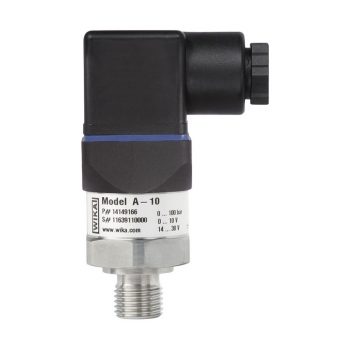
- Measuring ranges from 0 … 0.05 to 0 … 1,000 bar
- Non-linearity 0.25 % or 0.5 %
- Output 4 ... 20 mA, DC 0 ... 10 V, DC 0 ... 5 V and others
- Electrical connection: Angular connector form A and C, circular connector M12 x 1, cable outlet 2 m
- Process connection G ¼ A DIN 3852-E, ¼ NPT and others
|
Datasheet |
| User Manual |

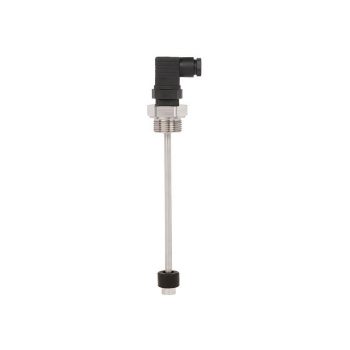
- Maximum reliability thanks to high-quality reed contacts
- Very high variety and customer-specific solutions possible
- Simple and fast installation
| Datasheet |
| User Manual |
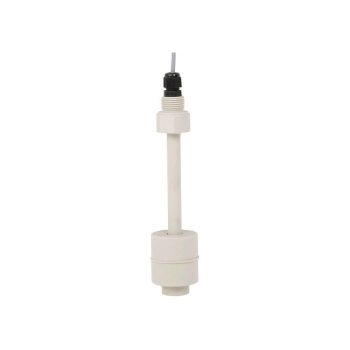
- Highest reliability in aggressive media
- Optimum process safety thanks to SMD production
- Simple and fast installation
| Datasheet |
| User Manual |
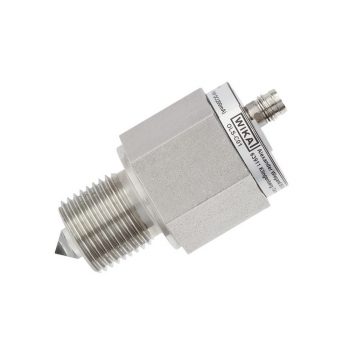
- Compact design, no moving components
- Mounting position as required
- Accuracy ±2 mm
- Visual indication of the switching status
- Choice of electrical connections: PUR, PVC cable or circular connector M8 x 1
| Datasheet |
| User Manual |

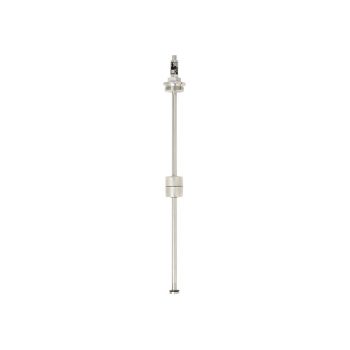
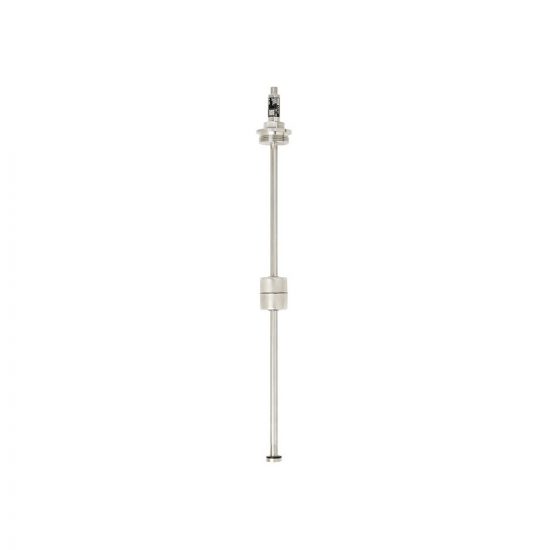
- Freely selectable switch position through fixing the float switch at the required level
- Large range of application due to the simple, proven functional principle
- For harsh operating conditions, long service life
- Operating limits: - Operating temperature: T = -30 ... +150 °C - Operating pressure: P = Vacuum up to 40 bar - Limit density: ρ ≥600 kg/m3
| Datasheet |
| User Manual |
Heat pumps
Heat pumps are one of the most important technologies for energy-efficient and sustainable heating today.
They use the heat stored in the environment — from air, ground or groundwater — and convert it into usable heating energy
through a thermodynamic process. This enables them to provide a large portion of the required heat from renewable sources
and significantly reduce energy consumption.
Modern heat pump systems operate highly automated and adjust their output precisely to the current heating demand.
Precise sensor technology plays a central role here: temperature sensors monitor the source temperature and
the flow temperature, flow meters provide important data for efficiency, and pressure sensors ensure trouble-free
operation of the refrigeration circuit. These measurement parameters enable not only energy-optimized operation
but also long-term operational reliability.
Typical applications and advantages of heat pumps
Heat pumps are particularly suitable for well-insulated buildings and heating systems with low flow temperatures,
such as underfloor or surface heating systems. Due to continuous technical improvements, modern units are increasingly
attractive for existing buildings as well.
- Very high energy efficiency through the use of environmental heat
- Reduction of heating costs with simultaneously low CO2 emissions
- Ideal for new buildings, renovations and low-temperature systems
- Can be combined with photovoltaics, buffer storage and hybrid heating systems
- Low maintenance requirements and long service life
- Future-proof thanks to the use of renewable energy sources
Depending on the heat source, design, efficiency and requirements for hydraulics and control vary.
The choice of the right heat pump depends strongly on local conditions and the desired performance range.
Types of heat pumps and typical measurement parameters
| Heat pump type | Application | Important measurement parameters | Special characteristics |
|---|---|---|---|
| Air/water heat pump | New buildings, renovations, residential buildings | Outdoor air temperature, flow temperature, volume flow | Easy installation, widely used, powerful at moderate temperatures |
| Brine/water heat pump | Buildings with ground probes or ground collectors | Source temperature, brine pressure, heat quantity | Very high efficiency, constant source temperatures, ideal for low-energy systems |
| Water/water heat pump | Locations with accessible groundwater | Groundwater temperature, delivery pressure, flow rate | Highest efficiency of all systems, but requires permits |
| Air/air heat pump | Commercial buildings, halls, direct air heating | Air temperatures, air volume flow, pressure ratios | No heating water required, fast response times |
| Hybrid heat pump | Existing buildings with gas heating | Switching points, system temperatures, energy flows | Combines heat pump and gas condensing boiler for maximum flexibility |
Through the use of modern sensor technology and intelligent control strategies, heat pumps achieve
high seasonal performance factors and enable precise output modulation.
This not only reduces energy consumption but also extends the service life of the system.
In combination with photovoltaics and energy management systems, they also enable largely
self-sufficient heat supply — an important step toward sustainable building technology.
|
Datasheet
|
|
User Manual
|
|
User Manual
|
|
User Manual
|
|
User Manual
|
|
Datasheet
|
|
User Manual
|
|
Datasheet |
| User Manual |
Wall-mounted gas boiler
Wall-mounted gas boilers are among the most compact and flexible heat generators for residential buildings and small
commercial units. They combine efficient condensing technology with minimal space requirements and can be easily
integrated into existing heating systems. Thanks to their wall-mounted design, they are particularly suitable for buildings
with limited installation space, such as kitchens, bathrooms or utility rooms.
Modern wall-mounted gas boilers utilise the residual heat contained in the exhaust gases via a condensing heat exchanger,
achieving very high efficiencies. Precise measurement and control technology plays a central role in ensuring safe and
efficient operation: temperature sensors ensure a stable flow temperature, pressure sensors monitor heating circuit pressure,
and flow meters record domestic hot water demand in real time. This enables rapid modulation of output while reducing
gas consumption.
Why wall-mounted gas boilers remain a sensible choice in many buildings
- Compact design, ideal for limited installation areas
- High efficiency thanks to modern condensing technology
- Short response times and fast domestic hot water provision
- Lower investment costs compared to other heating systems
- Easy integration into existing heating installations
- Can be combined with solar thermal systems and buffer storage
In addition to classic heating-only boilers, combination boilers are also available, providing both heating and
domestic hot water. These particularly space-saving units are ideal for apartments or smaller houses with low to
medium hot water demand. Larger buildings, on the other hand, often rely on systems with an external hot water
storage tank to ensure consistently high hot water performance.
Types of wall-mounted gas boilers and relevant measurement parameters
| Boiler type | Application | Important measurement parameters | Special characteristics |
|---|---|---|---|
| Condensing heating boiler | Residential buildings, small commercial properties | Flow temperature, return temperature, gas consumption | Very high efficiency, suitable for radiators and surface heating systems |
| Combination boiler | Apartments, compact single-family homes | Domestic hot water flow rate, system pressure, temperature control | Heating and hot water in one unit, extremely space-saving |
| Boiler with external storage tank | Buildings with high hot water demand | Storage temperature, charging flow rate, heat quantity | Consistent hot water output, ideal for multiple tapping points |
| Hybrid gas boiler | Renovations, existing buildings with future retrofit options | Energy flows, switching points, flow temperature | Combination of condensing boiler and heat pump for maximum efficiency |
Through the use of modern sensor technology and electronic control systems, wall-mounted gas boilers can now be
precisely adapted to actual heating and hot water demand. This leads to a significant reduction in operating costs
while enabling comfortable and low-disruption system operation. In combination with solar thermal systems or
hybrid solutions, wall-mounted gas boilers continue to offer an economically attractive and technically reliable option
in building heating technology.
- Combined indication for pressure and temperature
- Scale ranges to 0 … 10 bar [ 0 ... 150 psi] and 0 ... 120 °C [32 ... 248 °F]
- Shut-off valve included in delivery
| Datasheet |
- Setting ranges: 0.2 … 2 bar [3 ... 30 psi] to 30 ... 320 bar [450 ... 4,600 psi] and -0.85 ... -0.15 bar [-25 inHg ... -5 inHg]
- Non-repeatability of the switch point: ≤ 2 % of span
- Switching functions: Normally closed, normally open or change-over contact
- Media: Compressed air, neutral and self-lubricating fluids and neutral gases
| Datasheet |
- Adjustable switch hysteresis
- Setting ranges: 0.2 … 2 bar [3 ... 30 psi] to 30 ... 320 bar [450 ... 4,600 psi] and -0.85 ... -0.15 bar [-25 inHg ... -5 inHg]
- Non-repeatability of the switch point: ≤ 2 %
- Switching functions: Normally closed, normally open or change-over contact
- Media: Compressed air, neutral and self-lubricating fluids and neutral gases
|
Datasheet
|
Heat transfer and distribution stations
Heat transfer and distribution stations form the central link between heat generation and the individual
consumer circuits of a building. They ensure that heating energy is distributed efficiently, safely and according
to demand to radiators, underfloor heating systems or domestic hot water circuits. Due to their compact design and
modular construction, they can be used flexibly in almost any building type – from single-family homes to large
residential complexes or commercial buildings.
A modern station typically consists of heat exchangers, control valves, pumps, temperature sensors and
precise measurement and control technology. These components ensure that heat is optimally transferred to the
consumers and that hydraulic processes within the system remain stable. Especially in combination with energy-efficient
heat generators such as heat pumps, CHP units or district heating, proper heat distribution is crucial for achieving
high overall system efficiency.
Typical stations and relevant measurement parameters
| Station type | Application | Important measurement parameters | Special characteristics |
|---|---|---|---|
| House connection / transfer station | District heating, local heating networks, multi-family buildings | Flow/return temperatures, differential pressure, heat quantity | Transfers network energy into the building, centralised control |
| Heating circuit distribution station | Residential buildings, commercial buildings, surface heating systems | Volume flow, pressure, temperature control of individual circuits | Modular design, ideal for multiple heating circuits |
| Domestic hot water transfer station (fresh water station) | Multi-family buildings, hygienic domestic hot water preparation | Tapping temperature, flow rate, storage temperature | Legionella-safe hot water preparation, high efficiency |
| Low-temperature distribution station | Heat pumps, low-energy buildings | Low flow temperature, volume flow, heat quantity | Optimised for efficient heat pump hydraulics |
| CHP / hybrid system station | Commercial properties, residential complexes, mixed systems | Energy flows, return temperatures, load distribution | Couples multiple heat generators within one system |
Proper design of the heat transfer and distribution station is crucial for overall system efficiency.
It ensures that all heating circuits are hydraulically balanced, heat generators can operate in their optimal range
and user comfort is maintained. If precise control is missing or measurement values are insufficient,
this leads to energy losses, uneven heat distribution and increased wear on system components.
Advantages of modern heat transfer and distribution stations
- Even and demand-based heat distribution throughout the building
- High operational safety through transparent monitoring of key measurement parameters
- Optimal integration of different heat generators
- Reduced energy consumption through hydraulically optimised systems
- Modular design enables easy adaptation to building structures
- Hygienic domestic hot water preparation in fresh water stations
Through the use of modern sensor technology and intelligent control strategies, heat transfer and distribution stations
make a significant contribution to the overall performance of the heating system. They form the basis for low operating
costs, high efficiency and safe, comfortable system operation – today and in the future.
- Setting ranges: 0.2 … 2 bar [3 ... 30 psi] to 30 ... 320 bar [450 ... 4,600 psi] and -0.85 ... -0.15 bar [-25 inHg ... -5 inHg]
- Non-repeatability of the switch point: ≤ 2 % of span
- Switching functions: Normally closed, normally open or change-over contact
- Media: Compressed air, neutral and self-lubricating fluids and neutral gases
| Datasheet |
- Adjustable switch hysteresis
- Setting ranges: 0.2 … 2 bar [3 ... 30 psi] to 30 ... 320 bar [450 ... 4,600 psi] and -0.85 ... -0.15 bar [-25 inHg ... -5 inHg]
- Non-repeatability of the switch point: ≤ 2 %
- Switching functions: Normally closed, normally open or change-over contact
- Media: Compressed air, neutral and self-lubricating fluids and neutral gases
|
Datasheet
|
- Accuracy class 2 per EN 13190
- Nominal size 63, 80, 100 and 160
- Scale ranges from -30 ... +200 °C
| Datasheet |
| User Manual |
- Scale ranges from -30 ... +500 °C
- Large choice of nominal sizes from 25 ... 160 mm
- Case and stem from stainless steel
- 5 different connection designs
|
Datasheet
|
|
User Manual
|
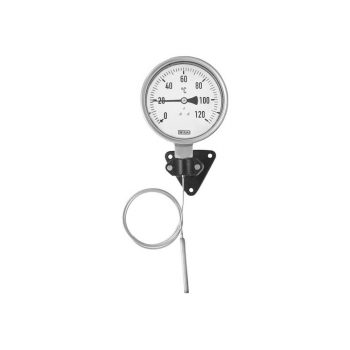
- Case and stem made of stainless steel
- Design per DIN EN 13190
- Different designs of connection and mounting
- With capillary
- With various fixed connections
|
Datasheet
|
|
User Manual
|
|
Datasheet
|
|
User Manual
|
|
Datasheet
|
|
User Manual
|
|
User Manual
|
|
User Manual
|
|
User Manual
|
|
Datasheet |
| User Manual |
- Reliable and cost-effective
- Design per EN 837-1 or ASME B40.100
- Nominal size 40 [1 ½"], 50 [2"], 63 [2 ½"], 80 [3"], 100 [4"] and 160 [6"]
- Scale ranges to 0 ... 400 bar [0 ... 6,000 psi]
|
Datasheet |
- Excellent load-cycle stability and shock resistance
- All stainless steel construction
- German Lloyd approva
- Scale ranges up to 0 … 1,600 bar
| Datasheet |
| User Manual |
- Very good vibration and shock resistance
- Especially robust design
- Type approval for the shipbuilding industry
- Scale ranges to 0 ... 1,000 bar or 0 ... 15,000 psi
|
Datenblatt
|
|
Bedienungsanleitung
|
- Long service life, robust
- Cost-effective and reliable
- To combine with WIKA diaphragm seals
- German Lloyd approval
- Scale ranges up to 0 … 1,000 bar
| Datasheet |
| User Manual |
- With one or two adjustable microswitches
- Shatterproof window and robust aluminium or stainless steel measuring chamber for increased requirements
- Optionally with approvals for hazardous areas
- High ingress protection, IP65, for outdoor use and processes with high condensation
- Low measuring range from 0 ... 250 mbar
| Datasheet |
| User Manual |
- Transmission of process values to the control room (e.g. 4 ... 20 mA)
- Shatterproof window and robust aluminium or stainless steel measuring chamber for increased requirements
- Optionally with approvals for hazardous areas
- High ingress protection, IP65, for outdoor use and processes with high condensation
- Low measuring range from 0 ... 160 mbar
| Datasheet |
| User Manual |
- Shatterproof window and robust aluminium or stainless steel measuring chamber for increased requirements
- Low scale ranges from 0 ... 160 mbar
- High accuracy down to 1.6 %
- Optionally with approvals for hazardous areas
- Helium leak tested
| Datasheet |
| User Manual |
- Scale ranges from 0 ... 0.6 bar to 0 … 1,000 bar
- Two process connections and two independent pointers
- Differential pressure display with moving dial
- Cost-effective and reliable
| Datasheet |
| User Manual |
- Measuring ranges from 0 … 0.05 to 0 … 1,000 bar
- Non-linearity 0.25 % or 0.5 %
- Output 4 ... 20 mA, DC 0 ... 10 V, DC 0 ... 5 V and others
- Electrical connection: Angular connector form A and C, circular connector M12 x 1, cable outlet 2 m
- Process connection G ¼ A DIN 3852-E, ¼ NPT and others
|
Datasheet |
| User Manual |
Industrial boiler systems
Industrial boiler systems form the foundation for the reliable provision of process heat, steam or
hot water in commercial and industrial applications. They are used wherever large amounts of heat
are required continuously or in peak loads – such as in food production, the chemical industry,
metal processing, the textile sector or other energy-intensive industrial processes.
These systems are characterised by robust construction, high performance and extensive
safety equipment. Modern industrial boilers operate with precise measurement and control technology
to reliably monitor temperatures, pressures and flow rates. This is essential to ensure safe operation,
exploit efficiency potential and detect malfunctions at an early stage.
Special requirements for industrial boiler systems
- High thermal output for continuous or variable process requirements
- Strict safety standards and monitoring of critical operating parameters
- Efficient heat transfer to reduce energy losses
- Reliable operation even under demanding conditions
- Integration into automated process chains and control systems
- Long-term cost efficiency through optimised fuel consumption
Depending on the application, design, fuel type and control technology vary considerably.
Classic steam boilers are used in production processes, while hot water boilers
are preferred for large heating systems. Firing systems, pressure maintenance components and
heat exchangers are just as much a part of the equipment as a dense network of sensors and
safety-oriented monitoring technology.
Types of industrial boiler systems and typical measurement parameters
| Boiler type | Application | Relevant measurement parameters | Special characteristics |
|---|---|---|---|
| Steam boiler (high pressure / low pressure) | Industrial production, chemical industry, food sector | Boiler pressure, steam temperature, water level, fuel consumption | High performance, critical safety monitoring required |
| Hot water boiler | Process heat, large heating systems, logistics centres | Flow/return temperature, system pressure, heat quantity | Ideal for consistent heat supply with high flow rates |
| Thermal oil boiler | Processes requiring high temperatures without overpressure | Oil temperature, differential pressure, flow rate | Very high flow temperatures up to over 300 °C possible |
| Biomass boiler | Industry, commercial sector, sustainable energy supply | Fuel moisture, flue gas temperature, boiler pressure | Uses renewable energy, higher requirements for fuel handling |
| Large gas/oil boiler | Industry, hospitals, district heating | Flue gas values, burner output, temperatures, pressures | Reliable technology, often used in modular heating centres |
The efficiency of industrial boiler systems depends largely on the precise monitoring of all relevant
measurement parameters. Temperature and pressure sensors ensure safe operating conditions, flow meters
allow detailed analysis of heat transfer, and heat meters support the assessment of energy consumption.
With modern digital monitoring and control systems, operators can identify energy-saving potential,
optimise maintenance cycles and minimise downtime.
Overall, industrial boiler systems are an essential component of energy supply technology in many industries.
Their performance and reliability are crucial for stable production processes and economically efficient operations.
- Reliable and cost-effective
- Design per EN 837-1 or ASME B40.100
- Nominal size 40 [1 ½"], 50 [2"], 63 [2 ½"], 80 [3"], 100 [4"] and 160 [6"]
- Scale ranges to 0 ... 400 bar [0 ... 6,000 psi]
|
Datasheet |
- Excellent load-cycle stability and shock resistance
- All stainless steel construction
- German Lloyd approva
- Scale ranges up to 0 … 1,600 bar
| Datasheet |
| User Manual |
- Very good vibration and shock resistance
- Especially robust design
- Type approval for the shipbuilding industry
- Scale ranges to 0 ... 1,000 bar or 0 ... 15,000 psi
|
Datenblatt
|
|
Bedienungsanleitung
|
- Long service life, robust
- Cost-effective and reliable
- To combine with WIKA diaphragm seals
- German Lloyd approval
- Scale ranges up to 0 … 1,000 bar
| Datasheet |
| User Manual |
- Measuring ranges from 0 … 0.05 to 0 … 1,000 bar
- Non-linearity 0.25 % or 0.5 %
- Output 4 ... 20 mA, DC 0 ... 10 V, DC 0 ... 5 V and others
- Electrical connection: Angular connector form A and C, circular connector M12 x 1, cable outlet 2 m
- Process connection G ¼ A DIN 3852-E, ¼ NPT and others
|
Datasheet |
| User Manual |
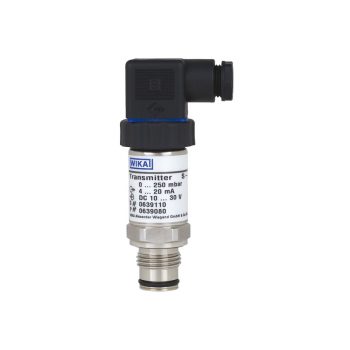
- High-quality product
- Many configurations possible
- Flush process connection
- Large stocks for short delivery times
- Vacuum-tight
| Datasheet |
| User Manual |
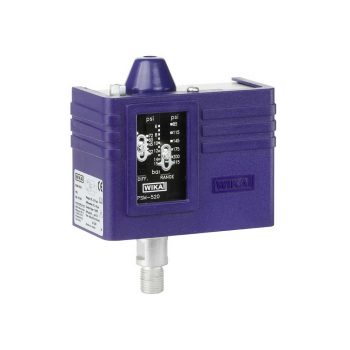
- Adjustable on site
- Protection cap for switch point adjustment
- Setting ranges: -0.4 ... +7 to 6 ... 30 bar -6 ...100 to 85 ... 425 psi -0.04 ... +0.7 to 0.6 ... 3 MPa
- Electrical rating up to AC 230 V, 50/60 Hz, 10 A
| Datasheet |
| User Manual |

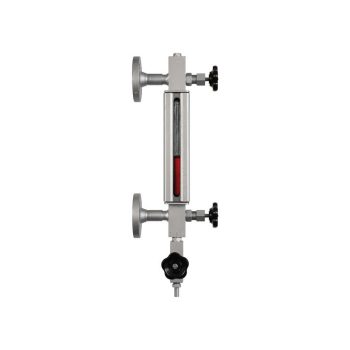
- Process- and procedure-specific production
- Operating limits: - Operating temperature: -196 ... +374 °C 1) - Operating pressure: Vacuum to 250 bar 1)
- Wide variety of different process connections and materials
- Illumination optional
- Heating and/or insulation optional
| Datasheet |
| User Manual |
Ventilation and air handling systems (HVAC)
Ventilation and air handling systems (HVAC) ensure controlled supply and exhaust air in buildings and are
essential for a healthy, comfortable and energy-efficient indoor climate. They provide filtration,
temperature control, humidification or dehumidification, as well as CO2 regulation,
ensuring optimal conditions for people, processes and sensitive equipment. Reliable air handling is
particularly indispensable in work environments, public buildings, production facilities or laboratories.
Modern HVAC systems operate energy-efficiently and use heat recovery systems, precise
sensor technology and intelligent control mechanisms to continuously optimise air quality,
temperature and humidity. Key measurement parameters include air flow rates, pressures, humidity levels,
CO2 concentrations and temperatures – enabling demand-oriented control and high operational
reliability. The use of sensors and monitoring also helps reduce energy consumption and detect
operational disturbances at an early stage.
Typical functions and advantages of HVAC systems
- Ensuring hygienic, controlled air exchange
- Filtration of particles, pollutants and aerosols
- Regulation of indoor temperature and humidity
- CO2 and VOC monitoring for improved indoor air quality
- Heat recovery to reduce energy consumption
- Stabilisation of process and production conditions
Depending on the application, design, performance and functionality of HVAC systems differ significantly.
While simple ventilation units with heat recovery are sufficient for residential buildings,
industrial systems require extensive filtration stages, precise pressure regulation or controlled
climate zones. Particularly strict requirements apply in cleanrooms, operating theatres or
production environments with sensitive materials.
Typical HVAC systems and relevant measurement parameters
| System type | Application | Important measurement parameters | Special characteristics |
|---|---|---|---|
| Central ventilation system | Office buildings, schools, public buildings | Airflow rate, CO2, temperature, humidity | Efficient heat recovery, centralised air distribution |
| Residential ventilation system | Residential buildings, energy renovations | Air volume, temperature, humidity | Compact design, reduced ventilation heat losses |
| Industrial air handling unit | Production, storage, manufacturing | Differential pressure, filter status, process air parameters | High air volumes, robust design, variable control |
| Cleanroom ventilation | Pharma, electronics, medical technology | Particle concentration, pressure levels, temperature, humidity | Very high requirements for hygiene, filtration and stability |
| Laboratory and safety ventilation | Research, chemical industry, healthcare facilities | Exhaust airflow, negative pressure, pollutant measurement | Protection against hazardous substances, controlled pressure zones |
A professionally planned HVAC system significantly contributes to lower energy costs, improved
user comfort and safe system operation. With modern sensor technology – such as for airflow,
differential pressure, CO2 content or humidity – air quality standards can be reliably
met while simultaneously collecting operational data for maintenance and optimisation. This makes
HVAC systems an indispensable component of modern building technology.
Overall, HVAC systems enable sustainable and controlled air supply in buildings and industrial environments.
They not only improve air quality and hygiene but also contribute significantly to energy efficiency –
especially through heat recovery and demand-based control.

- Output signal 0 ... 10 V or 4 ... 20 mA
- Maintenance-free
- Simple operation
- High accuracy
| Datasheet |
| User Manual |

- Electrical output signal 0 ... 10 V or 4 ... 20 mA, can be selected directly at the instrument via jumpers
- Modbus® output signal (option)
- LC display (option)
- Maintenance-free
- Maximum operating pressure 20 kPa
| Datasheet |
| User Manual |

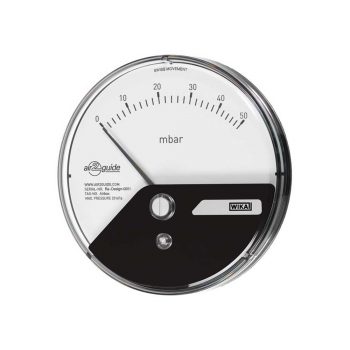
- Very small insertion depth
- Simple and fast mounting via threaded bezel
- Separated construction of measuring chamber and display area
- Integrated sealing element for direct mounting in a ventilation duct
- Individual design of dial and scale possible
| Datasheet |
| User Manual |
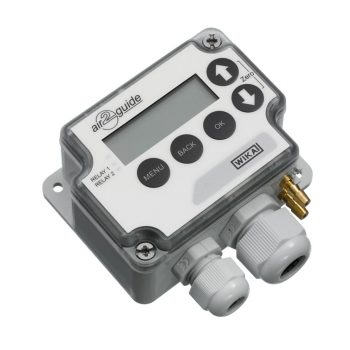
- Electrical output signal 0 ... 10 V (3-wire)
- Simple and quick mounting
- Maintenance-free
- Maximum operating pressure 20 kPa
| Datasheet |
| User Manual |
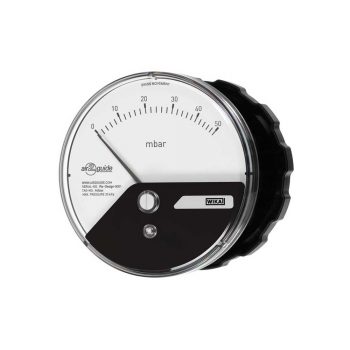
- Fast, tool-free mounting via threaded bezel
- Separated construction of pressure measurement chamber and display area
- Integrated sealing element for direct installation in a ventilation duct or instrument panel
- Available as a built-in or add-on version
- Individual design of dial and scale possible
| Datasheet |
| User Manual |
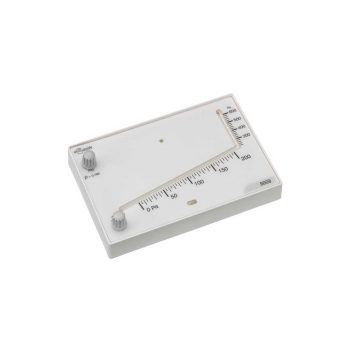
For ventilation and air-conditioning
Datenblatt
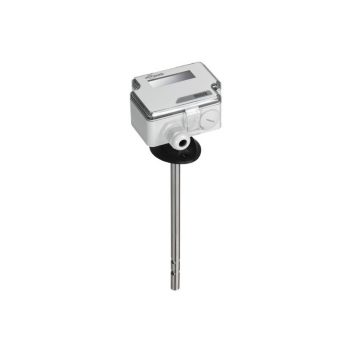
- Electrical output signal DC 0 … 10 V or 4 … 20 mA, can be selected directly at the instrument via jumpers
- Output signal for velocity and air temperature in one instrument
- With switching output
- Mounting flange for mounting on circular ventilation pipes or rectangular ventilation ducts
- Maintenance-free
|
Datasheet
|
|
User Manual
|
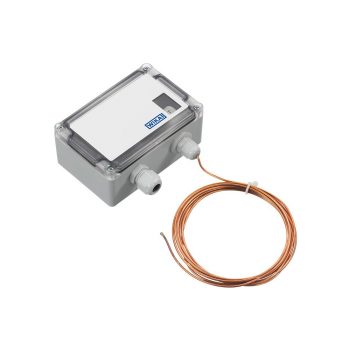
- Simple mounting
- Compact and heavy-duty version
- High reproducibility
- Integrated switching output
- With automatic resetting
| Datasheet |
| User Manual |
The continuous advancement of modern control and monitoring systems plays a central role in the
efficiency and operational safety of all heating, air conditioning and ventilation technologies.
Intelligent controls, networked sensor technology and IoT-based monitoring solutions enable precise
adaptation to current demand and contribute significantly to reducing energy consumption and operating costs.
At the same time, they increase comfort by visualising operating conditions transparently and performing
automatic optimisations.
To successfully implement this technological progress, reliable partners with sound expertise,
extensive experience and a clear vision for future developments are essential. They support the
efficient planning, safe operation and sustainable further development of modern systems. This results
in building technology that not only meets current requirements but is also designed for long-term
efficiency, safety and sustainability.