


Measurement Technology in the Semiconductor Industry
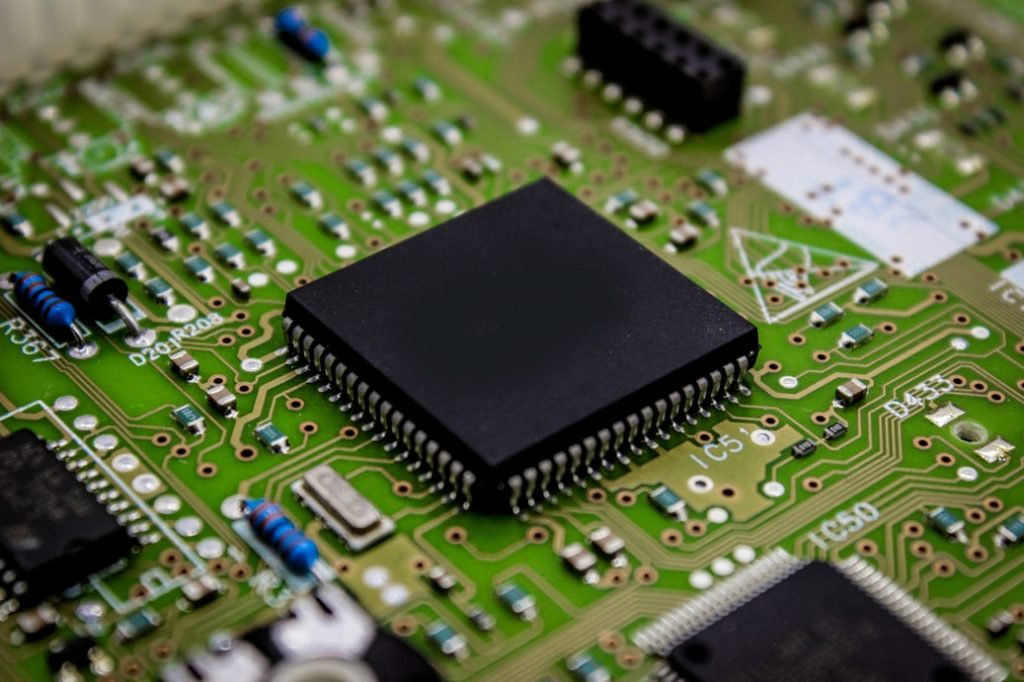
Photo by Bermix Studio on Unsplash
The semiconductor industry is one of the most precise and complex production environments in the world.
Every single process step – from wafer manufacturing through lithography, etching processes and
coating processes to testing and quality assurance – requires precisely defined and
always reproducible conditions. Even the smallest deviations in temperature, pressure,
flow or media purity can impair the functionality of entire components.
For this reason, measurement technology is of central importance for the entire value chain
of semiconductor production. Sensors, measurement systems and test procedures enable the continuous
monitoring of critical parameters and ensure that production equipment operates in a stable, reliable and
standards-compliant manner. Modern measurement technology thus makes a decisive contribution to process quality,
yield, operational safety and economic efficiency in cleanrooms and
production facilities.
The following overview shows which measured variables are particularly important in semiconductor manufacturing,
which challenges exist and which technical solutions are typically used in different
process areas. The aim is to provide a deep understanding of the role that precise measurement and monitoring
systems play in achieving stable and high-quality production results.
Central Measured Variables and Requirements in Semiconductor Manufacturing
In semiconductor manufacturing, numerous physical, chemical and technical variables
must be permanently monitored and controlled. The goal is a highly stable and reproducible
process environment in which all operations take place within tightly defined tolerance limits.
Measurement technology takes on the task of recording relevant conditions in real time, detecting deviations
at an early stage and enabling targeted control.
Key Measured Variables at a Glance
-
Pressure: Monitoring of process gases, vacuum levels and differential pressures
between cleanroom zones. -
Temperature: Control of thermal processes such as diffusion, oxidation,
annealing as well as stabilization of media and equipment. -
Flow: Precise dosing of gases, chemicals and ultrapure water
in process and supply systems. -
Level: Monitoring of chemical and storage tanks for
safe and uninterrupted supply. -
Media purity: Measurement of conductivity, TOC (Total Organic Carbon),
particle content or metal ion concentration in ultrapure water and chemicals. -
Air and cleanroom parameters: Differential pressure, humidity, temperature
and particle concentration in cleanrooms and airlocks. -
Electrical quantities: Current, voltage, resistance, capacitance or
leakage currents during testing, characterization and quality assurance of components.
Requirements for Measurement Technology in the Semiconductor Industry
Measuring instruments and sensors in the semiconductor industry must meet special requirements.
In addition to accuracy and stability, aspects such as cleanroom suitability, chemical
resistance, long-term drift and the possibility of traceable calibration play a central
role.
- High measuring accuracy and resolution with very small tolerance ranges
- Long-term stable sensors with minimal drift
- Resistance to aggressive chemicals and high-purity media
- Cleanroom-compatible designs with smooth, easy-to-clean surfaces
- Possibility of regular, traceable calibration
- Integration into higher-level control and fieldbus systems
- High signal quality and immunity to interference in EMC-critical environments
Typical Measured Variables and Areas of Application
| Measured variable | Typical requirements | Examples of areas of application |
|---|---|---|
| Pressure |
High accuracy, fast response time, measurement from vacuum to overpressure, suitable materials for high-purity gases. |
Vacuum chambers, process gas lines, differential pressure monitoring of filters and cleanroom zones. |
| Temperature |
Stable measurement over wide temperature ranges, low heat dissipation, reproducible measurement results. |
Diffusion furnaces, oxidation systems, annealing processes, reactors, media and cooling circuits. |
| Flow |
High reproducibility even at very low flow rates, small dead volumes, chemically resistant materials. |
Process gas supply, dosing of cleaning and etching chemicals, ultrapure water distribution. |
| Level |
Reliable detection with aggressive media, foam, vapors or narrow tank geometries. |
Chemical tanks, ultrapure water tanks, buffer and storage tanks in supply systems. |
| Media purity |
Very low detection limits, fast response times, stable and reproducible measurement methods. |
Quality monitoring of ultrapure water, process chemicals and rinsing solutions. |
| Cleanroom parameters |
Precise detection of particle count, humidity and differential pressure, continuous monitoring. |
Cleanrooms, airlocks, filter monitoring, monitoring of HVAC systems. |
| Electrical quantities | High precision, defined test procedures, automatable measuring and test sequences. | Wafer and device tests, end-of-line test stands, reliability and burn-in tests. |
The diversity of measured variables makes it clear that measurement technology in the semiconductor industry is not
limited to individual sensors or test stations, but is an integral part of almost all
process and supply systems. A carefully considered selection and combination of suitable
measurement methods forms the basis for stable processes and consistently high product quality.
Application Areas of Measurement Technology in Semiconductor Production
Semiconductor manufacturing comprises numerous highly specialized process steps, all of which depend on
precise measurement and monitoring technology. The requirements differ depending on
the application, but the goal always remains the same: to ensure stable, reproducible and
standards-compliant production conditions.
1. Process Gas Supply
Process gases are used in almost all production steps – including lithography,
etching processes, doping and coating methods such as CVD or ALD. Gas quality and
process stability depend directly on precise measurement and control technology.
- Monitoring of pressure and differential pressure in gas lines
- Measurement of extremely low flow rates of high-purity gases
- Leak detection and tightness testing
- Temperature stabilization for constant gas density
2. Ultrapure Water and Chemical Supply
Ultrapure water (UPW) and high-purity chemicals are essential to keep wafer and device
surfaces free from particles and contamination. Measurement technology monitors
the quality, purity and constant supply of these media.
- Measurement of conductivity, TOC and particle load
- Monitoring of levels in storage and process tanks
- Control of flow and temperature in supply systems
- Monitoring of chemical concentrations and media purity
3. Thermal Process Control
Many process steps – such as oxidation, diffusion or annealing processes – are strongly
temperature-dependent. Deviations in the temperature profile can create structural defects or
change material properties.
- Monitoring of furnace temperatures and process chambers
- Precise temperature measurement in rapid thermal processes
- Temperature stabilization of chemicals and ultrapure water
4. Pressure and Vacuum Technology
Pressure conditions play a decisive role in etching processes, deposition methods and
transfer processes. Measurement technology is used here both for process control and for
safety technology.
- Vacuum monitoring in reactors and coating chambers
- Control of pressure gradients between cleanroom zones
- Control of gas pressures in plasma, etching and coating processes
5. Cleanroom Monitoring
Cleanrooms are one of the most important environmental conditions in the semiconductor industry. The
parameters prevailing there must be continuously recorded in order to prevent particle contamination and
production downtimes.
- Measurement of particle concentration and particle size
- Monitoring of humidity, temperature and differential pressure
- Continuous monitoring in accordance with international cleanroom standards
6. Electrical Test and Measurement Procedures
Electrical characterization forms the final quality stage of
semiconductor manufacturing. Measurement technology supports test procedures that ensure
that components are functional, reliable and compliant with standards.
- Precise measurements of voltage, current and resistance
- End-of-line tests and burn-in monitoring
- Determination of capacitances, leakage currents and other functional parameters
Tabular Overview
| Area | Measurement tasks | Importance for process quality |
|---|---|---|
| Process gas supply | Pressure, flow, temperature, tightness | Constant gas purity and stable reaction conditions |
| Ultrapure water and chemical supply | Conductivity, TOC, level, flow | Avoidance of contamination and process disruptions |
| Thermal processes | Temperature profiles, stability, ramps | Exact reproducibility of material-dependent steps |
| Pressure and vacuum technology | Pressure level, leak rate, differential pressure | Stable plasma and deposition conditions |
| Cleanroom monitoring | Particle count, temperature, humidity, differential pressure | Prevention of contamination events |
| Electrical tests | Current, voltage, capacitance, impedance | Ensuring functionality and reliability |
The examples mentioned show that measurement technology throughout the entire production process not only
plays a supporting role, but is a fundamental prerequisite for stable and high-performance
manufacturing processes. Without precise measurement systems, the production of modern
semiconductor components in their current form would not be possible.
Process Stability and Quality Assurance through Measurement Technology
One of the greatest challenges in semiconductor manufacturing is
to produce millions of highly complex structures in the smallest space with consistently high quality.
Process stability is directly dependent on the accuracy
and reliability of the measurement and monitoring systems used. Only when all
relevant parameters are continuously recorded and documented can
fluctuations be minimized and reproducible results ensured.
Importance of Process Stability
Precise measurement technology makes it possible to detect deviations at an early stage before
they affect production success. This is crucial, as even
minor instabilities can impair the electrical function of a component
or significantly reduce yield.
- Reduction of process fluctuations through close-meshed monitoring
- Increased reproducibility over many production runs
- Avoidance of scrap and rework costs
- Continuous monitoring of critical process steps
Role of Measurement Technology in Quality Assurance
Quality assurance does not start at final testing; it accompanies the entire
production process. Modern measurement technology enables the acquisition, evaluation and
documentation of all quality-related parameters in real time. This creates transparency
and forms the basis for continuous optimization of the process chain.
- Traceable documentation of all measurement and process data
- Monitoring of defined process windows to comply with international standards
- Comparison and analysis of historical measurement series for process optimization
- Fast fault diagnosis based on consistent data
Typical Measuring Points in Quality Assurance
| Area | Measuring points | Objective of monitoring |
|---|---|---|
| Cleanroom | Particle count, differential pressure, temperature, humidity | Prevention of contamination events |
| Process equipment | Pressure, temperature, gas flow, vacuum level | Stabilization of chemical and physical processes |
| Chemical and ultrapure water quality | Conductivity, TOC, metal ion content | Ensuring defined media purity |
| Electrical tests | Voltage, current, capacitance, leakage currents | Testing the functionality of finished components |
| Supply systems | Levels, pressure levels, flow rates | Ensuring uninterrupted supply |
Benefits of Consistent Quality Assurance
A measurement-driven quality strategy not only improves production quality,
but also has a positive impact on organizational and economic factors.
- Higher yield due to stable process parameters
- Transparent and audit-proof documentation
- Reduced maintenance and material costs
- Better predictability of process behavior
- Compliance with international quality standards
Overall, precise measurement technology makes a decisive contribution to ensuring
process reliability and product quality in semiconductor production over the long term. It forms
the technical basis for a modern, efficient and stable production environment.
Requirements for Measurement Technology in the Semiconductor Industry
The special conditions of semiconductor production place high demands on measuring instruments,
sensors and test procedures. Many measuring points are located in cleanrooms, aggressive
chemicals, vacuum areas or complex system structures. At the same time, measured values
must always be traceable, stable and highly precise. Measurement technology therefore not only serves
process control, but is an integral part of production quality.
Design and Materials
Components used in the semiconductor industry must withstand both chemical and
physical stresses. This applies in particular to measuring devices that come into contact with high-purity
gases, ultrapure water or aggressive chemicals.
- Chemically resistant materials such as stainless steel, PFA, PTFE or high-purity metals
- Smooth, easy-to-clean surfaces for cleanroom use
- Minimization of dead volumes to prevent residues
- Suitable seals for media-critical applications
Measurement Accuracy and Stability
As many process steps take place within narrow tolerance ranges, the highest measuring accuracy and
long-term stability of sensors are necessary. Low drift values are also essential to
ensure reproducible process conditions.
- Measurement accuracies in the low percent or per mille range
- High resolution for very small process variations
- Low drift over long periods of operation
- Fast response times for dynamic processes
Cleanroom Suitability
Measuring devices must be integrated into cleanrooms in such a way that they neither introduce particles nor
negatively influence airflow. This concerns both the design and the materials and
installation methods.
- Low-particle design and assembly
- Low emission of outgassing or volatile components
- Compatibility with cleanroom cleaning and disinfection
- Device design according to ISO cleanroom classes
Calibratability and Traceability
To ensure consistent measurement quality, measuring devices must be calibrated regularly and
their values documented in a traceable manner. This is particularly relevant for audits and international
standard requirements.
- Regular, traceable calibration of all measuring points
- Documentation according to international standards (e.g. ISO/IEC 17025)
- Support for test reports and digital measurement data formats
- Minimization of calibration intervals through stable measurement technology
Integration into Process and Control Technology
Modern production facilities in the semiconductor industry are highly automated. Measuring devices
must therefore be seamlessly integrated into existing systems and ensure fast and
interference-free communication.
- Support for common interfaces and fieldbus protocols
- High signal quality and EMC immunity
- Easy integration into monitoring and automation systems
- Ability to network multiple measuring points
Comparison of Typical Requirements
| Requirement | Description | Relevant areas of application |
|---|---|---|
| Chemical resistance | Materials must withstand aggressive media and high purity. | Chemical supply, ultrapure water, wet processes |
| High measuring accuracy | Tight tolerances require precise sensors and low measurement deviations. | Vacuum technology, temperature processes, gas flow |
| Cleanroom suitability | Components must not emit particles or influence airflows. | Cleanrooms, airlocks, measuring points near wafer processing |
| Documentation & traceability | Measured values must be stored, evaluated and calibrated without gaps. | Quality management, audit processes, final tests |
| Automation capability | Measuring points must be integrated into complex systems. | Production facilities, supply systems, monitoring |
In summary, the semiconductor industry requires measurement technology that meets both the extreme
purity and precision requirements and is also long-term stable, audit-capable and
integrable into processes. Only in this way can modern production processes be operated at the required
quality and speed.
Future Trends and Further Development of Measurement Technology in the Semiconductor Industry
The semiconductor industry is continuously evolving – with ever smaller
structure sizes, more complex materials and higher demands on purity and
process reliability. In parallel, the need for modern measuring systems that meet these
developments is also increasing. The measurement technology of the future must not only become more precise, but
also smarter, faster and more networked.
1. Higher Precision and Smaller Tolerances
With the transition to structure sizes in the single-digit nanometer range, the limit
of what is technically measurable is shifting. Measuring devices must be able to detect extremely small changes
while remaining stable in the long term.
- Further development of high-resolution sensors
- Reduction of drift and temperature dependencies
- Improved calibration methods for nanometer-accurate measurements
2. Digitalization and Networked Measuring Systems
With the increasing automation of modern production facilities, the importance of digital
interfaces and intelligent sensor technology is growing. Measurement technology is increasingly becoming part of comprehensive
data ecosystems.
- Integration of sensors into cloud-based monitoring systems
- Automatic analysis of large measurement data sets in real time
- Networking of different measuring points for a complete process representation
- Support for modern communication protocols
3. Inline and Real-Time Measurement
While many process data used to be recorded with a time delay, the industry is increasingly relying on
inline measurement technology directly in the process. This makes it possible to detect and avoid errors immediately.
- Continuous monitoring without interrupting production
- Faster reaction to deviations
- Optimization of process windows through live data
4. Advances in Material and Sensor Technology
New semiconductor materials such as silicon carbide (SiC), gallium nitride (GaN) or innovative
packaging methods also place new demands on measurement technology. Many processes require
sensors that operate reliably under extreme conditions.
- More chemically resistant components for highly reactive process media
- Higher temperature resistance and lower drift
- Sensors for tight installation spaces and complex system geometries
5. Predictive Maintenance through Process Data Analysis
Extensive data acquisition and the use of modern analysis methods make it possible to detect
wear, drift or functional deviations at an early stage. This reduces downtime and
improves process reliability.
- Analysis of historical measurement data for pattern recognition
- Early identification of unstable components
- Optimization of maintenance intervals based on real measured values
Tabular Overview of Future Developments
| Trend | Technical significance | Impact on production |
|---|---|---|
| Higher measuring accuracy | Improved sensor resolution and lower drift | More precise process control for nanostructures |
| Digital networking | Faster data exchange and extended analysis options | Transparent real-time process monitoring |
| Inline measurement technology | Measurement directly in the process without delay | Reduced scrap rates and more stable processes |
| New sensor materials | Higher resistance and more specific application possibilities | Reliable measurements under extreme conditions |
| Predictive maintenance | Data-driven condition monitoring of equipment | Less downtime and optimized maintenance cycles |
The further development of measurement technology is a key factor for the future success of the
semiconductor industry. Advances in precision, digitalization and sensor technology will
increasingly determine how stable, efficient and powerful modern
production processes can be designed.
Conclusion
Measurement technology plays a central role in the semiconductor industry and forms the basis for
precise, reproducible and safe production processes. In no other industry do
the smallest deviations have such a direct impact on quality, yield and reliability as in the
manufacture of modern semiconductor components. Pressure, temperature, flow, media purity and
cleanroom parameters must always be monitored precisely to ensure stable process conditions.
The requirements for measuring systems are correspondingly high: in addition to the highest accuracy and
long-term stability, cleanroom suitability, chemical resistance and seamless
traceability are essential. In addition, measuring devices must be integrated into complex system structures and
digital process control systems in order to enable comprehensive and continuous
monitoring.
With progress towards smaller structure sizes, new materials and more networked
production lines, measurement technology is gaining further importance. Real-time measurement, intelligent
data analysis, automated calibration processes and networked sensor technology are becoming increasingly
important building blocks of future semiconductor production.
Overall, it is clear that modern semiconductor production in its current form would not be possible
without precise and reliable measurement technology. It ensures that complex
production processes remain stable, high quality standards are maintained and the
technological developments of the industry are sustainably supported.
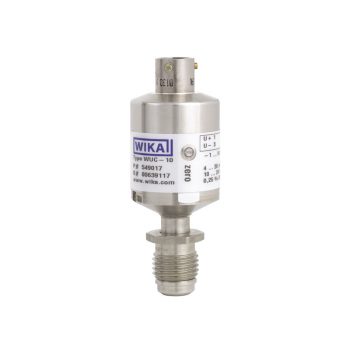
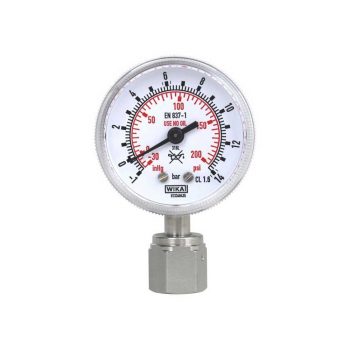
- VCR® compatible face seal fittings
- Helium leak tested
- Electropolished case
- Process connection surface finish Ra ≤ 0.25 μm
 Datasheet Datasheet |
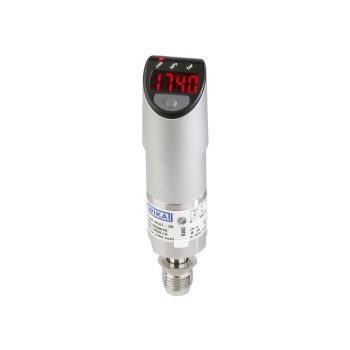
- High-accuracy pressure measurement 0.15 % RSS
- Excellent long-term stability
- Signal noise cancellation and shielding
- Vacuum-referenced pressure measurement
- Active temperature compensation
| Datasheet |
| User Manual |
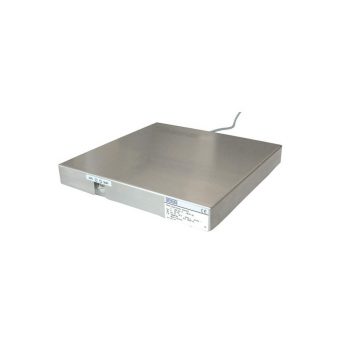
- High overload protection up to 400 %
- 0.1 % FS Accuracy
- Meets the highest EMC requirements
- Measuring ranges 0 ... 27.22 kg to 0 ... 136.08 kg [0 ... 60 lbs to 0 ... 300 lbs]
- High ingress protection, IP65, for outdoor use and processes with high condensation

 Datasheet Datasheet |
| User Manual |
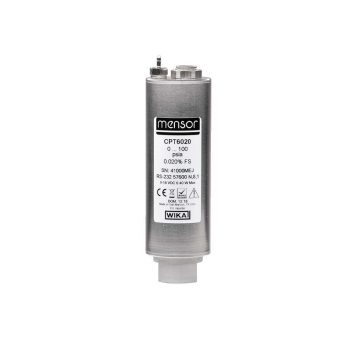
- Accuracy: 0.020 % FS
- Measuring range: 25 mbar ... 1,001 bar [10 inH2O ... 15,015 psi]
- Temperature compensation: 0 ... 50 °C [32 ... 122 °F]
- RS-232 or RS-485 communication
- Rugged and compact design
 Datasheet Datasheet
|
|
User Manual
|
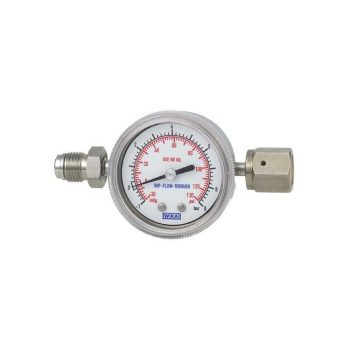
- Dead space free media chamber
- Excellent rinsing behaviour
- Helium leak tested, leak rate ≤ 10-9mbar · l/s
- Case and media chamber electropolished, surface roughness Ra ≤ 0.25 μm
- All ultra high purity gas fittings available
|
Datasheet |
| User Manual |
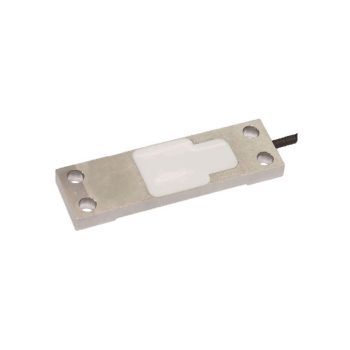
- Strain of 0 … 200 με to max. 0 … 1,000 με
- Can be retrofitted, easy installation with M6-screws
- Total error < 1 % Fnom
- Electrical connection as cable, with plug-in radio module, display or junction box.
| Datasheet |
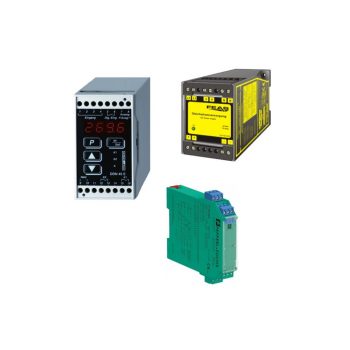
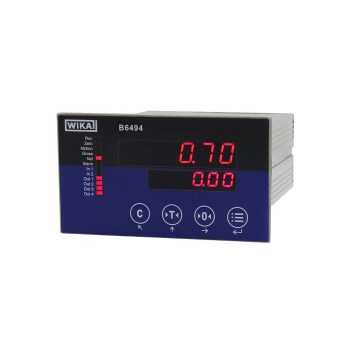
- Dual mV/V display
- 2x digital input and 4x digital output
- Integrated multiple signal outputs available
- Serial interface, RS-232 or RS-485
- Ingress protection IP65
| Datasheet |