


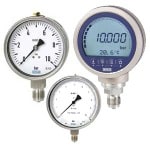
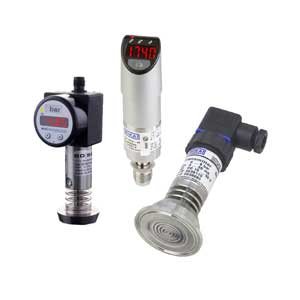
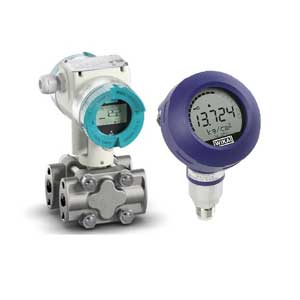
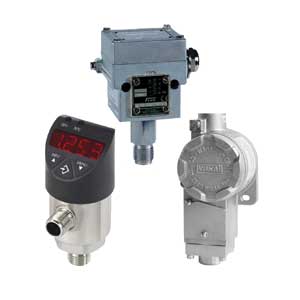





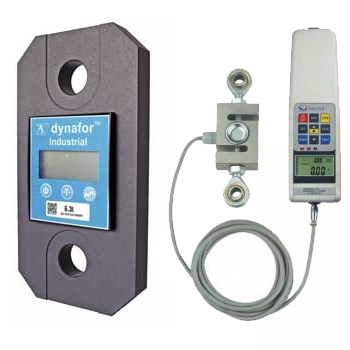
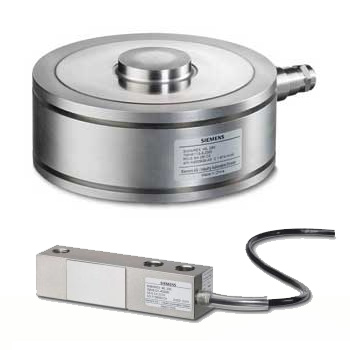
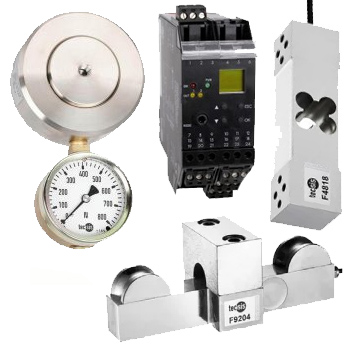
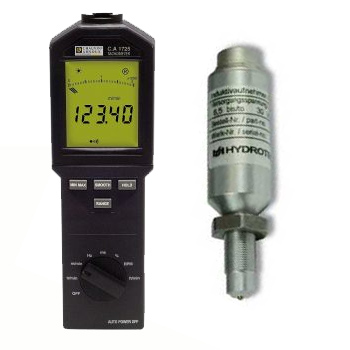




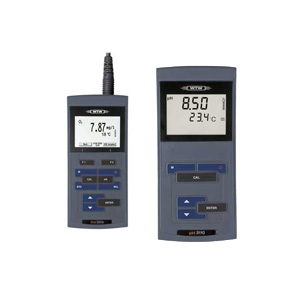




























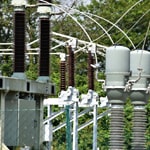

The strain gauge (DMS) bridge is an essential instrument in metrology, used to measure mechanical deformations in materials and components. It is based on the principle of electrical resistance change, which occurs when a material is stretched or compressed. This technology is widely used in industry, particularly in force, pressure, and strain measurement.
Basics of the Strain Gauge Bridge
A strain gauge bridge consists of multiple strain gauges arranged in a so-called Wheatstone bridge. This electrical circuit enables highly precise detection of small resistance changes caused by mechanical deformation. Main components of a strain gauge bridge:- Strain gauge (DMS): Sensors attached to a substrate whose electrical resistance changes when stretched.
- Wheatstone bridge: An electrical circuit consisting of four resistors that can measure changes in resistance values.
- Power source: Provides electrical voltage within the bridge circuit.
- Measuring device: Detects changes in bridge voltage and converts them into measurable values.
Functionality of the Strain Gauge Bridge
The functionality of a strain gauge bridge is based on the deformation of a material to which the strain gauge sensors are adhered or otherwise attached. This deformation leads to a change in the electrical resistance of the strain gauge. The Wheatstone bridge converts these resistance changes into a voltage that can be measured and analyzed. Measurement principle:- When the component is loaded, its shape changes slightly.
- The strain gauge undergoes elongation or compression.
- This strain causes a change in electrical resistance.
- The Wheatstone bridge amplifies this change and converts it into a voltage.
- The voltage is converted into a physical quantity, such as force or pressure.
Types of Bridges in Strain Gauge Technology
There are different configurations of the Wheatstone bridge, which vary in terms of sensitivity and compensation properties:| Bridge Type | Description | Advantages |
|---|---|---|
| Quarter Bridge | Only one active strain gauge, the remaining resistors are fixed references. | Simple design, cost-effective |
| Half Bridge | Two active strain gauge sensors that complement each other. | Higher sensitivity, temperature compensation |
| Full Bridge | All four resistors are strain gauge elements. | Highest accuracy, low interference |
Applications of the Strain Gauge Bridge
Strain gauge bridges are used in many areas of industry. They are particularly applied where forces, strains, or pressures need to be measured precisely:- Mechanical engineering: Load analysis on components and materials.
- Aerospace: Fatigue testing and structural analysis.
- Automotive industry: Crash tests and load measurements on vehicle structures.
- Medical technology: Sensors for prosthetics and orthotics.
- Civil engineering: Monitoring the structural integrity of bridges, tunnels, and buildings.
Advantages and Challenges
The strain gauge bridge offers numerous advantages that make it an indispensable tool in metrology. However, there are also challenges to consider when using it.| Advantages | Challenges |
| High sensitivity and precision | Requires complex calibration |
| Direct conversion of strain into electrical signals | Temperature influences must be compensated |
| Use in various materials and environments | Mechanical attachment requires care |
| Compact design and lightweight | External interference can affect measurement results |
Conclusion
The strain gauge bridge is a precise and versatile method for measuring mechanical loads. Its high sensitivity and adaptability make it an essential technology in many industrial sectors. Despite some challenges, such as temperature drift or calibration effort, the advantages significantly outweigh them, especially in applications requiring the highest accuracy. Whether in mechanical engineering, aerospace, or medical technology – the strain gauge bridge remains an indispensable tool for precise measurement of mechanical deformations and forces.
- Dead-space free hygienic design with thick-walled sensor tube from stainless steel
- In-line pressure measurement with sensor tube without system fill fluid
- Continuous sensor monitoring of the double-tube system prevents contamination of process and environment
- Suitable for SIP and CIP
- EHEDG-certified and 3-A-compliant

 Datasheet Datasheet |
| User Manual |
 Datasheet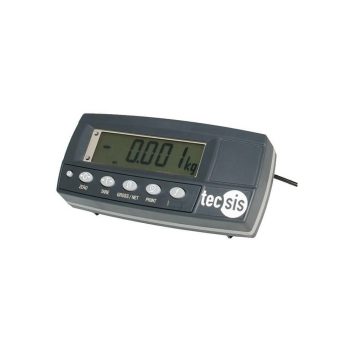
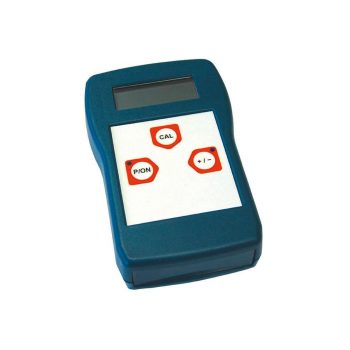
- 6-digit liquid crystal display (LCD) with backlighting
- Extensive functions easy to set on the instrument or via PC
- International approval for applications requiring verified measurements OIML, NTEP
- AC, DC (DC 7 ... 24 V) operating on (rechargeable) battery power (DC 4.8 ... 24 V) – ideal for a number of mobile applications
- High ingress protection, IP65
| Datasheet |
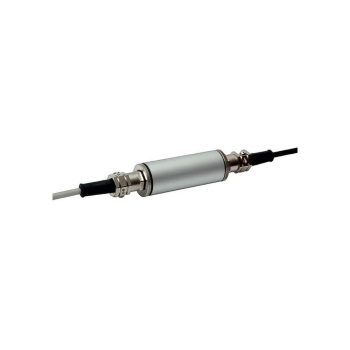
- High accuracy
- Input signal: strain gauge resistance thermometry bridge; output signal 0/4 ... 20 mA or DC 0 ... 10 V
- Cable length between amplifier and read-out unit: up to 100 m are possible
- Compact design
- Ingress protection IP67
| Datasheet |
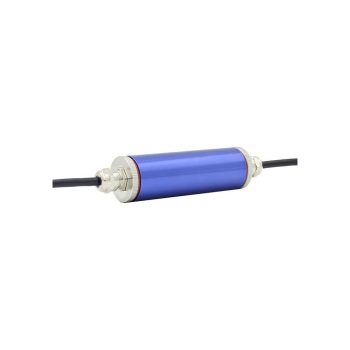
- High accuracy
- Input signal: strain gauge measuring bridge; Output signal: 0/4 … 20 mA or DC 0 … 10 V
- Cable length between amplifier and read-out unit: up to 100 m are possible
- Compact design
- Ingress protection IP67
| Datasheet |
| User Manual |
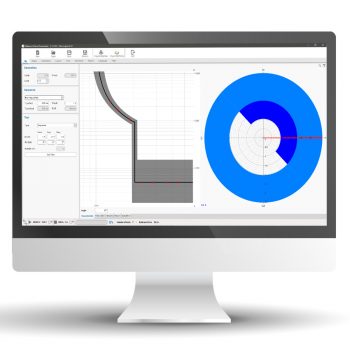
- Automatic Import of relay settings
- Large library of relays from the major relay producers
- Easy configuration of DRTS Test Set
- Simplified creation of complex test sequences thanks to Test Plan Editor
- IEC 61850 Substation protocol testing facility
- Creation of professional test reports through the Report Manager
- Compatible with ISA Relay Test Set
- DRTS 66, DRTS 64, DRTS 34, DRTS 33
| Datenblatt |
.
.

- 5-digit digital indicator for strain gauge (load cell) signals
- Measuring range: -9999 to 99999
- Input for strain gauge sensors (1 mV/V, 2 mV/V, 3.3 mV/V up to 6 mV/V)
- 2 or 4 relay outputs for limit monitoring
- Analog outputs: 0/4–20 mA or 0–10 V (12 bit)
- Interfaces: RS232 or RS485 (galvanically isolated)
- Power supply: 100–240 VAC or 10–40 VDC
- Integrated bridge supply for sensors
- Front keypad operation, protection class IP65
- Functions: calibration, tare, min/max memory, alarms
|
Datasheet
|
|
User Manual
|
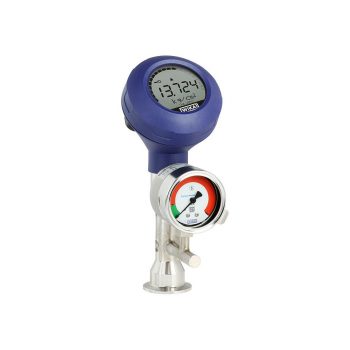
- Double-diaphragm system prevents contamination of process and environment
- Hygienic process connections in different designs
- Signal transmission and configuration with only one cable per measuring location
- Minimal installation costs, even with retrofitting

 Datasheet Datasheet |
| User Manual |
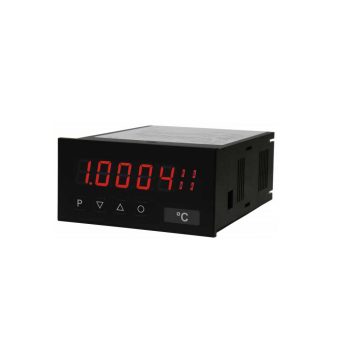
- 5-digit digital indicator for weighing applications (strain gauge mV/V)
- Measuring range: -19999 to 99999
- Input for strain gauge sensors (1 mV/V, 2 mV/V, 3.3 mV/V up to 4 mV/V)
- 2 or 4 relay outputs or optionally 8 PhotoMOS outputs
- 2 analog outputs: 0/4–20 mA or 0–10 V (16 bit)
- Interfaces: RS232 or RS485 (galvanically isolated)
- Power supply: 100–240 VAC or 10–40 VDC
- Integrated bridge supply for load cells
- Front keypad operation, protection class IP65
- Functions: calibration, tare, min/max memory, linearization, alarms
|
Datasheet
|
|
User Manual
|
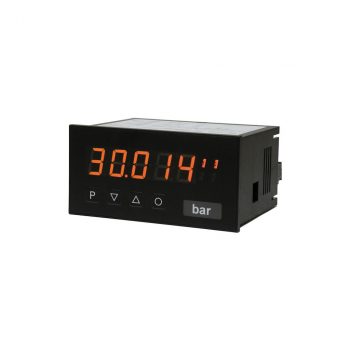
- 5-digit digital indicator for weighing applications (strain gauge mV/V)
- Measuring range: -19999 to 99999
- Input for strain gauge sensors (1 mV/V, 2 mV/V, 3.3 mV/V up to 4 mV/V)
- 2 relay outputs for limit monitoring
- Power supply: 230 VAC or 10–30 VDC (galvanically isolated)
- Integrated bridge supply for load cells
- Front keypad operation, protection class IP65
- Compact design: 96 x 48 mm
- Functions: calibration, tare, min/max memory, linearization, alarms
|
Datasheet
|
|
User Manual
|
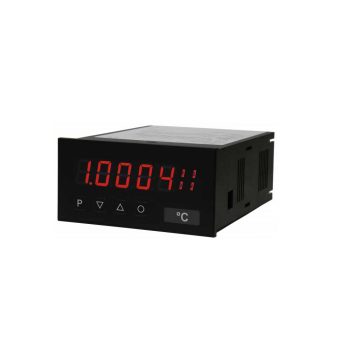
- 5-digit digital indicator for strain gauge / load cell sensors
- Measuring range: -19999 to 99999
- Input for strain gauge sensors (1 mV/V, 2 mV/V, 3.3 mV/V up to 4 mV/V)
- 2 or 4 relay outputs or optionally 8 PhotoMOS outputs
- Analog outputs: 0/4–20 mA or 0–10 V (16 bit)
- Interfaces: RS232 or RS485 (galvanically isolated)
- Power supply: 100–240 VAC or 10–40 VDC
- Integrated bridge supply for sensors
- Front keypad operation, protection class IP65
- Functions: calibration, tare, min/max memory, linearization, alarms
| Datasheet |
| User Manual |
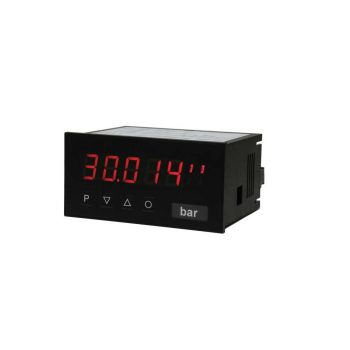
- 5-digit digital indicator for strain gauge / load cell sensors
- Measuring range: -19999 to 99999
- Input for strain gauge sensors (1 mV/V, 2 mV/V, 3.3 mV/V up to 4 mV/V)
- 2 relay outputs for limit monitoring
- Power supply: 230 VAC or 10–30 VDC (galvanically isolated)
- Integrated bridge supply for sensors
- Front keypad operation, protection class IP65
- Compact design: 96 x 48 mm
- Functions: calibration, tare, min/max memory, linearization, alarms
| Datasheet |
| User Manual |
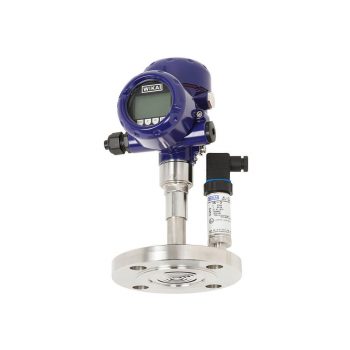
- Double-diaphragm system to ensure the separation of the process and the pressure measuring instrument
- Process connection with flange to provide for direct threaded connection
- All welded design with flush diaphragm
- Wetted parts from Hastelloy
|
Datenblatt
|
|
Bedienungsanleitung
|

- Double-diaphragm system to ensure the separation of the process and the pressure measuring instrument
- Process connection with thread to provide for direct threaded connection
- All welded version with internal diaphragm
- System from Monel
| Datasheet |
| User Manual |