



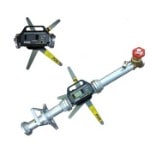
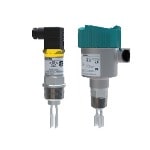
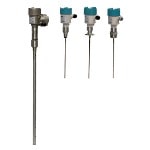
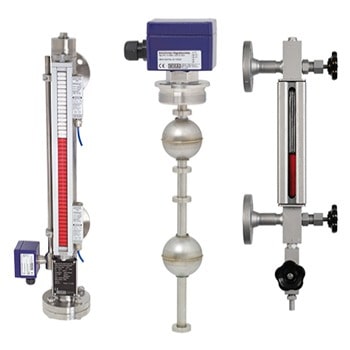
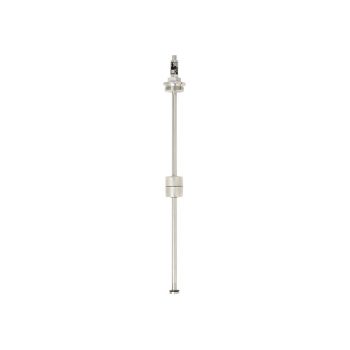



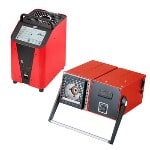
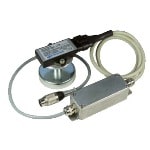
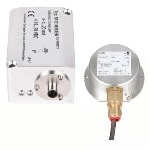
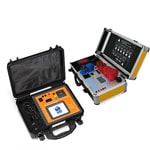


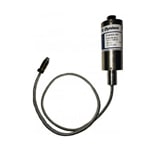
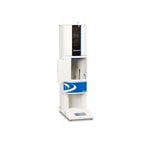
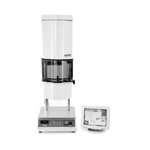
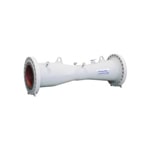
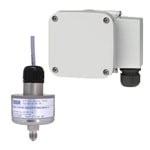
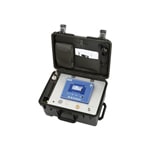
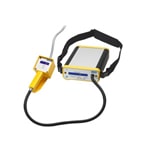
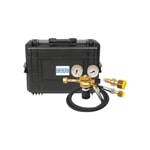
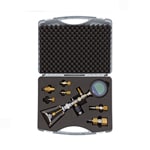
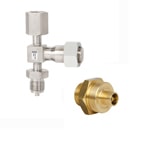
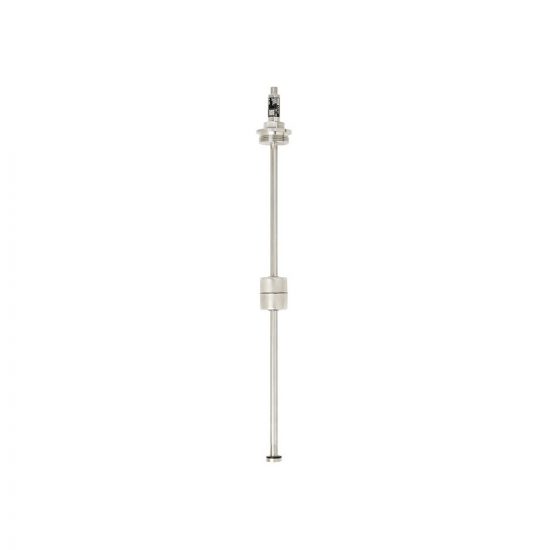
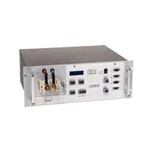
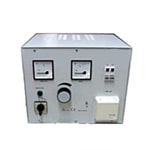


























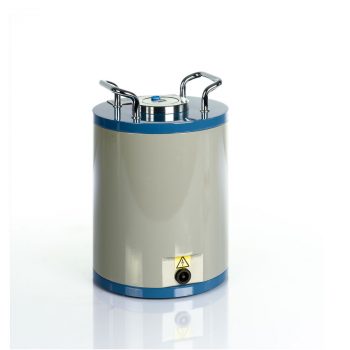
Oil cell for the HV test of dielectric oil
The option allows the testing of the insulation characteristics of the oil by checking if there is no contamination.
 Datenblatt STS5000 Datenblatt STS5000
|
|
Datenblatt STS4000
|
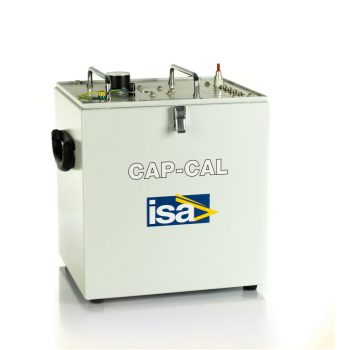
The purpose of CAP-CAL is to check the correctness of Tan Delta and Capacitance of TD 5000 and TDX 5000. The calibrator includes an extremely high accuracy high voltage capacitor, which comes with a certificate issued by ISA - Altanova Group lab.
|
Datenblatt STS5000
|
|
Datenblatt STS4000
|
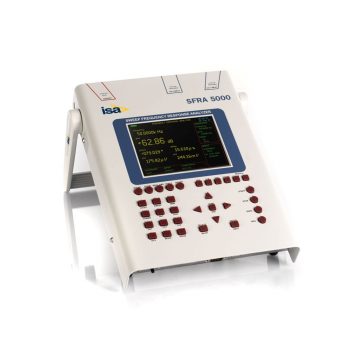
- Standalone high accuracy transformer analysis
- Leading wideband accuracy: basic 0.02dB with class leading high frequency performance
- Leading phase accuracy: 0.05 degrees basic
- Wide frequency range: 5Hz to 45MHz
- Full colour VGA display enabling engineer to perform and store measurement in the field without a PC
- PC software included: remote control, tables, graphs and database management of results
- USB, RS232 and LAN interfaces
- LCR mode: fully functional LCR meter to measure transformer LCR parameters
- Various measurement modes: FRA, RMS, LCR, Scope
- Compliant to IEC60076-18 standard
- Light and easy to carry
|
Datenblatt
|
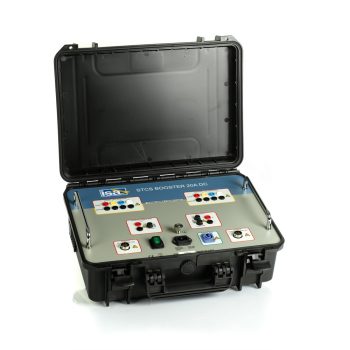
- Maximum output current: 20 A DC
- Maximum power on output sockets: 400 W
- Current output switch: controlled by STCS
- Current output amplitude: controlled by STS 5000 or STS 4000
|
Datenblatt
|
|
Datenblatt
|
.
.
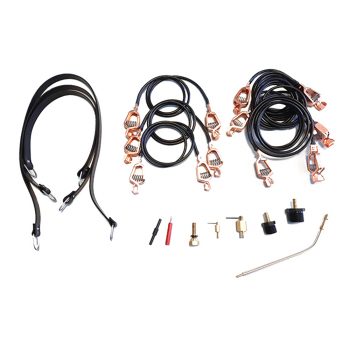
- 1x male to female bushing adapter
- 1x female to female bushing adapter
- 1x 2.5 cm long bushing tap adapter
- 1x bushing adapter probe
- 1x 1.9 cm long bushing tapadapter
- 1x 3 hot collar straps
- 1x set of mini bushing tap adapter
- 1x 3 non insulated 1m long leads
- 1x bushing tap adapter
- 1x 3 non insulated 2m long leads
- 1x thermo hygrometer
|
Datenblatt
|
.
.
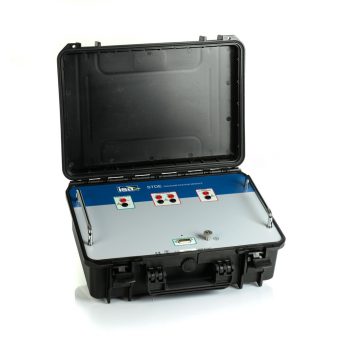
- Constant current, voltage limited generator
- Maximum test current: 7 A DC
- Maximum test voltage: 70 V DC
- Output current stability: better than 0.5% of the rated value
- Automatic current direction reversal
| Datenblatt |
| Datenblatt |
.
.
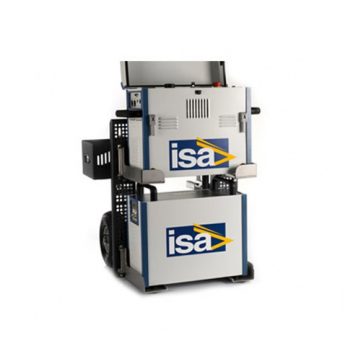
- Fully automatic
- Variable output frequency: 15 - 500 Hz
- Output voltage up to 12 kV
- Power dissipation factor test with the module TD 5000 ( voltage up to 12 kV)
- PADS - Power Apparatus Diagnostic Software for automatic testing, assessment and report
- USB interface and Ethernet interface for PC connection
- Compact and lightweight.
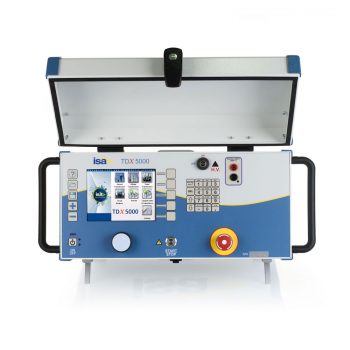
- Fully automatic
- Variable output frequency: 1 - 500 Hz
- Output voltage up to 12 kV
- Tan Delta, capacitance, dissipation factor measurements and exciting current test
- RCTD - compensating reactor module allows increasing the test current and getting the maximum test voltage with high capacitive burdens
- PADS - Power Apparatus Diagnostic Software for automatic testing, assessment and report
- USB interface and Ethernet interface for PC connection
- Patented technology for capacitance and Tan Delta measurement
- Light and compact
|
Datenblatt
|
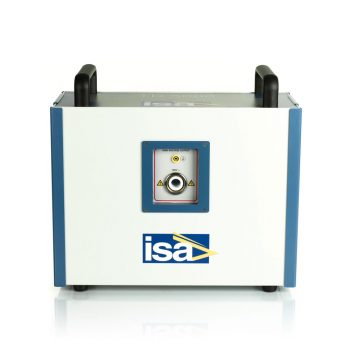
- Optional module for STS 5000 and STS 4000 test set, standard module for STS 3000 light
- Tan Delta, capacitance, dissipation factor measurements and for exciting current test
- Output voltage from 12 V up to 12 kV
- Variable output frequency: 1 - 500 Hz
- PADS - Power Apparatus Diagnostic Software for automatic testing, assessment and report
- Compact and lightweight
- Patented technology
|
Datenblatt
|
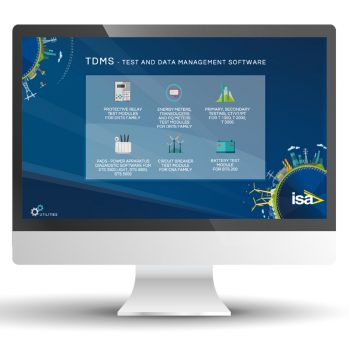
TDMS 7 is a powerful software package providing data management for acceptance and maintenance testing activities. Electrical apparatus data and test results are saved in the TDMS 7 database for historical results analysis. TDMS 7 software organizes test data and results for the majority of electrical apparatus tested with ISA test sets and related software.
|
Datenblatt
|
.
.

- STS und TD vom PC aus fernsteuern
- Prüfplan erstellen
- Gespeicherte Prüfergebnisse per Ethernet-Kabel herunterladen
- Prüfberichte erstellen und anpassen
- Prüfergebnisse drucken
|
Datenblatt
|
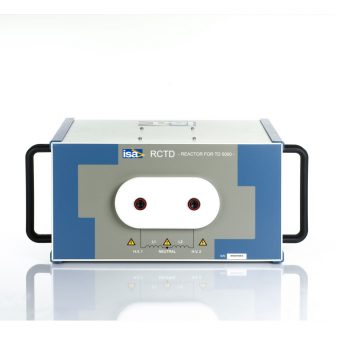
This module is properly designed for testing Tan Delta in rotating machines with TD 5000 and allows increasing the test current and getting the maximum test voltage with high capacitive burdens.
|
Datenblatt
|
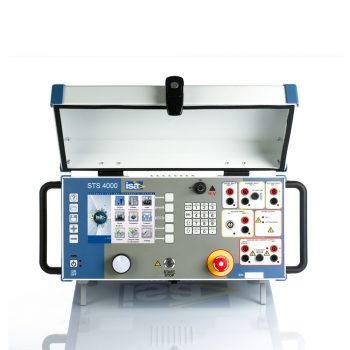
- Fully automatic
- Primary injection testing capabilities: up to 800 A or up to 5000 A / 7000 A, with the optional module BUX 5000
- Variable output frequency: 15 - 500 Hz
- Power dissipation factor test with the optional module TD 5000 ( voltage up to 12 kV)
- 2000 v AC high-pot test
- Local control by large color display
- PADS - Power Apparatus Diagnostic Software for automatic testing, assessment and report
- IEC 61850-9-2 communication protocol
- Patented technology for Capacitance and Tan Delta measurement
- USB interface and Ethernet interface for PC connection.
- Compact and lightweight
|
Datenblatt
|
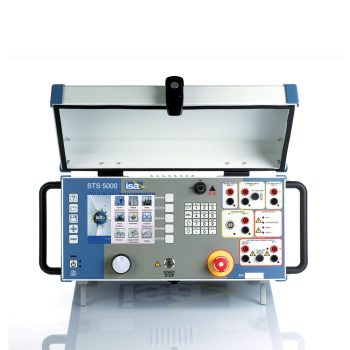
- Fully automatic
- Primary injection testing capabilities: up to 800 A or up to 5000 A / 7000 A, with the optional module BUX 5000
- Variable output frequency: 15 - 500 Hz
- Power dissipation factor test with the optional module TD 5000 ( voltage up to 12 kV)
- 2000 v AC high-pot test
- Local control by large color display
- PADS - Power Apparatus Diagnostic Software for automatic testing, assessment and report
- IEC 61850-9-2 communication protocol
- Patented technology for Capacitance and Tan Delta measurement
- USB interface and Ethernet interface for PC connection.
- Compact and lightweight
|
Datenblatt
|

Power Transformer Testing
Power Transformer Testing umfasst alle erforderlichen Prüfungen und Messungen an Leistungstransformatoren — sowohl vor der Inbetriebnahme als auch während Wartung und Instandhaltung. Ziel ist es, elektrische, mechanische und die Isolationsintegrität der Transformatoren sicherzustellen, Fehler frühzeitig zu erkennen und die Betriebssicherheit sowie Leistungsfähigkeit zu gewährleisten. Getestet werden Wicklungen, Isolation, Übersetzungsverhältnisse, Impedanz und Zustand der Kern- und Wicklungsstruktur sowie Betriebsverhalten unter Last und Isolationsbeanspruchung.
FAQ
Was bedeutet Power Transformer Testing?
Power Transformer Testing bezeichnet eine Reihe von Prüfungen und Diagnosen an Leistungstransformatoren mit dem Ziel, Wicklung, Isolierung, Übersetzungsverhältnis, Impedanz und mechanische Integrität zu prüfen und Fehlfunktionen oder Alterung frühzeitig zu erkennen.
Welche Prüfungen gehören typischerweise dazu?
Dazu zählen unter anderem: Isolationswiderstandsprüfung, Übersetzungsverhältnis-Test (Turns Ratio), Wicklungswiderstands-Messung, Impedanz- und Kurzschlussprüfung, Leerlauf- bzw. Leerlaufverluste-Messung, Magnetisierungsstrom- bzw. Erregungsstrommessung, Phasenlagen / Polung, Isolations- bzw. Dielektrizitätsprüfung, Isolations- bzw. Verlustfaktor (z. B. Power-Factor / Tan δ), bei Öltransformatoren ggf. Öl- und Isolierstoffanalyse sowie bei Bedarf Hochspannungs- oder Spannungsfestigkeitstest.
Warum ist der Übersetzungsverhältnis-Test wichtig?
Der Übersetzungsverhältnis-Test (Turns Ratio Test) prüft, ob das Verhältnis der Windungszahlen bzw. Spannungen zwischen Primär- und Sekundärwicklung korrekt ist. Abweichungen deuten auf Kurzschlüsse, Unterbrechungen oder Fehler in der Wicklung hin — solche Fehler können Betrieb, Spannungsverhältnisse oder Sicherheit beeinträchtigen.
Was zeigt die Wicklungswiderstandsmessung?
Die Wicklungswiderstandsmessung erkennt falsche Verbindungen, beschädigte Leiter, schlechte Löt- oder Schraubverbindungen, teilweise Unterbrechungen oder erhöhte Übergangswiderstände — Ursachen für Überhitzung, Leistungsverluste oder Ausfall im Betrieb.
Was wird mit Isolations- bzw. Dielektrizitätsprüfung erfasst?
Mit diesen Prüfungen wird die Qualität und Belastbarkeit der Isolation überprüft — also ob Windung zu Windung oder Windung zu Erde ausreichend isoliert ist. Sie zeigen Alterungserscheinungen, Feuchtigkeit oder Isolationsschwächen auf, bevor es zu Isolationsdurchschlägen kommen kann.
Was sind Impedanz- bzw. Kurzschlussprüfungen und wozu dienen sie?
Impedanz- oder Kurzschlussprüfungen simulieren Belastung oder Fehlerstrombedingungen, messen Impedanz, Kurzschlussfestigkeit und Belastungsverhalten. Damit wird sichergestellt, dass der Transformator stabile Leistung liefert und Fehlerströme sicher beherrscht.
Was bedeutet Leerlauf- bzw. Leerlaufverluste-Messung?
Bei Leerlauftests wird der Transformator ohne Last betrieben — dabei werden Magnetisierungsstrom, Kernverluste (Eisenverluste) und Kernzustand geprüft. Abweichungen deuten auf Kernfehler, Wicklungsprobleme oder magnetische Unregelmäßigkeiten hin.
Wann sollten Power Transformer Tests durchgeführt werden?
Unbedingt vor der ersten Inbetriebnahme (Abnahmeprüfung), nach Transport oder Montage, nach Reparaturen oder Umbauten, regelmäßig im Wartungs- oder Inspektionszyklus sowie bei Auffälligkeiten im Betrieb (z. B. erhöhte Temperatur, Geräusche, Leistungseinbrüche).
Wer sollte Prüfungen durchführen?
Qualifiziertes Fachpersonal mit Kenntnissen in Hoch-/Mittelspannung, Transformator- und Isolationsprüfung sowie Sicherheitsvorschriften. Prüfungen erfordern Erfahrung und geeignete Prüfgeräte.
Was sollte dokumentiert werden?
Protokolle mit Angaben zu Prüfdatum, Transformator-Daten, Prüfmethode, gemessenen Werten (Widerstände, Übersetzung, Impedanz, Isolation etc.), Abweichungen, Bewertung und ggf. Maßnahmen. Damit wird Nachvollziehbarkeit und Wartbarkeit gewährleistet.
Warum sind regelmäßige Prüfintervalle wichtig bei Transformatoren?
Transformatoren altern, Isolation kann altern oder Feuchtigkeit aufnehmen, mechanische Belastungen oder Belastungsspitzen können Schäden verursachen. Regelmäßige Prüfungen sichern langfristige Zuverlässigkeit und verhindern unerwartete Ausfälle.
Welche Besonderheiten sind bei Öltransformatoren zu beachten?
Bei Öltransformatoren sollte zusätzlich die Isolation (Öl, Isoliermittel), Dichtheit, Ölqualität und ggf. Öl-Analyse erfolgen — da Alterung, Feuchtigkeit oder Ölverunreinigungen die Isolation wesentlich beeinflussen.