


- Standalone high accuracy transformer analysis
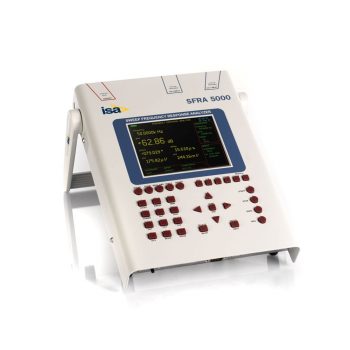
- Leading wideband accuracy: basic 0.02dB with class leading high frequency performance
- Leading phase accuracy: 0.05 degrees basic
- Wide frequency range: 5Hz to 45MHz
- Full colour VGA display enabling engineer to perform and store measurement in the field without a PC
- PC software included: remote control, tables, graphs and database management of results
- USB, RS232 and LAN interfaces
- LCR mode: fully functional LCR meter to measure transformer LCR parameters
- Various measurement modes: FRA, RMS, LCR, Scope
- Compliant to IEC60076-18 standard
- Light and easy to carry
 Datasheet Datasheet |
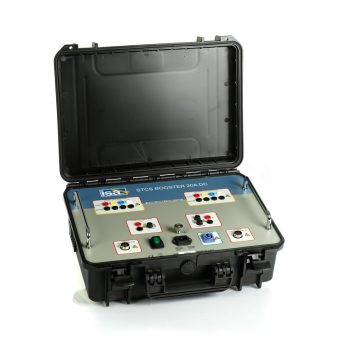
- Maximum output current: 20 A DC
- Maximum power on output sockets: 400 W
- Current output switch: controlled by STCS
- Current output amplitude: controlled by STS 5000 or STS 4000
|
Datenblatt
|
|
Datenblatt
|
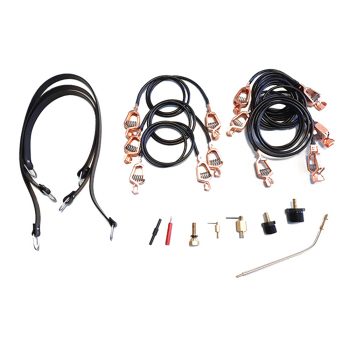
- 1x male to female bushing adapter
- 1x female to female bushing adapter
- 1x 2.5 cm long bushing tap adapter
- 1x bushing adapter probe
- 1x 1.9 cm long bushing tapadapter
- 1x 3 hot collar straps
- 1x set of mini bushing tap adapter
- 1x 3 non insulated 1m long leads
- 1x bushing tap adapter
- 1x 3 non insulated 2m long leads
- 1x thermo hygrometer
|
Datenblatt
|
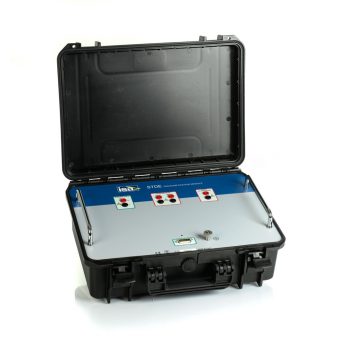
- Constant current, voltage limited generator
- Maximum test current: 7 A DC
- Maximum test voltage: 70 V DC
- Output current stability: better than 0.5% of the rated value
- Automatic current direction reversal
| Datenblatt STS5000 |
| Datenblatt STS4000 |
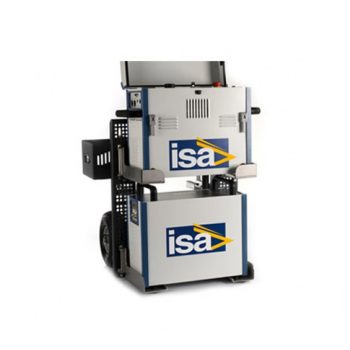
- Fully automatic
- Variable output frequency: 15 - 500 Hz
- Output voltage up to 12 kV
- Power dissipation factor test with the module TD 5000 ( voltage up to 12 kV)
- PADS - Power Apparatus Diagnostic Software for automatic testing, assessment and report
- USB interface and Ethernet interface for PC connection
- Compact and lightweight.
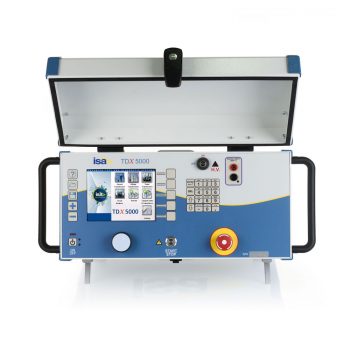
- Fully automatic
- Variable output frequency: 1 - 500 Hz
- Output voltage up to 12 kV
- Tan Delta, capacitance, dissipation factor measurements and exciting current test
- RCTD - compensating reactor module allows increasing the test current and getting the maximum test voltage with high capacitive burdens
- PADS - Power Apparatus Diagnostic Software for automatic testing, assessment and report
- USB interface and Ethernet interface for PC connection
- Patented technology for capacitance and Tan Delta measurement
- Light and compact
| Datasheet |
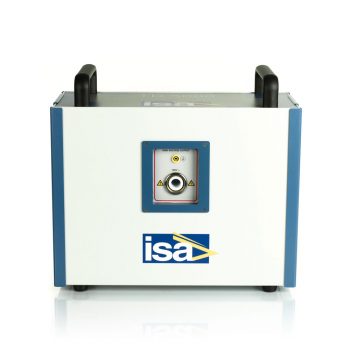
- Optional module for STS 5000 and STS 4000 test set, standard module for STS 3000 light
- Tan Delta, capacitance, dissipation factor measurements and for exciting current test
- Output voltage from 12 V up to 12 kV
- Variable output frequency: 1 - 500 Hz
- PADS - Power Apparatus Diagnostic Software for automatic testing, assessment and report
- Compact and lightweight
- Patented technology
| Datasheet |
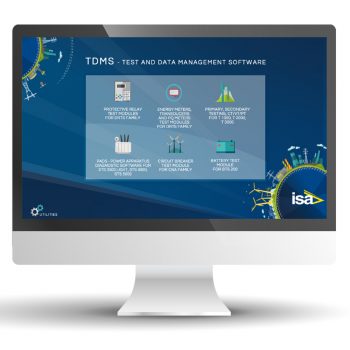
TDMS 7 is a powerful software package providing data management for acceptance and maintenance testing activities. Electrical apparatus data and test results are saved in the TDMS 7 database for historical results analysis. TDMS 7 software organizes test data and results for the majority of electrical apparatus tested with ISA test sets and related software.
|
Datenblatt
|
.
.

- Control STS and TD remotely from PC
- Create test plan
- Download stored test results via Ethernet cable
- Create and customize test reports
- Print test results
|
Datasheet
|
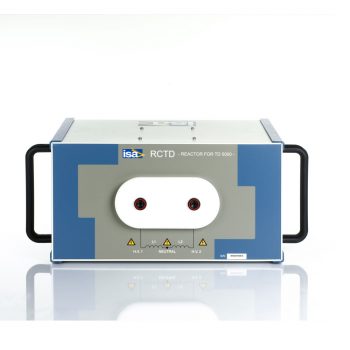
This module is properly designed for testing Tan Delta in rotating machines with TD 5000 and allows increasing the test current and getting the maximum test voltage with high capacitive burdens.
|
Datasheet
|
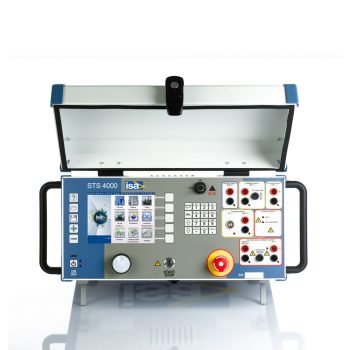
STS 4000 is a multifunction substation maintenance & commissioning test system for current, voltage and power transformers, designed to perform primary tests requested in substations commissioning. It allows to perform accurate tests on CTs, VTs, PTs and ground grid.
- Fully automatic
- Primary injection testing capabilities: up to 800 A or up to 5000 A / 7000 A, with the optional module BUX 5000
- Variable output frequency: 15 - 500 Hz
- Power dissipation factor test with the optional module TD 5000 ( voltage up to 12 kV)
- 2000 v AC high-pot test
- Local control by large color display
- PADS - Power Apparatus Diagnostic Software for automatic testing, assessment and report
- IEC 61850-9-2 communication protocol
- Patented technology for Capacitance and Tan Delta measurement
- USB interface and Ethernet interface for PC connection.
- Compact and lightweight
| Datasheet |
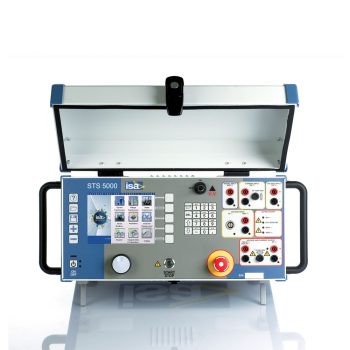
- Fully automatic
- Primary injection testing capabilities: up to 800 A or up to 5000 A / 7000 A, with the optional module BUX 5000
- Variable output frequency: 15 - 500 Hz
- Power dissipation factor test with the optional module TD 5000 ( voltage up to 12 kV)
- 2000 v AC high-pot test
- Local control by large color display
- PADS - Power Apparatus Diagnostic Software for automatic testing, assessment and report
- IEC 61850-9-2 communication protocol
- Patented technology for Capacitance and Tan Delta measurement
- USB interface and Ethernet interface for PC connection.
- Compact and lightweight
| Datasheet |

Power Transformer Testing
Power Transformer Testing includes all required tests and inspections on power transformers — both prior to commissioning and during maintenance cycles. The aim is to verify electrical, mechanical and insulation integrity, to detect faults early and to ensure operational safety and performance. Tests cover windings, insulation, transformer ratio, impedance, core and winding integrity, load behavior and insulation stress under operational conditions.
FAQ
What is power transformer testing?
Power transformer testing refers to a series of tests and diagnostics on power transformers to verify winding integrity, insulation condition, turns ratio, impedance, mechanical and dielectric stability and to detect possible faults or ageing effects.
Which tests are typically performed?
Common tests include: insulation resistance test, turns ratio test, winding resistance measurement, impedance / short-circuit test, no-load and core loss test, excitation / magnetizing current measurement, polarity / phase relation check, dielectric / high-pot test, dielectric loss / power-factor testing; for oil-filled transformers also oil and insulation-fluid analysis and sealing/leak tests.
Why is the turns ratio test important?
The turns ratio test verifies that the ratio between primary and secondary windings (or their voltages) is correct. Deviations indicate possible shorted turns, open windings or faults, which can impair voltage output, efficiency or safety.
What does a winding resistance test reveal?
It detects faulty connections, damaged conductors, high contact resistance, broken strands or poor joints — which can lead to overheating, increased losses and potential failure under load.
What is checked by insulation and dielectric testing?
These tests verify that insulation between windings, and between windings and ground, is intact and effective — ensuring no leakage, moisture ingress or degradation threatens safe operation or risks dielectric breakdown.
What are impedance / short-circuit tests used for?
They simulate fault or load conditions to determine transformer's impedance, short-circuit withstand capability and behavior under current stress — ensuring safe and reliable operation under load or fault events.
What does no-load / core loss testing do?
No-load testing measures magnetizing current, core losses (iron losses) and checks core and winding integrity without load. Deviations from expected losses may indicate core or winding issues, deformation or insulation problems.
When should transformer tests be carried out?
Before commissioning, after transport or installation, after repair or modification, as part of periodic maintenance, and whenever operational anomalies (temperature rise, noise, loss of performance) occur.
Who should conduct these tests?
Qualified personnel experienced in high- or medium-voltage systems, transformer testing and safety protocols, using suitable test equipment.
What documentation should be created after testing?
A test report containing transformer data, test methods, measured values (resistances, ratios, impedance, insulation, losses), deviations, evaluation, date and tester — for traceability, maintenance planning and compliance.
Why are regular test intervals essential for transformers?
Transformers age, insulation can degrade or absorb moisture, mechanical stress or overloads can cause damage. Regular testing ensures long-term reliability and helps avoid unexpected failures.
What special considerations apply for oil-filled transformers?
In oil-filled types, additional attention must be given to oil quality, sealing, insulation fluid integrity and leak testing — since oil condition critically affects insulation performance and long-term reliability.