










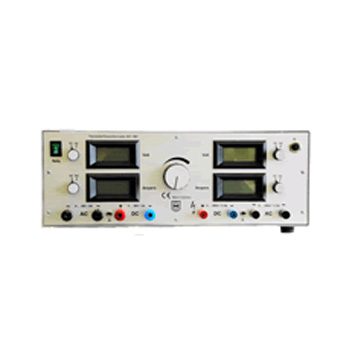
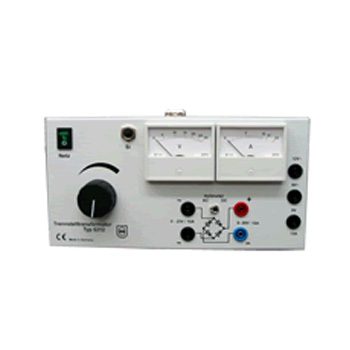
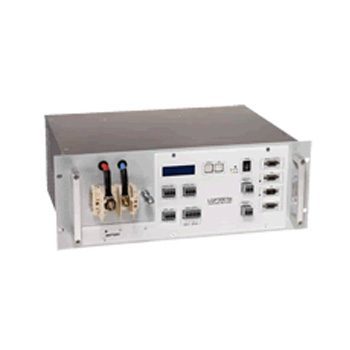
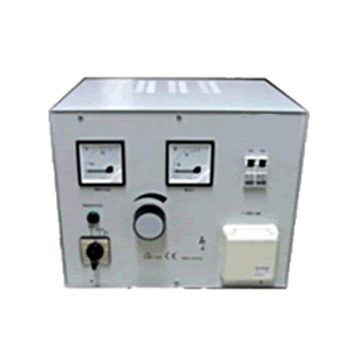
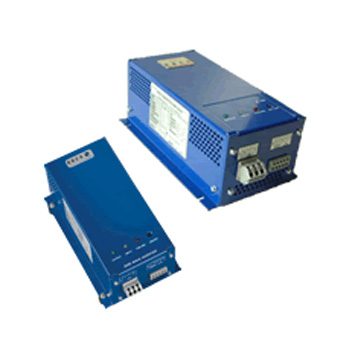

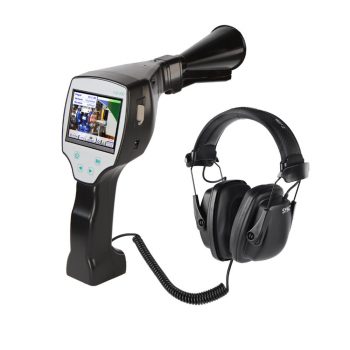
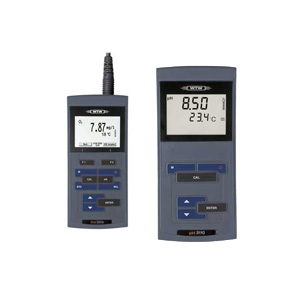




























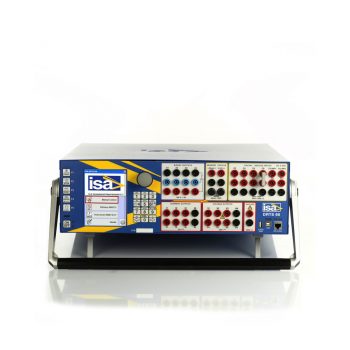
- Manual control of the display
- 6 Current and 6 Voltage generetors plus 1 battery simulator outputs
- Current outputs : 6 x 32 A, 3 x 64 A, 1 x 128 A
- Power outputs: 6 x 430 VA, 3 x 860 VA, 1 x 1000 VA
- Voltage outputs: 6 x 300 V at 100 VA
- High accuracy outputs: better than 0.05%
- IEC 61850 protocol interface
- USB and ethernet interface
- Advanced testing and data management software TDMS
- Complete library of relays from the major manufacturers
 Datasheet Datasheet |
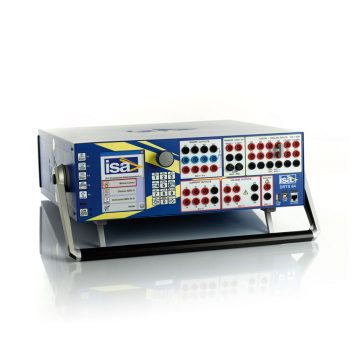
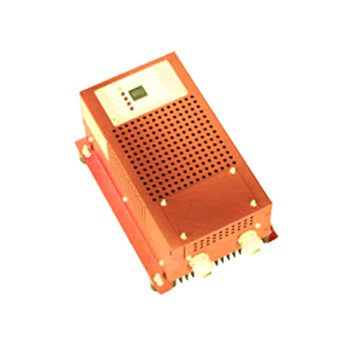
- Manual control of the display
- 6 Current and 4 Voltage generators plus 1 battery simulator outputs
- Current outputs : 6 x 32 A, 3 x 64 A, 1 x 128 A
- Power outputs: 6 x 430 VA, 3 x 860 VA, 1 x 1000 VA
- Voltage outputs: 4 x 300 V at 100 VA
- High accuracy outputs: better than 0.05%
- IEC 61850 protocol interface
- USB and ethernet interface
- Advanced testing and data management software TDMS
- Complete library of relays from the major manufacturers
| Datasheet |
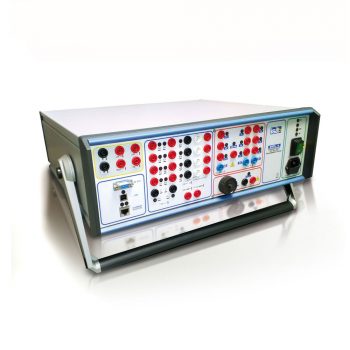
- Multi-tasking relay test equipment designed for testing protection relays, energy meters, transducers
- Output: 6x15 A (80 VA); 4x300 V (85 VA); 1x260 V DC
- High accuracy outputs: 0.1 %; 0.05% (HP)
- Analog measurement inputs
- IEC 61850 protocol interface
- USB and RS232 port
- Controlled by PC laptop or local control by PDA
| Datasheet |
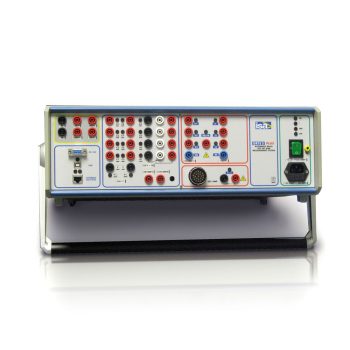
- Multi-tasking relay test equipment designed for testing protection relays, energy meters, transducers
- Output: 3x15 A (100 VA); 4x300 V (85 VA); 1x260 V DC
- High accuracy: better than 0,05%
- Analog measurement inputs
- IEC 61850 communication Protocol interface
- USB and RS232 port
- Controlled by PC laptop or local control by PDA
- Lightweight
| Datasheet |
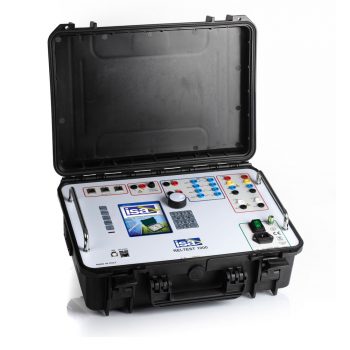
- Local control, via keyboard and colored display
- Remote control with the Advanced Test & Data Management Software.
- Three independent AC voltage outputs adjustable from 0 to 400 V
- Fourth independent AC voltage output adjustable from 0 to 130 VOne current output, from 0 to 15 A, switchable on 3 phase sockets
- One independent current output, adjustable from 0 to 1 A
- Optional IEC 61850-8 communication interface
- Optional six low level outputs
- USB interface
- Automatic test report
- Light and easy to carry
|
Datenblatt
|
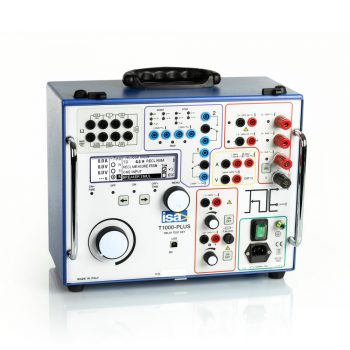
- Multi-tasking test set designed for testing relays and transducers
- Max current output: 250 A
- Max AC voltage output: 250 V
- Max DC voltage output: 300 V
- Frequency generator: 15 ÷ 550 Hz
- Phase angle shifter
- Battery simulator 20 ÷ 260 V DC
- Oscilloscope function for current and voltage
- USB port - Microprocessor controller
- Test results and settings saved into local memory
- TD 1000 Plus model with two current outputs and high power at 15 Hz.
| Datenblatt |
| Bedienungsanleitung |
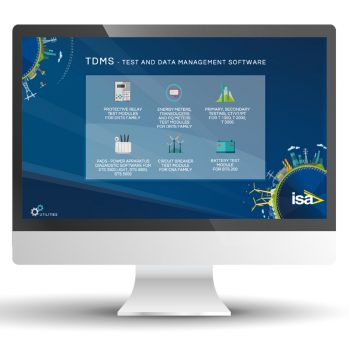
TDMS 7 is a powerful software package providing data management for acceptance and maintenance testing activities. Electrical apparatus data and test results are saved in the TDMS 7 database for historical results analysis. TDMS 7 software organizes test data and results for the majority of electrical apparatus tested with ISA test sets and related software.
|
Datenblatt
|
.
.

- Manual control of the display
- 3 Current and 4 Voltage generators plus 1 battery simulator outputs
- Current outputs : 3 x 32 A, 1 x 96 A
- Power outputs: 3 x 430 VA, 1 x 1000 VA
- Voltage outputs: 4 x 300 V at 100 VA
- High accuracy outputs: better than 0.05%
- IEC 61850 protocol interface
- USB and ethernet interface
- Advanced testing and data management software TDMS
- Complete library of relays from the major manufacturers
 Datasheet Datasheet |
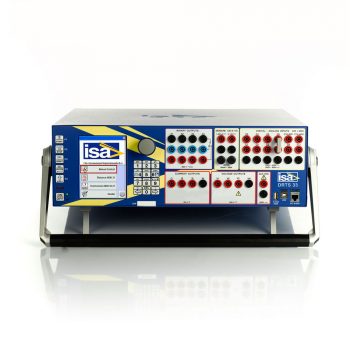
- Manual control of the display
- 3 Current and 3 Voltage generators plus 1 battery simulator outputs
- Current outputs : 3 x 32 A, 1 x 96 A
- Power outputs: 3 x 430 VA, 1 x 1000 VA
- Voltage outputs: 3 x 300 V at 100 VA
- High accuracy outputs: better than 0.05%
- IEC 61850 protocol interface
- USB and ethernet interface
- Advanced testing and data management software TDMS
- Complete library of relays from the major manufacturers
| Datasheet |
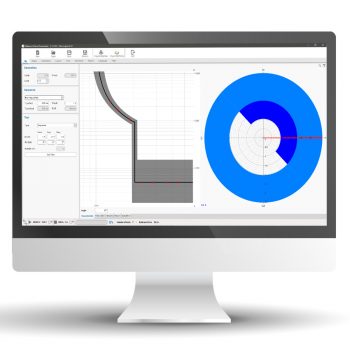
- Automatic Import of relay settings
- Large library of relays from the major relay producers
- Easy configuration of DRTS Test Set
- Simplified creation of complex test sequences thanks to Test Plan Editor
- IEC 61850 Substation protocol testing facility
- Creation of professional test reports through the Report Manager
- Compatible with ISA Relay Test Set
- DRTS 66, DRTS 64, DRTS 34, DRTS 33
| Datenblatt |
.
.
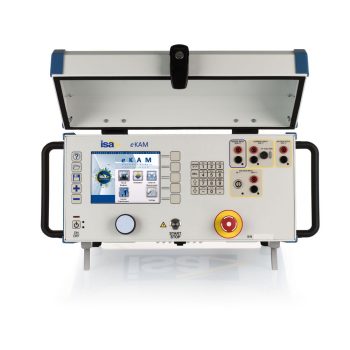
- Fully automatic
- Two portable units: control and current units
- High current output: up to 2000 A, 3000 A and 5000 A
- Variable output frequency: 15 - 500 Hz
- CT ratio, burden and polarity test
- Large graphic display
- Advanced Test & Data Management Software for test set control, results storage and analysis
- Step & touch plus ground resistance tests with STLG option
- Reduced timing test
- USB interface and Ethernet interface for PC connection
- IEC 61850-9-2 sample values protocol interface
- Compact and lightweight
|
Datasheet
|

Protective Relay Testing
Protective relay testing covers verification, calibration and functional checking of protection relays in power systems. Modern test sets generate defined test currents and voltages and simulate fault conditions to verify tripping times, characteristics, pick-up values and selectivity of protection functions. This ensures that relays operate correctly and in accordance with settings when faults such as short circuits, overload, over/undervoltage or frequency deviations occur.
FAQ
What is meant by protective relay testing?
Protective relay testing is the systematic verification of a relay’s performance and settings by applying defined test quantities (current, voltage, frequency, phase angle) and recording its response and tripping behaviour.
Why is testing of protective relays important?
Protective relays must clear faults selectively and reliably. Regular testing ensures that relays operate within specified tolerances, avoid false tripping and do not fail to trip when a real fault occurs.
Which types of relays are typically tested?
Commonly tested relays include overcurrent, distance, differential, earth-fault, voltage and frequency relays, as well as multifunction protection relays, motor and generator protection relays and combined protection/measurement devices.
What is the difference between primary and secondary testing?
Primary testing injects current or voltage into the real primary circuit (busbars, power lines, transformers). Secondary testing applies test quantities directly to the secondary terminals of instrument transformers or relay inputs without energising the primary system.
Which quantities are injected during testing?
Depending on relay type: single or three-phase currents and voltages, unbalanced conditions, fault currents, impedance points for distance protection, and variations in frequency or phase angle.
What are typical steps of a relay test?
Typical steps include visual inspection and settings review, nominal value test, pick-up and drop-off tests, time-current or characteristic checks, verification of output contacts and signalling, and final documentation.
How are tripping times and characteristics evaluated?
Measured tripping times and operating points are compared with calculated or set values. Deviations must remain within tolerance; otherwise settings or the relay itself need adjustment or repair.
What is the role of software in relay testing?
Software is used to create automated test plans, control the test set, record and evaluate results, generate reports and manage result databases, improving reproducibility and efficiency.
How often should protective relays be tested?
Intervals depend on utility regulations, standards, criticality and environmental conditions. Commonly, relays are tested periodically (e.g. every few years) and after modifications, disturbances or repairs.
Who should perform relay testing?
Testing should be performed by qualified engineers or technicians with expertise in protection systems, secondary systems and high-voltage testing.
What documentation is required?
Test reports with relay data, settings, test conditions, injected values, measured tripping times, assessment, date and responsible tester. These reports serve as proof of correct operation and as a reference for future tests.
What is an automatic test plan?
An automatic test plan is a predefined sequence of test steps controlled by software. It automates injection, measurement and evaluation, reducing manual work and the risk of operator errors.
How does testing differ for electromechanical vs. digital relays?
Electromechanical relays may require more manual handling and visual observation, while digital/microprocessor relays offer extensive settings, communication interfaces, event logs and self-diagnostics that must also be checked.
Which communication interfaces are used?
Modern test systems support interfaces such as IEC 61850, serial links or Ethernet to test relays in digital substations and to exchange settings or status information directly.
What safety aspects must be considered during testing?
Standard safety procedures for high-voltage installations apply: isolation from live parts, lockout/tagout, proper grounding, use of personal protective equipment and clear test setups with defined boundaries.
How are unwanted or false tripping conditions checked?
By injecting signals near threshold or in specific non-fault zones, testers verify that the relay does not operate incorrectly and that restraint or blocking functions work as intended.
Why is selectivity important in relay testing?
Selectivity ensures that only the faulty section is disconnected. Testing confirms that settings and time coordination between upstream and downstream protection devices achieve proper selectivity.
How can test results be tracked over time?
By storing reports and data in a central database, trends in tripping times, setting changes or relay behaviour can be monitored and compared between test periods.