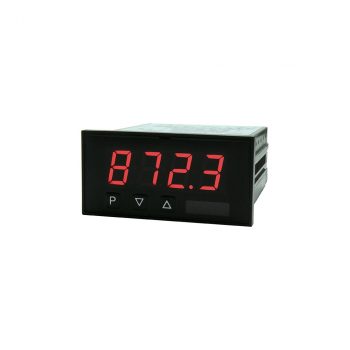
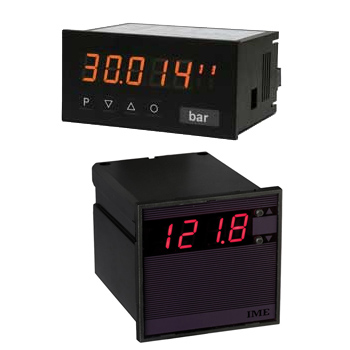
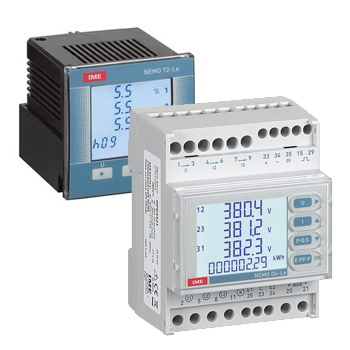
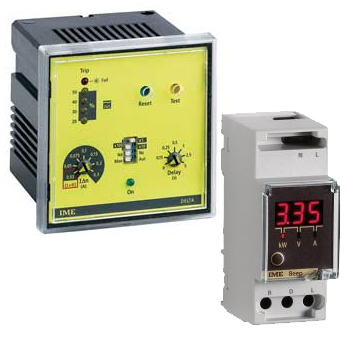
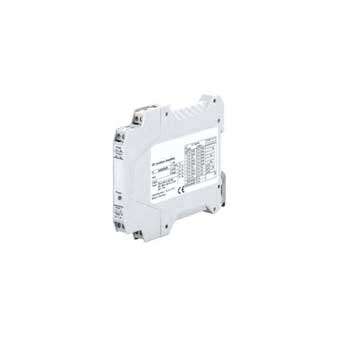
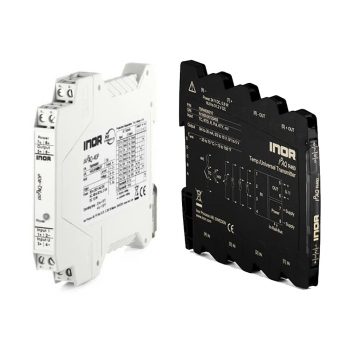
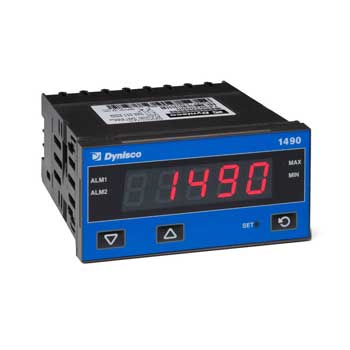
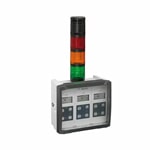
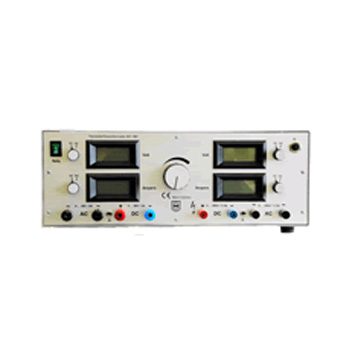
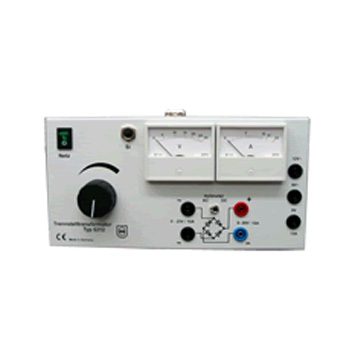
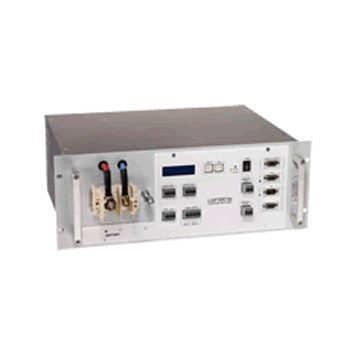
























| Size | 72 x 36 mm |
| Display | 4-digit 14 mm digit height Color: red, green, orange, or blue display |
| Display Range | -1999 to 9999 |
| Operation | front keypad, IP65 protection |
| Inputs | AC voltage / AC current true RMS 0-1AAC, 0-100VAC |
| Analog Output | – |
| Switch Output | 2 changeover relays 30 VDC/AC, max. 2 A resistive load |
| Interface | – |
| Power Supply | 24 VDC +/-10% galvanically isolated 230 VAC Other power supplies on request! |
| Transducer Power Supply | – |
| Software Features |
|
Datasheet |
User Manual |
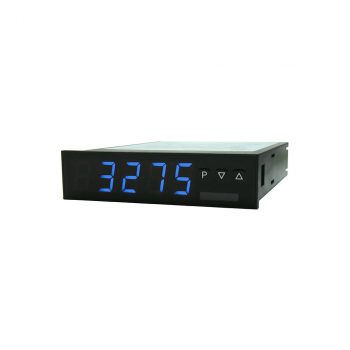
| Housing | 96 x 24 mm |
| Display | 4-digit 14 mm digit height Colour: red, green, orange or blue display |
| Range displayed | -1999 to 9999 |
| Operation | front panel keyboard protection class IP65 |
| Input | AC voltage / AC current 0-100VAC, 0-1AAC |
| Analogue Output | – |
| Switch point | – |
| Interface | – |
| Power supply | 230 VAC 24 VDC +/-10% galvanic isolated Other voltage supplies on demand! |
| Sensor supply | – |
| Software properties |
|
Datasheet |
User Manual |
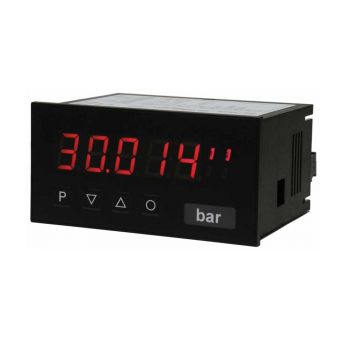
| Housing | 96 x 24 mm |
| Display | 5-digit 14 mm digit height Colour: red, green, orange or blue display |
| Range displayed | -19999 to 99999 |
| Operation | front panel keyboard protection class IP65 |
| Input | AC voltage / AC current true RMS 50 VAC, 5 AAC |
| Analogue Output | 0/4-20 mA / 0-10 VDC / 16 Bit Alternatively interface RS232/RS485 |
| Switch point | 1 or 2 change-over relays 250 VAC / 2 AAC ; 30 VDC / 2 ADC |
| Interface | RS232 or RS485 galvanic isolated Alternatively analog output |
| Power supply | 10-40 VDC / 18-30 VAC 50/60Hz 100-240 VAC 50/60 Hz / DC +/- 10% |
| Sensor supply | – |
| Software properties |
|
Datasheet
|
User Manual
|
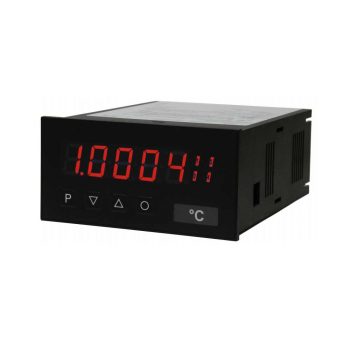
| Housing | 96 x 48 mm |
| Display | 5-digit 14 mm digit height Colour: red, green, orange or blue display |
| Range displayed | -19999 to 99999 |
| Operation | front panel keyboard protection class IP65 |
| Input | AC voltage / AC current true RMS 10 VAC, 50 VAC, 1 AAC, 5 AAC Digital input: <2.4V OFF, >10V ON, max. 30 VDC |
| Analogue Output | 0/4-20 mA / 0-10 VDC / 16 Bit Alternatively digital input |
| Switch point | 2 relays (change-over contact) 250 V / 5 AAC, 30 V / 5 ADC |
| Interface | – |
| Power supply | 230 VAC 10-30 VDC galvanic isolated Other voltage supplies on demand! |
| Sensor supply | – |
| Software properties |
|
Datasheet
|
User Manual
|
| Housing | 96 x 48 mm |
| Display | 5-digit 14 mm digit height Colour: red, green, orange or blue display |
| Range displayed | -19999 to 99999 |
| Operation | front panel keyboard protection class IP65 |
| Input | AC voltage / AC current true RMS 10 VAC, 50 VAC, 1 AAC, 5 AAC Digital input: <2.4V OFF, >10V ON, max. 30 VDC |
| Analogue Output | 2 analog outputs 0/4-20 mA / 0-10 VDC / 16 Bit |
| Switch point | 2 or 4 relays (change-over contacts) 250 V / 5 AAC, 30 V / 5 ADC or 8 PhotoMos outputs (NOC) 30 V / 0.4 A AC/DC |
| Interface | RS232 or RS485 galvanic isolated Alternatively to analog output 2 |
| Power supply | 100-240 VAC 50/60 Hz / DC +/- 10% 10-40 VDC / 18-30 VAC 50/60Hz |
| Sensor supply | – |
| Software properties |
|
Datasheet
|
User Manual
|
Digital Panel Meters for AC Voltage and AC Current
Digital panel meters for AC voltage and current measure alternating voltage or current (AC) signals and convert them into a digital value shown on a multi-digit LED display. These devices are designed for panel mounting in control cabinets, typically offer front-side protection up to IP65, and support a variety of AC input ranges. With freely configurable scaling, selectable units, optional analog outputs, and relay outputs for limit monitoring, they are suited for monitoring AC electrical parameters in industrial installations.
Questions & Answers
For what applications are AC panel meters used?
AC panel meters are used wherever alternating voltage or current needs to be monitored — for example in power distribution panels, motor control cabinets, lighting circuits, generator outputs, or in any system with AC supply or AC loads.
Which input signal types are supported?
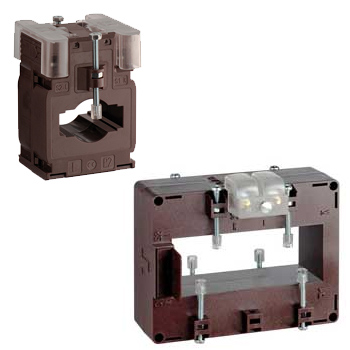
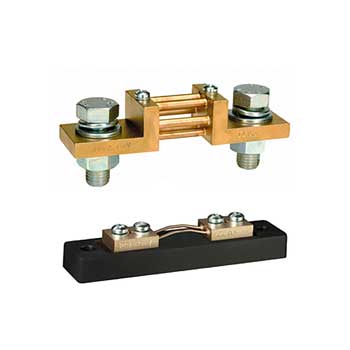
Typical supported inputs include AC voltage (e.g. 0–300 VAC, 0–600 VAC or per specific device rating) and AC current via measurement shunts or current transformers (e.g. 0–5 A, 0–10 A, or using external CT with secondary 0–5 A, etc.), depending on the device version.
How is the AC signal processed and displayed?
The instrument measures the effective value (RMS) of the AC voltage or current and converts it into a digital value. Via parameterizable scaling and unit selection, the measured value is shown directly in volts (V) or amperes (A), optionally with decimal point.
What display range is typical?
Commonly, the display covers a range from –19999 to 99999 counts, allowing for high resolution and the display of small as well as large AC values with user-defined scaling.
Is scaling and unit conversion possible?
Yes — the meter allows selecting the display unit (V or A), decimal point, scaling factor and, if needed, a multiplier (e.g. for current transformer secondary scaling). This enables direct reading of real-world values without additional calculation.
Are analog outputs for further processing available?
Depending on the model, analog outputs like 0/4–20 mA or 0–10 V may be offered. These allow the measured AC value to be forwarded to PLCs, data loggers or control systems for monitoring or regulation tasks.
Are relay outputs for limit detection or alarms integrated?
Yes — many AC panel meters integrate one or two potential-free relay contacts. These can be configured as under-, over- or window-limit triggers, enabling alarms or switching actions when defined thresholds are crossed.
What supply voltage is required for the device?
The supply voltage depends on the specific model: some devices require 24 VDC (galvanically isolated), while others may accept a universal supply such as 100–240 VAC, depending on configuration.
How is parameterization done?
Parameterization is carried out via a front keypad. The user can set input type (voltage/current), measurement range, scaling, display unit and decimal point, filter parameters, analog output behavior and relay thresholds — all without opening the cabinet door.
What display and visibility options are typical?
Multi-digit LED displays in colors such as red, green or orange are common. Digit heights of 10 mm or 14 mm and adjustable brightness ensure good readability under different lighting conditions.
How is measurement stability achieved when AC signals fluctuate?
Digital filtering or averaging functions help to stabilize the display output even if the AC signal fluctuates slightly, ensuring a stable and reliable reading.
For what ranges of AC values are these meters suitable?
Depending on the model and design, AC voltage meters may support typical ranges (e.g. up to 300 VAC or 600 VAC), while current meters can be used with internal shunts or external current transformers to cover a broad current range (e.g. up to tens or hundreds of amperes on the primary side).
Which panel cut-out sizes are usual?
Devices are built for standard control-cabinet cutouts — typical front frame dimensions are 96×48 mm, 96×24 mm or other sizes depending on display resolution and functionality.
Can both AC voltage and AC current be measured with the same device?
Some models support both AC voltage and AC current measurement — either via separate input channels or through modular design. The user selects the appropriate input type during configuration.
Is the device suitable for industrial mains monitoring?
Yes — these panel meters are ideal for monitoring AC mains parameters (voltage, current) in distribution boards, motor starters, generator outputs or other industrial AC supply or load circuits.


Datasheet
Datasheet