
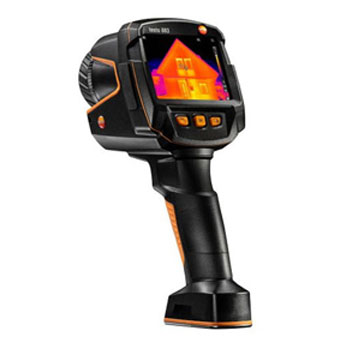
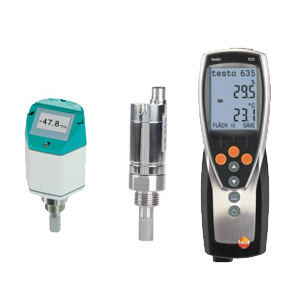
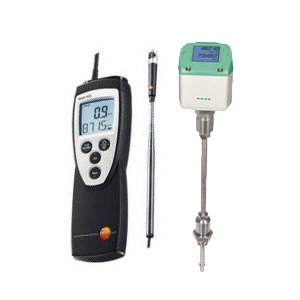
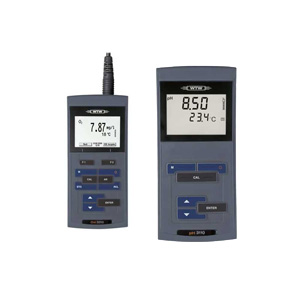
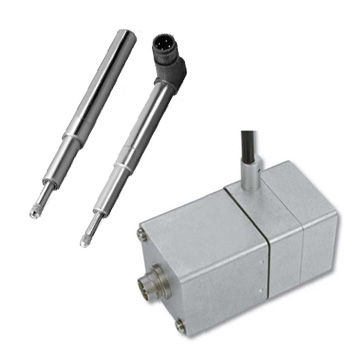
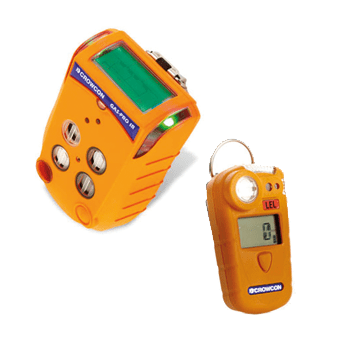
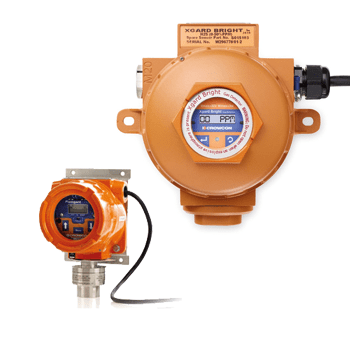
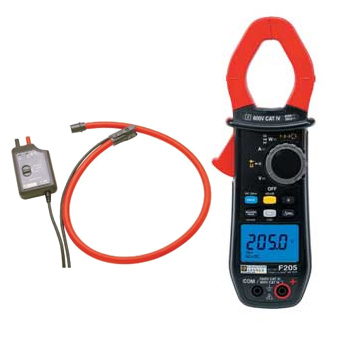
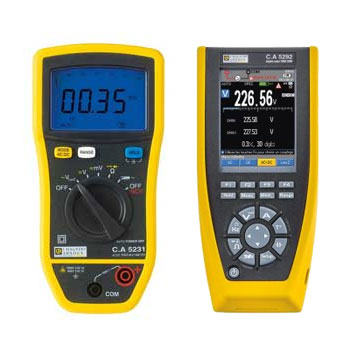
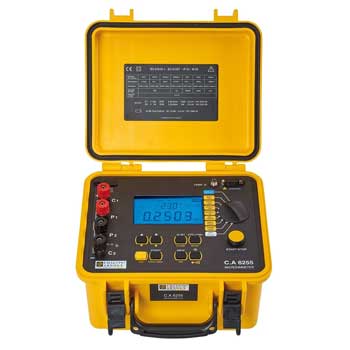
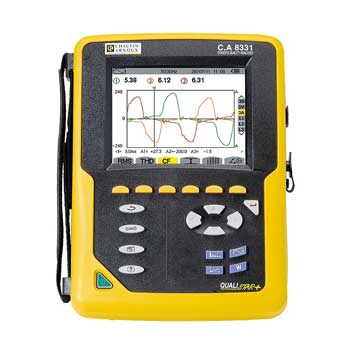
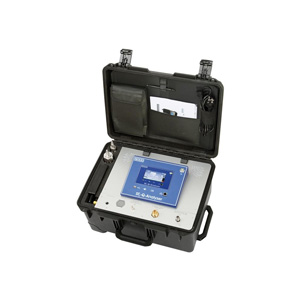
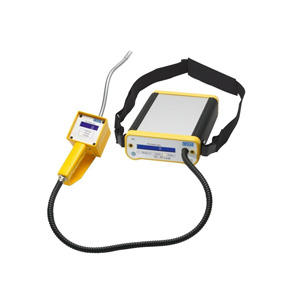
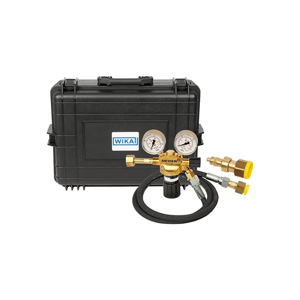
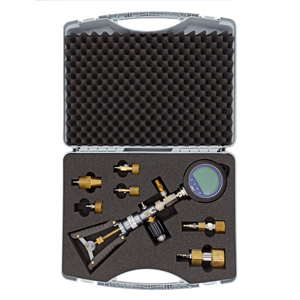
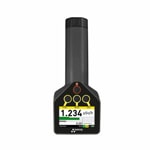






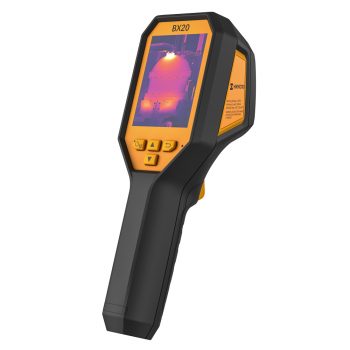
- ATEX: II 3 G Ex ic IIC T6 Gc, II 3 D Ex ic IIIC T85°C Dc
- IECEx: Ex ic IIC T6 Gc, Ex ic IIIC T85°C Dc
- Thermal resolution: 256 × 192 (49,152 pixels)
- Temperature measurement range: -20°C to 550°C (-4°F to 1022°F)
- Image frequency: 25 Hz
- Display: 3.2'' LCD screen
- Continuous running time of up to 6 hours

Datasheet
|
Flyer
|
User Manual
|
Thermal Imaging Cameras – intrinsically safe (ATEX/IECEx) for hazardous areas
Intrinsically safe thermal imaging cameras enable contactless temperature diagnostics in explosive atmospheres—e.g., in chemicals/petrochemicals, oil & gas, paint shops, bulk/ dust zones and mining. They are approved for defined ATEX/IECEx zones and designed to prevent ignition sources.
Depending on model: ATEX/IECEx approval (e.g., II 2G/2D), IP protection, wide operating temperature ranges, glove-friendly UI, bright displays, interchangeable optics, radiometric images/video, high-sensitivity NETD, plus documentation-capable interfaces (model-dependent, sometimes restricted).
ICS Schneider Messtechnik supports zone classification/marking interpretation, model selection, calibration, training and QA/report workflows—including SCADA/IIoT integration in line with your site’s safety rules.
FAQ on Intrinsically Safe Thermal Imaging Cameras (ATEX/IECEx)
Answers on zones, equipment categories, marking, temperature classes, emissivity, accuracy, documentation, software, maintenance and field practice.
Which hazardous zones are these cameras designed for?
Model-dependent approvals for gas zones 1/2 (II 2G/3G; EPL Gb/Gc) and dust zones 21/22 (II 2D/3D; EPL Db/Dc). Some systems are additionally classified for mining (Group I).
How do I read the ATEX/IECEx marking?
| Element | Example | Meaning |
|---|---|---|
| Group/Category | II 2G 2D | Group II (industry), category 2 for gas & dust |
| EPL | Gb/Db | Equipment Protection Level |
| Protection | Ex i IIC T4 Gb | Intrinsic safety; gas group IIC; temperature class T4 |
| Dust | Ex t IIIC T135 °C Db | Dust protection (t); dust group IIIC; max surface temperature |
What does intrinsic safety (Ex i) mean?
Electrical energy in circuits is limited so that even under fault conditions no sparks or critical temperatures can ignite the atmosphere. This also affects charging/communication—often permitted only outside the hazardous area.
Which temperature classes and gas/dust groups matter?
| Temp. class | Max surface temperature | Typical media |
|---|---|---|
| T6 | ≤ 85 °C | very easily ignitable gases/vapors |
| T5 | ≤ 100 °C | easily ignitable gases |
| T4 | ≤ 135 °C | common industrial applications |
| T3/T2/T1 | ≤ 200/300/450 °C | higher ignition temperatures |
What ambient conditions are permitted?
Observe the camera’s ambient temperature range (e.g., −10…+50 °C). Approval applies only within that range; account for sun exposure, dust build-up and convection.
What accuracy is realistic for Ex-rated models?
Typically ±2 K or ±2% of reading (model-dependent). Ex design may limit display/optics/network features; the radiometric performance remains suited for inspections.
Are there restrictions on wireless/ports?
Yes. WLAN/Bluetooth/USB may be disabled in Ex zones or usable only in safe areas. Data export is therefore often outside the hazardous area (dock/cradle).
How do I choose optics and IFOV?
Wide-angle for large plant rooms, telephoto for distance to hotspots (e.g., flares, flanges). Check IFOV: the target should cover at least 3×3 pixels.
How do I set emissivity (ε) in Ex areas?
Shiny metals cause errors. Use matte reference patches (approved tapes/paints) or a parallel contact reference (if allowed). Adjust ε until readings match.
What are typical applications?
- Leak/tightness checks on flanges/valves
- Bearings/motors in Ex zones
- Bulk material/dust filters (hotspots, blockages)
- Tank farms/pipelines (insulation faults, over-/underheating)
How do I create audit-ready documentation?
Radiometric images/video with time stamp, location, operator, limits and comments; export CSV/PDF, store in the QA system, and ensure traceable calibration.
Which software functions are useful?
Point/line/area measurements, isotherms/alarms, trend curves, batch reports, and optionally SDK/API for SCADA/CMMS—used per plant IT/Ex policies.
What about charging/batteries?
Charge only outside hazardous areas with approved chargers. Avoid hot environments; check/replace batteries as specified by the manufacturer.
Maintenance & calibration intervals?
Regularly clean optics (lint-free), inspect seals/protective windows, update firmware (outside Ex). As a guideline, annual calibration; for critical use semi-annual.
How do I handle reflections in Ex zones?
Change measurement angle, use shielding, add matte references, and consider influences from hot pipes/surfaces in the background.
What protection classes/robustness are common?
Housings often IP54/IP65, drop-tested, with glove-friendly UI and high display brightness. Ex housings may be more massive.
Can I use radiometric video inside Ex areas?
Model-dependent; streaming/export is usually outside the Ex zone. For real-time alarming in-plant, stationary Ex-rated IR sensors are a useful complement.
Which standards & directives apply?
ATEX 2014/34/EU (equipment), ATEX 1999/92/EC (use/worker safety), IECEx schemes, and relevant EN/IEC standards for marking/testing.
How do I plan measurement points and limits?
Process- and safety-driven: establish baseline images, define routes, set hotspot thresholds per asset, and perform regular comparative measurements for trend assessment.
Do you provide selection, training & integration support?
Yes. We interpret markings, verify zone fit, recommend optics/workflows, supply calibration certificates, and integrate with QA/SCADA/IIoT—including safety training.


Datasheet