


designed for applications, in which an extremely fast and exact pressure measuring is required
 Datasheet Datasheet |
| User Manual |


The pressure transmitter IDMP 331 can be used in all industrial areas when the medium is compatible with stainless steel 1.4404 (316 L) or 1.4435 (316 L). Optional with SIL2


| Datasheet |
| User Manual |
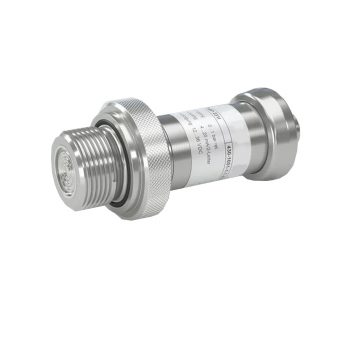
- nominal pressure: 0 ... 400 mbar up to 0 ... 40 bar
- accuracy: 0.1 % FSO
- thermal error in compensated range -20 … 80 °C: 0.2 % FSO TC 0.02 % FSO / 10 K
- turn-down 1:10
- communication interface for adjusting of offset, span and damping
| Datasheet |
| User Manual |
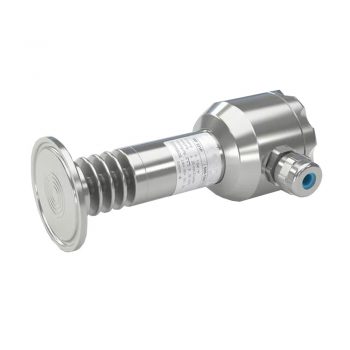
- nominal pressure: 0 ... 100 mbar up to 0 ... 40 bar
- accuracy: 0.35 % (opt. 0.25 %) FSO
- CIP / SIP cleaning up to 150 °C
- vacuum resistant
- hygenic version
- diaphragm with low surface roughness
| Datasheet |
| Mounting instructions |
| User Manual |

The signal from the specially designed piezoresistive stainless steel sensor is processed by the newly developed digital electronic system, performing thus an active compensation of sensor-specific deviations such as hysteresis, thermal errors and non-linearity.
|
Datasheet
|
|
User Manual
|

Especially designed for use in hydraulic applications with high static and dynamic pressure, the transmitter is characterized by an excellent long term stability, also under fast changing pressure as well as positive and negative pressure peaks

| Datasheet |
| User Manual |

especially designed for use in hydraulic systems up to 2200 bar, thinfilm sensor, that is welded with the pressure port and meets high demands of foolproofness and reliability
| Datasheet |
| User Manual |

- nominal pressure: 0 ... 600 up to 0 ... 2.200 bar
- accuracy: 0.1 % FSO
- pressure sensor welded
- turn-down 1:10
- excellent accuracy
- extremly robust and excellent longterm stability
| Datasheet |
| User Manual |

The industrial pressure transmitter IMP 335 is based on a stainless steel welded pressure sensor without fluid.
| Datasheet |
| User Manual |

- nominal pressure: 0 ... 16 up to 0 .... 1000 bar
- accuracy: 0,5 % FSO
- wetted parts in special stainless-steel
- insensitive to pressure peaks
- high overpressure capability
- oil and grease free according to ISO 15001 (e.g. for oxygen applications)
| Datasheet |
| User Manual |

features a G ¼" flush pressure port, designed for the use in a range of machinery including metering systems, ideal for measuring the pressure of viscous and pasty media, as only a small dead space is created
| Datasheet |
| User Manual |

Especially designed for the measurement of very low gauge pressure and for vacuum applications. Permissible media are non-aggressive, dry gases and non-aggressive, low viscos oils.
| Datasheet |
| User Manual |

Especially designed for rough conditions occurring especially in shipbuilding and offshore applications. All gaseous and liquid media, which are compatible with stainless steel 1.4404 (316L) respectively can be used.
| Datasheet |
| Mounting Manual |

The industrial pressure transmitter IMK 331 with ceramic sensor has been especially designed for pasty, polluted or aggressive media and for oxygen applications at low pressure range.
| Datasheet |
| User Manual |

The pressure transmitter IMK 331P is suitable for measuring the pressure of viscous and pasty media, where a totally flush pressure port is required.
| Datasheet |
| User Manual |

Designed for applications in plant and machine engineering as well as laboratory techniques and is suitable for measuring small system pressure and filling heights.
| Datasheet |
| User Manual |

The pressure transmitter IMK 351P has been designed for measuring small system pressure in the food industry and chemical industry.
| Datasheet |
| User Manual |

- nominal pressure: from 0 ... 100 mbar up to 0 ... 60 bar
- output signal: 2-wire: 4 ... 20 mA / 3-wire and others on request
- high overpressure resistance
- diaphragm ceramics Al2O3 (99.9 %)
- accuracy: 0.35 % (opt. 0.25 %) FSO
| Datasheet |
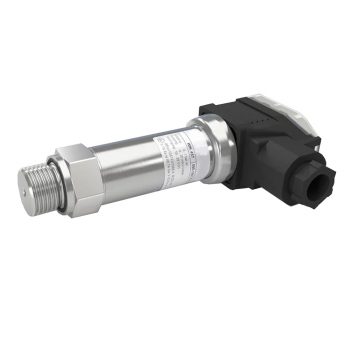
designed for typical applications in shipbuilding and offshore constructions as alternative to our pressure transmitter IMP 457 with piezoresistive stainless steel sensor
| Datasheet |
| Mounting Manual |

Developed for marine and offshore applications. In addition to thread connections, different flush versions are available, which are especially suitable for pasty, viscous, and polluted media.
| Datasheet |
| Mounting Manual |


nominal pressure: 0 ... 6 bar up to 0 ... 60 bar / -1 ... 6 bar up to -1 ... 60 bar
| Datasheet |
| User Manual |


stainless steel sensor without media isolation, nominal pressure: 0 ... 100 mbar up to 0 ... 6 bar
| Datasheet |
| User Manual |


- nominal pressure: 0 ... 1,6 bar up to 0 ... 250 bar
- accuracy: 1 % FSO
| Datasheet |
| Mounting instructions |
| User Manual |

- nominal pressure: 0 ... 40 mbar up to 0 ... 20 bar
- accuracy: 0.35 % (opt. 0.25 %) FSO
- pressure port G 1 1/2" for pasty and polluted media
| Datasheet |

Especially designed for applications with highest demand on precision and reliability
| Datasheet |
| User Manual |

- Dry ceramic sensor
- Cost optimized for standard applications
- Smallest measuring range: 0…250 mbar
- Largest measuring range: 0…250 bar
- Negative pressure measuring range: up to -1 bar
- Compact and rugged design
- Accuracy ≤ 0,5 %
- Analog output: 4…20 mA, 2-wires 0…10 V, 3-wires 0...5 V, 3-wires 0,5...4,5 V, ratiometric
| Datasheet |
| User Manual |

- High overload capability
- Dry capacitive ceramic sensor
- Smallest measuring range: 0…100 mbar
- Largest measuring range: 0…60 bar
- Negative pressure measuring range: up to -1 bar
- Accuracy ≤ 0,35%
- Compact design
- Analog output: 4…20 mA, 2-wires 0…10 V, 3-wires 0...5 V, 3-wires 0,5...4,5 V, ratiometric
| Datasheet |
| User Manual |

- Front flush process connection
- High overload capability
- Dry ceramic sensor
- Accuracy ≤ 0,3 %
- Smallest measuring range: 0…60 mbar
- Largest measuring range: 0…20 bar
- Negative pressure measuring range: up to -1 bar
- Analog output: 4…20 mA, 2-wires
- Optional for media up to 125 °C
| Datasheet |
| User Manual |

- Dry ceramic sensor
- Accuracy ≤ 0,5 %
- Smallest measuring range: 0…100 mbar
- Largest measuring range: 0…300 mbar
- Various electrical connections
- Analog output: 4…20 mA, 2-wires
| Datasheet |
| User Manual |

- Dry capacitive ceramic sensor
- Smallest measuring range: 0…40 mbar
- Largest measuring range: 0…250 bar
- Negative pressure measuring range: up to -1 bar
- Accuracy ≤ 0,2%
- High overload capability
- Compact and rugged design
- Optionally in plastic PP or PVDF
- Analog output: 4…20 mA, 2-wires 0…10 V, 3-wires
- DNV certified
- Ex II 1G Ex ia IIC T4 Ga I M2 Ex ia I Mb
| Datasheet |
| User Manual |
| User Manual |

- Front flush dry ceramic sensor
- Smallest measuring range: 0…30 mbar
- Largest measuring range: 0…40 bar
- Negative pressure measuring range: up to -1 bar
- Accuracy ≤ 0,2%
- High overload capability
- Rugged design
- Optionally in plastic PVDF
- Analog output: 4…20 mA, 2-wires 0…10 V, 3-wires
- DNV-GL certified
- Ex II 1G Ex ia IIC T4 Ga I M2 Ex ia I Mb
 Datasheet Datasheet |
| User Manual |

The precise pressure transmitter IX ACT ci measures the pressure of gases, steam and fluids. The special-developed capacitive ceramic sensor for this transmitter, which can optionally be delivered in pure ceramic, has a high overpressure capability and excellent media stability.
|
Datasheet
|

especially designed for the food industry, pharmacy and biotechnology and measures vacuum, gauge and absolute pressure of gases, steams and fluids up to 40 bar
| Datasheet |

especially designed for the process industry and measures vacuum, gauge and absolute pressure ranges of gases, steam, fluids and dust up to 600 bar
|
Datasheet
|
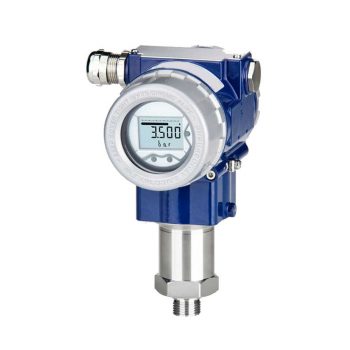
The process pressure transmitter IXMP ci measures the pressure of gases, steam, dust and fluids. The special-developed capacitive ceramic sensor for this transmitter has a high overpressure capability and excellent media stability.

|
Datasheet
|
|
User Manual
|

- Pressure 0,8...1000 bar (abs./rel.)
- Output
- RS485 (digital)
- 4...20 mA (2-wire)
- 0...10 V (3-wire)
- 0…2,5 V / 0…5 V (3-wire)
- 0,1…2,5 V (3-wire)
- Accuracy, Error Band (10…40 °C)
- type 0,05 %FS (digital)
- type 0,1 %FS (2-wire)
- type 0,1 %FS (3-wire)
|
Datenblatt
|

- Pressure 0,8...1000 bar (abs./rel.)
- Output
- RS485 (digital)
- 4...20 mA (2-wire)
- 0...10 V (3-wire)
- 0…2,5 V / 0…5 V (3-wire)
- 0,1…2,5 V (3-wire)
- Accuracy, Error Band (10…40 °C)
- type 0,05 %FS (digital)
- type 0,1 %FS (2-wire)
- type 0,1 %FS (3-wire)
|
Datenblatt
|

- PD-33X piezoresistive differential pressure transmitter with very high accuracy
- Suitable for differential pressure measurement, filter monitoring, flow measurement and leak detection
- RS485 interface can be combined with an analog interface
- Analog interface scalable via RS485, including turn-down function
- Modbus RTU protocol for process values and configuration
- Base pressure up to 600 bar
- Excellent long-term stability for demanding industrial applications
- Accuracy ± 0.05 %FS and pressure ranges from 0...0.3 bar to 0...30 bar
|
Datasheet
|
|
Bedienungsanleitung
|

- Pressure Ranges
- 30 mbar / 100 mbar / 300 mbar (rel./diff.)
- Output
- 4...20 mA
- 0...10 V
- Error Band (10…50°C) 0,1 %FS typ. / 0,2 %FS max.
- Operating Temperature -20...80 °C
- Comp. Temp. Range 10...50 °C
|
Datasheet
|
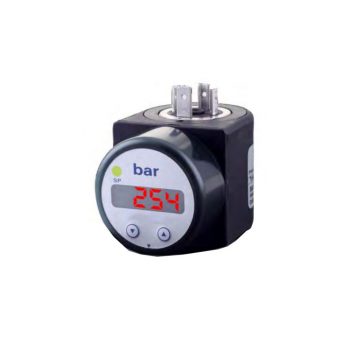
- Functional range
- free scalable display
- switch mode, hysteresis, parameteriza-ble deceleration of the contacts
- display 330 ° rotatable
- connector 300 ° rotatable
- no external power supply necessary
- Product characteristics
- plug-on display for pressure transmitter with output signal: 4 … 20 mA / 2-wire or 0 … 10 V / 3-wire
- 4-digit LED display
- Optional versions
- IS-version
- 1 or 2 programmable contacts
| Datasheet |
| User Manual |

- free scalable display
- switch mode, hysteresis, parameteriza-ble deceleration of the contacts
- no external power supply necessary
- Product characteristics
- field display for pressure transmitter with output signal: 4 … 20 mA / 2-wire or 0 … 10 V / 3-wire
- 4-digit LCD display
- plastic or aluminium housing
- pressure compensation element with PTFE-Filter
- Optional versions
- IS-version
- 2 contacts
- 4-digit LED display
| Datasheet |
| User Manual |

ICS Pressure Sensors – Rugged Industrial Transmitters for Precise Measurement
ICS pressure sensors deliver reliable readings for gauge, absolute and differential pressure—from vacuum to high pressure. Depending on the application, they use ceramic, piezoresistive, thin-film or capacitive sensing elements. Outputs include 4–20 mA and 0–10 V, with options for IO-Link/Modbus to enable fast parameterization and diagnostics. Housings and wetted parts in stainless steel 316L and seals such as FKM, EPDM, PTFE ensure high media resistance.
ICS Schneider Messtechnik supports you with sizing, media & material checks, process connections, damping/protection (snubbers, cooling elements, diaphragm seals) and calibration (ISO/DAkkS). If required, we integrate your measuring points into PLC/DCS or IIoT (edge, MQTT/HTTPS) for transparent, traceable processes.
FAQ on ICS Pressure Sensors
At a glance: selection, accuracy, media compatibility, connections, EMC, calibration and integration.
Which outputs do ICS pressure sensors offer?
Standard outputs are 4–20 mA (2-wire) and 0–10 V (3-wire). Selected models feature IO-Link or Modbus RTU (RS-485) for extended diagnostics and quick integration.
What measuring ranges are available?
From vacuum up to the high-pressure range (model dependent). As a rule of thumb: working pressure × 1.3–2.0. With pulsation/spikes, choose a larger range or add damping.
What accuracy can I expect?
Typically ±0.25…1.0% FS (model dependent). For QA/test, variants with a tighter Total Error Band (TEB) are available.
Which process connections are offered?
| Connection | Standard | Use |
|---|---|---|
| G 1/4, G 1/2 | ISO 228 (BSPP) | Industrial standard |
| ¼″ / ½″ NPT | ASME | Tapered, self-sealing |
| M20×1.5 | ISO metric | Process industry |
| Hygienic (Tri-Clamp) | EHEDG | Food/Pharma (with diaphragm seal) |
Which media are ICS sensors suitable for?
For air, water, oils as well as many corrosive media. Wetted materials are typically 316L; options include Hastelloy®/Monel®. Select seals to match the medium (FKM/EPDM/PTFE/FFKM).
How do I protect the sensor from pressure spikes?
Use snubbers/orifices, capillaries or a diaphragm seal. Additionally enable measurement filtering in the PLC/controller.
What is the correct wiring?
- 4–20 mA (2-wire): wire +/− in series through the analog input.
- 0–10 V (3-wire): +Ub, GND, Signal—avoid ground loops.
Which EMC measures are recommended?
Use shielded, twisted-pair cable, ground the shield on one side, ensure equipotential bonding, and route power/signal cables separately.
What ambient/media temperatures are permitted?
Model dependent (see datasheet). For hot media, use a cooling element/siphon or remote mount; consider temperature effects (TEB).
Are variants available for hazardous areas?
Yes—selected ICS sensors are available with ATEX/IECEx approvals (e.g., Ex ia). Please inquire for your project.
How often should I calibrate?
Recommendation: annually; for QA/safety loops semi-annually/quarterly or after overload/service. ISO/DAkkS certificates available.
How do I integrate ICS sensors into IIoT?
Connect analog to a PLC/edge or digitally via IO-Link/Modbus. An edge gateway publishes values securely via MQTT/HTTPS to SCADA/cloud.
What typical error sources should I avoid?
- Range too small → overload/saturation
- No damping with pulsation → noise/wear
- Wrong seal/materials → leaks/chemical attack
- EMC/ground loops → offset/drift
Do you support selection, documentation and commissioning?
Yes—from media review and sizing/drawings to calibration and commissioning, including test reports and BOMs.