

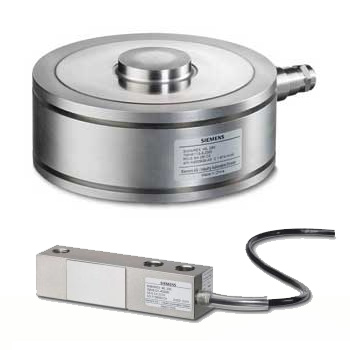































-
Legal for trade according to OIML R60
-
Usable in harsh environments due to IP67
-
Suitable for high-precision applications
Dataheet
|
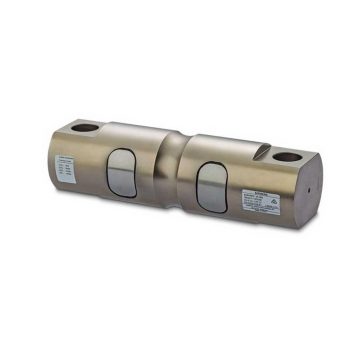
Double Shear Beam Load Cells – High-Performance Sensors for Heavy-Duty Weighing
Double shear beam load cells are symmetrically designed sensors in which the load is applied centrally across two shear sections. This construction ensures excellent compensation of side and transverse forces, making them ideal for heavy-duty platform scales, vehicle and truck scales, silo and tank weighing, and other demanding industrial weighing systems.
Typical features include high rated loads (often > 10 t), protection classes up to IP67/IP68/IP69K, robust alloy steel or stainless-steel housings, OIML R60 approvals, and hermetic sealing. In combination with weighing modules, mounting kits, junction boxes, and suitable weighing electronics, ICS Schneider Messtechnik offers complete system solutions—from design and selection to calibration and integration into PLC/SCADA environments.
FAQ About Double Shear Beam Load Cells
Answers about functionality, selection criteria, accuracy, installation, protection classes, calibration, and typical use cases.
What is a double shear beam load cell and how does it work?
A double shear beam load cell is designed so that the load is applied centrally across two parallel shear sections, providing symmetrical force distribution and minimizing sensitivity to side or tilt forces.
Where are double shear beam load cells typically used?
They are used in vehicle/truck scales, silo and tank weighing, bridge and axle scales, and anywhere large platforms or heavy industrial structures must be weighed safely and accurately.
What advantages do double shear beam load cells offer over standard shear or bending beam types?
The dual shear-section design results in improved resistance to side forces, higher stability in heavy-load applications, and better long-term reliability.
Which protection classes and materials are common?
Common materials include alloy steel and stainless steel. Protection ratings typically range from IP67 to IP68/IP69K, making them suitable for outdoor, industrial, and wash-down environments.
Are double shear beam load cells legal-for-trade?
Yes, many models comply with OIML R60 requirements. However, legal-for-trade validity always depends on the complete weighing system (load cell + electronics + calibration).
What accuracy classes are available?
Industrial models often achieve C3 accuracy class according to OIML. Actual system accuracy also depends on mechanical design, installation quality, electronics, and calibration.
What load ranges do double shear beam load cells typically cover?
They commonly cover several tons of rated load, with typical ranges from around 9 t to over 27 t, depending on the model.
How should double shear beam load cells be installed?
A stable, flat support surface, unobstructed vertical force transfer, proper mechanical isolation, and suitable overload or lift-off protection are essential for accurate and reliable performance.
How do side forces affect the measurement, and how can they be minimized?
Double shear beam load cells are significantly more tolerant of side forces than other types, but side-load minimization is still important—rigid pipes, tight cables, misalignment, and thermal expansion must be avoided.
How are double shear beam load cells electrically connected?
They output a standard strain-gauge bridge signal (mV/V) via a 4- or 6-wire cable. Versions with SENSE lines compensate for voltage drops over long cables.
How are multi-cell weighing systems configured with double shear beams?
Several load cells are combined in a weighing assembly and connected via a junction box. Proper load distribution, mechanical symmetry, and system calibration are crucial.
What should be considered during calibration?
Calibration typically uses known test weights or reference liquids. The process includes zeroing, applying several calibration points, verifying linearity and repeatability, and documenting results.
What are common sources of error?
Common issues include inadequate frame stiffness, rigid connections (pipes, cables), vibration or dynamic forces, temperature gradients, and uneven load distribution.
Which accessories are recommended?
Recommended accessories include mounting kits with side-load and tilt isolation, lift-off protection, rocker or pendulum bearings, and appropriate junction boxes for multi-cell configurations.
Does ICS Schneider Messtechnik provide technical assistance?
Yes—ICS Schneider Messtechnik supports you with load cell selection, system design, weighing electronics integration, calibration, and documentation.
How can I request a quotation?
You can add products to the inquiry list on the product page or contact ICS Schneider directly via phone or email with details such as load range, structure dimensions, and environmental conditions.


Dataheet