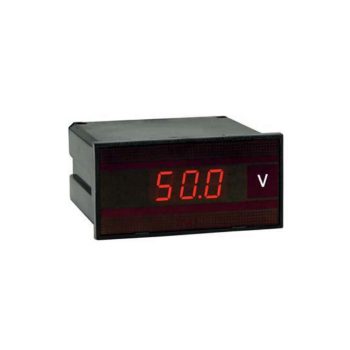
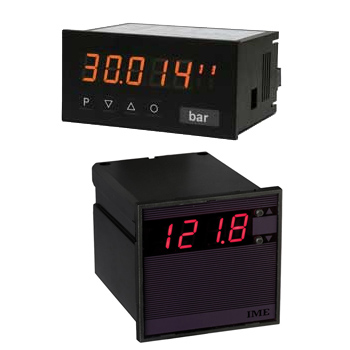
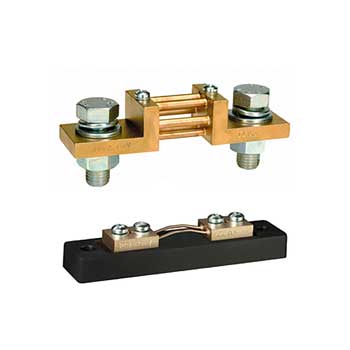
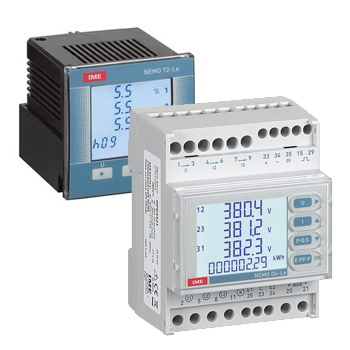
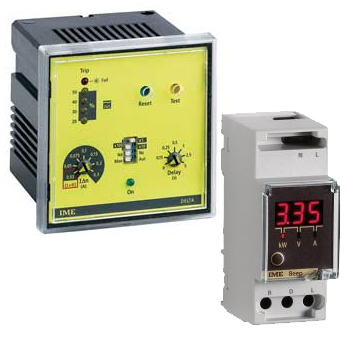
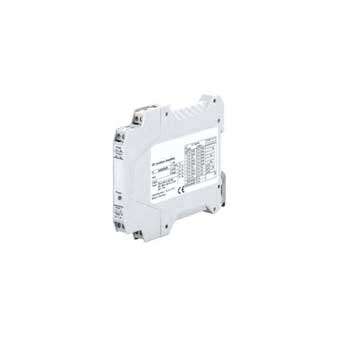
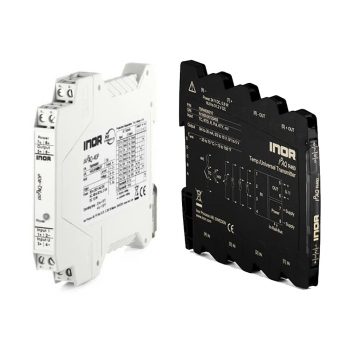
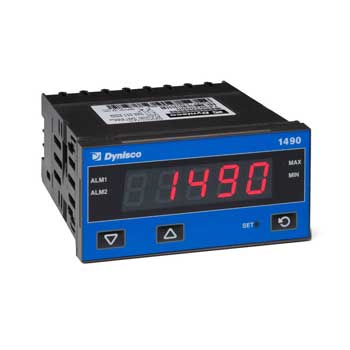
























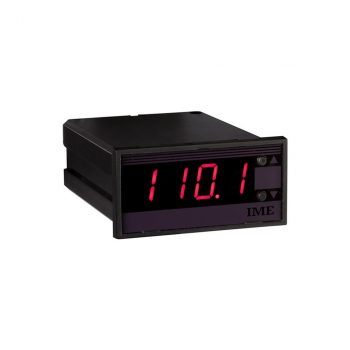
• Digital display for alternating voltage RMS (input through shunt)
  • Dimensions: front frame 96x48mm
  • With or without 2 programmable limit contacts, MIN and / or MAX contact
  • Input: 100V
  • Auxiliary voltage: 24Vac or 115 or 230Vac or 240Vac or 20 ... 150Vdc / 48Vac or 150 ... 250Vdc
  • Display: 100V ... 250kV (43 ranges adjustable); 3 digits, max.display: 999
Datasheet

  • Digital indicator for AC voltage (direct or VT input)
  • Dimensions: front frame 48x48mm
  • Without border contacts
  • Input: 200V or 450V or 100V
  • Auxiliary voltage: 24Vac or 115 or 230Vac or 240Vac or 20 ... 150Vdc / 48Vac or 150 ... 250Vdc
  • Display: directly 199.9V or 450V; 3 1/2 digits, max.display: 1999
Datasheet

  • Digital display for alternating voltage RMS (VT input)
  • Dimensions: 72x36mm
  • Without border contacts
  • Input: 100V
  • Auxiliary voltage: 24Vac or 115Vac or 230Vac or 240Vac or 20 ... 150Vdc / 48Vac or 150 ... 250Vdc
  • Display: direct 100V ... 250kV (43 ranges adjustable); 3 digits, max.display: 999
Datasheet

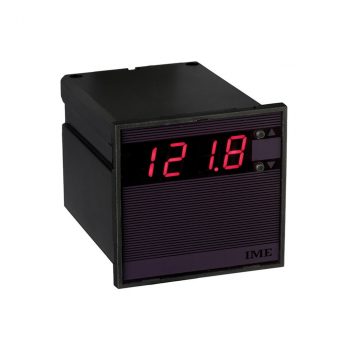
  • Digital display for alternating voltage RMS (VT input)
  • Dimensions: front frame 72x72mm
  • With or without 2 programmable limit contacts, MIN and / or MAX contact
  • Input: 100V
  • Auxiliary voltage: 115Vac or 230Vac or 240Vac or 20 ... 150Vdc / 48Vac or 150 ... 250Vdc
  • Display: 100V ... 250kV (43 ranges adjustable); 3 digits, max.display: 999
Datasheet

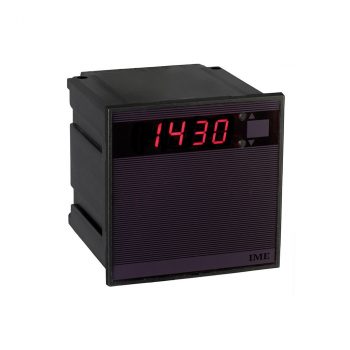
  • Digital display for alternating voltage RMS (VT input)
  • Dimensions: front frame 96x96mm
  • Without border contacts
  • Input: 100V
  • Auxiliary voltage: 24Vac or 115Vac or 230Vac or 240Vac or 20 ... 150Vdc / 48Vac or 150 ... 250Vdc
  • Display: 100V ... 250kV (43 ranges adjustable); 3 digits, max.display: 999
Datasheet

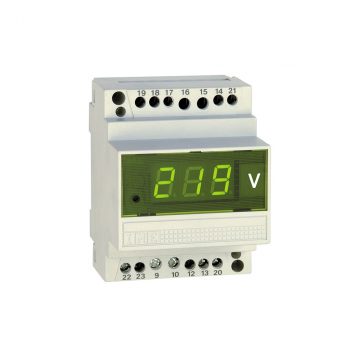
  • Digital display for alternating voltage RMS / VT
  • Dimensions: 4 modules DIN
  • With or without 2 programmable limit contacts, MIN and / or MAX contact
  • Input: 100V
  • Auxiliary voltage: 24Vac or 115Vac or 230Vac or 240Vac or 20 ... 150Vdc / 48Vac or 150 ... 250Vdc
  • Display: 100V ... 250kV (43 ranges adjustable); 3 digits, max display: 999
Datasheet


Digital AC-Einbaumessgeräte / Digital AC Panel Meters

Digitale AC-Einbaumessgeräte sind elektronische Mess- und Anzeigeinstrumente, die Wechselstromparameter wie AC-Spannung, AC-Strom, Frequenz, Leistung, Energie etc. messen und digital — z. B. auf einem LED- oder LCD-Display — darstellen. Durch einen Analog-Digital-Wandler (ADC) und digitale Signalverarbeitung liefern sie präzise, stabile Werte und erlauben oft zusätzliche Funktionen wie Alarme, Grenzwertüberwachung, Kommunikationsschnittstellen oder Mehrgrößenanzeige. :contentReference[oaicite:0]{index=0}

F&Q

What is a digital AC panel meter?

A digital AC panel meter is a built-in instrument for monitoring AC electrical quantities (voltage, current, frequency, power etc.) and displaying the results numerically on a display — designed for mounting in control panels or switchgear. :contentReference[oaicite:1]{index=1}

Which AC quantities can be measured?

Typical measurable quantities include AC voltage (VAC), AC current (AAC), frequency (Hz), power (active, reactive or apparent), power factor and — depending on model — energy consumption or demand. :contentReference[oaicite:2]{index=2}

How does a digital AC panel meter work?

The meter receives the analog input signal (voltage, current via sensors or transformers), the signal is converted by an analog-to-digital converter (ADC), then processed by an internal microcontroller and finally shown as a numeric value on the display. This process ensures accurate, stable measurements even with fluctuating waveforms. :contentReference[oaicite:3]{index=3}

What are the advantages compared to analog meters?

Digital meters provide higher measurement accuracy, avoid reading errors typical for analog pointer gauges, allow automatic range adaptation, and often offer extra functions such as alarms, data logging, adjustable thresholds, multi-parameter display or communication ports (e.g. RS-485 / Modbus). :contentReference[oaicite:4]{index=4}

Where are digital AC panel meters typically used?

They are used in power distribution panels, motor-control cabinets, industrial switchgear, energy-management systems and automation setups — überall dort, wo zuverlässige Überwachung, Steuerung und Dokumentation von AC-Netzparametern nötig sind. :contentReference[oaicite:5]{index=5}

Which display and output types are common?

Displays sind meist LED- oder LCD-Displays. Optional bieten Geräte Relais- oder Analogausgänge, Impulsausgänge für Energiezählung, Schnittstellen für Datenkommunikation oder Alarm-/Schaltfunktionen. :contentReference[oaicite:6]{index=6}

What should be considered when selecting a digital AC meter?

Wichtig sind: der Eingangstyp (Direkteingang oder über Strom-/Spannungswandler), Messbereiche (Spannung, Strom etc.), Genauigkeitsklasse, Displaytyp, Panel-Einbaumaße, Versorgungsspannung, und ob gewünschte Funktionen wie Leistungs-/Energiemessung, Kommunikation oder Grenzwertüberwachung unterstützt werden. Auch Umweltbedingungen und Schutzart sollten beachtet werden. :contentReference[oaicite:7]{index=7}

Can a digital AC meter replace multiple analog instruments?

Ja — häufig kombinieren sie Funktionen von Voltmeter, Amperemeter, Frequenzmesser, Leistungsmesser und Energiezähler in einem Gerät, was Platz spart und die Verkabelung vereinfacht. :contentReference[oaicite:8]{index=8}

Are there limitations or disadvantages?

Digitale Geräte benötigen eine Versorgungsspannung, und ihre Elektronik kann empfindlich gegenüber Spannungsspitzen oder Störungen sein. Bei stark verfälschten Spannungsformen oder schnellen transienten Ereignissen kann die Messung ungenau sein, wenn das Gerät nicht für echte RMS-Messung ausgelegt ist. :contentReference[oaicite:9]{index=9}

Diese Website benutzt Cookies. Wenn du die Website weiter nutzt, gehen wir von deinem Einverständnis aus.