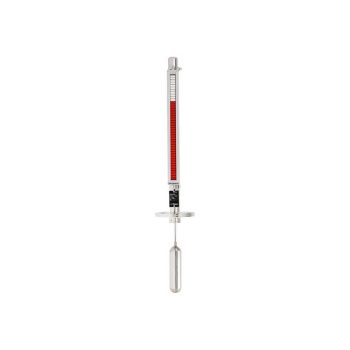
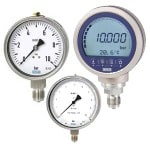
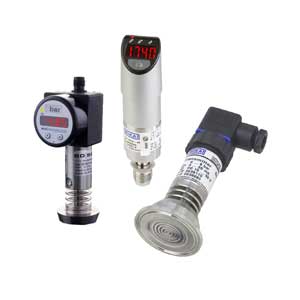
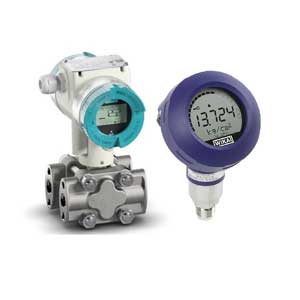
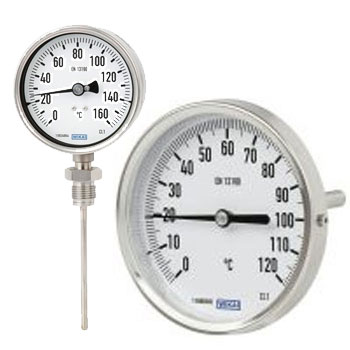
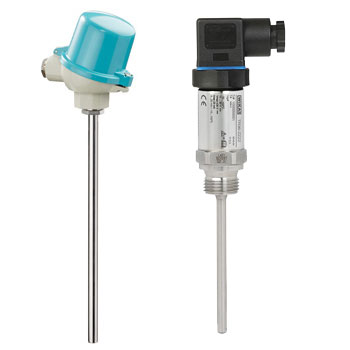
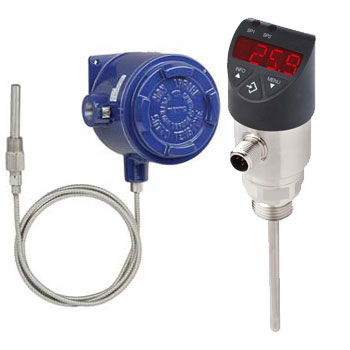
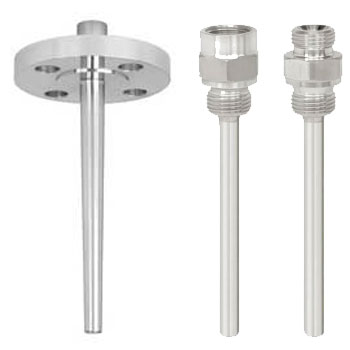
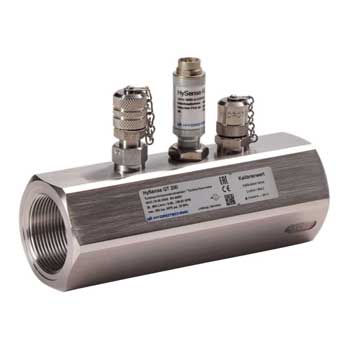
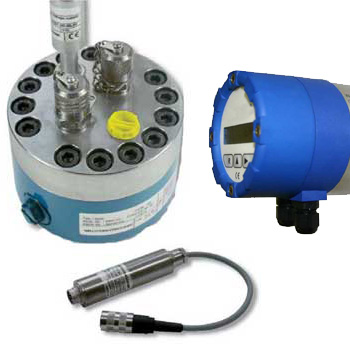
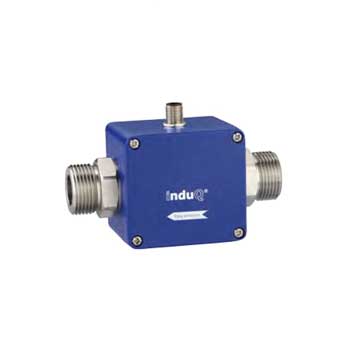
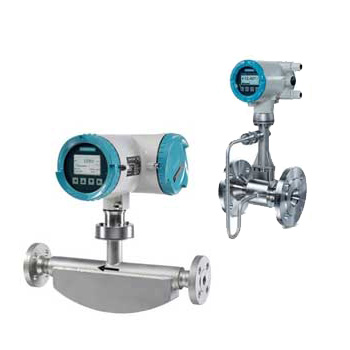
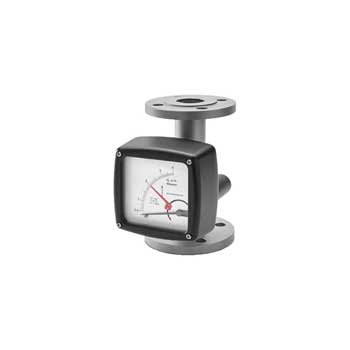
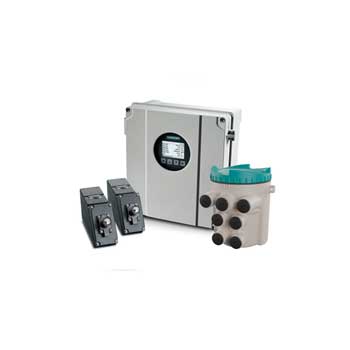
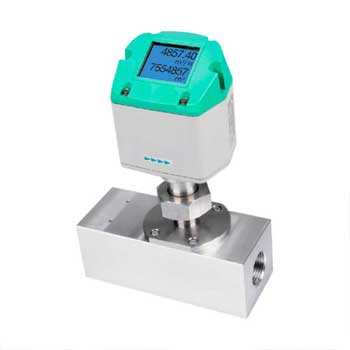
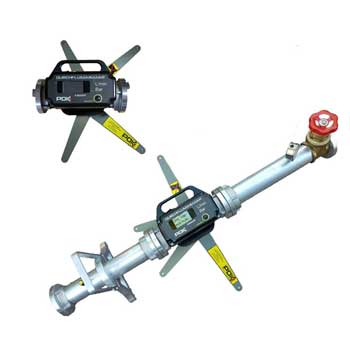
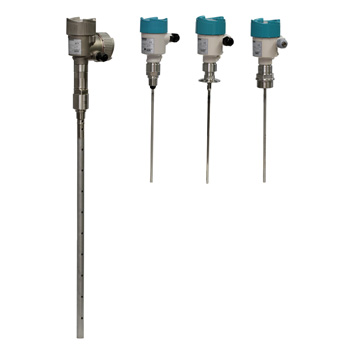
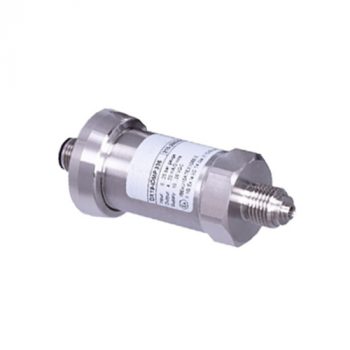
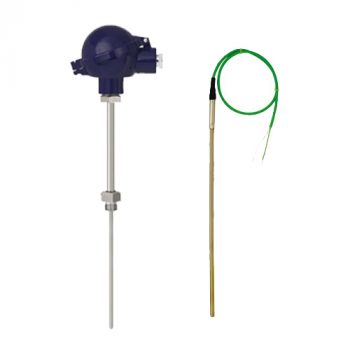
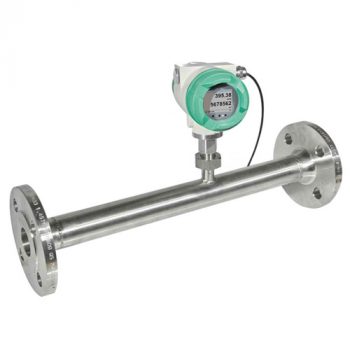




























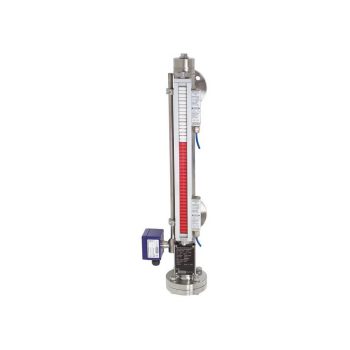
• Process- and system-specific production
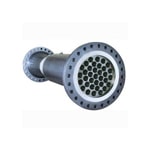
  • Operating limits: - Operating temperature: T = -196 ... +450 °C - Operating pressure: P = vacuum to 400 bar - Limit density: ρ ≥ 340 kg/m3
  • Wide variety of different process connections and materials
  • Mounting of level transmitters and magnetic switches possible as an option
  • Explosion-protected versions
Datasheet
User Manual

  • Process- and procedure-specific production
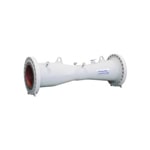
  • Operating limits: - Operating temperature: T = -60 ... +300 °C - Operating pressure: P = Vacuum to 40 bar
  • Wide variety of different process connections
  • Mounting of level sensors and magnetic switches possible as an option
  • Explosion-protected versions
Datasheet
User Manual


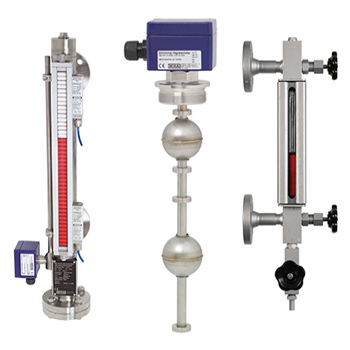
Level Indicators by WIKA / KSR Kuebler – rugged, highly legible local level display

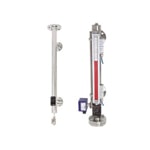
Level indicators from WIKA / KSR Kuebler visualize tank/vessel level on site—clearly readable, optionally with electrical feedback. Common designs include magnetic flap indicators (bypass type), float/Reed-chain indicators, sight-glass indicators and scale/rod systems for plant and tank applications.

Depending on model: ATEX/IECEx, SIL, high-pressure/high-temperature, hygienic design, corrosion/seawater resistance, limit switches (Reed/Hall/magnetic), transmitters (4–20 mA/HART, Modbus/RS-485, IO-Link), metric scales, and process connections G/NPT, PN/ANSI flange or clamp/Varivent.

ICS Schneider Messtechnik supports sizing (density/temperature/pressure), materials, switch/transmitter configuration, calibration and PLC/SCADA/IIoT integration.


FAQ on Level Indicators (WIKA / KSR Kuebler)

Answers on principles, selection, accuracy, installation, materials, switches/signals, hygiene/ATEX/SIL and maintenance.

Which types exist and where are they used?

TypePrincipleStrengthsTypical application
Magnetic flap indicator (bypass) Float with magnet flips external flap/roller scale Excellent readability, high T/p capability, no process window Process vessels, chemical, energy, offshore
Reed-chain / magnetostrictive Float moves along sensor rail Continuous signal (4–20 mA), fine resolution Tank gauging, inventory
Sight-glass indicator Direct view of medium/float Simple, economical, quick check Utilities, non-critical media
Scale/rod systems Mechanical display on tank Media independent, very robust Machine/vehicle tanks

How does a magnetic flap indicator work?

A float in the bypass follows the tank level. Its permanent magnet actuates external flaps or a roller/flag scale, forming a clear color band readable from a distance.

What accuracy can I expect?

Reading accuracy is typically ±5…10 mm (flap/scale resolution). Electronic transmitters (Reed chain/magnetostrictive) achieve about ±2…5 mm or better—depending on design and installation.

Which media and conditions are supported?

Liquids from low to high viscosity, including moderate solids content. Temperature/pressure ranges are model-dependent; special versions exist for high pressure/high temperature and cryo.

What materials are available?

Bodies in 1.4404/316L, 1.4571, Hastelloy®, duplex, titanium or plastic-lined. Seals EPDM/FKM/PTFE/FFKM. Scales/windows with protective covers against UV/impact.

Can I add limit switches and a transmitter?

Yes. Magnetic switches (Reed/Hall) can be clamped to the bypass and positioned as needed. You can also add transmitters (Reed chain or magnetostrictive) for 4–20 mA/HART or IO-Link.

How is the right float selected?

By density (ρ), temperature, pressure, viscosity and medium. Density sets buoyancy; for varying ρ use adapted floats or apply corrections.

Which process connections are offered?

PN/ANSI flanges, G/NPT threads, clamp/Varivent (hygienic) and custom interfaces. Bypass indicators typically use side top/bottom nozzles on the vessel.

How do I install a bypass indicator?

  • Side mounting with upper/lower take-off (add isolation valves).
  • Provide venting at top and drain at bottom.
  • Mount straight and stress-free; add insulation/heating if required.

Are ATEX/IECEx or SIL versions available?

Yes. Many models support Ex i/Ex d; electronic add-ons (switches/transmitters) with matching approvals. SIL use requires proof, proof-test intervals and suitable evaluation.

How do density and temperature influence the reading?

With the float principle, the float position is density-dependent. Density changes slightly shift the indication. Temperature affects ρ and viscosity—consider this during design.

What matters in hygienic applications?

316L, flush/crevice-free connections (clamp/Varivent), FDA/EU 1935/2004 seals, CIP/SIP resistance, polished surfaces and supporting certificates.

Can I display interfaces (oil/water)?

Yes. With interface floats and the proper bypass geometry the phase boundary can be shown; add a transmitter for continuous output if needed.

What IP ratings are typical?

Indicator housings are usually IP65…IP67; electronics may be IP67/IP69K. For outdoor use add UV protection and corrosion-resistant fasteners.

How is electrical connection made?

Switches with PNP/NPN or relay/Namur, transmitters with 4–20 mA/HART, Modbus/RS-485 or IO-Link. Use M12/circular plugs or junction boxes; route cables per EMC best practice.

What tests/acceptance can be provided?

Pressure/leak tests, EN 10204-3.1 material certificates, factory/DAkkS calibrations for transmitters and FAT per client plan.

How are switching points set?

Magnetic limit switches are slidable along the scale; lock in place, verify with a test magnet, and document set values.

What are typical pitfalls?

  • Wrong float (ρ/T) → pick the correct float type
  • Too large magnetic gap → set proper distance for flaps/switches
  • Build-up/particles → add rinsing/cleaning provisions
  • Air trapped in bypass → vent properly; ensure correct flow direction
  • EMC issues on transmitter → shielded cable and grounding

Maintenance & cleaning—what’s sensible?

Regularly check mechanics (free-moving flaps), mounts, tightness and scale/window condition. In CIP/SIP service verify chemical compatibility. Function-test electronics periodically.

Do you support selection, sizing & commissioning?

Yes. We size the bypass & float, define materials/connections, configure switches/transmitters, supply calibration certificates and integrate into PLC/SCADA/IIoT with documentation.

Diese Website benutzt Cookies. Wenn du die Website weiter nutzt, gehen wir von deinem Einverständnis aus.