








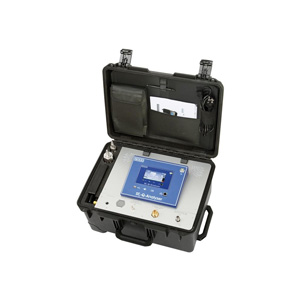
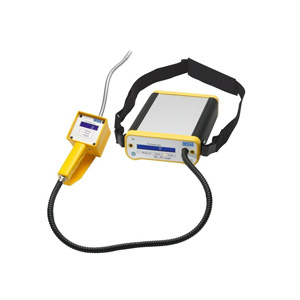
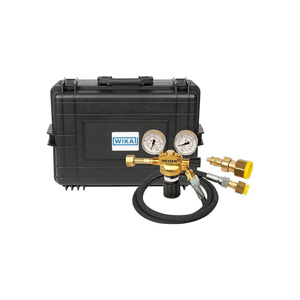
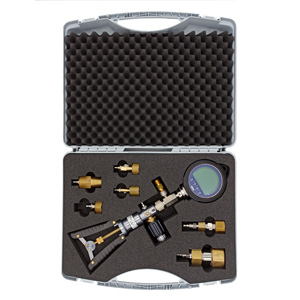
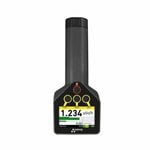
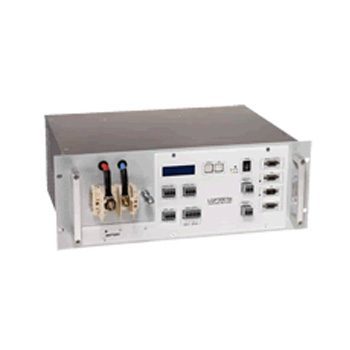
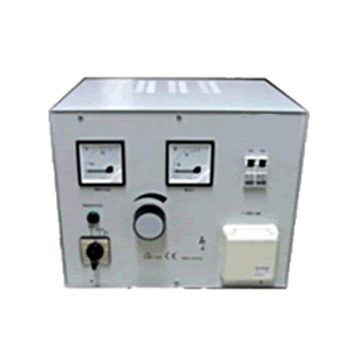
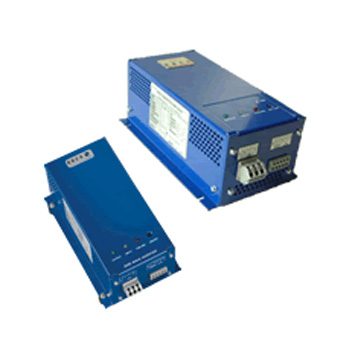
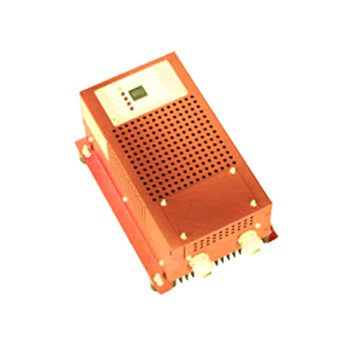





























- Ultra lightweight (6.9kg)
- 1-200Adc test current with <2.5% ripple
- Supplied with standard 3m output lead set
- 0.1μΩ resolution
- mV, A, and m/μΩ displayed simultaneously
- USB memory key for data storage
- USB keyboard for comment entry
- Pre-settable test current with three buttons to store user test currents
- Large back-lit liquid crystal display
- Universal supply voltage 90-264V
- Optional current clamp to allows testing of objects with both sides earthed
 Datasheet Datasheet
|

- As per DMO200 but supplied with Kelvin Clamp 3m output lead set
- Ultra lightweight (6.9kg)
- 1-200A DC test current with <2.5% ripple
- 0.1μΩ resolution
- mV, A, and m/μΩ displayed simultaneously
- USB memory key for data storage
- USB keyboard for comment entry
- Pre-settable test current with three buttons to store user test currents
- Large back-lit liquid crystal display
- Universal supply voltage 90-264V
- Optional current clamp to allows testing of objects with both sides earthed
- IP rating 54
| Datasheet |
- As per DMO200 Test System but supplied with standard 5m output lead set
- Ultra lightweight (6.9kg)
- 1-200Adc test current with <2.5% ripple
- 0.1μΩ resolution
- mV, A, and m/μΩ displayed simultaneously
- USB memory key for data storage
- USB keyboard for comment entry
- Pre-settable test current with three buttons to store user test currents
- Large back-lit liquid crystal display
- Universal supply voltage 90-264V
- Optional current clamp to allows testing of objects with both sides earthed
- IP rating 54
| Datasheet |
- As per DMOO200 Test System but supplied with Nevada Crocodile Clip 3m output lead set
- Ultra lightweight (6.9kg)
- 1-200A DC test current with <2.5% ripple
- 0.1μΩ resolution
- mV, A, and m/μΩ displayed simultaneously
- USB memory key for data storage
- USB keyboard for comment entry
- Pre-settable test current with three buttons to store user test currents
- Large back-lit liquid crystal display
- Universal supply voltage 90-264V
- Optional current clamp to allows testing of objects with both sides earthed
- IP rating 54
| Datasheet |

- Ultra lightweight (19.7g)
- 10-600Adc test current with <2.5% ripple
- 0.1μΩ resolution
- mV, A, and m/μΩ displayed simultaneously
- USB memory key for data storage
- USB keyboard for comment entry
- Pre-settable test current with three buttons to store user test currents
- Large back-lit liquid crystal display
- Universal supply voltage 90-264V
- Supplied with 3m output lead set
- Optional current clamp to allows testing of objects with both sides earthed
|
Datasheet
|

Digital Micro-Ohmmeters
Digital micro-ohmmeters are precision instruments designed to measure very low electrical resistances — typically in the milliohm or microohm range. They are used to assess contact resistances in switchgear, connections, welding or solder joints, cable ends or grounding links — especially where contact quality and conductivity are critical. By employing precise Kelvin measurement techniques and controlled test currents, reliable assessment of conductivity and connection integrity is possible.
FAQ
What is a micro-ohmmeter?
A micro-ohmmeter is a measuring instrument that determines very low electrical resistances with high precision — usually in the range from milliohms down to microohms.
Where are micro-ohmmeters used?
For testing contact resistances in circuit breakers, connectors, busbar systems, cable lugs, welds, solder joints, grounding connections and other critical electrical junctions.
Why is measuring very low resistances important?
High contact or joint resistance can cause overheating, voltage drops, power losses or unreliable operation — particularly under high current load or in safety-critical systems.
How does a digital micro-ohmmeter measure low resistances?
Using a 4-wire Kelvin technique: two leads carry the test current, while two separate leads measure the voltage drop — minimizing influence from lead and contact resistances and yielding accurate results.
What measurement ranges and accuracy are typical?
Depending on the model: from a few milliohms up to several hundred milliohms, often with accuracy better than 0.1 % or < 0.1 mΩ under optimal conditions.
When should a micro-ohm measurement be performed?
During commissioning, after installation or repair, when contact problems are suspected, after overheating incidents, before high current operation or as part of regular maintenance and inspections.
What faults can micro-ohmmeters detect?
High contact resistance, corrosion, poor solder or weld joints, loose or insufficiently tightened connections, degraded contacts, oxidation, or damaged conductors.
What are common sources of measurement error?
Poor contact surfaces, oxidation, dirt, insufficient contact pressure, improper wiring or test current, poor lead connection, environmental influences or incorrect measurement setup.
How should a micro-ohm test be prepared?
Clean contact surfaces, tighten connections, ensure stable contact pressure, connect correct leads, apply defined test current and use stable ambient conditions for measurement.
How are results evaluated and documented?
Record measured resistance, compare with nominal or reference values, note environmental conditions and test current, document date and responsible person. If resistance is too high, remedial action must be taken and measurement repeated.
What safety considerations apply?
Ensure circuit is de-energized before testing. Test current should not exceed component load capacity. Use measuring leads and instruments rated for expected current. Protect against accidental energisation.
Who should perform micro-ohm measurements?
Qualified personnel familiar with electrical installations, measurement techniques and safety procedures — especially when checking critical connections in switchgear or installations.
How often should periodic checks be done?
In high-load systems annually or bi-annually; otherwise after installation, repair, or upon signs of heating, loosening or corrosion.
What are the benefits of digital micro-ohmmeters compared to simple testers?
They provide high precision and repeatability, compensate for lead and contact resistance, reliably measure very low resistances, and are often portable and robust for field use.