




















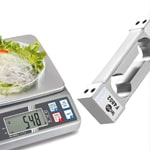






- PRE-TARE function for manual subtraction of a known container weight, useful for checking fill-levels
-
Display device: Plastic, protection against dust and water splashes IP65
-
Load fork: protection against dust and water splashes IP67, temporary use in wet areas possible
- Pivot range 206°
- Castors: Solid rubber on aluminium rims
-
Load rollers: Tandem tyres to overcome thresholds and obstacles more easily. Material: Polyurethane
- Totalising of weights
- Ready for use: Batteries included (4×1.5 V AA). Operating time up to 80 h
Datasheet
|
User Manual
|
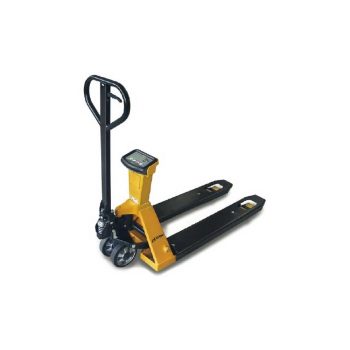
Weighing Pallet Truck Scales – Mobile Scales for Transport & Weighing in One Step
Weighing pallet truck scales combine a pallet truck (hand- or electric operated) with an integrated industrial weighing system. This dual-function device allows you to both transport and weigh pallets or crates in one step—ideal for logistics, warehousing, shipping or production processes. :contentReference[oaicite:0]{index=0}
Such devices typically offer a load capacity up to 2,000 kg or more, a resolution of 1 kg or finer, rugged construction for everyday industrial use, and optional features like tare memory, summation of batches or interface connections for data export. :contentReference[oaicite:1]{index=1}
FAQ About Weighing Pallet Truck Scales
Answers to questions about functionality, selection, installation, operational advantages and typical use cases.
What is a pallet truck scale?
A pallet truck scale is essentially a pallet truck equipped with an integrated weighing system. It allows the user to lift and transport a pallet and read its weight at the same time, eliminating the need to transfer loads to a separate weighing platform. :contentReference[oaicite:2]{index=2}
In which situations is a pallet truck scale especially useful?
They are particularly valuable where goods are already on pallets or skids and need to be moved and weighed frequently—such as warehouse inbound/outbound, order picking, shipping, production feed-in and internal logistics—saving time and minimizing handling steps. :contentReference[oaicite:3]{index=3}
What key criteria should I consider when selecting one?
You should evaluate:
- Maximum load capacity (e.g., 1 000 kg, 2 000 kg, 2 500 kg)
- Resolution / minimum readability (e.g., 1 kg, 0.5 kg)
- Platform / forks length and width compatible with your pallets
- Load cell count, protection rating (e.g., IP65/67) for industrial use :contentReference[oaicite:4]{index=4}
- Display placement and readability during pallet handling
- Batteries vs mains power, mobility (hand vs electric truck) :contentReference[oaicite:5]{index=5}
- Interfaces for data export, printer or warehouse system integration
How is a pallet truck scale installed and used?
The device needs no special foundation—just standard floor clearance. Ensure the forks can enter pallets freely, the display is visible, batteries charged (if mobile) and the tare (empty pallet weight) is correctly set. For permanent use, a verification or calibration may be required per local regulations. :contentReference[oaicite:6]{index=6}
What advantages do they offer?
Major advantages include:
- Reduced handling: no need to move pallets to a stationary scale
- Time savings in shipping/receiving workflows
- Improved process efficiency and traceability
- Space savings: one device instead of separate scale and truck
What are common error sources or issues?
- Battery low or display not visible during transport
- Forks not fully inserted into pallets, causing uneven load transfer
- Overloading beyond rated capacity leading to inaccurate readings
- Calibration or verification not maintained leading to compliance issues
Are pallet truck scales certified for trade or internal use?
Some models are legal-for-trade (eichfähig) for billing purposes, others are intended for internal process control. Check the model specification and local metrology requirements. :contentReference[oaicite:7]{index=7}
How can I request a quotation?
Please provide ICS Schneider Messtechnik with required maximum load, readability/accuracy, pallet dimensions (fork length and width), mobility requirements (hand or electric truck), environment (humid, dusty, outdoor), battery or mains power, and any interface/printing needs. They will then offer a solution tailored to your workflow.


Datasheet