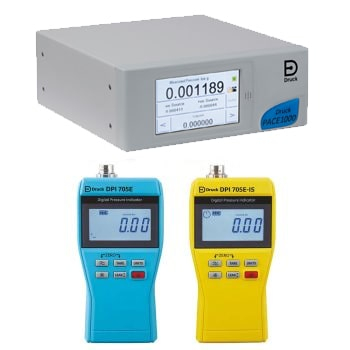
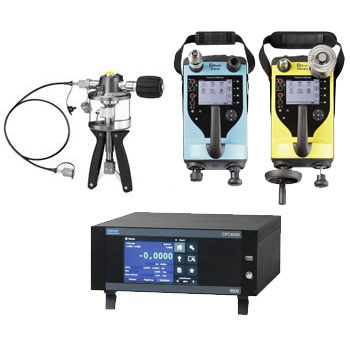
Industrial Pressure Measurement – measure reliably, integrate cleanly

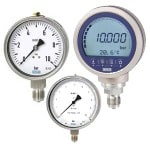
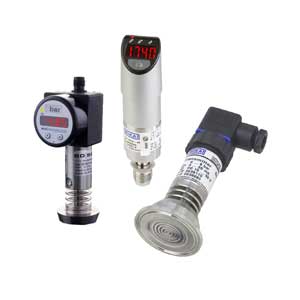
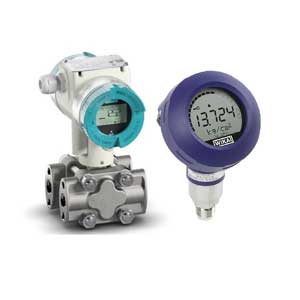
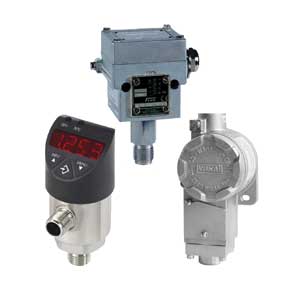
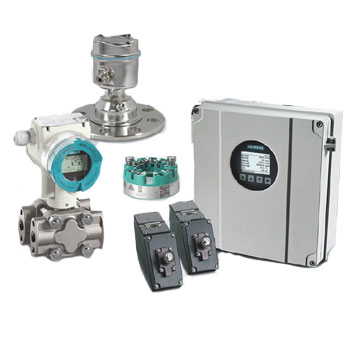
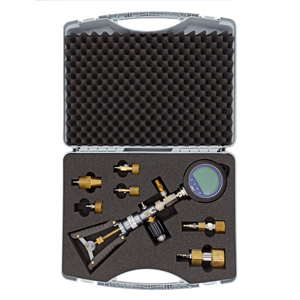
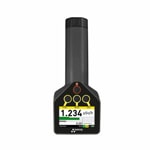
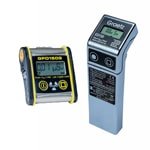
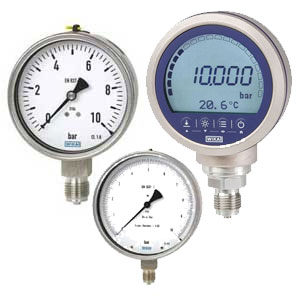
Pressure is one of the most important process variables. Whether bourdon-tube gauges, digital pressure meters, pressure sensors, differential pressure transmitters, pressure switches, or diaphragm seals — at ICS Schneider you’ll find the right solution from simple indication to high-accuracy process monitoring.

We support you from selection and sizing through commissioning: media and material consulting, process connection and span selection, damping for pulsations, hygienic and Ex versions, calibration and — if desired — IIoT connectivity (HART, Modbus RTU, IO-Link, MQTT/HTTPS). The result is stable, traceable measurements that cut downtime, leaks, and energy losses.


FAQ on Pressure Measurement

Answers to key questions on selection, installation, accuracy, overload protection, cleaning, calibration, and digitalization of your pressure points.

What’s the difference between gauges, digital pressure meters, sensors, and transmitters?

Device typeFunctionTypical use
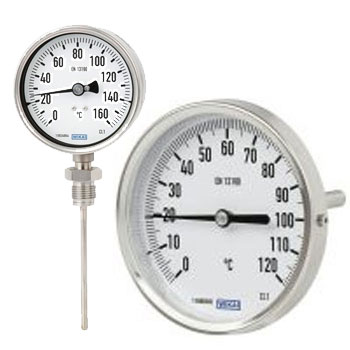
Mechanical gaugeLocal indicationHydraulics, pneumatics, utilities
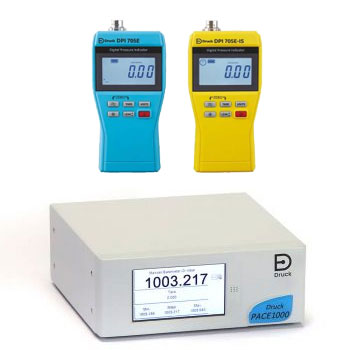
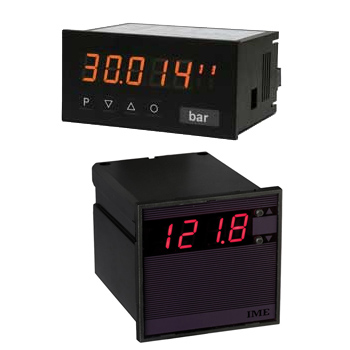
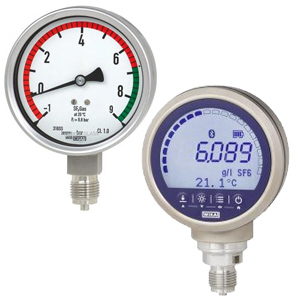
Digital pressure meterDisplay + features (hold, peak)Service, maintenance, testing
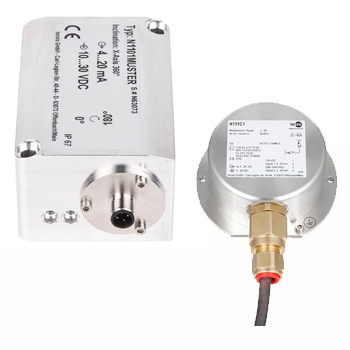
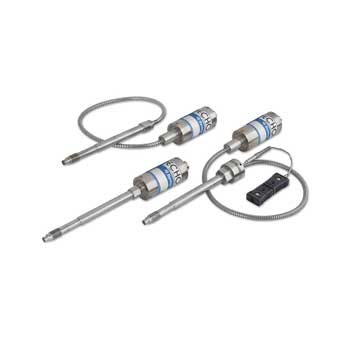
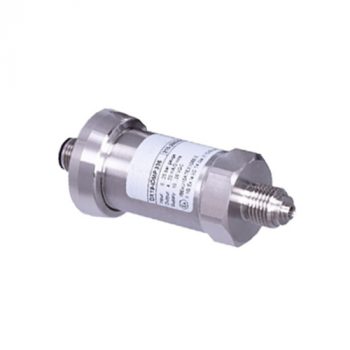
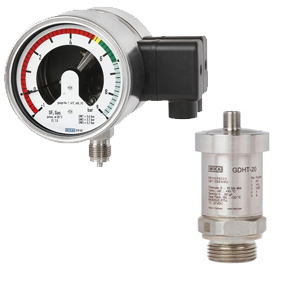
Pressure sensor/transmitterElectrical signal (4–20 mA, IO-Link, Modbus)Automation, control, IIoT
Differential pressure transmitterΔp for filter/flow/levelFilter monitoring, flow, tanks
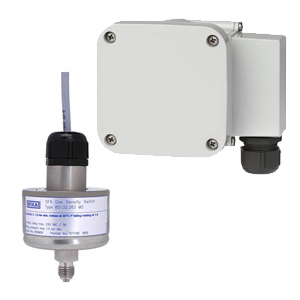
Pressure switchContact at thresholdPump protection, compressor, safety

Absolute, gauge, or differential pressure — which do I need?
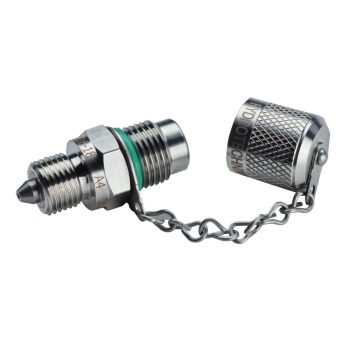
Gauge (g) references ambient (e.g., 0 bar g at open systems). Absolute (a) references vacuum (e.g., 1.013 bar a ambient). Differential (Δp) measures the difference between two points (filters, flow, level). Choose based on process and required insight.

How do I choose the correct measuring range?
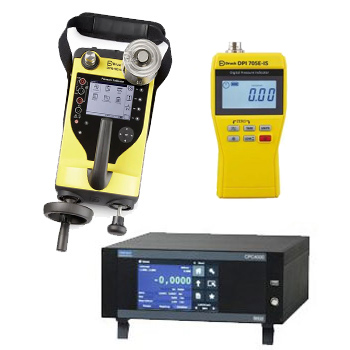
Maximum working pressure × safety factor (1.3–2.0) for dynamic loads. For switches: setpoint roughly mid-span. For filter Δp allow margin for clogging.

What accuracy classes are typical?
DeviceAccuracy (typ.)Note
GaugeClass 1.0–2.5Process indication
Digital indicator±0.05…0.25% of FSService/verification
Transmitter±0.04…0.5% of FSControl/quality

Which process connections are common?

ConnectionStandardUse
G 1/4, G 1/2ISO 228General industry
¼" NPT, 1/2" NPTASMEUS/Oil & Gas
Tri-Clamp, Varivent®HygienicFood/pharma
FlangeEN/ASMEHigh pressure/aggressive media

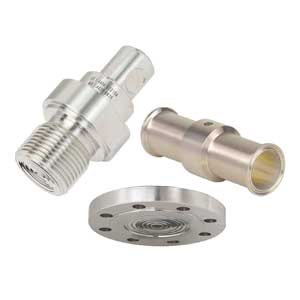
When do I need a diaphragm seal (chemical seal)?

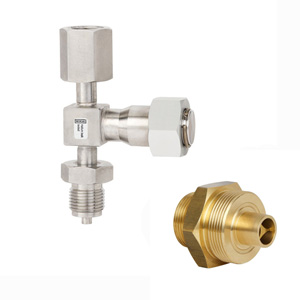
For highly viscous, crystallizing, abrasive, hot/corrosive media and for CIP/SIP. The seal protects the sensing element; match fill fluid and diaphragm material to the medium.

Which fill fluids are suitable for hygienic applications?

FDA/EU-compliant fluids (e.g., food-grade oils). Consider temperature range and viscosity; archive release documents.

How do I protect instruments from pressure spikes and pulsations?

Use restrictors/capillaries, pulsation dampers/snubbers, or glycerin-filled gauges. Consider a larger span and adjust switching delays.

Does mounting orientation matter?

Yes. Gauge indication and filled systems can be position-dependent. Same for transmitters with capillaries. Follow manufacturer notes and re-zero for installed position if needed.

How does temperature affect the measurement?

Electronics/diaphragm drift and medium temperature shift zero/span. For high T: use capillary extensions, cooling elements, siphons, or remote seals.

How do I size differential pressure for filters?

Select Δp span based on expected fouling (e.g., 0…500 mbar). Install with a 3- or 5-valve manifold for isolation/zero. Keep impulse lines equal length and add condensate traps where required.

Which materials are media-resistant?

PartMaterialSuitability
Process connection1.4571/316TiBroad chemical resistance
DiaphragmHastelloy®, Monel®, TantalumHigh corrosion resistance
SealsFKM, EPDM, PTFEDepends on medium/temperature

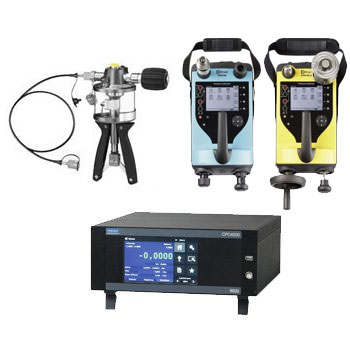
How often should I calibrate?

Usage/risk dependent: typically annually; for quality/safety loops consider semi-annual/quarterly. After mechanical events (shock/overpressure) check immediately.

What does traceable calibration include?

Reference with DKD/DAkkS/ISO certificate, documented setup, up/down points, environmental conditions, measurement uncertainty. Store the certificate in a revision-safe way.

What are common error sources?

Air in impulse lines, clogged restrictors, poor venting, vibration, temperature drift, wrong units/scaling, and EMC issues on electrical sensors.

Can existing 4–20 mA/HART devices be integrated into DCS/IIoT?

Yes. Via HART-enabled inputs/multiplexers or edge gateways. Diagnostics, zero/span, and tagging can be parameterized remotely and published via MQTT/HTTPS.

When is IO-Link or Modbus RTU the better choice?

IO-Link: short runs, fast parameterization/events, machinery. Modbus RTU (RS-485): longer cables, many nodes, process plants. Both can be bridged to IT/cloud via an edge.

Which enclosure ratings/housings should I select?

At least IP65 for outdoor/humid areas; IP67/IP69K for wash-down. In hazardous areas follow ATEX/IECEx (e.g., Ex ia) and use proper cable glands/barriers.

How do I detect leaks or energy losses in compressed air?

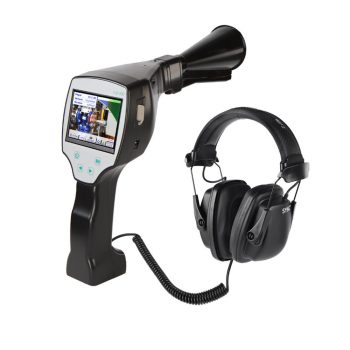
Trend network pressure/compressor starts, Δp across filters, compare night base load. Set alarms for rapid drops/rate-of-change; optionally add ultrasonic leak surveys.

Which units are common — and how do I convert?

UnitRelationConversion (example)
bar1 bar = 105 Pa1 bar = 100 kPa
MPa106 Pa1 MPa = 10 bar
psipound/in²1 bar ≈ 14.5038 psi
mbar102 Pa1000 mbar = 1 bar

How do I set pressure switch setpoints correctly?

Place the setpoint in a stable operating zone (not near spikes), define hysteresis (fallback), add damping for pulsation. For safety loops follow standards/SIL.

What matters in hygienic processes?

Avoid dead legs, use polished surfaces, EHEDG/3-A designs, CIP/SIP resistance. Manage temperature/pressure swings with suitable diaphragms and fill fluids.

How important is the installation location?

Close to the process, low vibration, easy to vent/drain, shielded from heat/radiation. For vibration: use remote seals with capillaries or proper mounts.

Can a transmitter “measure” flow?

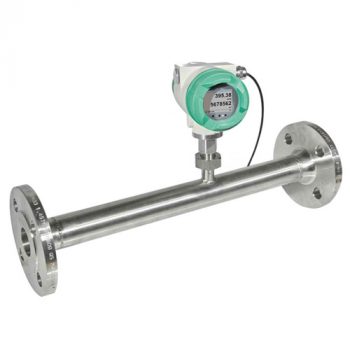
Yes, via differential pressure across an orifice/nozzle/Venturi. The transmitter measures Δp; the calculation converts this to flow (assuming density/geometry).

How do I plan a replacement/retrofit with minimal downtime?

Pre-match type/connection/span, prepare adapters/reducers, parameterize zero/span, document switchpoints, replace seals, and perform a leak test.

Why use glycerin-filled gauges?

They damp pointer oscillation under vibration/pulsation, improve readability, and protect mechanics. Check the fluid’s temperature range.

How do I integrate pressure points into energy management?

Correlate network and compressor pressure, Δp across filters/dryers, cycles/starts, alarms, and consumption. Feed data to historian/BI to quantify savings potential.

What are typical cost packages for pressure points?

PackageScopeNote
BasicGauge + accessoriescost-effective, local readout
AutomationTransmitter 4–20 mA/HARTcontrol-grade, parameterizable
RuggedDiaphragm seal + transmittermedia resistant, cleanable
DigitalIO-Link/Modbus + edgecondition-based, IIoT-ready

Do you support selection and documentation?

Yes. We provide media/material checks, span calculation, drawings/datasheets, calibration certificates, Ex/hygiene approvals and — if desired — the matching dashboard/alarm concept.

Diese Website benutzt Cookies. Wenn du die Website weiter nutzt, gehen wir von deinem Einverständnis aus.