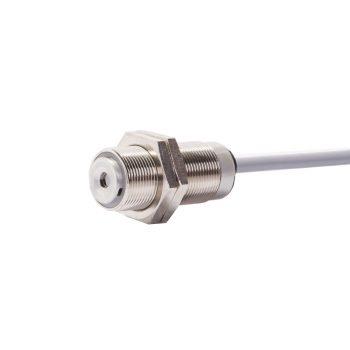
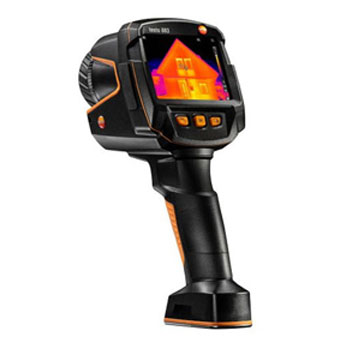
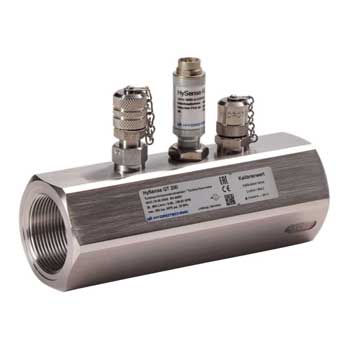
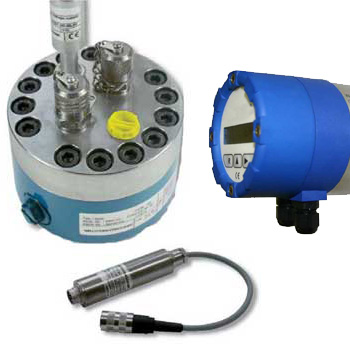
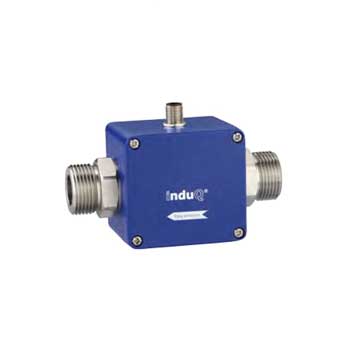
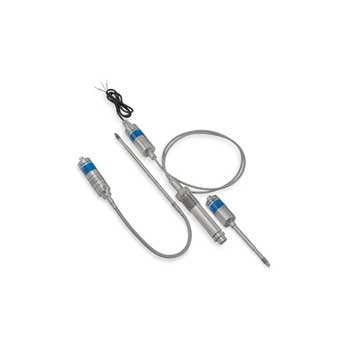
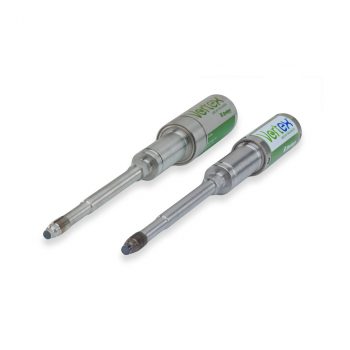
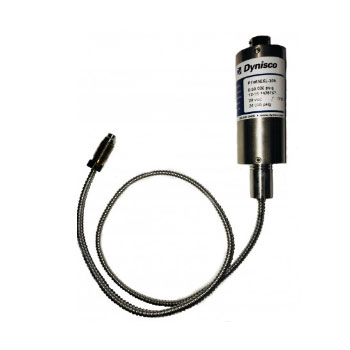
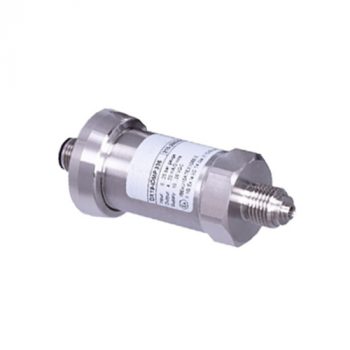






















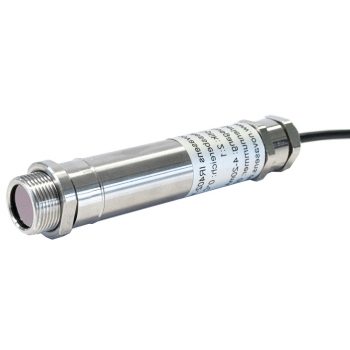
• High-quality low-cost sensor for OEM applications
  • Precise germanium optics
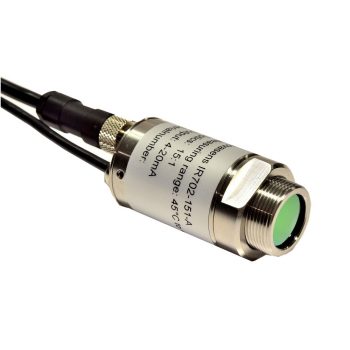
  • Type K thermocouple output
  • Robust, insensitive sensor housing made of stainless steel
  • Compact due to integrated electronics in the sensor housing
  • Low power supply: 6 – 24 VDC and 25 mA
Datasheet

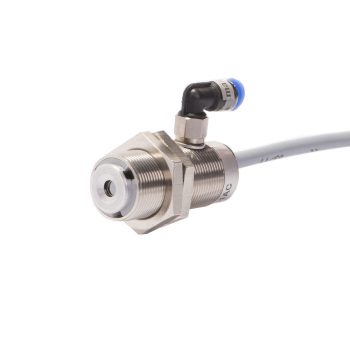
  • Capturing larger measuring areas thanks to the distance/measuring spot ratio of 1:1
  • Robust, insensitive sensor housing
  • 3 m sensor cable, extendable up to 40 m
  • Very small and compact design of 43x18mm for installation in tight spaces space conditions
Datasheet

  • Capturing larger measuring areas thanks to the distance/measuring spot ratio of 1:1
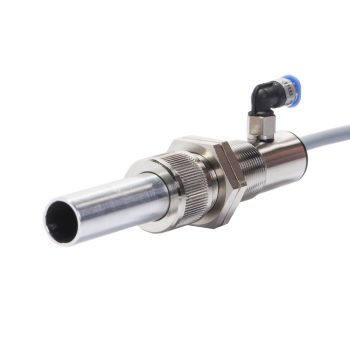
  • Connection for air cooling and lens cleaning with compressed air
  • Robust sensor for use in very hot or heavily polluted environments
  • Very small and compact design for installation in tight spaces
Datasheet

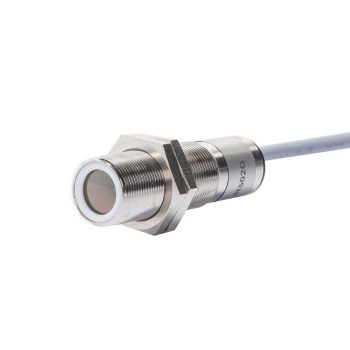
  • Detection of small measuring spots over large measuring distances
  • High-quality, moisture-resistant germanium optics
  • Robust, insensitive sensor housing
  • Compact design
Datasheet

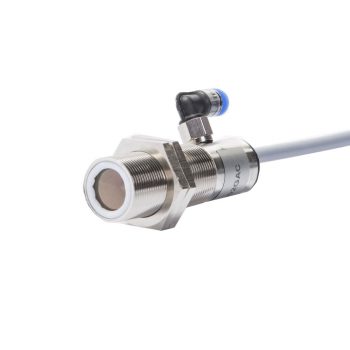
  • Robust sensor for use in very hot or heavily polluted environments
  • Connection for air cooling and lens cleaning with compressed air
  • Detection of small measuring spots over large measuring distances
  • High-quality, moisture-resistant germanium optics
  • Compact, space-saving design
Datasheet

Robust sensor for use in very hot or heavily polluted environments

  • Connection for air cooling and lens cleaning with compressed air
  • Attachment tube against dirt and interference radiation
  • For large measurement distances between sensor and measurement object
  • High-quality, moisture-resistant germanium optics
Datasheet

  • ModBus enabled sensor
  • Precise non-contact temperature measurement of metals
  • Temperature linear 4-20mA output
  • Robust, insensitive sensor housing made of stainless steel in IP65
  • Compact due to integrated electronics in the sensor housing
  • Low power supply: 6 – 24 VDC and 22 mA
Datasheet
User Manual


Infrared Temperature Sensors – non-contact, fast & process-safe

Infrared temperature sensors (pyrometers) measure surface temperatures without contact via emitted thermal radiation—ideal for fast processes, moving objects, electrically isolated parts, hot surfaces, and harsh environments.

Available as compact sensors, fiber-optic/two-wire pyrometers, high-temperature models, and ratio/two-color pyrometers with laser aiming, display, or vision sight. Interfaces: 4–20 mA, 0–10 V, relay/alarm, RS-485/Modbus, IO-Link—optionally with edge/cloud connectivity.

Optics offer different distance-to-spot ratios (D:S), viewing windows (e.g., CaF₂, SiO₂, Al₂O₃), plus air purge, water cooling and protective housings up to IP65–IP69K.

ICS Schneider Messtechnik supports you with wavelength selection, emissivity, optics/D:S, installation, calibration and integration into PLC, SCADA and IIoT.


FAQ about Infrared Temperature Sensors

Answers on emissivity, spectral ranges, optics (D:S), accuracy, calibration, protection & integration.

What are infrared sensors particularly suitable for?

For moving, very hot or mechanically sensitive targets and wherever contact probes are impractical (e.g., conveyors, rollers, casting, glass, electronics, food).

How does non-contact measurement work?

The surface emits thermal radiation. The pyrometer detects it in a chosen spectral band and calculates temperature—dependent on emissivity and optical coupling.

What is emissivity (ε) and why does it matter?

Emissivity (0…1) describes how “radiative” a surface is. It directly affects the reading. Matte, dark surfaces often have ε ≈ 0.9; bare metals are much lower.

Typical emissivities of selected materials

MaterialSurfaceε (guide)
Steeloxidized/matte0.80…0.95
Aluminumbare/polished0.03…0.10
Paint/plasticmatte0.90…0.97
Glassclear0.85…0.95 (at ~5 µm)
Foodmoist/matte0.90…0.98

Which spectral band should I choose?

Spectral bandTypical applicationReason
~1.0–1.6 µmhot metals, forgingLower ε, reduced disturbances
~2.3–3.9 µmglass, flames, high-temp processesMaterial windows & less H₂O/CO₂ influence
~5.0–5.2 µmglass surfacesHigh transmission/sensitivity
8–14 µmgeneral, low/medium T, non-metalsHigh ε, universal
Two-color (ratio)incandescent metals, partial obscurationRobust to soiling/ε drift

What does D:S (distance-to-spot) mean?

D:S is the ratio of distance D to spot size S. Example: D:S = 50:1 → at 500 mm distance, S ≈ 10 mm. The spot must be fully covered by the target.

Examples of optics and spot sizes

OpticD:SWorking distanceSpot Ø
Standard20:1200 mm10 mm
Tele50:1500 mm10 mm
Micro100:1100 mm1 mm

How accurate are IR measurements?

Typically ±(0.5…1 % of reading) or ±(1…2 K), depending on device, calibration, ε, optics and environment.

How fast do pyrometers respond?

Response times of 1…50 ms are common. For fast processes choose short t95/t90 and apply filtering/averaging (optionally peak-hold).

What is a two-color/ratio pyrometer?

It measures in two spectral channels and forms a ratio. Benefit: less sensitive to soiling, partial obscuration and ε variations.

How to deal with reflective metals?

Favor shorter wavelengths (1–1.6 µm), set emissivity correctly, keep a shallow viewing angle, avoid stray light, optionally use black paint spots as references.

Which windows/protective glasses are suitable?

Window material must match the spectral band (e.g., CaF₂ for 2–5 µm, sapphire for robustness, quartz for broadband). Consider transmission and compensate in the device.

How do I protect the sensor in harsh environments?

Air purge against dust, water cooling at high ambient temperature, protective housings (IP65–IP69K), and vibration-resistant mounts.

Any mounting guidelines?

  • Ensure the spot fully covers the target; keep the correct focus distance
  • Reduce stray light (tubes/apertures)
  • Use laser aiming for alignment
  • Consider thermal influences from convection/radiation

What outputs/interfaces are available?

4–20 mA, 0–10 V, relay/switch, RS-485/Modbus, IO-Link; optional data acquisition via edge/cloud (MQTT/HTTPS).

How do I calibrate a pyrometer?

Against a blackbody reference (traceable, ISO 17025) in the relevant temperature range. Document emissivity/transmission; intervals typically 6–12 months depending on the process.

How to handle varying emissivity?

Use a ratio pyrometer, consult emissivity tables, create reference spots (black coating), or perform a comparison with contact probes.

IR vs. contact probes – when to use which?

CriterionInfraredContact (RTD/TC)
Response timeVery fast (ms)ms…s
Mounting influenceOptics/ε/geometryThermal coupling/installation
Moving/hot targetsExcellentOften challenging
Measurement uncertaintyε-dependentWell controllable

Which environmental effects distort readings?

Steam/dust, hot backgrounds, reflections, wrong viewing angle, dirty optics. Mitigation: air purge, apertures, shielding, suitable spectral band.

Can I measure very small spots precisely?

Yes, with tele/micro optics and laser aiming. Mind the focus position and use mechanically stable mounts (avoid vibration).

How do I integrate the pyrometer into control systems?

Analog 4–20 mA/0–10 V to PLC input, or digital via RS-485/Modbus, IO-Link. Set scaling, limits, averaging/filtering in the device or PLC.

Hygienic/IP protection for food/wash-down?

Yes—smooth surfaces, IP69K, FDA-compliant windows/seals, suitable brackets; air purge against product build-up.

Use in hazardous (Ex) areas (ATEX/IECEx)?

Possible with Ex i or Ex d versions and suitable barriers/enclosures. Observe zones, temperature class, marking and documentation.

How can I validate my application upfront?

Build a test setup: determine emissivity, verify optics/D:S, simulate background radiation, compare with a reference contact probe, evaluate stability and response time.

Do you support selection & commissioning?

Yes. We select wavelength, optics and protection, provide calibration certificates, and integrate up to the IIoT dashboard—including parameterization and acceptance.

Diese Website benutzt Cookies. Wenn du die Website weiter nutzt, gehen wir von deinem Einverständnis aus.