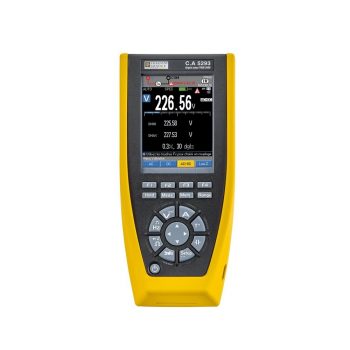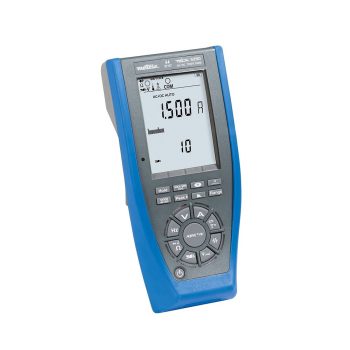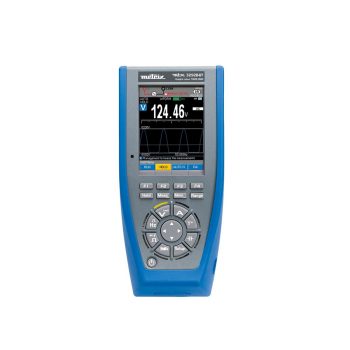
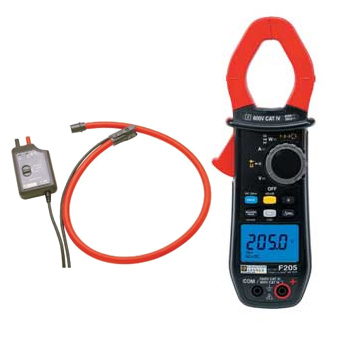
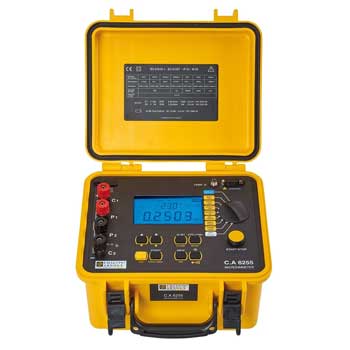
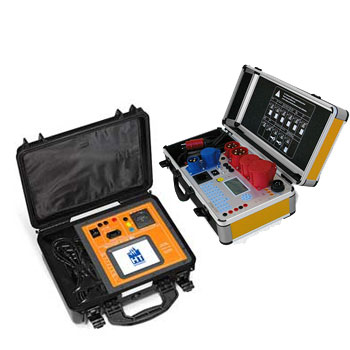
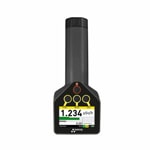




















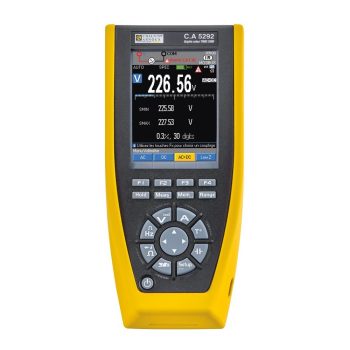
• Graphical display of trends with multiple parameters and waveform up to 600 Hz
  • Multiple analytical tools: time/date-stamped Min/Max/Avg and Peak monitoring, filtering, duty cycle
  • Optimized ergonomics: IP67 watertight casing, safety measurement terminals as per IEC61010 1000V CAT III/600V CAT IV, power supply via USB charger
  • Top-of-the-range specifications: 100 kcts, 200 kHz bandwidth and 0.02% accuracy
  • Communication: USB, BT and ANDROID application via the SX-DMM software delivered, SCPI programming commands
Datasheet
User Manual

  • Graphical display of trends with multiple parameters and waveform up to 600 Hz
  • Multiple analytical tools: time/date-stamped Min/Max/Avg and Peak monitoring, filtering, duty cycle
  • Optimized ergonomics: IP67 watertight casing, safety measurement terminals as per IEC61010 1000V CAT III/600V CAT IV, power supply via USB charger
  • Top-of-the-range specifications: 100 kcts, 200 kHz bandwidth and 0.02% accuracy
  • Communication: USB, BT and ANDROID application via the SX-DMM software delivered, SCPI programming commands
Datasheet
User Manual

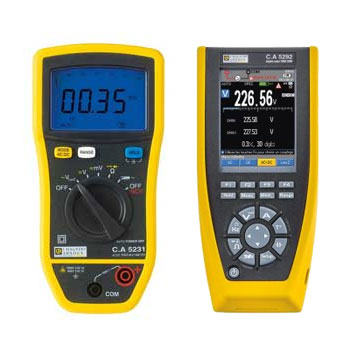
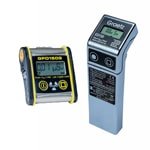
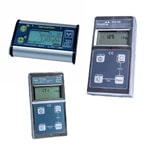
These portable multimeters with digital display allowing direct measurement of the main electrical quantities benefit from an innovative design making them compact, rugged, leakproof and comfortable to grip.

Datasheet

These portable multimeters with digital display allowing direct measurement of the main electrical quantities benefit from an innovative design making them compact, rugged, leakproof and comfortable to grip.

Datasheet

High-performance graphical multimeters...

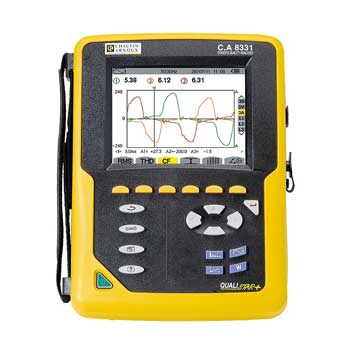
  • Easy-to-read 320 x 240-pixel colour matrix screen with black background
  • Graphical display of trends and multiple parameters on a summary screen / 600 Hz waveform
  • Trace, cursors and zoom on recordings
  • Recording of 10 sequences
Dynamic loggers
  • Storage of up to 10,000 measurements
  • Simplified setting of the number of measurements, interval, duration and storage capacity
  • Internal storage of measurement 10 sequences
  • Interactive zoom function on the recordings
  • A simple surveillance mode displaying the time/date-stamped MIN/MAX/AVG and PEAK values
... And much more!
  • Contextual reminder of the connections
  • Normal USB communication or Bluetooth available as an option / ANDROID application
  • IP67 protection against water projections and dust, ideal for outdoor conditions
  • Ni-MH AA rechargeable battery, the best solution in terms of quality and price
  • Operation for up to 100 hrs on batteries with management of the battery charge level
  • No time-wasting: the instrument operates while charging
Datasheet


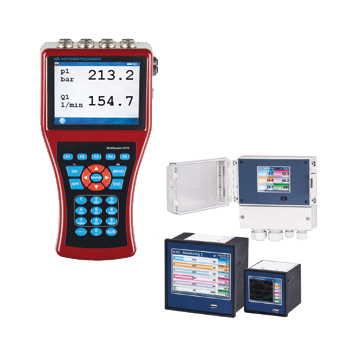
Graphical Recorders

Graphical recorders capture measurement signals over time and display them as curves or trend diagrams on a screen. Depending on the device, they can record voltages, currents, temperatures, resistances, frequencies, digital states or calculated quantities. Typical applications include long-term monitoring, troubleshooting, commissioning, quality assurance and documentation of test and measurement processes.

FAQ

What is a graphical recorder?

A graphical recorder is a measuring and recording instrument that acquires signals over a defined period, stores them and displays them as trend curves or charts, often on several channels in parallel.

Which signals can graphical recorders measure?

Depending on the model, graphical recorders can acquire voltages, currents, temperatures, resistances, frequencies, pulses, digital states and derived quantities such as power or energy.

How do graphical recorders differ from data loggers?

Graphical recorders typically provide an integrated display with real-time visualisation of the trend curves, whereas simple data loggers mainly store values for later analysis on a PC. Graphical recorders are well suited for immediate on-site diagnostics.

How many channels can usually be recorded?

The number of channels ranges from a few analogue or digital channels up to several dozen, depending on the instrument class. The channel count defines how many signals can be monitored simultaneously.

What sampling rates are common?

Sampling rates can extend from slow intervals of seconds or minutes up to much faster acquisition in the millisecond range, depending on the application and device performance.

Which storage options are available?

Graphical recorders use internal memory and often external media such as SD cards or USB storage devices. The effective recording duration depends on sampling rate, number of channels and data format.

Which interfaces do graphical recorders offer?

Typical interfaces include USB, Ethernet, serial ports, fieldbus connections and in some cases wireless communication. They allow data export, remote access and integration into networks or control systems.

How are measurement channels configured?

Channels are configured via the front panel, touch screen or a PC software. Users define input type, range, scaling, channel names, alarm thresholds and recording intervals.

What input types are supported?

Common inputs are voltage and current inputs, thermocouples, resistance temperature detectors, digital inputs and current-loop signals like 4–20 mA. With scaling, process values such as pressure or flow can also be visualised.

Which display modes are available?

Typical modes include time-based trend curves, bar graphs, numeric tables, alarm lists and, on some instruments, additional views such as statistics or frequency analysis.

How are alarms and limit violations handled?

Alarms can be indicated visually, acoustically or via relay outputs. Limit values are configured per channel, and alarm events are usually logged with a time stamp.

What is the role of time stamps and real-time clock?

A precise internal clock ensures that each measured value and event is assigned a correct time stamp, which is essential for analysis, correlation with external events and documentation.

How are recorded data evaluated?

Data can be analysed directly on the device using zoom, cursor and statistics functions, or transferred to a PC for detailed evaluation, comparison, filtering and report generation.

In which applications are graphical recorders typically used?

They are used for long-term monitoring of systems, detection of sporadic faults, test bench recording, energy and load profile analysis, thermal profiling in processes and qualification or validation tasks.

Which criteria are important when selecting a graphical recorder?

Key criteria include number of channels, sampling rate, accuracy, input types, memory capacity, interface options, display size, environmental robustness, data security and software support.

How is data security ensured?

Data security is supported by robust file handling, automatic saving, event logs, user access control on some devices and regular export or backup to external media.

What calibration and maintenance requirements exist?

Regular calibration intervals are defined according to accuracy requirements. In addition, connectors, storage media, real-time clock settings and firmware versions should be checked at scheduled intervals.

Can graphical recorders be integrated into existing control systems?

Many instruments support protocols and interfaces that allow data transfer to higher-level systems or remote control of recording functions, facilitating integration into existing automation or SCADA environments.

What are the advantages of portable versus stationary graphical recorders?

Portable recorders are ideal for mobile service and diagnostic tasks, while stationary systems are designed for permanent monitoring, higher channel counts and continuous recording in fixed installations.

Diese Website benutzt Cookies. Wenn du die Website weiter nutzt, gehen wir von deinem Einverständnis aus.