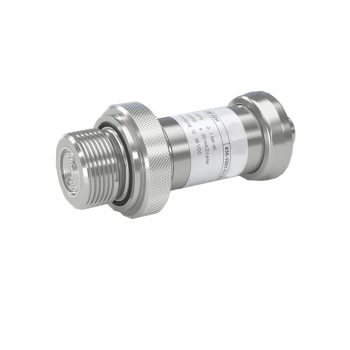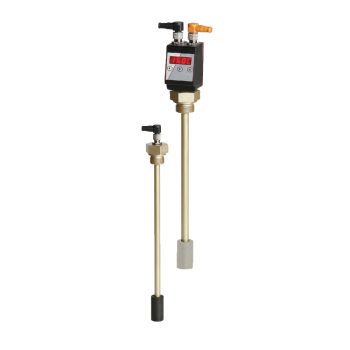
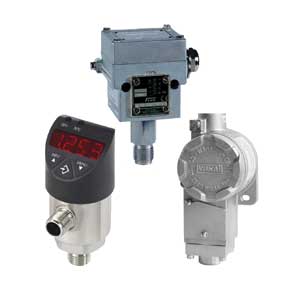
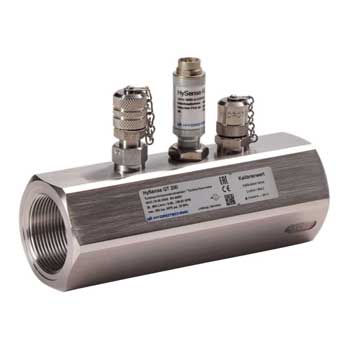
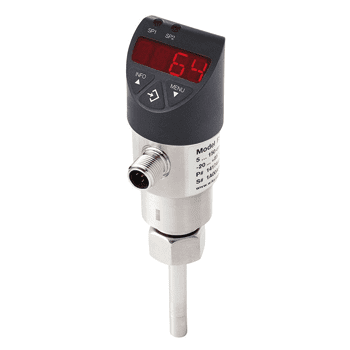
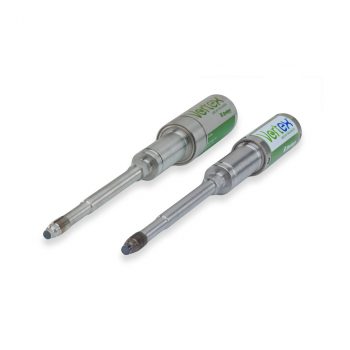
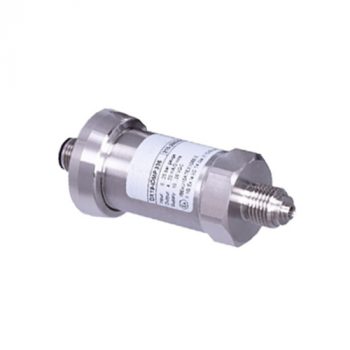
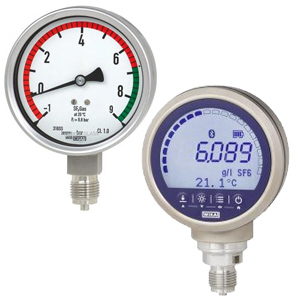
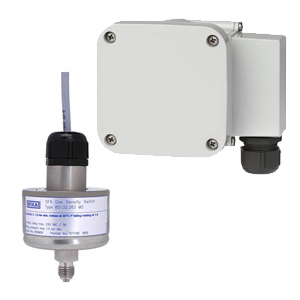
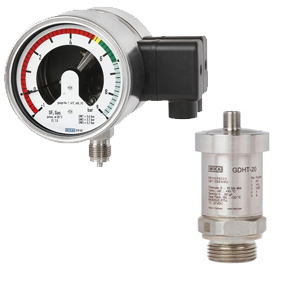
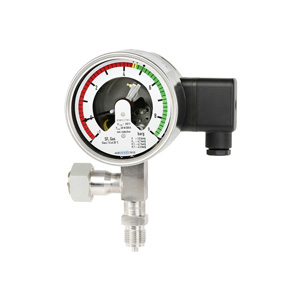



























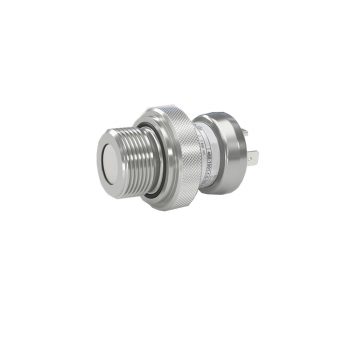
• nominal pressure: 0 ... 40 mbar up to 0 ... 20 bar
  • accuracy: 0.35 % (opt. 0.25 %) FSO
  • pressure port G 1 1/2" for pasty and polluted media
Datasheet

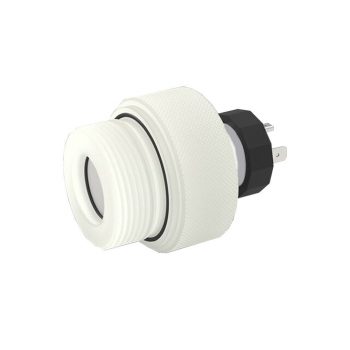
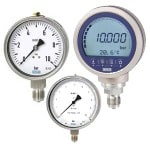
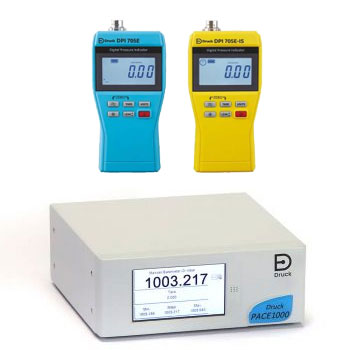
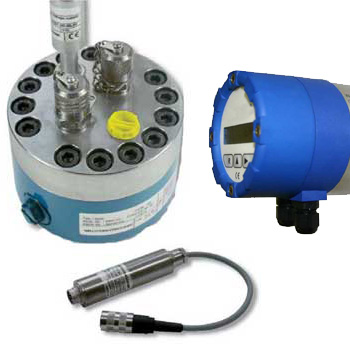
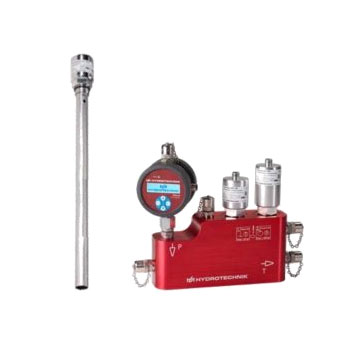
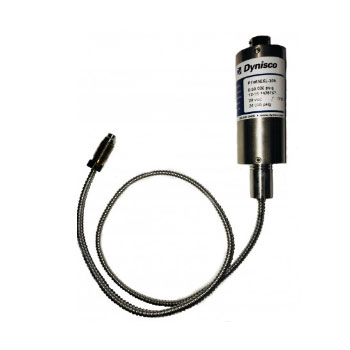
  • nominal pressure: 0 ... 100 mbar up to 0 ... 40 bar
  • accuracy: 0.35 % (opt. 0.25% / 0.1 %) FSO
  • small thermal effect
  • excellent long term stability
  • pressure port G 3/4" flush
Datasheet

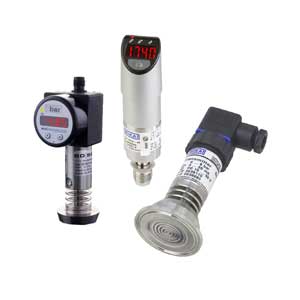
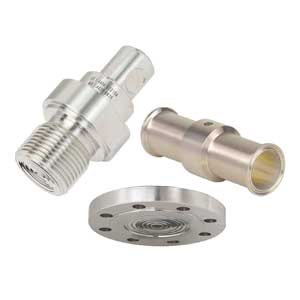
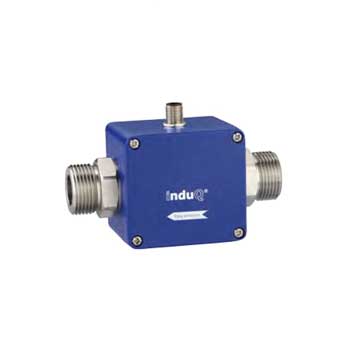
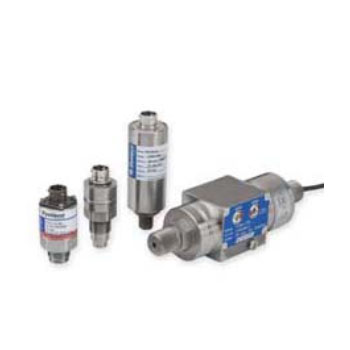
  • nominal pressure: 0 ... 400 mbar up to 0 ... 40 bar
  • accuracy: 0.1 % FSO
  • thermal error in compensated range -20 … 80 °C: 0.2 % FSO TC 0.02 % FSO / 10 K
  • turn-down 1:10
  • communication interface for adjusting of offset, span and damping
Datasheet

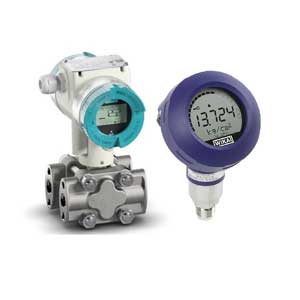
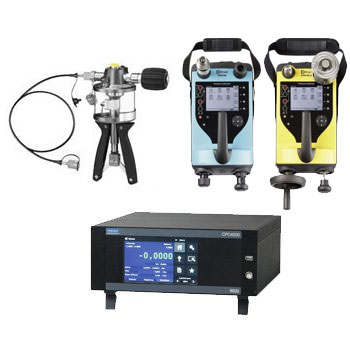
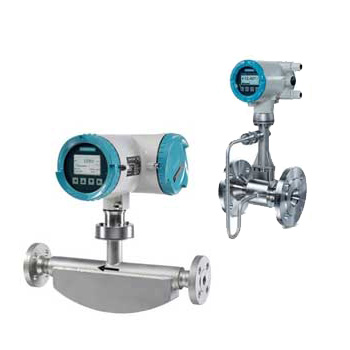
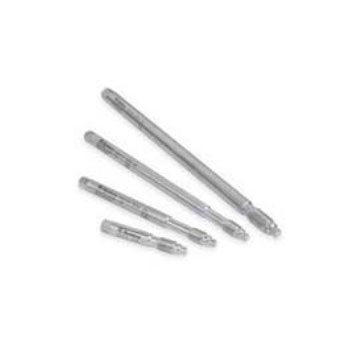
  • nominal pressure: 0 ... 400 mbar up to 0 ... 60 bar
  • accuracy: 0.5 % FSO
  • pressure port G 3/4" flush
Datasheet

No longer available.

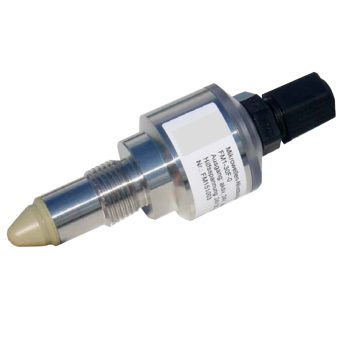
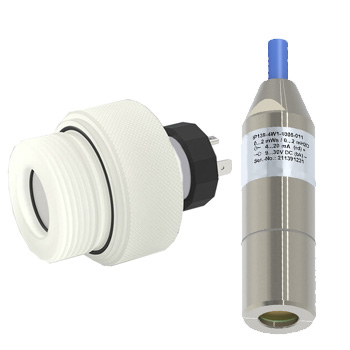
  • Microwave level switch for media with more than 20% water content
  • Insensitive to foam and build-up
  • Hygienic installation according to EHEDG standards
  • All parts in contact with the product are FDA-compliant
  • Electronics fully encapsulated
  • Vibration-resistant
  • Compact design
  • LED status indicator
Datasheet

  • Microwave level switch for media with >20% water content
  • Not influenced by foam or adhesions
  • Hygienic installation in accordance with EHEDG
  • Wetted parts compatible with FDA requirements
  • Vibration resistant
  • LED indicator
Datasheet

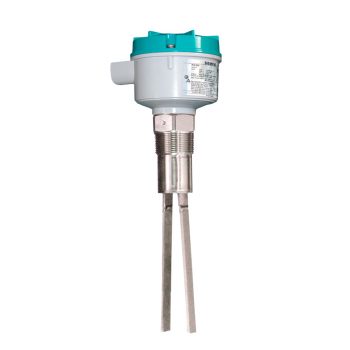
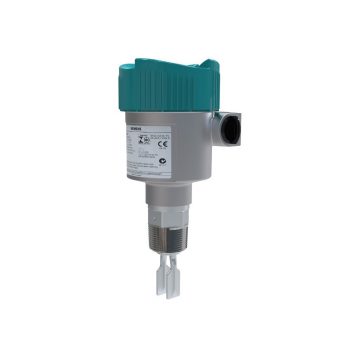
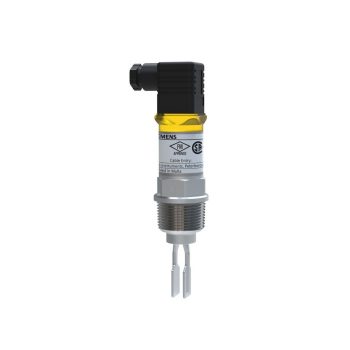
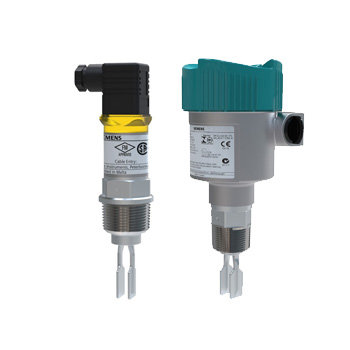
SITRANS LVL100 is a compact vibrating level switch for liquid and slurry applications such as overflow, high, and low level detection. Also ideal for pump protection, safety backup and confined spaces.

Datasheet
User Manual

  • Testfunktion einschließlich Remoteoptionen
  • Fehlerüberwachung auf Korrosion, Ausfall der Schwingung oder Leitungsbruch zum Piezoantrieb
  • Kompakte Bauweise
  • Geringe Eintauchtiefe ab 40 mm (1.57")
  • Optionen für extreme Drücke und Temperaturen


Datasheet

  • Ease of setup with no calibration and rotatable enclosure
  • Suitable for low bulk density materials starting at  30 g/l (1.9 lb/ft³)
  • Adjustable sensitivity for varied applications


Datasheet
User Manual


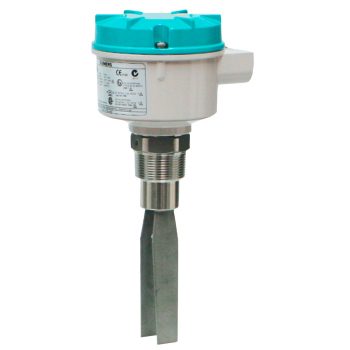
  • High resistance to mechanical forces
  • Strong vibration resistance to high bulk material loads
  • Rotatable enclosure
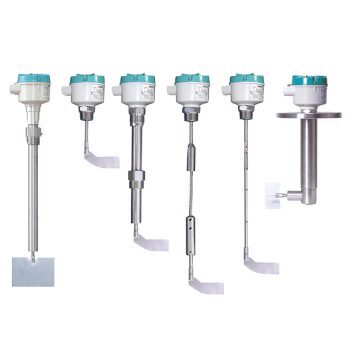
  • Suitable for low density material: standard version, 20 g/l (1.3 lb/ft³); liquid/solid interface version, 50 g/l (3 lb/ft³), and low density option min. 5 g/l (0.3 lb/ft³)
  • Customer desired extensions up to 20 000 mm (787”)
  • Optional detection of solids within liquid
  • Durable short fork option with 165 mm (6.5 inch) insertion length


Datasheet
User Manual

SITRANS LPS200 is a rotary paddle switch for point level detection in bulk solids. Ideal for point level or safety backup applications with SIL 2 and motor failsafe detection.


Datasheet
User Manual


Screw-in Probes – hydrostatic level measurement via threaded & hygienic connections

Screw-in probes are pressure-based level sensors mounted directly into the tank wall or a side/bottom nozzle via threaded or hygienic connections. They measure the liquid’s hydrostatic pressure and output the corresponding level—ideal for tanks/vessels, CIP/process skids and utility systems.

Options (model-dependent): flush/flush-membrane for viscous/sticky media, housings in 316L/Hastelloy®/titanium, diaphragms ceramic or metal, seals EPDM/FKM/PTFE/FFKM, process connections G/NPT, clamp/Varivent, flange. Features include ATEX/IECEx, SIL, hygienic design, high-temperature options, and outputs 4–20 mA/HART, 0–10 V, Modbus/RS-485, IO-Link.

ICS Schneider Messtechnik supports principle selection, mounting location, density/temperature compensation, calibration and integration into PLC/SCADA/IIoT.


FAQ on Screw-in Probes

Answers on operating principle, threaded/hygienic connections, seals, accuracy, compensation, installation, cleaning, ATEX/SIL and best practices.

How does level measurement with screw-in probes work?

The probe senses the hydrostatic pressure at the mounting point. With the liquid density (ρ) the level is calculated via h = p/(ρ·g). For side mounting, the pressure equals the liquid head above the sensing point.

Which process connections are available?

TypeExamplesUse case
ThreadedG 1/2, G 1, 1/2" NPTGeneral plant engineering
HygienicClamp, Varivent, dairyFood & beverage, pharma
FlangePN/ANSIHigher p/T, large nozzles

Flush diaphragm or recessed port?

Flush avoids dead spaces and buildup (viscous/pasty media). Recessed ports are fine for clean, low-viscosity media and are often more economical.

What accuracy can I expect?

Typically ±0.1…0.25 % FS. Practical accuracy depends on density/temperature drift, mounting elevation, hydraulic calmness and zero setting.

How do I compensate density and temperature changes?

Option 1: set a fixed density in the transmitter/control system. Option 2: add temperature measurement and correct density via ρ(T). For strongly varying media consider radar/TDR instead.

How do I size the measuring range?

Maximum liquid head above the sensor × density → required pressure span (mH₂O or bar). Plan a 10–20 % margin.

Where is the optimal mounting point?

Low on the tank (near the bottom) or in a calm side tapping. Keep distance from inlets/agitators; ensure venting and drainability.

How do I seal correctly?

With G threads use a flat gasket/O-ring or sealing cone; with NPT (tapered) use proper paste/PTFE tape. For hygienic couplings use FDA/EHEDG-compliant gaskets.

Which materials and seals make sense?

MaterialPropertyTypical use
316L/1.4404Corrosion-resistant, hygienicWater, food
Hastelloy®Excellent chemical resistanceChemical/process
TitaniumChloride/seawater resistantOffshore/saline media
EPDM/FKM/PTFE/FFKMBroad media/temp capabilitySelected per medium/T

How do I avoid errors from foam, vibration or pulsation?

Use a calmed tapping or restrictor/capillary, enable damping in the transmitter, vent the impulse volume, provide vibration decoupling.

Can the probe output level/volume directly?

Yes. Many transmitters convert bar → mH₂O and—using a strapping table—output liters/m³; optional display, limits and totalizers.

What electrical interfaces are available?

4–20 mA/HART (2-wire), 0/10 V, Modbus/RS-485, IO-Link. Diagnostics: sensor status, overload, temperature, and optionally an event log.

How are parameterization and calibration done?

Via keys/display, DD/DTM/software or IO-Link. Set zero at atmosphere, span via reference column or defined level; configure density/T in the device.

Hygienic design—what matters?

Flush diaphragm, polished surfaces, dead-space-free couplings (clamp/Varivent), FDA/EU 1935/2004 seals, CIP/SIP resistance, and material certificates.

Are ATEX/IECEx & SIL options available?

Yes—many models offer Ex i/Ex d and SIL2/3. In hazardous areas use suitable barriers/isolators and observe device categories.

How do I handle tank vacuum or overpressure?

Size the range to include any static tank pressure (positive/negative). For vacuum service use an absolute or adequately vacuum-rated sensor.

What temperature/pressure limits apply?

Depending on design up to >100 °C and PN16/PN40+. Choose diaphragm and gasket materials to suit medium/temperature; use a neck extension if needed.

Maintenance & cleaning—what’s sensible?

Periodically check tightness, diaphragm surface and cables/connectors. Use CIP/SIP-compatible detergents; avoid hard tools on the diaphragm.

Typical pitfalls & fixes

  • Wrong density configured → correct density/T or choose an alternative principle
  • Air pocket at diaphragm → change orientation, vent properly
  • Dead space/buildup → use flush diaphragm, hygienic fitting
  • EMC interference → shielded cabling, bonding, separate power/signal

Do you support selection & commissioning?

Yes. We size the range/connection, define compensation, provide calibration certificates and integrate the measuring point into PLC/SCADA/IIoT with full documentation.

Diese Website benutzt Cookies. Wenn du die Website weiter nutzt, gehen wir von deinem Einverständnis aus.