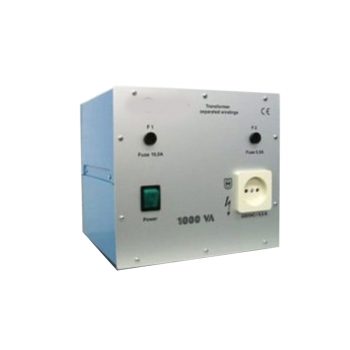
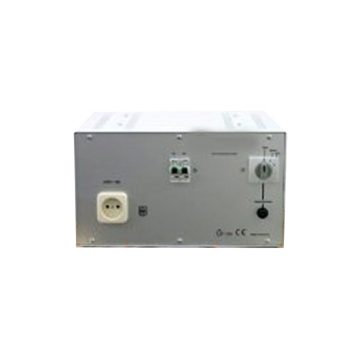
Isolation Transformers

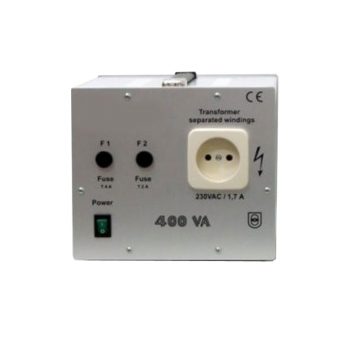
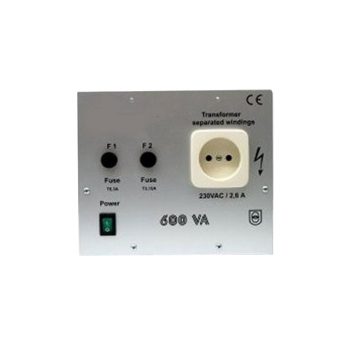
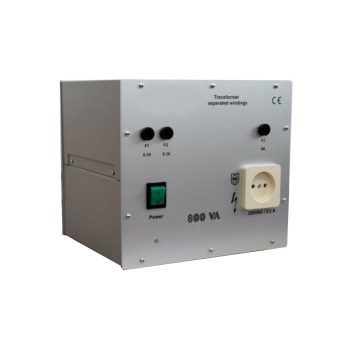
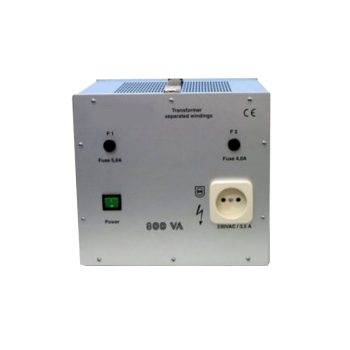
Isolation transformers provide a fully galvanically isolated secondary side. That means the primary side (mains) and the secondary side are electrically separated — without any direct connection to mains earth reference. This ensures a safe, floating supply, which is especially advantageous for testing, maintenance, laboratory applications or operation of equipment without grounded enclosures.

Questions & Answers on Isolation Transformers

What does galvanic isolation mean?

Galvanic isolation means that the primary and secondary windings are electrically separated, with no direct conduction path. As a result, the secondary side is independent of earth potential and no direct link exists between mains and output — this reduces risk of earth or contact potentials and eliminates ground loops.

When should an isolation transformer be used?
An isolation transformer is ideal when safety and electrical isolation are required — for example in measurement or test setups, during maintenance on mains-connected devices without earth reference, operation of devices with metal housings where earth ground is to be avoided, or when contact voltages pose a risk.

What output voltages are typical for isolation transformers?
Typically the secondary provides the nominal mains voltage, e.g. 230 V AC for single-phase devices. Depending on the design and purpose, other voltages such as 115 V or 400 V may be available. The critical aspect is that the secondary remains galvanically isolated.

How to size an isolation transformer correctly?
Important parameters are the rated power (VA), maximum output current, insulation class, and possibly short-circuit withstand capability. The transformer must suit the connected load such that under full load both voltage and isolation stay stable. It may be advisable to include margin for inrush currents or inductive loads.

Which protection features and safety aspects are relevant?

Isolation transformers often include fuses, thermal protection and insulation monitoring. The galvanic isolation itself reduces the risk of ground loops and contact voltages — crucial for test setups or operation of ungrounded equipment. This enhances safety for both personnel and measuring instruments.

How do mains disturbances or grounding issues affect the secondary side?

Due to galvanic isolation, the secondary side remains unaffected by mains disturbances such as earth potential shifts, mains noise or ground loops. This ensures stable and independent supply — ideal for sensitive measurement instruments, insulation testing or applications where earth-reference problems must be avoided.

What mechanical designs and connection types are typical?

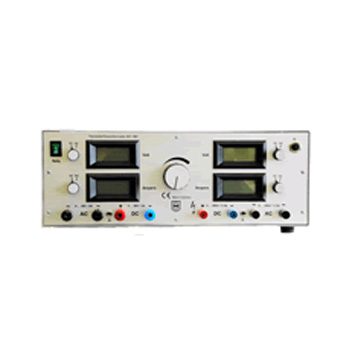
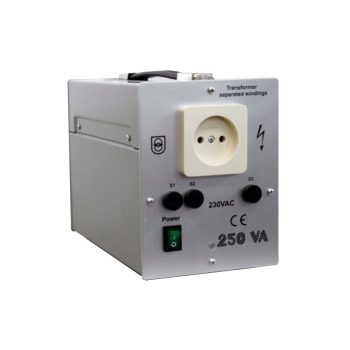
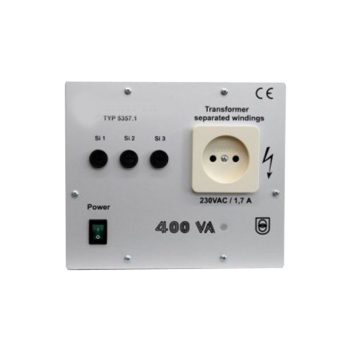
Isolation transformers are commonly built as compact bench- or wall-mounted units with enclosed metal housings. Connections are made via screw terminals, protective mains plugs or lab sockets. Some models offer multiple secondary outputs or selectable voltages depending on size and use case.

How reliable is the isolation in long-term operation?

In quality devices, isolation remains stable over long service lives. However, under heavy usage periodic inspection is recommended — e.g., visual check, inspection of housing and terminals. On older units, insulation resistance tests may be useful to detect aging or moisture intrusion and ensure long-term safety.

For which applications are isolation transformers particularly suitable?

They are especially suitable for laboratories, test benches, maintenance and repair work, assembly of devices without grounded housings, operation of measurement and test equipment, insulation or safety testing — wherever a floating supply and maximum safety are required.

What advantages do isolation transformers offer over direct mains supply?

They provide galvanic separation, which prevents ground loops, mains feedback and contact voltages — protecting both personnel and measurement equipment. They deliver a stable, independent supply that does not rely on mains potential or earth reference. For testing, lab or maintenance applications they significantly increase safety and reliability.

Do isolation transformers require maintenance?

Isolation transformers are generally low-maintenance. Nevertheless, for intensive use regular visual inspection of housing, connections, terminals and wiring is recommended. For older devices, insulation resistance testing may help identify aging or moisture ingress — essential to ensure long-term safety.

Diese Website benutzt Cookies. Wenn du die Website weiter nutzt, gehen wir von deinem Einverständnis aus.