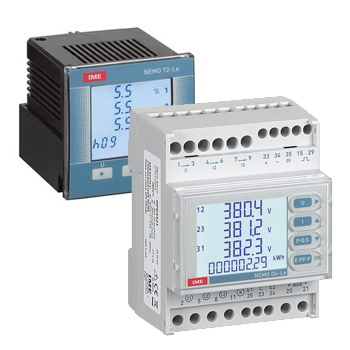
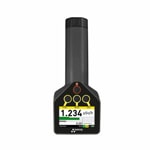
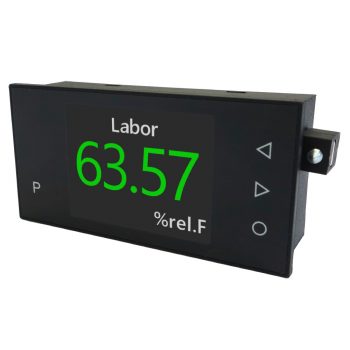
• TFT digital display with multicolor backlight
  • Measuring range: -1999 to 9999
  • Multifunction inputs: voltage, current, shunt, Pt100, thermocouples, pulse, frequency, speed, counter
  • 2.4" color display (320 × 240 pixels)
  • Selectable display and background colors
  • 2 relay outputs (changeover contacts)
  • Power supply: 100–240 VAC or 24 VDC (galvanically isolated)
  • Front keypad operation, protection class IP65
  • Compact installation depth and pluggable terminals
  • Functions: min/max detection, tare, alarms, configurable display
Datasheet
User Manual

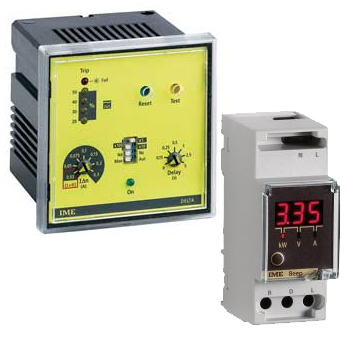
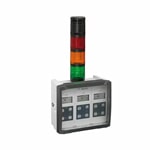
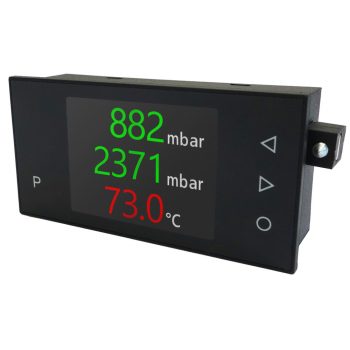
  • Triple TFT digital display in 96 × 48 mm format
  • Suitable for displaying and processing standard signals
  • Inputs for voltage 0–10 VDC and current 0/4–20 mA
  • Measured value display of 3 × -1999 to 9999 digits
  • TFT display with 9 mm digit height and multicolour backlighting
  • Measuring point and signal designation with up to 15 characters possible
  • Front-panel operation via keypad with IP65 protection rating
  • Configurable unit symbols, min./max. value recording, tare function and programming lock
  • With 2 switching points as changeover contacts and plug-in screw terminal
Datasheet
User Manual

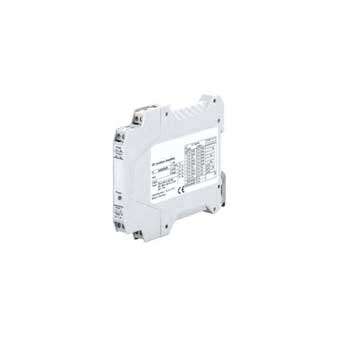
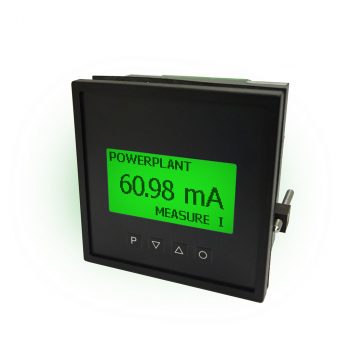
  • LCD/TFT digital display with multicolor backlight
  • Measuring range: -1999 to 9999
  • Multifunction inputs: voltage, current, shunt, Pt100, thermocouples, pulse, frequency, speed, counter
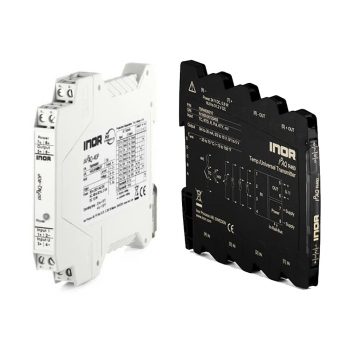
  • Full graphic display (128 × 64 pixels) with up to 15 characters
  • Configurable display and engineering units
  • Power supply: 100–240 VAC or 10–40 VDC
  • Front keypad operation, protection class IP65
  • Functions: min/max memory, tare, linearization, alarms, buzzer
  • Optional: analog output, relays, RS232/RS485 (Modbus), digital input
Datasheet
User Manual


Digital Panel Meters with LCD/TFT Display

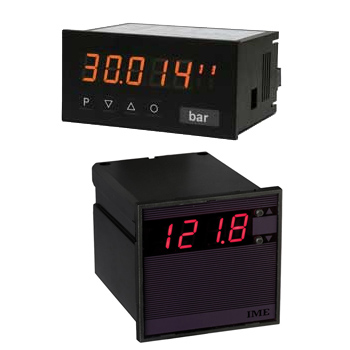
Digital panel meters with LCD or TFT displays use a graphical screen instead of basic LED digits. They process input signals such as current loops, voltages, temperature sensors, PT100/PT1000, resistances, or other sensor signals, and offer freely configurable scaling, display units, decimal points, as well as alarm/relay functions and analog outputs in many cases. The graphical display enables clear representation of multiple measurements, units, and status indicators — ideal for complex control and measurement tasks in control cabinets or panels.

Questions & Answers

What are the advantages of an LCD/TFT display compared to classic LED displays?

LCD/TFT displays allow variable digit layouts, graphical representations, multiple values displayed simultaneously, clearer unit indication, and better readability from various viewing angles. They are more flexible and can show bar graphs, status symbols or multi-variable readouts.

Which input signal types are typically supported?

Depending on the model, input signals such as 4–20 mA / 0–20 mA, voltages, PT100 / PT1000, thermocouples, resistances or combinations thereof are supported. Often multiple input channels are available.

How flexible is scaling and unit configuration?

Scaling, unit and decimal point can be freely adjusted. A measured value can thus be displayed as °C, bar, m/s, l/min or any other physical unit. Graphical display supports different formats: numeric, bar, trend, or status.

Are analog and relay outputs available for integration or alarm functions?

Yes — many models provide scalable analog outputs (e.g. 0/4–20 mA or 0–10 V) and potential-free relays. This allows forwarding of measured values to PLCs, controllers or data loggers and implementing alarm or control actions when set thresholds are crossed.

For which applications are LCD/TFT panel meters especially suited?

They are ideal for complex or multi-variable measurement and control tasks where multiple process values need to be monitored simultaneously — e.g. temperature and pressure, process control values, trend monitoring, status indication, or machine visualization.

How is configuration and operation handled?

Configuration is typically done via a front keypad or control interface. Settings such as input type, scaling, unit, display format, filtering, analog and relay outputs are configurable — without opening the cabinet.

What display formats and visualization options are available?

Possible display modes include numeric readout, bar graphs, trend lines, combined multi-channel values, status symbols, multiple units and channel separation, often with color-coding or backlighting for enhanced clarity.

How suitable is an LCD/TFT display for industrial environments?

LCD/TFT displays often offer wide viewing angles and high contrast; many models include backlighting or adjustable brightness, ensuring readability in bright or dim environments — making them well suited for industrial usage.

What enclosure and panel cut-out sizes are used?

These devices are designed for standard control-cabinet or panel cutouts. Common formats include 96×48 mm, 96×96 mm or larger panel sizes, depending on display size and number of input channels.

When is it worth using an LCD/TFT meter instead of a classic LED-display meter?

When multiple measurements must be displayed simultaneously, or when flexibility in units, display format, status information or graphical representation is needed — e.g. in complex machinery, control systems or monitoring installations — then an LCD/TFT meter is advantageous over a simple LED display.

Diese Website benutzt Cookies. Wenn du die Website weiter nutzt, gehen wir von deinem Einverständnis aus.