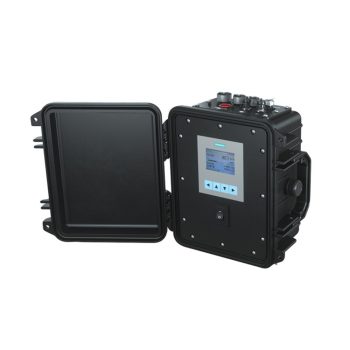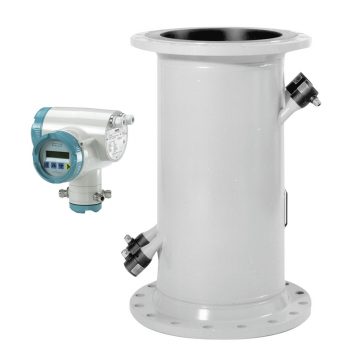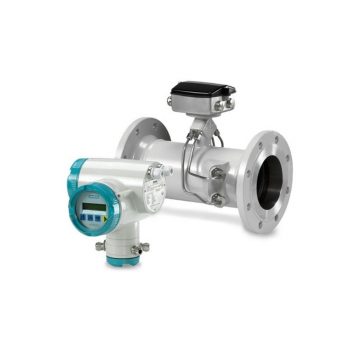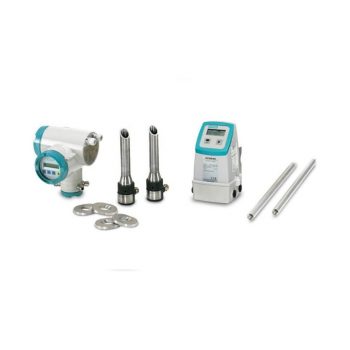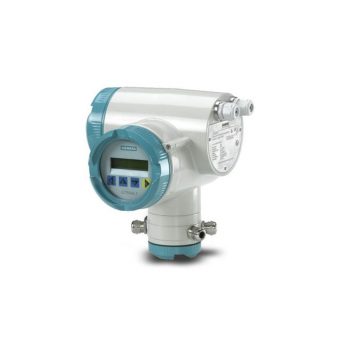
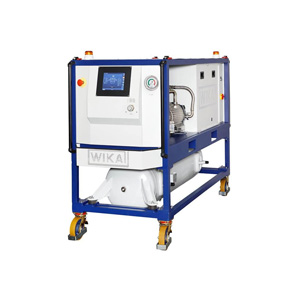
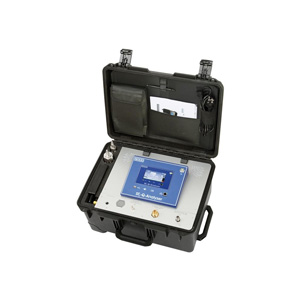
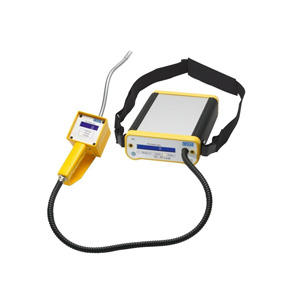
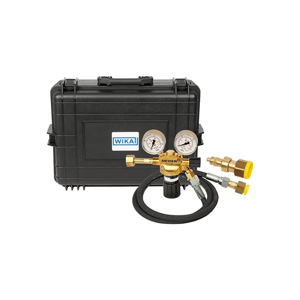
















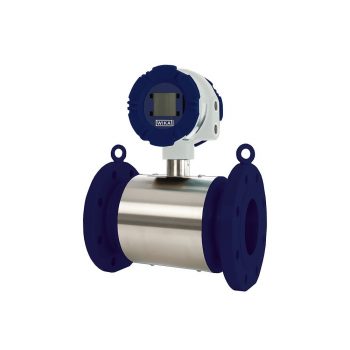
- Measurement of two independent streams
- Narrow-band high-speed (NBHS) burst measurement
- Innovative HMI (Human-Machine Interface) with touch and gesture control
- Integrated high-capacity data logger
- Embedded “WIKA WebApp” configuration (no external software needed)
Datenblatt |
- Patented broadband continuous-wave technology
- Simultaneous transmission on two or more paths
- No pressure drop and no wear parts
- Intrinsically safe design
- Approved for custody transfer (MID MI-001, OIML R137-1 and -2)
Datasheet |
User Manual |
User Manual |
User Manual |
User Manual |
SITRANS FS290 flexible, versatile, practical
- Check metering, temporary and test measurements
- Compensation of flow disturbances through the anomaly compensation
- Long battery life, simple battery replacement
- Measurement accuracy of 1% under good conditions
Datasheet |
- Up to four configurable outputs and 2 RTD input channels selected at ordering
- Outputs can be individually configured for mass flow, volume flow etc.
- Three built-in totalizers which can count positive, negative or net flows
- Independent low flow cut-offs, adjustable
- Uni/bidirectional flow measurement
- Flow direction adjustable
- Alarm system consisting of alarm-log, alarm pending menu
- Change log, logs all changes made to menu parameters or via communications
- Internal data logger
- Display of operating time with real-time clock
- Flowrate outputs are freely configurable between maximum negative and maximum positive flows according to the sensor capacity
- Limit switches programmable for flow, density and temperature. Limit points can be graded as warning and alarm for values both above and below nominal process conditions
- Zero adjustment menu, with zero point evaluation display
- Full service menu for effective and straight forward application and meter troubleshooting
- Precise temperature measurement ensures optimal accuracy on massflow and density
- Fully compatible with Siemens PDM version 8.2 service pack 1 or higher
User Manual |
- High accuracy and repeatability – accuracy of 1% of flow rate and repeatability of 0.25% according to ISO 11631
- Exceptional zero stability – minimal need to set a zero point
- Best-in-class user-friendliness – fully graphical display with simple menu navigation, multiple setup wizards and the option to display up to 6 customizable parameters on the same screen
- Easy servicing – includes removable SensorFlash® microSD card and built-in USB service port
Datasheet
|
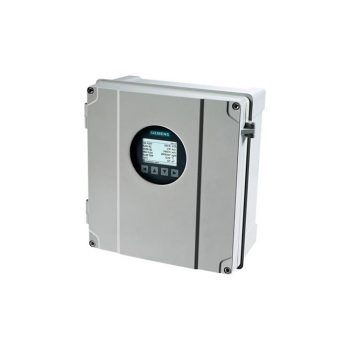
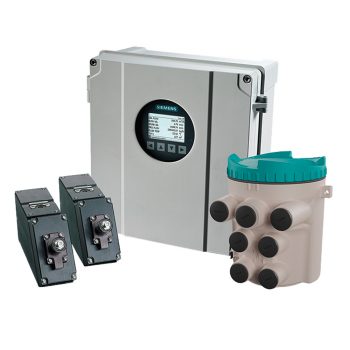
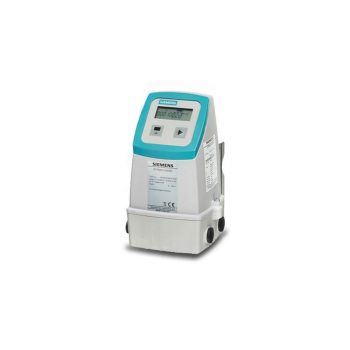
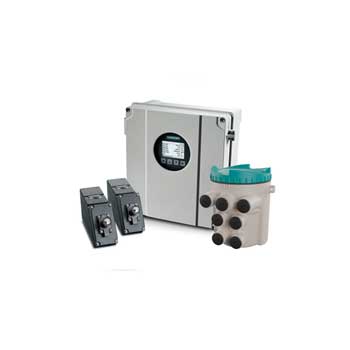
SITRANS FS230 is an ultrasonic clamp-on flowsystem. The SITRANS FST030 transmitter with the proven-in-use FSS200 sensors is ideal for challenging applications and the use in Ex areas. The Sitrans FS230 system is compatible with pipe diameters from DN10 up to DN10.000. For applications in hazardous areas, the external electronics module SITRANS FS DSL is used. It is installed close to the sensors and digitizes the measured signal at the earliest opportunity to transfer it to the FST030 transmitter with optimal EMC protection.

Datasheet
|
User Manual
|
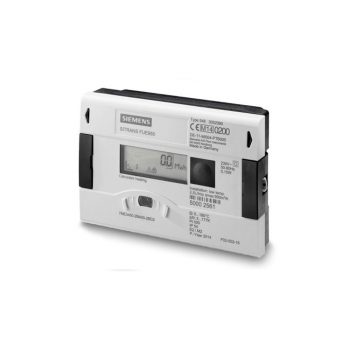
The battery or mains powered SITRANS FUE950 is a universal custody transfer approved energy calculator. It is designed for use in hot water, chilled water and cooling/heating applications. The calculator has a modular construction which means that it can be fitted with optional output modules when it is ordered. These include a pulse output, pulse input, current output and an M-Bus add-on module. If needed, the necessary temperature sensor pair and pockets can be ordered along with the calculator.
The SITRANS FUE950 can be used with SITRANS FUS380, SITRANS FUE380, SITRANS FM MAG 5000, SITRANS FM MAG 6000, SITRANS FM MAG 8000 and SITRANS FS220. Application Examples: District heating applications, Chilled water applications, Combined cooling/heating applications
Datasheet
|
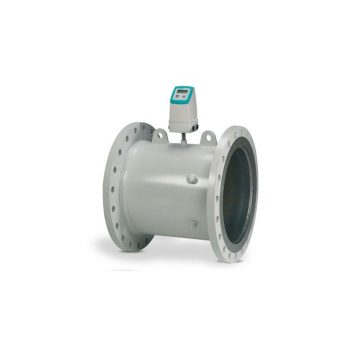
The SITRANS FUS SONO 3100/SITRANS FUS060 flowmeter consists of a SITRANS FUS SONO 3100 sensor with O-ring or flange transducers depending on the application. The SITRANS FUS060 transmitter is engineered for high performance applications and designed for remote installation in hazardous as well as non-hazardous environments. In addition to the standard outputs, it also offers communication. The SITRANS FUS SONO 3100/SITRANS FUS060 flowmeter consists of a sensor and transmitter. For details and information about the transmitter, see SITRANS FUS060

Datasheet
|
User Manual
|
User Manual
|
The SITRANS FUS SONO3300/SITRANS FUS060 flowmeter consists of a SITRANS FUS SONO 3300 sensor and a SITRANS FUS060 transmitter. The sensor is available in carbon steel and is fitted with integrated transducers. It also comes with signal cables enclosed in stainless steel pipes. The SITRANS FUS060 transmitter makes use of an advanced transit-time signal processing technology ensuring reliable and accurate signal detection for a wide range of processes. The SITRANS FUS SONO 3300/SITRANS FUS060 flowmeter consists of a sensor and transmitter. For details and information about the transmitter, see SITRANS FUS060

Datasheet
|
User Manual
|
User Manual
|
SITRANS FUS SONOKIT offers a simple, accurate alternative to traditional flowmeters as it can be retrofitted onto existing pipelines. Being a transit time based ultrasonic flowmeter,SITRANS FUS SONOKIT has in-line transducers which assure superior accuracy and performance. The kit includes all necessary parts and special tools to make the installation as 1- or 2-track flowmeter. It is made for installation on empty pipes or pipes under pressure without process shut-down (hot-tap).

Datasheet
|
The cost-effective SITRANS FUS060 transmitter is based on proven technology for volumetric flow measurement and is ideal for optimizing efficiency when high accuracy is required. It comes as standard with 2 paths and features advanced diagnostics, ATEX certification and bus communication. In order to make a complete flowmeter, the SITRANS FUS060 flow transmitter must be combined with one of the following F US sensors: SITRANS FUS SONO 3100: Industrial applications ( except water measurements for larger sizes) SITRANS FUS SONO 3300: Industrial applications (for smaller sizes) SITRANS FUS SONOKIT: for retrofittings

Datasheet
|
User Manual
|
SITRANS FUS080 is a transit time-based transmitter designed for ultrasonic flow metering with any sensor in the SITRANS FUS380 / SITRANS FUE380 in-line series. SITRANS FUS080 comes as battery or mains powered version and is designed to measure flow in water applications. In order to make a complete flowmeter, the SITRANS FUS080 flow transmitter must be combined with one of the following sensors: SITRANS FUS SONOKIT: retrofit flowmeter series SITRANS FUS380: flow meter for measuring on all district water qualities and water conductivities SITRANS FUE380: as SITRANS FUS380, but with type approval for custody transfer systems
Datasheet
|
User Manual
|
Datasheet
|
User Manual
|
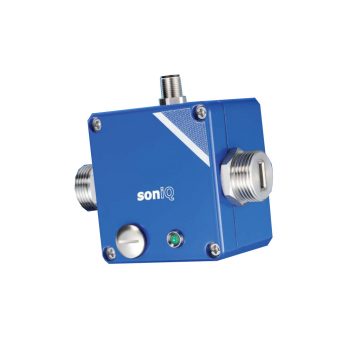
- No moving parts
- Only one wetted material, chemically resistant (stainless steel)
- No mechanical wear
- Three output signals frequency output analog output 4...20 mA alarm output
- Independent of pipe and installation position
- Suitable for electrically non-conductive liquids, e. g. DI water
- Fast response
- Air detection
- Insensitive against pressure peaks and particles in the medium because of protected transducers
- Customised set-up on request
Datasheet
|
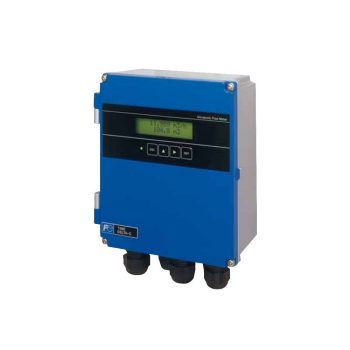
- High accuracy measurement : 1% of rate
- Superior anti-bubble performance: Our Advanced ABM method * is adopted
- Maintenance free operation: non-invasive setup with no moving parts
- Compact and lightweight : Size and mass reduced by 2/3 (compared with model FLV)
- Flexible communication functions: RS-485 (MODBUS) (option)
- Wide application range fi13 to fi6000mm applicable pipe diameters Extendable rail type detector up to fi 50 to fi 1200mm
- Simple menu guided setup from front panel or PC interface
Datasheet
|
Ultrasonic Flow Meters – non-invasive, precise & retrofittable for liquids (and selected gases)
Ultrasonic flow meters measure volumetric flow—and with p/T compensation the mass or standard volume flow—without moving parts. Available as in-line versions or clamp-on solutions for retrofits without process interruption. Ideal for water/wastewater, process media, energy/thermal metering, large pipes and temporary campaigns.
Technologies: Transit-time (clean media, high accuracy) and Doppler (media with particles/air). Features (model-dependent): multi-path (1–4 paths), bidirectional measurement, datalogger, communications (4–20 mA/HART, Modbus/RS-485, Profinet/EtherNet/IP, M-Bus/BACnet), thermal energy functions, ATEX/IECEx and SIL.
ICS Schneider Messtechnik supports principle selection, sizing (pipe data/acoustic path), installation (transducer placement/coupling), calibration/verification and integration into PLC/SCADA/IIoT/EMS.
FAQ on Ultrasonic Flow Meters
Answers on transit-time vs. Doppler, in-line vs. clamp-on, accuracy, installation, pipe data, energy metering, Ex/EMC and best practices.
Transit-time or Doppler—what fits my medium?
| Criterion | Transit-time | Doppler |
|---|---|---|
| Medium | Clean, lightly loaded liquids | Liquids with particles/air bubbles |
| Accuracy | High (typically ±0.5…1% of rate) | Good to adequate (application-dependent) |
| Signal basis | Time-of-flight difference | Frequency shift from moving scatterers |
| Typical use | Process, energy, acceptance tests | Wastewater, slurries, process monitoring |
In-line or clamp-on?
| Aspect | In-line | Clamp-on |
|---|---|---|
| Installation | Sensor inserted into the pipe | Mounted externally—no pipe break |
| Shutdown needed | Yes | No |
| Accuracy | Very high, fixed geometry | High with correct pipe data |
| Flexibility | Permanent | Portable/temporary possible |
What accuracy can I expect?
In-line transit-time: typically ±0.5…±1% of rate (multi-path even better). Clamp-on: typically ±1…±2% of rate, depending on pipe data, coupling quality and flow profile.
Which media are suitable?
Almost all liquids (water, chemicals, oils; consider viscosity). Gases require dedicated gas ultrasonic meters. For liquids with solids/air, consider Doppler.
What pipe data do I need for clamp-on?
- Outer diameter and wall thickness
- Pipe material (steel, cast iron, PVC, PE, …)
- Lining (e.g., cement, rubber, PTFE) and thickness
- Medium incl. sound speed/temperature
How do I position the transducers correctly?
Choose the proper path (V, Z or W) for the pipe size and medium. Keep straight runs (e.g., 10–20 D upstream / 5–10 D downstream), avoid disturbances (valves/elbows/pumps), and ensure good acoustic coupling with gel.
How do fouling and corrosion affect results?
Internal deposits change the effective bore/acoustic properties → potential error. Inspect regularly; for clamp-on, update parameters accordingly.
Which flow profiles are critical?
Strong asymmetry/swirl from tight bends, mixers or fittings. Multi-path and longer inlets improve practical accuracy.
Is bidirectional measurement possible?
Yes—ultrasonic meters measure forward and reverse. Totalizers can record both directions separately.
Can the meter calculate thermal energy?
Yes. With ΔT inputs (supply/return), many devices compute heating/cooling energy (kWh/BTU) and provide pulses/communications for energy management.
What signals/protocols are available?
4–20 mA/HART, pulse/frequency, relay, Modbus/RS-485, Profinet/EtherNet/IP, IO-Link, building automation (M-Bus/BACnet)—model-dependent.
Temperature/pressure limits?
In-line (by size/material): typically up to PN16…PN40 and >100 °C. Clamp-on: medium temperature limited by sensors/coupling; high-temperature probes exist.
ATEX/IECEx and SIL?
Many systems offer Ex approvals (Zone 1/2) and SIL ratings. Match sensors/transmitters and any required barriers.
How do I deal with air bubbles/solids?
For transit-time minimize entrainment (degassing, stable back pressure). If scatterers are unavoidable, consider Doppler.
What straight-run lengths should I use?
Guidelines (transit-time): 10–20 D upstream, 5–10 D downstream. For heavy disturbances use a flow conditioner or multi-path.
How are calibration and verification handled?
Factory/DAkkS calibration; in the field use reference checks (e.g., clamp-on reference, test stand), zero checks, and balance against mass totals; document traceability.
Common pitfalls & quick fixes
- Wrong pipe data → verify OD/wall thickness
- Poor coupling → fresh gel, clean/flat surface, proper clamping
- Too little straight run → relocate or add multi-path/conditioner
- Wrong acoustic path → select V/Z/W per software assistant
How do I pick the right measuring range?
Target typical pipe velocity (e.g., 0.5–3 m/s for water). Too low → weak signal; too high → increased uncertainty/turbulence.
What materials/connections are used for in-line meters?
316L/1.4404, 1.4571, plastics (PVC/PP/PVDF) or linings per medium. Connections: flange (PN/ANSI), thread (G/NPT), clamp/hygienic.
EMC/cabling—what to consider?
Use shielded, twisted signal cables, separate from power, ensure proper bonding; for long runs prefer 4–20 mA/HART.
Maintenance & care?
Low maintenance (no moving parts). Clamp-on: check straps/pressure and coupling gel; in-line: check tightness/fouling and operating conditions; plan calibration per QA.
Do you support selection, installation & commissioning?
Yes. We clarify medium/pipe data, select technology/path, define straight runs, provide calibration certificates and integrate with SCADA/IIoT/EMS—including training.


Datenblatt
Datasheet
Datasheet