



































-
legal for trade according to accuracy class C3 acc. To OIMLR60
-
easy and quick installation with SIWAREX mounting units
-
options for use in hazardous areas are in preparation
 Datasheet Datasheet
|

Tension Load Cells – Reliable Sensors for Hanging Loads & Tensile Force Measurement
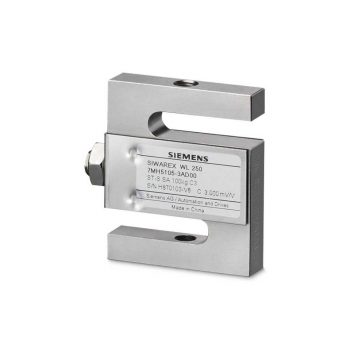
Tension load cells (often known as “S-type” or tension/compression load cells) measure tensile or compressive forces using strain gauges. They are particularly suitable for hanging weighing applications such as crane scales, Big Bag weighing, hopper and vessel weighing, and tensile force or pull-testing applications in industrial environments.
Typical features include S-shaped or Z-shaped geometries for clean force alignment, construction in alloy steel or stainless steel, protection classes up to IP67/IP68, high division counts (e.g. OIML approvals), and optional ATEX/IECEx versions. Together with hooks, eye bolts, tension links, weighing electronics, and junction boxes, ICS Schneider Messtechnik provides complete weighing solutions—from selection and system design to calibration and automation integration.
FAQ About Tension Load Cells
Answers on working principle, selection criteria, accuracy, installation, protection classes, calibration, and typical application scenarios.
What is a tension load cell and how does it work?
A tension load cell measures tensile or compressive forces using strain gauges. When force is applied, the sensor body deforms slightly, and the resulting change in electrical resistance produces a proportional output signal.
Where are tension load cells typically used?
Common applications include crane scales, Big Bag weighing, hopper and vessel weighing, lifting equipment, conveyor systems, and tensile testing systems in industrial and research environments.
Which designs are commonly used?
The most common design is the S-type geometry, which ensures that both mounting points are aligned along one axis for clean, vertical force transmission.
What materials and protection classes are available?
Tension load cells are available in alloy steel for standard environments and stainless steel for aggressive or hygienic applications. Typical protection classes range from IP65/IP67 to IP68 for hermetically sealed versions.
Are tension load cells legal-for-trade?
Many models comply with OIML R60 and are suitable for legal-for-trade environments when combined with approved weighing electronics and proper calibration.
What load ranges do tension load cells cover?
Rated loads range from just a few kilograms up to several tons—for example from 25 kg to 30 t, depending on model and application.
What are important criteria when selecting a tension load cell?
Key criteria include rated load (including safety margin), material, IP rating, geometry (e.g., S-type), legal-for-trade requirements, mounting style (hooks, eye bolts), and electronic integration.
What must be considered during installation?
Proper alignment of the mounting points, stress-free hanging installation, avoidance of side loads, and correct use of hooks or eyes are essential. Incorrect installation can cause measurement errors or damage.
How is the electrical connection implemented?
Tension load cells output a standard mV/V strain-gauge signal. They are connected to a weighing transmitter that converts the signal into standardized outputs such as mV, V, or 4–20 mA.
How is a tension load cell calibrated?
Calibration is performed by applying known tensile forces using certified weights or calibration fixtures, followed by zero and span adjustment, linearity verification, repeatability testing, and documentation.
What are common error sources?
Typical issues include incorrect mounting, side loads or shear forces, poorly secured hooks or eye bolts, vibration, temperature gradients, and inadequate shielding or grounding.
Which accessories are recommended?
Useful accessories include hooks, eye bolts, tension links, rod-end bearings, suitable connection cables, and junction boxes for multi-cell setups.
Does ICS Schneider Messtechnik provide technical support?
Yes—ICS Schneider Messtechnik provides support with load cell selection, mechanical design, electrical integration, calibration, and documentation.
How can I request a quotation?
You can submit an inquiry directly via the product page or contact ICS Schneider by phone or email. Providing details on load range, environment, and mounting method helps create an accurate quotation.