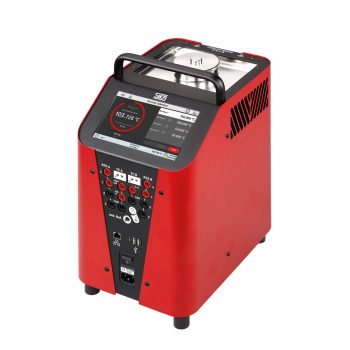
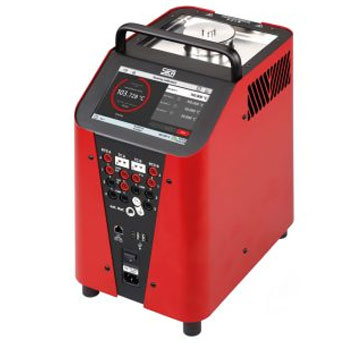
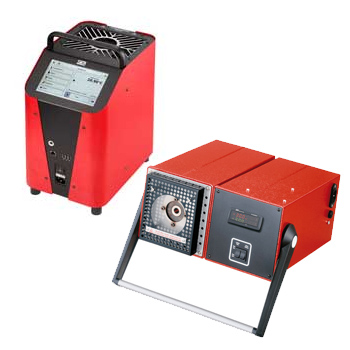
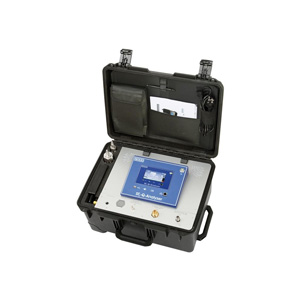
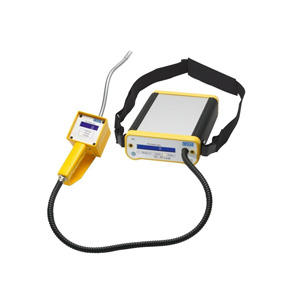
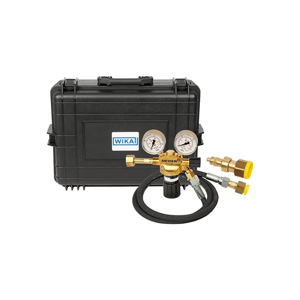
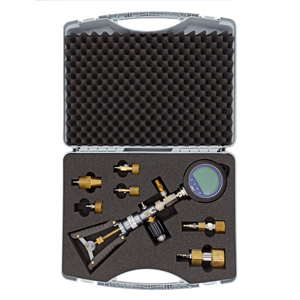



























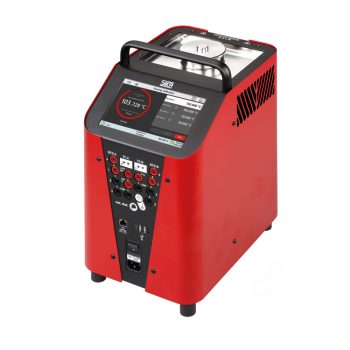
• Temperature range RT...255 °C
  • Calibration insert dimensions: Ø60 x 163 mm
  • Accuracy ±0.1 °C
  • Multifunction: Dry block, calibration bath, infrared, surface
  • Option: Integrated measuring instrument
Datasheet
Datasheet
User Manual

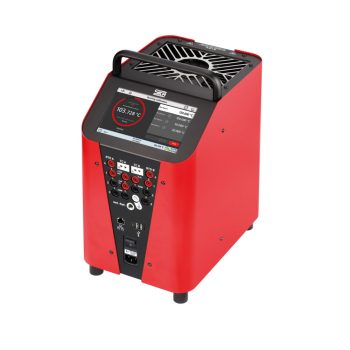
  • Temperature range -33...165 °C
  • Calibration insert dimensions: Ø60 x 163 mm
  • Accuracy ±0.1 °C
  • Multifunction: Dry block, calibration bath, infrared, surface
  • Option: Integrated measuring instrument
Datasheet
User Manual

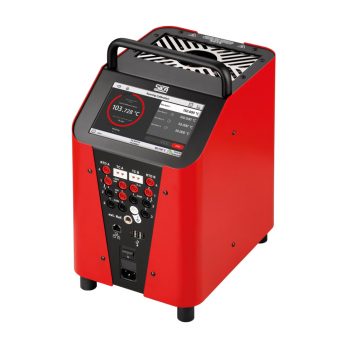
  • Temperature range RT...255 °C
  • Calibration insert dimensions: Ø60 x 163 mm
  • Accuracy ±0.1 °C
  • Multifunction: Dry block, calibration bath, infrared, surface
  • Option: Integrated measuring instrument
Datasheet
User Manual

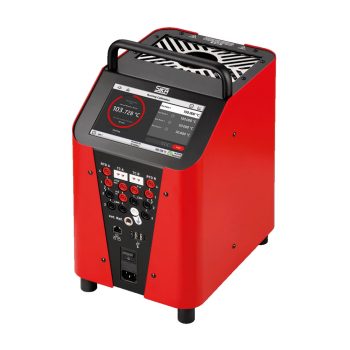
  • Temperature range -35...165 °C
  • Calibration insert dimensions: Ø28 x 150 mm
  • Accuracy ±0.2 °C
  • Option: Integrated measuring instrument
Datasheet
User Manual

  • Temperature range -55...200 °C
  • Calibration insert dimensions: Ø28 x 150 mm
  • Accuracy ±0.2 °C
  • Option: Integrated measuring instrument
  • Fastest calibrator with widest temperature range
Datasheet
User Manual

  • Temperature range RT...450 °C
  • Calibration insert dimensions: Ø60 x 150 mm
  • Accuracy ±0.2 °C
  • Multifunction: Dry block, infrared, surface
  • Option: Integrated measuring instrument
Datasheet
User Manual

  • Temperature range RT...700 °C
  • Calibration insert dimensions: Ø29 x 150 mm
  • Accuracy ±0.27 °C
  • Option: Integrated measuring instrument
Datasheet
User Manual


SIKA TP Premium – high-performance dry-well calibrators for demanding QA & labs

The SIKA TP Premium series combines precise control, excellent stability/homogeneity and comprehensive automation—ideal for series calibrations, audit-ready documentation and low measurement uncertainty in production, service and laboratory environments.

Depending on model: extended temperature ranges, internal/external referenced measurement, programmable sequences, multilingual display, and interfaces (e.g., USB/RS-485/Modbus/Ethernet) for SCADA/IIoT integration.

ICS Schneider Messtechnik supports model selection, uncertainty analysis, ISO/DAkkS calibration, report workflows and integration into existing QA processes.


FAQ on the SIKA TP Premium Series

Answers on accuracy, stability, sequences, reference probes, inserts, documentation, safety and integration.

Who is TP Premium designed for?

For users requiring minimal uncertainty, high repeatability and automated workflows—e.g., QA labs, calibration facilities, and regulated industries (GMP/ISO).

How does TP Premium differ from TP Basic/Solid?

CriterionTP BasicTP SolidTP Premium
Control/Stabilitygoodvery goodexcellent (optimized PID, fine resolution)
Automationbasicextendedfull (sequences, triggers, protocols)
Reference optionsoptionaloptionaladvanced external/internal reference paths
Interfacesselectedbroadmaximum incl. networking (e.g., Ethernet)

Which sensors/loops can be tested?

RTDs (Pt100/Pt1000), thermocouples (via indicator/transmitter), thermal switches/thermostats, and indicators. External reference channels enable comparison calibrations.

How good are stability and homogeneity?

TP Premium is designed for very low temporal drift and minimal gradients. Result: low overall uncertainty in practice—especially with an external reference probe close to the DUT.

Why use an external reference probe?

It measures the actual temperature directly at the DUT and minimizes effects from load, contact and axial/radial gradients. Essential for audit-ready, low-uncertainty results.

Which block inserts/bores are available?

Interchangeable inserts with single- and multi-bore layouts. Recommendation: bore diameter 0.2–0.5 mm larger than probe OD; include a reference channel for a repeatable reference position.

How deep should I immerse the probe?

Rule of thumb: 15–20× the probe diameter or until the sensing point is fully within the homogeneous zone; keep distance from the bore bottom.

How does high load (many probes) affect results?

High load increases gradients and stabilization times. Mitigation: optimize bore distribution, plan sequences with sufficient dwell/stability criteria.

Does TP Premium support automated sequences?

Yes. Programmable calibration sequences with fixed points, ramps, dwell times, stability thresholds and optional pass/fail logic.

How do I document in a compliant way?

Log series with timestamp, set/actual, reference value, load, ambient and operator; export as CSV/PDF, optionally network-enabled for QA/SCADA.

Which interfaces are available?

Depending on model: USB, RS-485/Modbus, Ethernet, etc.—for remote control, data acquisition and IIoT (e.g., via edge gateways/MQTT).

How do I choose calibration points?

Process-oriented: low/mid/high of the working range; consider 0 °C (ice point) and a point near the upper limit. For indicators, distribute points across the scale.

How do I build an uncertainty budget?

  • Reference sensor (certificate, drift)
  • Calibrator: stability/gradient/display
  • DUT: repeatability/hysteresis
  • Resolution & statistics
  • Coupling/immersion/ambient influences

Can I test thermostats/switches?

Yes. Record setpoints during heating/cooling, document hysteresis, run repeatability and limit tests.

Are fast ramp functions available?

TP Premium supports dynamic ramps with defined stability checks. Only capture readings after meeting the stability criterion.

What safety aspects should be observed?

Mark hot surfaces, use heat-protection gloves, ensure stable setup/ventilation; do not leave devices unattended at high temperatures.

Which calibration certificates do you offer?

Factory or DAkkS (ISO/IEC 17025) calibration for reference probes/indicators—including traceability and stated measurement uncertainty.

Is integration into QA/software possible?

Yes. We provide report templates, integrate via interfaces into existing systems and support audit workflows.

Maintenance & care?

Keep bores clean, change inserts without stress, avoid mechanical damage. Re-calibrate references regularly (rule of thumb: annually).

Do you support specification & commissioning?

Yes. We define sequences, recommend inserts/references, prepare uncertainty budgets and integrate with QA/IIoT—including training.

Diese Website benutzt Cookies. Wenn du die Website weiter nutzt, gehen wir von deinem Einverständnis aus.