


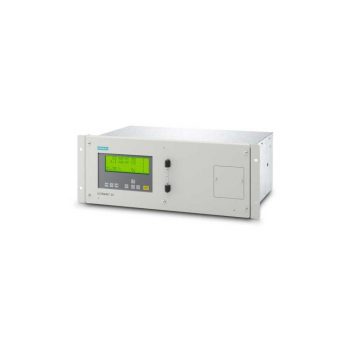
- Highly cost-effective because calibration gases are not required (AUTOCAL with ambient air, depending on the measuring component)
- High selectivity due to multilayer detectors e.g. low cross-sensitivity to water vapor
- Cleanable cuvettes: Cost savings through further use in case of contamination
- Menu-guided operation in plain text
- Open interface architecture (RS 485, RS 232; PROFIBUS, SIPROM GA): Simplified process integration; remote operation and control
 Datasheet Datasheet |
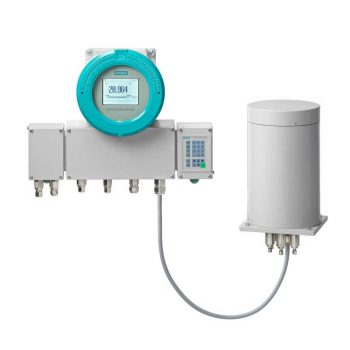
In addition to flexible modules, the innovative SIPROCESS GA700 series also includes a new housing type: the Ex d field device with pressure-resistant enclosure. It contains a field operating device consisting of an Ex d casing with attached Ex e connection housing plus a connected Ex d field module.

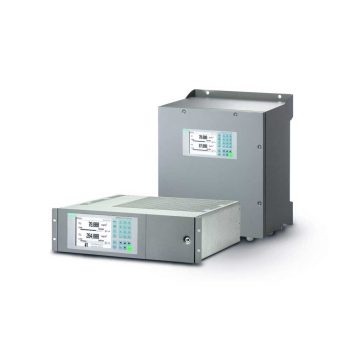
The new SIPROCESS GA700 series of gas analyzers makes it possible to combine up to two modules in one housing: in either a wall-mounted housing or in a 19" rack housing with three different height units, depending on individual requirements.
|
Datasheet
|
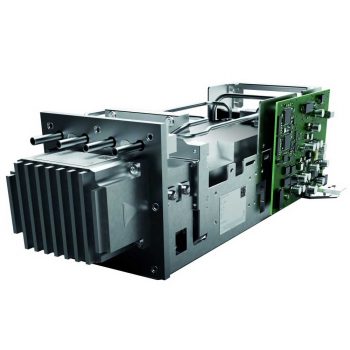
- High measuring precision in complex gas mixtures
- Low detection limits
- Low maintenance costs thanks to on-site cleaning of the analysis chambers
- Simplified interfering gas measurement
- Preventive maintenance function
- High selectivity due to two-layer detector
- Easy-to-use, thanks to Plug & Measure
- Ready for Industry 4.0
|
Datasheet
|
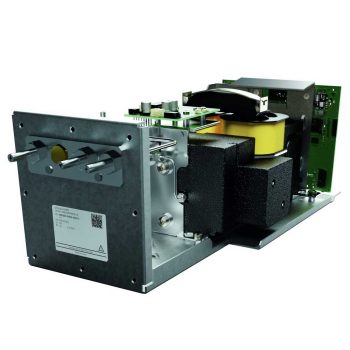
- Long service life, since the microflow sensor does not come into contact with the sample gas and therefore cannot corrode
- Low susceptibility to faults
- Vibration compensation
- T90 time 1.9 seconds
- Maximum ambient temperature 50 °C
- Small measuring ranges (0 to 0.5% or 99.5 to 100% O2)
- Physically suppressed zero point, such as 98 or 99.5 to 100% O2
- Easy-to-use, thanks to Plug & Measure
- Ready for Industry 4.0
|
Datasheet
|
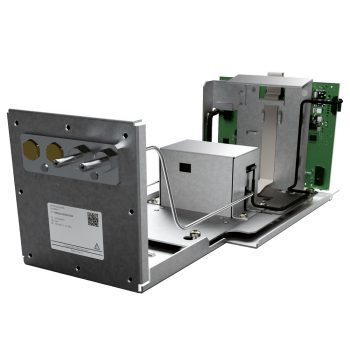
- Ideal for binary gases
- Integrated interference correction, no external calculation necessary
- High measuring range dynamics
- Low detection limits in the measuring range of 0 to 0.5% with hydrogen
- T90 time < 2.5 seconds
- Maximum ambient temperature 50 °C
- Easy-to-use, thanks to Plug & Measure
- Ready for Industry 4.0
|
Datasheet
|
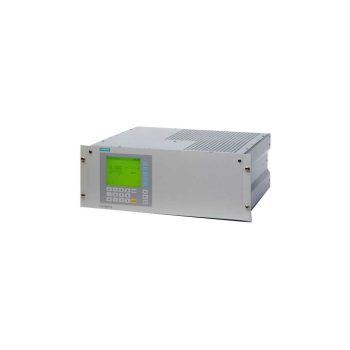
- Wide range of applications: in up to 100% H2O steam, for ultra-pure gas applications, for high-boiling components (up to 200 °C), in the presence of corrosive gases (with prefilter)
- Extremely low cross-sensitivity to interfering gases
- Low consumption of combustion air
- Low influence of oxygen on measured value
- Warning and fault messages; in case of combustion gas failure, flame extinction, and pump and filter faults
| Datasheet |
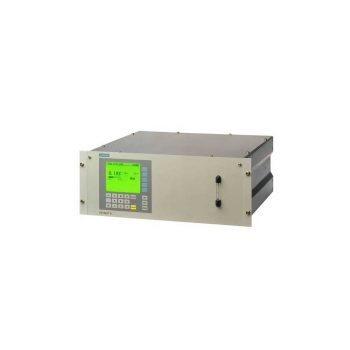
- Paramagnetic alternating pressure method: Small measuring ranges (0 to 0.5% or 99.5 to 100% O2), absolute linearity
- Detector element has no contact with the measuring gas: can be used under “harsh conditions,” long service life
- Physically suppressed zero point by suitable reference gas selection (air or O2), such as 98 to 100% O2 for purity monitoring / air separators
- Open interface architecture (RS 485, RS 232, PROFIBUS)
- SIPROM GA network for maintenance and service information (optional)
| Datasheet |
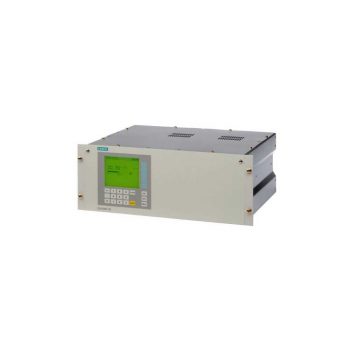
- Integrated pump for reference gas delivery (optionally for ambient air, for example)
- High degree of linearity
- Compact design
- Physically suppressed zero point possible
| Datasheet |
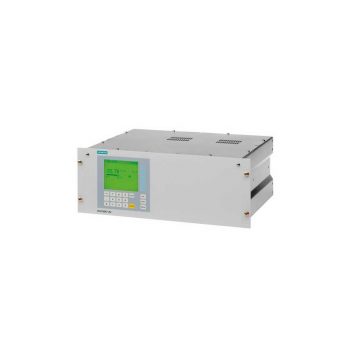
- High degree of linearity
- Compact design
- Open interface architecture (RS 485, RS 232, PROFIBUS)
- SIPROM GA network for maintenance and service information (optional)
| Datasheet |

- Corrosion-resistant materials in the gas channel (optional): Measurement possible in highly corrosive measuring gases
- Cleanable measuring chambers: Cost savings thanks to further use in case of contamination
- Open interface architecture (RS 485, RS 232, PROFIBUS)
- SIPROM GA network for maintenance and service information (optional)
| Datasheet |

Extractive Continuous Process Gas Analysis
In extractive continuous process gas analysis, a partial flow of the process gas is removed via sampling probes, heated lines and a gas conditioning system and fed to an analyzer located in a cabinet or field housing. The analyzers continuously measure concentrations of components such as O2, CO, CO2, NOx, SO2, CH4 or H2 and provide real-time values for control, monitoring and emissions reporting. Typical measurement principles include NDIR infrared, paramagnetic oxygen measurement, thermal conductivity, flame ionization detection (FID) and UV absorption spectroscopy. Robust gas paths, thermostatted measuring cells and industrial interfaces ensure high availability in 24/7 operation.
FAQ
What is extractive continuous process gas analysis?
It is a measuring method where the sample gas is extracted from the process, conditioned and transported to an external analyzer. The measurement is performed continuously so that concentration values are available at all times for process control and monitoring.
Which measurement principles are typically used in these analyzers?
Common principles are NDIR infrared for IR-active gases, paramagnetic methods for oxygen, thermal conductivity for hydrogen or helium, flame ionization detection (FID) for total hydrocarbons, and UV absorption spectroscopy for components such as NO, NO2 or SO2.
Which gases can usually be measured?
Typical target components include O2, CO, CO2, NO, NO2, SO2, H2S, CH4, total hydrocarbons and selected process and carrier gases. Depending on the analyzer, one or multiple components can be monitored simultaneously.
In which applications are extractive gas analyzers used?
They are used in power plants, waste incineration plants, chemical and petrochemical processes, steel and cement production, process off-gas and emissions monitoring, air separation units, as well as safety and inerting applications.
How does extractive gas analysis differ from in-situ analysis?
In extractive systems, the gas is taken out of the process and measured externally, whereas in-situ systems measure directly in the duct or stack. Extractive analyzers offer more flexibility for gas conditioning and combining different measurement principles, but require a more complex sampling system.
What is the purpose of the gas conditioning system?
Gas conditioning removes particles, condensate and disturbing components and stabilizes temperature and pressure of the sample gas. It is essential for reproducible measurements, short response times and long service life of sensors, valves and pumps.
How is condensation in the sample line avoided?
Condensation is prevented by using heated sampling probes, heated sample lines and thermostatted conditioning and analyzer modules. The temperature is selected so that all relevant components remain in the gas phase and no liquid condensate forms.
What accuracy and response times can be expected?
Modern analyzers typically achieve measurement uncertainties of a few percent of reading or span within the specified range and T90 response times from a few seconds to several tens of seconds, depending on gas path length, measurement principle and signal damping.
How are cross sensitivities to background gases corrected?
Cross sensitivities are minimized by suitable optical filters, detector designs and spectral ranges and are compensated electronically by correction algorithms, cross-interference compensation and application-specific configuration. The expected gas matrix is considered during setup.
What are the key requirements for the sampling system?
The sampling system must be pressure- and temperature-resistant, chemically compatible with the process gas, gas-tight and easy to maintain. It typically includes probe, filters, non-return valves, heated lines, condensate separators and pumps.
How are extractive gas analyzers integrated into control systems?
The analyzers provide analog outputs, digital contacts and serial or fieldbus interfaces. Common protocols are 4–20 mA, relay contacts, Modbus, PROFIBUS or PROFINET, allowing direct integration of measured values and status information into distributed control systems.
Which safety requirements have to be considered?
Depending on the installation site, requirements regarding explosion protection, functional safety and emission regulations must be fulfilled. Analyzers are available with corresponding enclosure ratings, Ex approvals and SIL classifications and are selected according to the risk assessment.
How often do extractive gas analyzers need to be calibrated?
Calibration intervals depend on the application, measurement principle and required uncertainty. Typical intervals range from several weeks to several months. Many systems support automatic zero and span calibration using reference gases or ambient air.
What are the advantages of modular gas analysis platforms?
Modular platforms allow combining different analyzer modules in one housing, make it easy to adapt to new tasks, simplify service and spare parts logistics and enable step-by-step expansion of the measurement functionality.