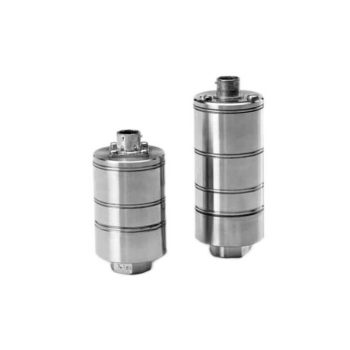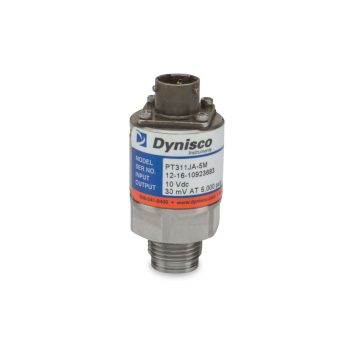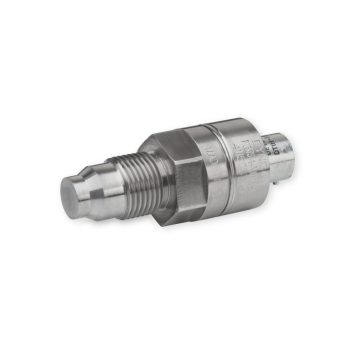
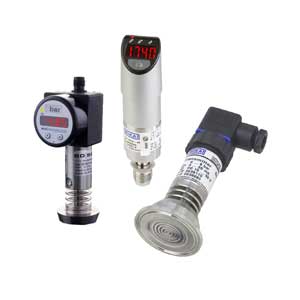
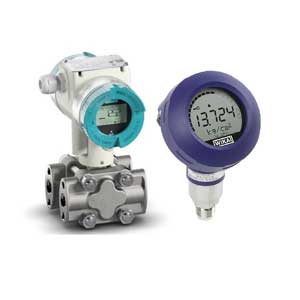
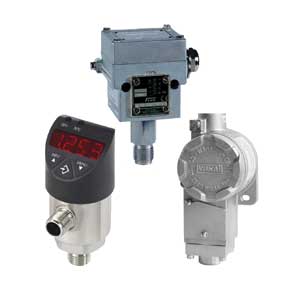
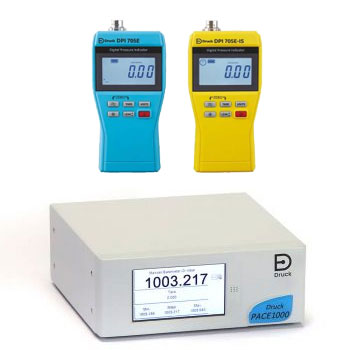
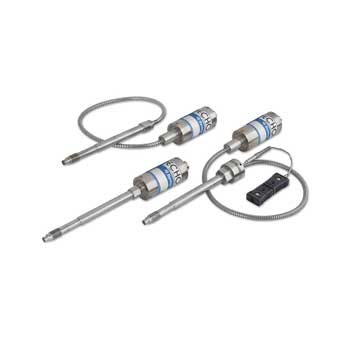
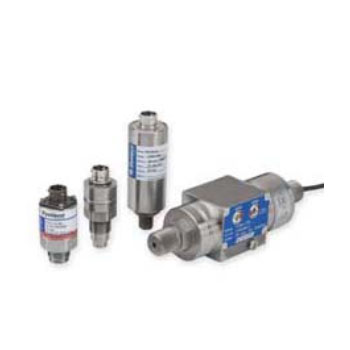
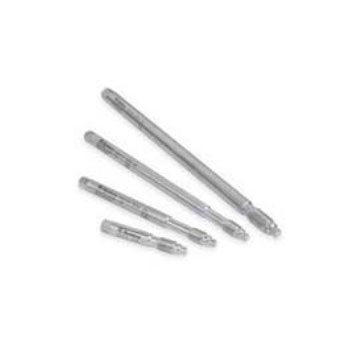
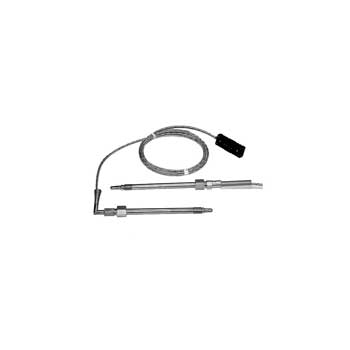
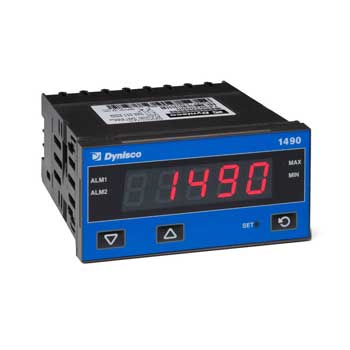
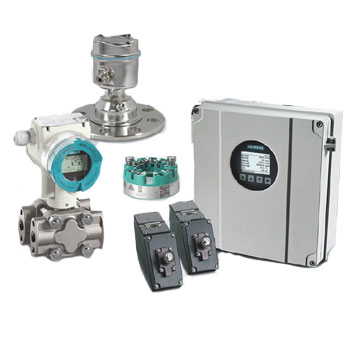
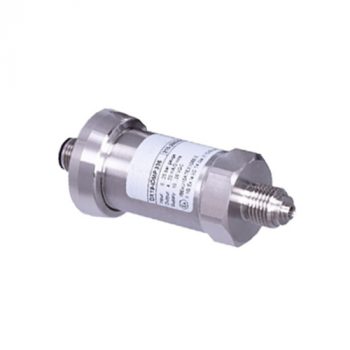


























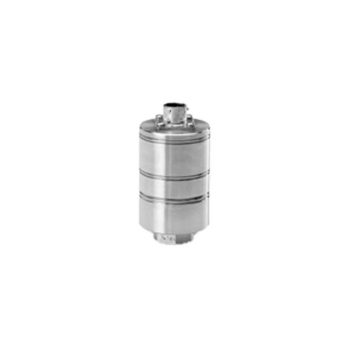
- General purpose pressure sensors for reliable pressure measurement in industrial applications
- 830, 850 and 860 models with flexible configuration
- Pressure ranges from 0...100 psi to 0...30,000 psi
- Accuracy ±0.5 % FSO including linearity, hysteresis and repeatability
- 3 mV/V, 5 VDC or 10 VDC outputs depending on model
- Excellent temperature compensation for stable measurements
- Internal shunt calibration with 80 % ±0.5 % FSO typical
- Bonded strain gauge sensor for reliable operation
- Compensated temperature range from 0...150 °F / -18...66 °C
- Wetted materials made of 17-4 PH and 15-5 PH stainless steel
Datasheet
|
User Manual
|
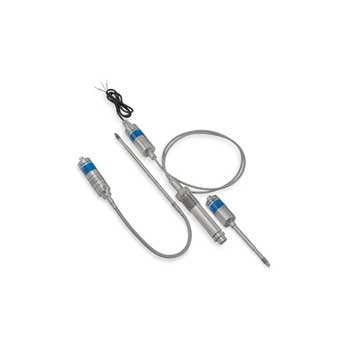
- General purpose pressure sensors for reliable pressure measurement in industrial applications
- 831, 851 and 861 models with flexible configuration
- Pressure ranges from 0...100 psi to 0...30,000 psi
- Accuracy ±0.25 % FSO including linearity, hysteresis and repeatability
- 3 mV/V, 5 VDC or 10 VDC outputs depending on model
- Excellent temperature compensation for stable measurements
- Internal shunt calibration with 80 % ±0.5 % FSO
- Bonded strain gauge sensor for reliable operation
- Compensated temperature range from 0...150 °F / -18...66 °C
- Wetted materials made of 17-4 PH and 15-5 PH stainless steel
Datasheet |
User Manual |
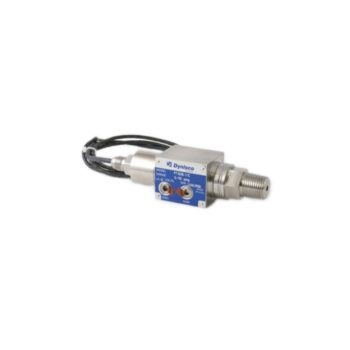
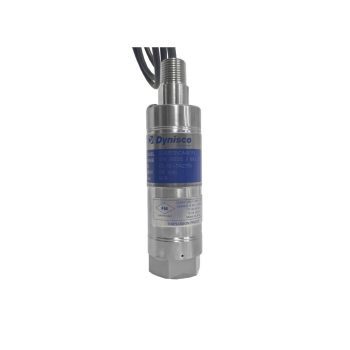
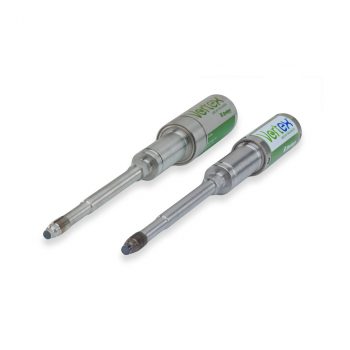
- General purpose pressure sensor for highly accurate pressure measurement
- Pressure ranges from 0...100 psi to 0...10,000 psi
- Accuracy ±0.15 % FSO including linearity, hysteresis and repeatability
- 3 mV/V output signal
- Excellent temperature compensation for stable measurements
- Welded stainless steel construction for rugged applications
- Internal shunt calibration with 80 % ±0.5 % FSO
- Compensated temperature range from 0...150 °F / -18...66 °C
- Suitable for test stands, automotive applications and polymer test equipment
- Wetted materials made of 17-4 PH and 15-5 PH stainless steel
Datasheet
|
User Manual
|
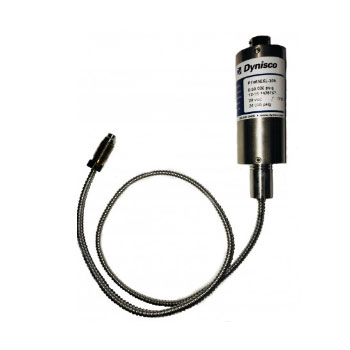
- Dynisco PT139 and PT139A rugged test pressure transducers
- For hydraulic pressure measurement in extreme environments
- Pressure ranges from 0–15 psi to 0–10,000 psi
- Accuracy better than ±0.5% full scale
- 3 mV/V output signal
- All-welded stainless steel construction with high shock and vibration resistance
- Integrated 80% shunt calibration
Datasheet
|
User Manual
|
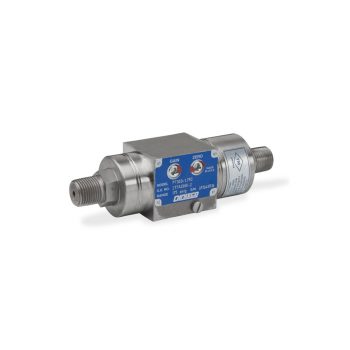
- Dynisco PT199 pressure transmitter for gas turbine applications
- Designed to measure gas and fuel pressure
- Pressure ranges from 0–15 psi to 0–1,500 psi
- Accuracy up to ±0.25% FSO on PT199B, PT199S, APT199S and ±0.5% FSO on PT199
- Rugged stainless steel construction
- Sealed zero and span potentiometers
- FM approval Class 1, Division 1, Groups A, B, C & D
Datenblatt
|
- Dynisco PT303 pressure transmitter for gas turbine and high-pressure applications
- Suitable for hazardous-area applications
- Pressure ranges from 0–110 psi to 0–700 psi
- ±0.25% FSO accuracy including linearity, hysteresis and repeatability
- Rugged stainless steel construction for reliable operation
- 4-wire 0–5 VDC output
- FM approval Class 1, Division 1, Groups A, B, C & D
Datasheet
|
User Manual
|
- Dynisco PT311JA flush-mounted pressure sensor
- For reliable and accurate pressure measurement of gases, viscous liquids and slurries
- Zero-volume pressure port for fast response and excellent cleanability
- Pressure ranges from 0–15 psi to 0–10,000 psi
- ±0.5% full-scale accuracy
- 3 mV/V output signal
- Integrated internal shunt calibration
Datenblatt
|
Bedienungsanleitung
|
- Dynisco PT375 high-pressure transducer with flush diaphragm
- Ideal for slurries, viscous liquids and homogenizable media
- Pressure ranges from 0–1,000 psi to 0–30,000 psi
- ±0.5% FSO accuracy including linearity, hysteresis and repeatability
- Zero-volume pressure port for fast response and excellent cleanability
- Metal-to-metal high-pressure seal
- Integrated 80% shunt calibration
Datasheet
|
User Manual
|
- Dynisco SPX2280 and SPX2281 smart industrial pressure transmitters
- 4–20 mA output with optional HART® communication
- Accuracy up to ±0.25% full scale
- Pressure ranges from 250 psi to 30,000 psi
- 3:1 turndown capability for flexible range adjustment
- ATEX, IECEx, FM and CSA approvals available
- SIL 2 and PL 'c' certified versions available
Datasheet
|
User Manual
|
Dynisco Industrial Sensors
“Industrial sensors” from Dynisco cover a wide range of pressure and temperature sensors and transmitters for general industrial applications — beyond just plastics processing. These include universal pressure sensors/transmitters suited for media such as oil, air, gas or other fluids, offering a variety of outputs and certifications (e.g. 4–20 mA, mV/V, V-signals).
These sensors are built to industrial standards: stainless steel or other rugged housings, hermetically sealed constructions, and often approved for hazardous or high-stress environments. They are suitable for demanding conditions like high pressure, temperature, aggressive media or explosion-prone areas. That makes them versatile for machinery, hydraulics, process engineering, chemical plants, pump and pressure systems, and other demanding industrial contexts.
Questions & Answers on Dynisco Industrial Sensors
What falls under “industrial sensors” at Dynisco?
Universal pressure transmitters and sensors for general process applications (hydraulics, pneumatics, fluids, gases), measuring pressure (and in some cases temperature) across diverse industries.
What parameters can they measure?
Primarily absolute or relative pressure; optionally temperature or combined parameters, depending on the version and application. Exact ranges depend on the sensor model.
What output signals are offered?
Common outputs include 4–20 mA, mV/V or voltage (e.g. 0–10 V), making them compatible with PLCs, data acquisition systems, controllers or display units.
In which application areas are they used?
Hydraulic/pneumatic systems, general process engineering, chemical or petrochemical plants, pump or pressure systems, test stands, gas or fluid monitoring — basically wherever robust, precise pressure or temperature measurement is required.
What distinguishes Dynisco industrial sensors from simple sensors?
They feature robust construction (stainless steel, welded housings), long-term stability, resistance to harsh conditions, broader measurement ranges, and often certifications for industrial or hazardous environments — making them more reliable for demanding applications.
Are there special certifications or protection ratings?
Yes — many sensors are rated for explosive environments and meet standards such as ATEX, FM, CSA or similar industrial safety/certification norms.
How are these sensors installed?
Usually via threaded fitting or flange into a process line; electrical connection via standard terminals or connectors to control or measurement systems. Compact design allows for retrofit or maintenance-friendly installation.
What are the advantages over generic sensors?
Better durability, suitability for harsh conditions, more precise and stable measuring behaviour, wider range of applications and compliance with industrial safety standards. Good for long-term use in demanding processes.
When does it make sense to use Dynisco industrial sensors?
Whenever pressure or temperature must be monitored under challenging industrial conditions — such as hydraulics, chemical or process industries — or when reliability and robustness are critical.

Datasheet
Datasheet