








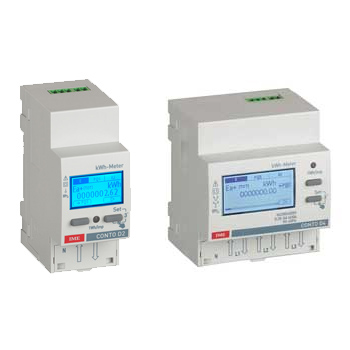






























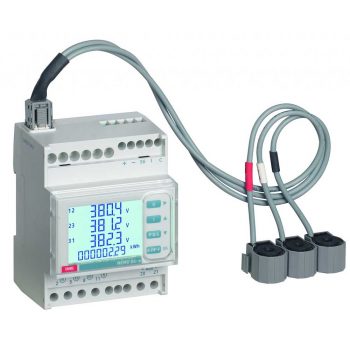
| CURRENT | 3x63A |
|---|---|
| NUMERO INGRESSI | 1 |
| VOLTAGE | 400 V (L-L) |
| ALIMENTAZIONE AUSILIARIA | 230Vca |
| USCITA COMUNICAZIONE | Modbus |
| FORMAT | 4 DIN modules |
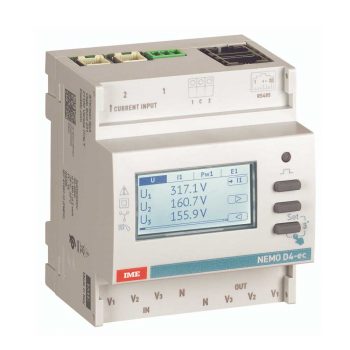
| CURRENT | 3x630/1600/3200/6300A |
|---|---|
| NUMERO INGRESSI | 1 |
| VOLTAGE | 400 V (L-L) |
| ALIMENTAZIONE AUSILIARIA | autoalimentato |
| USCITA COMUNICAZIONE | Mobus |
| FORMAT | 4 DIN modules |
 Datasheet Datasheet
|
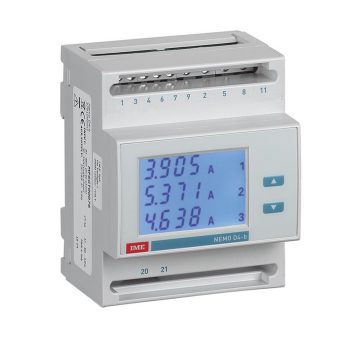
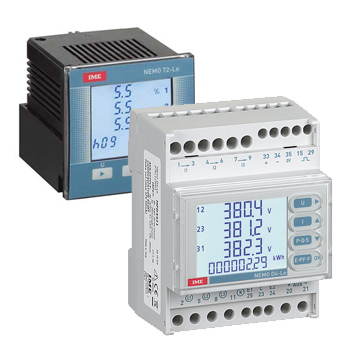
Network monitor for l.v. application
| AUX | 115 Vac |
|---|---|
| OUTPUT | without |
| FORMAT | 4 DIN modules |
| CURRENT | 1 A |
| VOLTAGE | 80...600 V (phase-phase) |
| VOLTAGE OPTIONS | direct |
| CURRENT OPTIONS | from CT 5…8000A (41 selectable primary ranges) |
| TYPE | Network monitor for l.v. application |
| MAIN | single-phase or three-phase 3/4 wire unbalanced load |
| DISPLAY | LCD rear-lighted |
|
Datasheet
|
|
User Manual
|
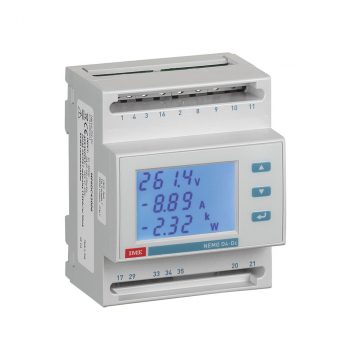
Network monitor for dc network applications up to 300V with energy count
| AUX | 230...240 Vac |
|---|---|
| OUTPUT | 2 alarm relays+pulses (Wh)+RS485 communication, protocol JBUS/MODBUS |
| FORMAT | 4 DIN modules |
| CURRENT | 10 A o 60 - 100 - 150 mV (selectable) |
| VOLTAGE | 10…300 V |
| VOLTAGE OPTIONS | direct |
| CURRENT OPTIONS | direct or from external shunt |
| TYPE | Network monitor for dc network applications up to 300V with energy count |
| DISPLAY | LCD rear-lighted |
|
Datasheet
|
|
User Manual
|
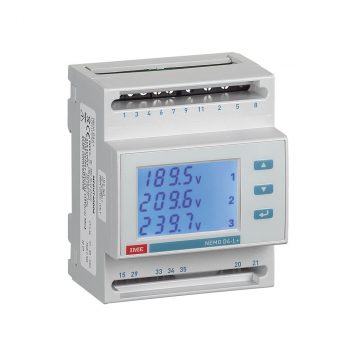
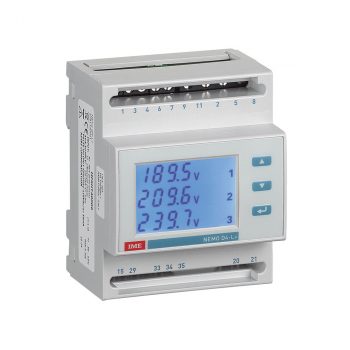
Network monitor for l.v./m.v applications with active (cl.1) and reactive (cl.2) energy count
| AUX | 20...150 Vdc/48 Vac |
|---|---|
| OUTPUT | RS485 communication, protocol BACNET |
| FORMAT | 4 DIN modules |
| CURRENT | 1 and 5 A |
| VOLTAGE | 80...480 V (phase-phase) |
| VOLTAGE OPTIONS | direct or from VT (programmable ratio) |
| CURRENT OPTIONS | from CT (programmable ratio) |
| TYPE | Network monitor for l.v./m.v applications with active (cl.1) and reactive (cl.2) energy count |
| MAIN | single-phase or three-phase 3/4 wire unbalanced load |
| DISPLAY | LCD rear-lighted |
|
Datasheet
|
|
User Manual
|
Network monitor for l.v./m.v applications with active (cl.1) and reactive (cl.2) energy count
| AUX | 20...150 Vdc/48 Vac |
|---|---|
| OUTPUT | RS485 communication, protocol BACNET |
| FORMAT | 4 DIN modules |
| CURRENT | 1 and 5 A |
| VOLTAGE | 80...480 V (phase-phase) |
| VOLTAGE OPTIONS | direct or from VT (programmable ratio) |
| CURRENT OPTIONS | from CT (programmable ratio) |
| TYPE | Network monitor for l.v./m.v applications with active (cl.1) and reactive (cl.2) energy count |
| MAIN | single-phase or three-phase 3/4 wire unbalanced load |
| DISPLAY | LCD rear-lighted |
|
Datasheet
|
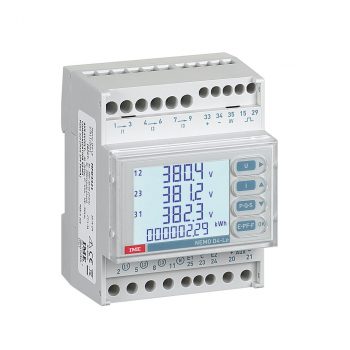
Network monitor for l.v. application with active (cl.0,5) and reactive (cl.1) energy count on 4 quadrants
| AUX | 11...60 Vdc |
|---|---|
| OUTPUT | S0 Pulse output or 1 alarm contact + RS485 BACNET protocol |
| FORMAT | 4 DIN modules |
| CURRENT | 1 and 5 A |
| VOLTAGE | 80...500 V (phase-phase) |
| VOLTAGE OPTIONS | direct or from VT (programmable ratio) |
| CURRENT OPTIONS | from CT (programmable ratio) |
| TYPE | Network monitor for l.v. application with active (cl.0,5) and reactive (cl.1) energy count on 4 quadrants |
| MAIN | single-phase or three-phase 3/4 wire unbalanced load |
| DISPLAY | LCD rear-lighted |
|
Datasheet
|
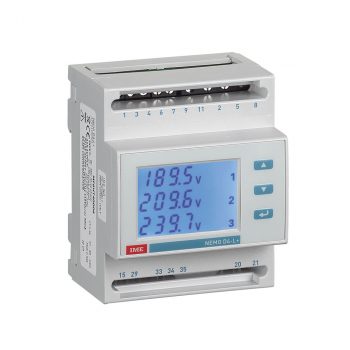
- Elektrische Messgrößenerfassung im Niederspannungsnetz
- Messen : Wirkenergie (Kl.1) oder Blindenergie (Kl.2)
- Netzart : Wechselstromnetz, 3/4-Leiter Drehstromnetz
- Display/Anzeige : LCD mit Hintergrundbeleuchtung
- Abmessungen : 4 Modul
- Impulsausgang
- Ausgang: Kommunikation RS485
- Ethernet, Profibus Kommunikation mit externe Schnittstellen
- Stromeingang 1A - Anschluss an an Teilbare Stromwandlers, TA24/36 (Bereiche 100-150-250-400-600A)
- Spannung : 80…500V (Phase-Phase) - Wandlerübersetzung CT und VT einstellbar
- Hilfsspannung : 230Vac
|
Datasheet
|
