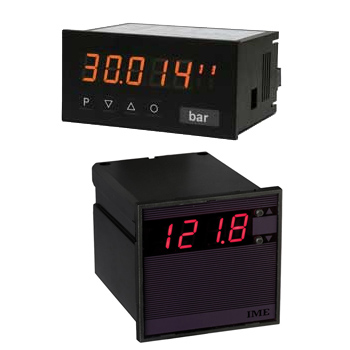
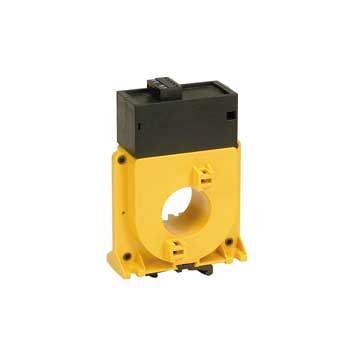
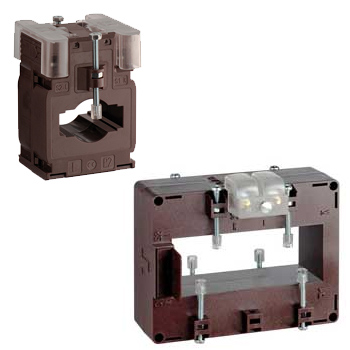
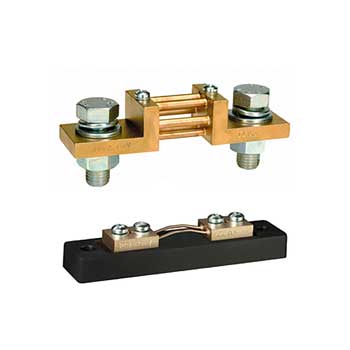
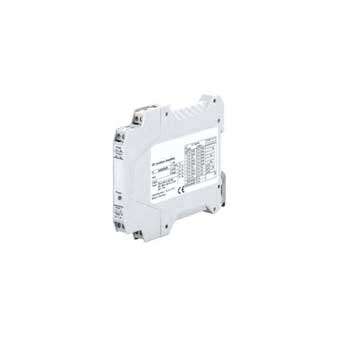
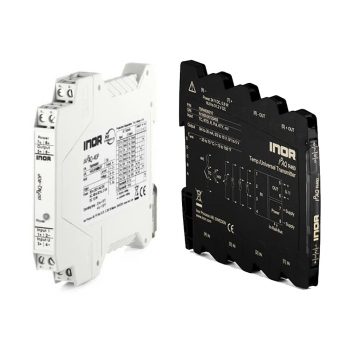
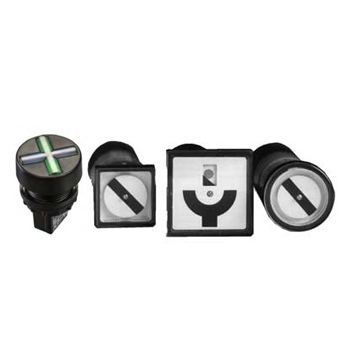
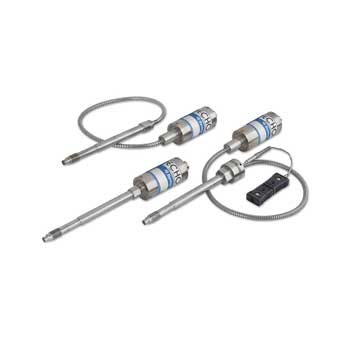
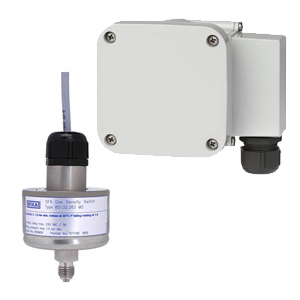
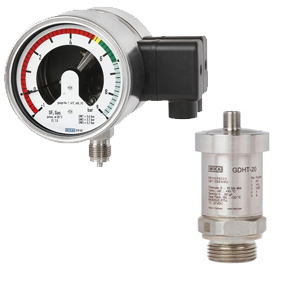
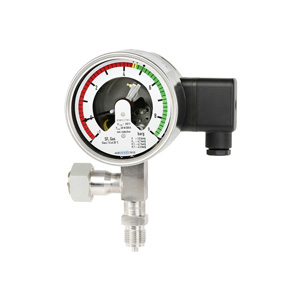
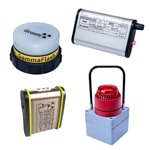
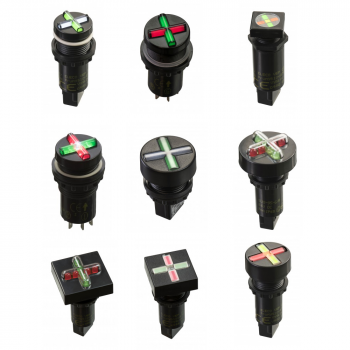
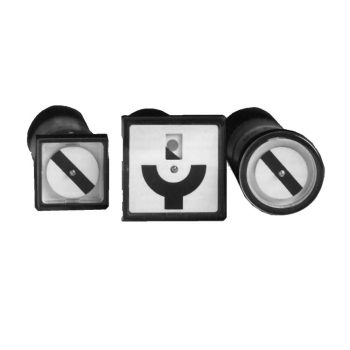
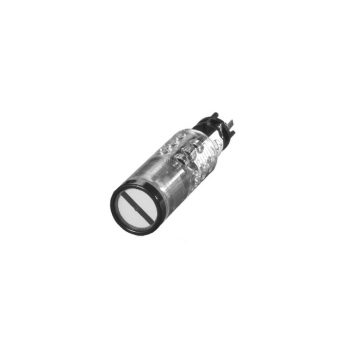
The ISUS switch position indicators provide clear visual indication of switching states in electrical systems, control panels, switchboards and mimic diagrams. Depending on the version, round or square designs, different symbols, LED colours, operating voltages and terminal or Faston connection options are available. The devices are designed for panel mounting, feature IP65 waterproof protection and, thanks to their low current consumption, are particularly suitable for compact control and indication panels.
Datasheet
|
- IPI / IPIR switch position indicator for DC or AC voltage
- Suitable for indicating switching states in switchgear and mimic diagrams
- Available voltage ranges from 24 V to 230 V
- Three display states: “on”, “off” and “fault” or “locked”
- Precise rotating magnet system with low power consumption
- Different front versions: 24 × 24 mm, 25 × 25 mm, Ø 29 mm, 36 × 36 mm and Ø 39 mm
- Screw terminals up to 1.5 mm² with touch protection
- IP54 protection class and position-independent installation
Datasheet |
- IST switch position indicator for electrical remote indication of switch positions
- Indicates three positions: “off”, “on” and “fault” or “locked”
- Suitable for power stations, substations and mimic diagrams
- Front versions 25 × 25 mm, Ø 25 mm and Ø 32 mm available
- DC and AC voltage versions from 24 V to 220/230 V
- IP52 protection degree on the housing front side
- Polycarbonate housing with 2.8 × 0.8 mm flat plug connection
- Options for parallel load, disconnect contact and extended touch protection
Datasheet
|
Switch Position Indicators
A switch position indicator is a device that detects and signals the state of a switch — whether it is open or closed. In control-cabinet and distribution setups, such an indicator is often used to show the status of circuit breakers, disconnectors, motor contactors or fuse switches. It helps to quickly see whether a circuit is energized or de-energized — enhancing safety, clarity and operational convenience.
These indicators are typically compact modules that can be installed in control cabinets or switchgear. They monitor the switch contacts and generate a signal on change — e.g. via LED, relay contact or alarm output. This provides a simple and reliable way to track switch status without requiring complex control logic or measurement devices.
Questions & Answers on Switch Position Indicators
What is a switch position indicator?
A device that detects the state of a switch (on/off, closed/open) and provides a signal or visual cue to indicate it.
Where are they used?
To signal the position of circuit breakers, disconnectors, fuse switches or contactors — for example in distribution panels, machines or automation systems.
How does the indicator show the switch state?
Typically with an LED indicator and/or a relay output or signaling contact, which can be connected to a control system or indicator panel.
Is galvanic isolation used?
Depending on the design, the module may be galvanically isolated to avoid interference or potential differences — particularly in systems with separate grounding or mixed circuits.
How is it installed?
Usually DIN-rail mounted or mounted near the relevant switch — installation requires wiring of the contact status and signal output.
What are advantages of using a switch position indicator?
Instant visibility of switch state, improved safety, easier maintenance and operation, and reduced risk of switching errors or unclear status.
What are the limitations?
The device only indicates switch state — it does not provide power measurement, fault protection or detailed monitoring. Incorrect wiring may lead to incorrect status indication.
Where are these indicators useful?
In distribution panels, machine control, maintenance or safety circuits — wherever the state of a switch must be visible or signalled.
Is a switch position indicator enough for protection?
Not necessarily — for protective functions, additional devices such as protective relays, residual-current devices or monitoring modules are required.

Datasheet