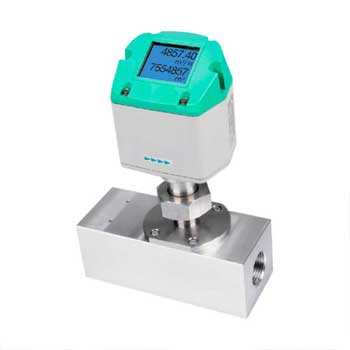
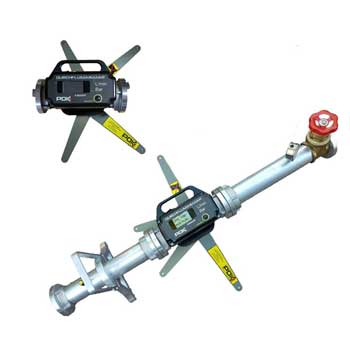
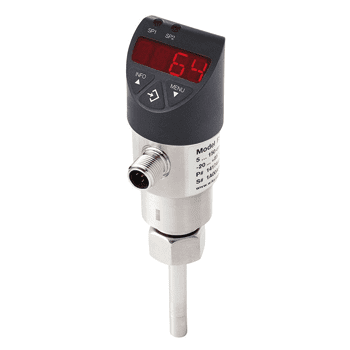
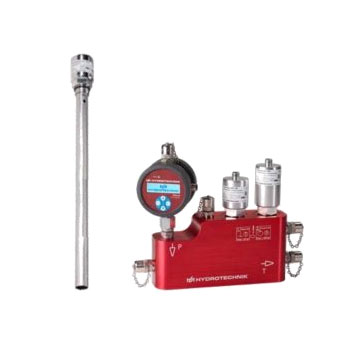
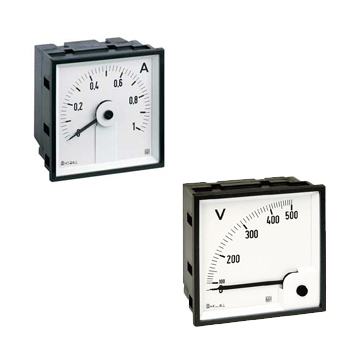
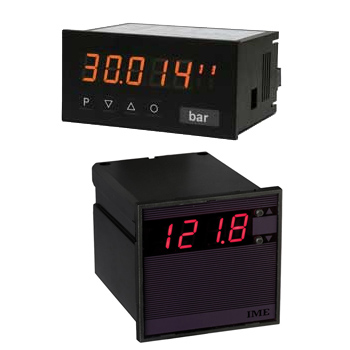
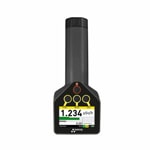
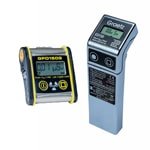
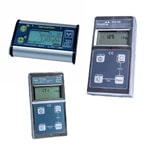
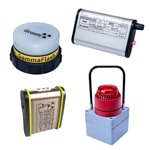
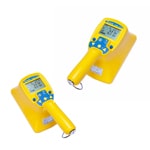
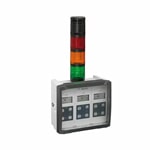























No longer available.

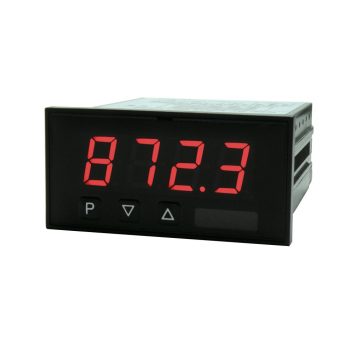
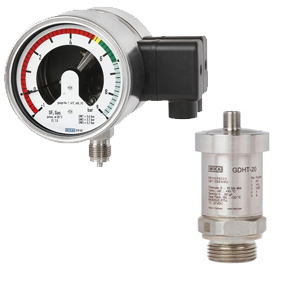
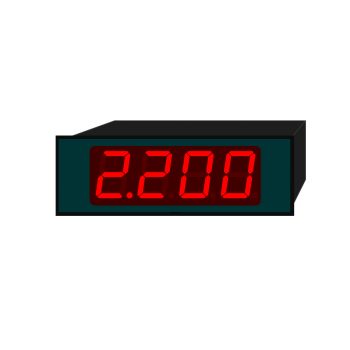
Housing 72 x 24 mm
Display 4-digit 7-segment-display 14 mm digit height
Range displayed 0-9999
Operation front panel keyboard
Input max. 10000 impulses/sec, +/- 5…24 V
Analogue Output
Switch point 2 Photo-MOS-setpoints
Interface
Power supply
Sensor supply
Software properties
  • timer with start-/stop-function and reset-function
  • timer steps of 10ms to 9999s adjustable
  • reading storage in case of blackout and failure
  • adjustable count up / count down with mit start value
  • adjustable shoulder evaluation
  • adjustable pulse attentuation onto 30Hz, normally 10kHz
  • switching contact onto adjustable threshold values or pulse divisor
Datasheet
User Manual

No longer available.

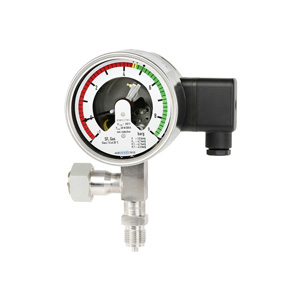
Housing 72 x 36 mm
Display 4-digit 7-segment-display 14 mm digit height
Range displayed 0-9999
Operation front panel keyboard
Input max. 10000 impulses/sec, +/- 5…24 V
Analogue Output
Switch point 2 Photo-MOS-setpoints
Interface
Power supply 24 VDC +/-10% galvanic isolated 5 VA
Sensor supply
Software properties
  • timer with start-/stop-function and reset-function
  • timer steps of 10ms to 9999s adjustable
  • reading storage in case of blackout and failure
  • adjustable count up / count down with mit start value
  • adjustable shoulder evaluation
  • adjustable pulse attentuation onto 30Hz, normally 10kHz
  • switching contact onto adjustable threshold values or pulse divisor
Datasheet
User Manual

No longer available.

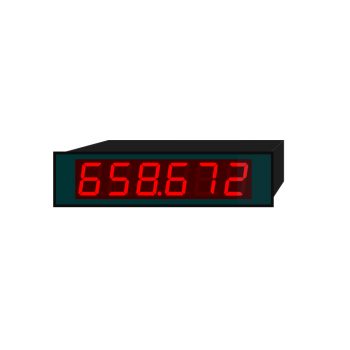
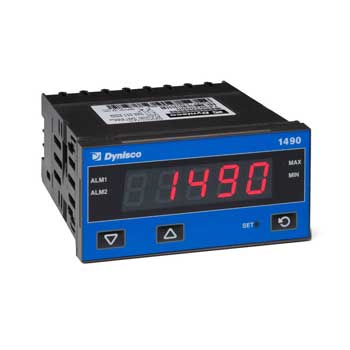
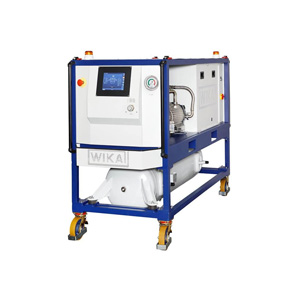
Housing 96 x 24 mm
Display 6-digit 7-segment-display 14 mm digit height
Range displayed 0-999999
Operation front panel keyboard
Input max. 10000 impulses/sec, +/- 5…24 V
Analogue Output
Switch point 2 Photo-MOS-setpoints
Interface
Power supply 24 VDC +/-10% galvanic isolated 5 VA
Sensor supply 24 V
Software properties
  • timer with start-/stop-function and reset-function
  • timer steps of 10ms to 999999s adjustable
  • reading storage in case of blackout and failure
  • adjustable count up / count down with mit start value
  • adjustable shoulder evaluation
  • adjustable pulse attentuation onto 30Hz, normally 10kHz
  • switching contact onto adjustable threshold values or pulse divisor
Datasheet
User Manual

No longer available.

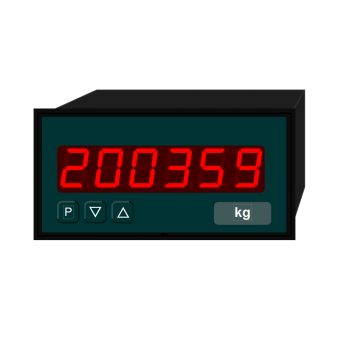
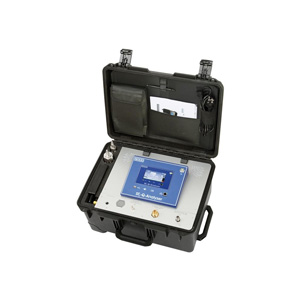
Housing 96 x 48 mm
Display 6-digit 7-segment-display 14 mm digit height
Range displayed 0-999999
Operation front panel keyboard
Input max. 10000 impulses/sec, +/- 5…24 V
Analogue Output
Switch point 2 Photo-MOS-setpoints
Interface
Power supply 115/230 VAC 24 VDC +/-10% galvanic isolated 5 VA
Sensor supply 24 V
Software properties
  • timer with start-/stop-function and reset-function
  • timer steps of 10ms to 999999s adjustable
  • reading storage in case of blackout and failure
  • adjustable count up / count down with mit start value
  • adjustable shoulder evaluation
  • adjustable pulse attentuation onto 30Hz, normally 10kHz
  • switching contact onto adjustable threshold values or pulse divisor
Datasheet
User Manual


Digital Panel Meters as Counters / Totalizers

Digital panel meters with counter or totalizer functions record pulses or standard input signals (e.g. current loop, voltage, switching signals) and tally them into a cumulative value — for example total quantity, event counts or operating time. The current count is displayed on a multi-digit LED display. With adjustable scaling, configurable units and optional outputs (analog, relay, bus), the count values can be flexibly integrated into control and visualization systems.

Questions & Answers

What are counter/totalizer panel meters used for?

They are used to count events, pulses, or continuous input signals — for example volumes, piece counts, operating hours or cycles in machines and processes.

Which input signals are commonly supported?

Typical input signals include pulses, digital switching signals, current loops (e.g. 4–20 mA), voltage signals or sensor outputs — depending on the device version. Some models also accept standard analog signals or voltages via appropriate input conditioning.

How is counting performed?

Pulses or input signals are detected by the device and summed internally. The counter increases the count accordingly and displays the current total on the LED display. For current or voltage inputs the counter can accumulate proportionally — for example volume, energy or runtime.

How flexible is scaling and parameterization?

Units, scaling factor and decimal point can be freely adjusted — so that the input signal is converted into a meaningful physical unit or quantity (e.g. liters, cycles, hours). The result is a clear, interpretable total value or count.

What display formats are available?

Large multi-digit LED displays (e.g. 6- or 8-digit) are common, providing sufficient range for high total values. Digit height and LED color vary by model to ensure good readability.

Are interfaces or outputs provided?

Many counters offer optional outputs — such as analog outputs, relay contacts or fieldbus interfaces — to transmit the count value to PLCs, SCADA systems or data loggers.

In which applications are counters commonly used?

Counters are useful for flow measurement and dosing, piece counting in production lines, operating time tracking, cycle counting, consumption logging, or any application where pulses or signals need to be aggregated over time.

How is configuration done?

Configuration is typically via a front keypad or menu. Input type, scaling, unit, decimal point, output type and optional relay or bus outputs are configurable — no need to open the control cabinet.

How is overflow or reset handled?

Many devices support resetting or partial resets. The counter can be reset manually or via external triggers or events, allowing to start a new count or batch when required.

Where are such counters frequently used?

Common applications are flow and dosing systems, piece counters in manufacturing, runtime or uptime tracking, cycle counters, consumption metering or aggregated quantity measurement in industrial processes.

Diese Website benutzt Cookies. Wenn du die Website weiter nutzt, gehen wir von deinem Einverständnis aus.