






















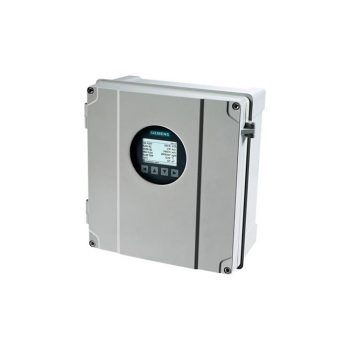
• Up to four configurable outputs and 2 RTD input channels selected at ordering
  • Outputs can be individually configured for mass flow, volume flow etc.
  • Three built-in totalizers which can count positive, negative or net flows
  • Independent low flow cut-offs, adjustable
  • Uni/bidirectional flow measurement
  • Flow direction adjustable
  • Alarm system consisting of alarm-log, alarm pending menu
  • Change log, logs all changes made to menu parameters or via communications
  • Internal data logger
  • Display of operating time with real-time clock
  • Flowrate outputs are freely configurable between maximum negative and maximum positive flows according to the sensor capacity
  • Limit switches programmable for flow, density and temperature. Limit points can be graded as warning and alarm for values both above and below nominal process conditions
  • Zero adjustment menu, with zero point evaluation display
  • Full service menu for effective and straight forward application and meter troubleshooting
  • Precise temperature measurement ensures optimal accuracy on massflow and density
  • Fully compatible with Siemens PDM version 8.2 service pack 1 or higher
User Manual

  • High accuracy and repeatability – accuracy of 1% of flow rate and repeatability of 0.25% according to ISO 11631
  • Exceptional zero stability – minimal need to set a zero point
  • Best-in-class user-friendliness – fully graphical display with simple menu navigation, multiple setup wizards and the option to display up to 6 customizable parameters on the same screen
  • Easy servicing – includes removable SensorFlash® microSD card and built-in USB service port
Datasheet

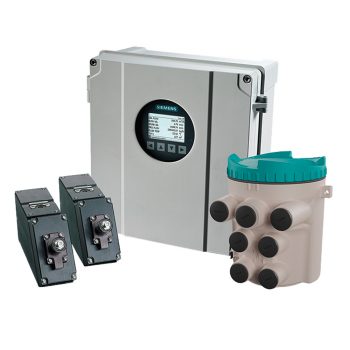
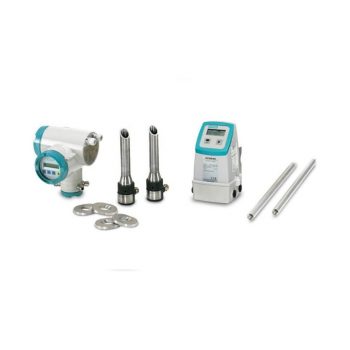
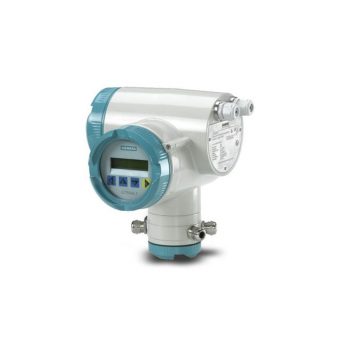
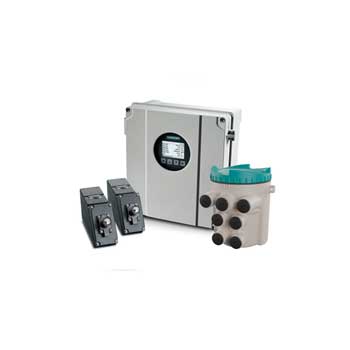
SITRANS FS230 is an ultrasonic clamp-on flowsystem. The SITRANS FST030 transmitter with the proven-in-use FSS200 sensors is ideal for challenging applications and the use in Ex areas. The Sitrans FS230 system is compatible with pipe diameters from DN10 up to DN10.000. For applications in hazardous areas, the external electronics module SITRANS FS DSL is used. It is installed close to the sensors and digitizes the measured signal at the earliest opportunity to transfer it to the FST030 transmitter with optimal EMC protection.


Datasheet
User Manual

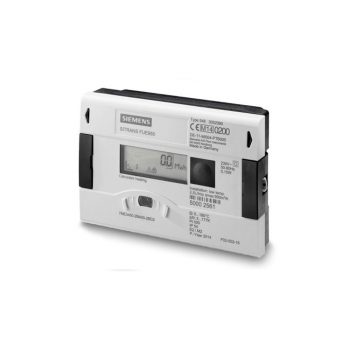
The battery or mains powered SITRANS FUE950 is a universal custody transfer approved energy calculator. It is designed for use in hot water, chilled water and cooling/heating applications. The calculator has a modular construction which means that it can be fitted with optional output modules when it is ordered. These include a pulse output, pulse input, current output and an M-Bus add-on module. If needed, the necessary temperature sensor pair and pockets can be ordered along with the calculator.

The SITRANS FUE950 can be used with SITRANS FUS380,  SITRANS FUE380, SITRANS FM MAG 5000,  SITRANS FM MAG 6000, SITRANS FM MAG 8000  and SITRANS FS220. Application Examples: District heating applications, Chilled water applications, Combined cooling/heating applications
Datasheet

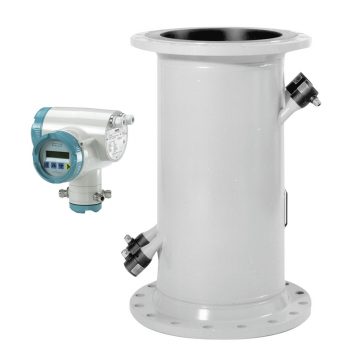
The SITRANS FUS SONO 3100/SITRANS FUS060 flowmeter consists of a SITRANS FUS SONO 3100 sensor with O-ring or flange transducers depending on the application. The SITRANS FUS060 transmitter is engineered for high performance applications and designed for remote installation in hazardous as well as non-hazardous environments. In addition to the standard outputs, it also offers communication.   The SITRANS FUS SONO 3100/SITRANS FUS060 flowmeter consists of a sensor and transmitter. For details and information about the transmitter, see SITRANS FUS060


Datasheet
User Manual
User Manual

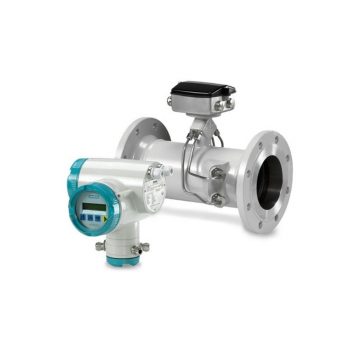
The SITRANS FUS SONO3300/SITRANS FUS060 flowmeter consists of a SITRANS FUS SONO 3300 sensor and a SITRANS FUS060 transmitter. The sensor is available in carbon steel and is fitted with integrated transducers. It also comes with signal cables enclosed in stainless steel pipes. The SITRANS FUS060 transmitter makes use of an advanced transit-time signal processing technology ensuring reliable and accurate signal detection for a wide range of processes.   The SITRANS FUS SONO 3300/SITRANS FUS060 flowmeter consists of a sensor and transmitter. For details and information about the transmitter, see SITRANS FUS060


Datasheet
User Manual
User Manual

SITRANS FUS SONOKIT offers a simple, accurate alternative to traditional flowmeters as it can be retrofitted onto existing pipelines. Being a transit time based ultrasonic flowmeter,SITRANS FUS SONOKIT has in-line transducers which assure superior accuracy and performance. The kit includes all necessary parts and special tools to make the installation as 1- or 2-track flowmeter. It is made for installation on empty pipes or pipes under pressure without process shut-down (hot-tap).

The SITRANS FUS SONOKIT consists of a sensorkit and transmitter. For details and information about the transmitter, see  SITRANS FUS060 and  SITRANS FUS080.


Datasheet

The cost-effective SITRANS FUS060 transmitter is based on proven technology for volumetric flow measurement and is ideal for optimizing efficiency when high accuracy is required. It comes as standard with 2 paths and features advanced diagnostics, ATEX certification and bus communication. In order to make a complete flowmeter, the SITRANS FUS060 flow transmitter must be combined with one of the following F US sensors: SITRANS FUS SONO 3100: Industrial applications ( except water measurements for larger sizes) SITRANS FUS SONO 3300: Industrial applications (for smaller sizes) SITRANS FUS SONOKIT: for retrofittings


Datasheet
User Manual

SITRANS FUS080 is a transit time-based transmitter designed for ultrasonic flow metering with any sensor in the SITRANS FUS380 / SITRANS FUE380 in-line series. SITRANS FUS080 comes as battery or mains powered version and is designed to measure flow in water applications.   In order to make a complete flowmeter, the SITRANS FUS080 flow transmitter must be combined with one of the following sensors: SITRANS FUS SONOKIT: retrofit flowmeter series SITRANS FUS380: flow meter for measuring on all district water qualities and water conductivities SITRANS FUE380: as SITRANS FUS380, but with type approval for custody transfer systems

Datasheet
User Manual

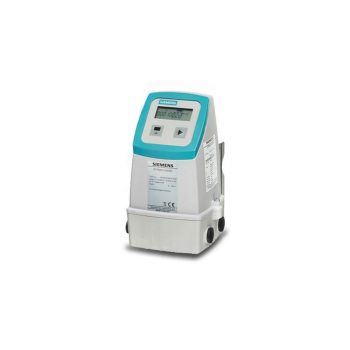
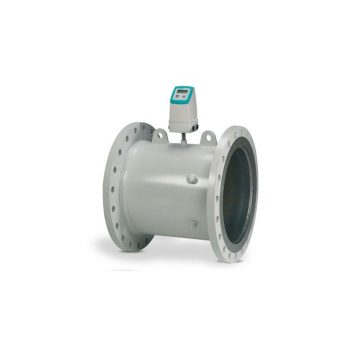
The SITRANS FUS380 is a battery or mains supply powered 2-path flowmeter designed for numerous standard applications. It can be used in all utility applications for water flow monitoring. The SITRANS FUS380 has a display that indicates various measurement values and diagnostics. In addition, the display is fitted with an IrDA optical interface for communication with SIMATIC PDM, which can be used for data transfer and programming. Optional add-on RS 232 and RS 485 modules include MODBUS RTU protocol.
The SITRANS FUS380 flowmeter consists of a sensor and transmitter. For details and information about the transmitter, see SITRANS FUS080. The flowmeter can be combined with an energy calculator, see SITRANS FUE950.
Datasheet
User Manual


Siemens Ultrasonic Flow Measurement

Siemens ultrasonic flowmeters measure volume flow using the transit-time principle, either non-invasively with clamp-on sensors or as wetted inline sensors. Clamp-on systems are mounted on the outside of the pipe and transmit ultrasound through the pipe wall, while inline meters integrate the ultrasonic transducers into a dedicated flow tube. This enables precise flow monitoring with minimal pressure loss in new and existing installations.

The portfolio covers a wide range of pipe diameters and is suitable for water, aqueous media and – with specific versions – other liquids and gases. Typical applications include district heating and cooling networks, energy and cost allocation, process and cooling water monitoring, HVAC systems and industrial utilities.

Questions & Answers on Ultrasonic Flowmeters

How does a transit-time ultrasonic flowmeter work?

Two ultrasonic transducers alternately send and receive signals in and against the flow direction. The transit time of the sound pulses is shorter with the flow than against it. The electronics determine the difference in transit time, calculate the average flow velocity along the acoustic path and then derive the volumetric flow rate by using the known internal cross-section of the pipe.

What is the difference between clamp-on and inline ultrasonic flowmeters?

Clamp-on devices are mounted on the outside of an existing pipe. The process line remains closed, and installation is possible without cutting the pipe or interrupting the process. Inline ultrasonic flowmeters comprise a dedicated flow tube with integrated transducers. They usually provide higher long-term accuracy and stability but require insertion into the pipeline.

For which media are Siemens ultrasonic flowmeters suitable?

Most instruments are designed for completely filled pipes carrying liquids such as potable water, district heating water, process and cooling water, or glycol mixtures. Special operating modes and versions can also handle media with increased solids or gas content and certain gases, provided the acoustic properties allow reliable signal transmission.

What accuracy can be achieved?

Inline ultrasonic flowmeters for water typically achieve measurement uncertainties down to about ±0.5 % of rate under recommended installation conditions. Clamp-on systems for liquids usually reach around ±1 % or better, depending on application, pipe quality and transducer mounting. The achievable accuracy strongly depends on the medium, flow profile and overall installation quality.

Which pipe sizes can be covered?

Inline ultrasonic flowmeters generally cover nominal diameters from roughly DN 50 up to DN 1200. Clamp-on systems can, depending on sensor type and frequency, be used on very small pipes with only a few millimetres in diameter up to large pipes and channels in the metre range.

What are the requirements for upstream and downstream straight runs?

A stable and symmetrical flow profile is important for reproducible measurements. Therefore, straight inlet and outlet sections without strong disturbances such as elbows, valves, pumps or reducers are required. The exact lengths depend on the specific meter type but are typically several pipe diameters upstream and downstream of the measuring point.

How sensitive is the measurement to gas bubbles and solids?

Transit-time ultrasonic flowmeters perform best in clear or only slightly turbid liquids with low gas and solids content. High fractions of entrained gas or suspended solids may attenuate or scatter the acoustic signal and lead to measurement errors. For heavily contaminated or two-phase flows, Doppler-type ultrasonic meters or alternative flow technologies are often more suitable.

Which temperature ranges can be handled?

Depending on the sensor type, variants are available for low-temperature applications well below 0 °C up to high medium temperatures above 200 °C. High-temperature sensors use special coupling materials and mechanical designs to ensure stable signal transmission with hot water, thermal oils or media close to their boiling point.

Which output signals and interfaces are available?

Common outputs include 4–20 mA, pulse or frequency outputs for counters, as well as status and alarm contacts. In addition, communication interfaces such as HART, Modbus RTU, Profibus or Profinet can be used for parameterization, diagnostics and integration into control and asset management systems.

Can ultrasonic flowmeters be used for energy and heat metering?

Yes, many inline ultrasonic flowmeters are designed to be combined with temperature sensors and an energy calculator. In district heating and cooling networks, the flow rate is combined with supply and return temperatures to calculate thermal energy or cooling capacity for monitoring and billing purposes.

Do ultrasonic flowmeters generate pressure loss?

Clamp-on ultrasonic flowmeters are completely non-intrusive and do not add any pressure loss to the system. Inline ultrasonic flowmeters have a straight and smooth measuring section, so the additional pressure loss is very low compared to fittings with internal obstructions such as orifices or turbine wheels.

What is the typical maintenance effort?

Because ultrasonic flowmeters have no moving parts, mechanical wear is negligible. Maintenance is usually limited to visual inspection of the installation, occasional cleaning of sensor surfaces if required, and verification or recalibration at defined intervals.

Can ultrasonic flowmeters measure bidirectional flow?

Yes, the transit-time principle inherently detects the flow direction. Many instruments support true bidirectional measurement and provide separate totals for forward and reverse volume as well as net and gross counters.

Are explosion-proof versions available?

For use in hazardous areas, special sensor and transmitter variants with appropriate approvals such as ATEX or IECEx are available. Depending on zone and protection concept, intrinsically safe circuits, flameproof enclosures or other protection methods are implemented.

Diese Website benutzt Cookies. Wenn du die Website weiter nutzt, gehen wir von deinem Einverständnis aus.