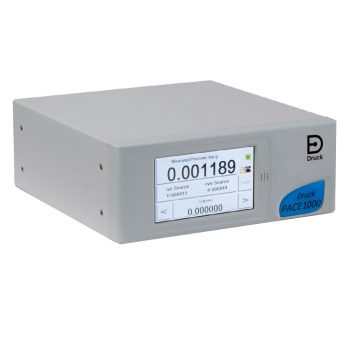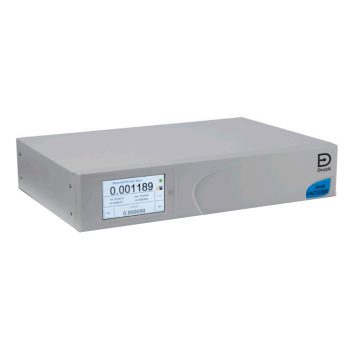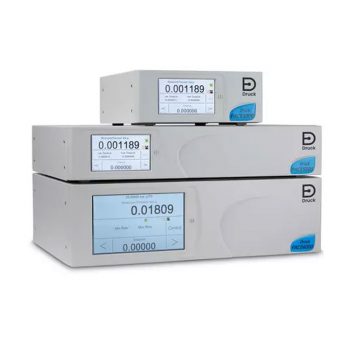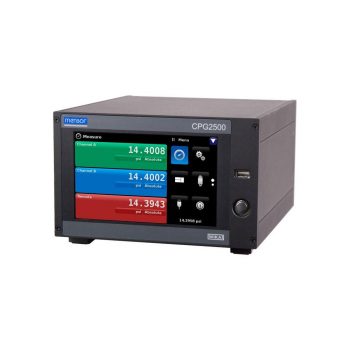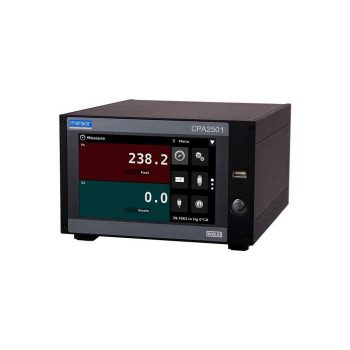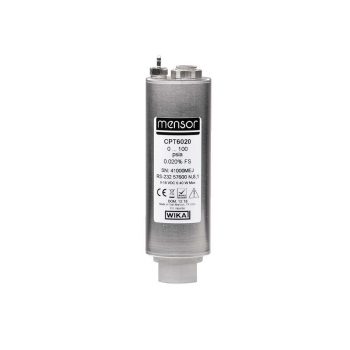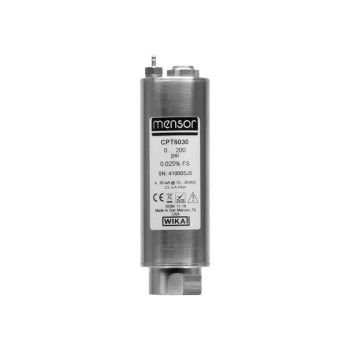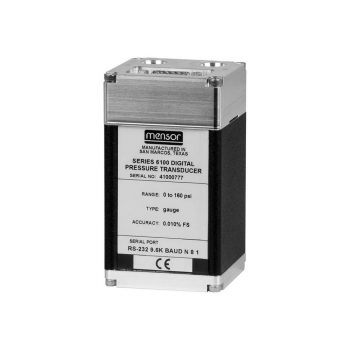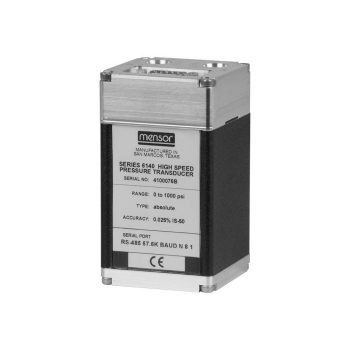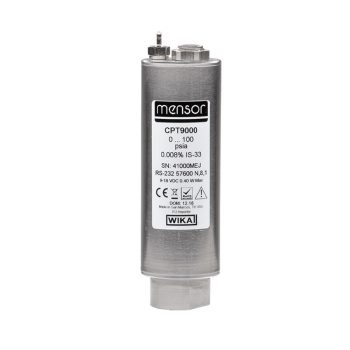
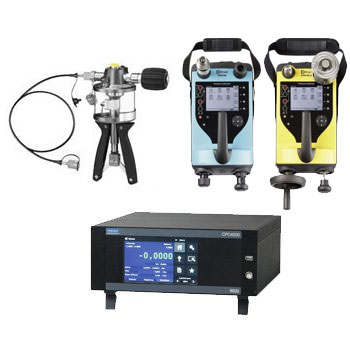
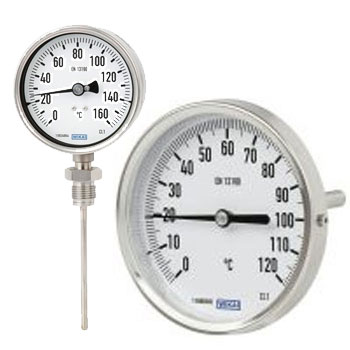
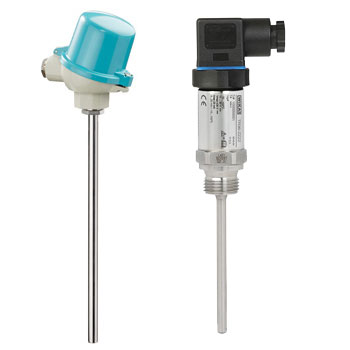
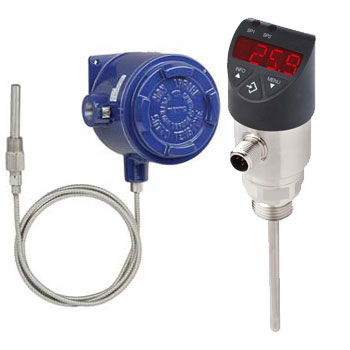
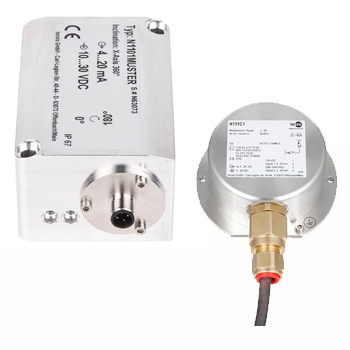
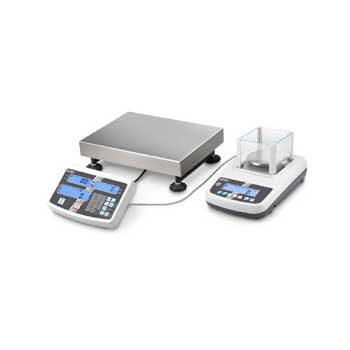
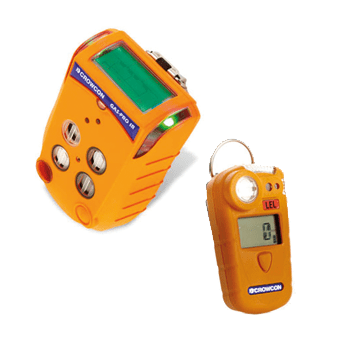
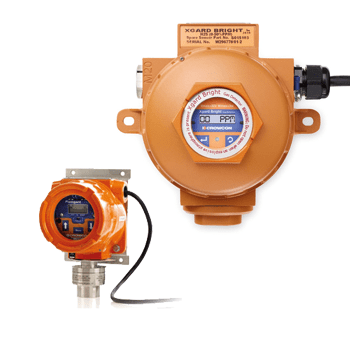
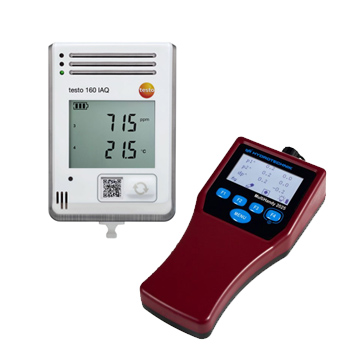
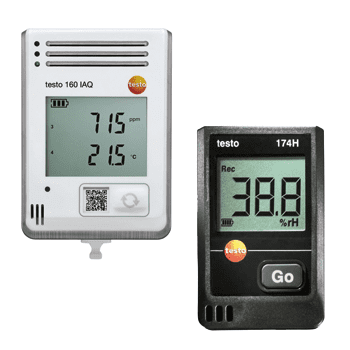
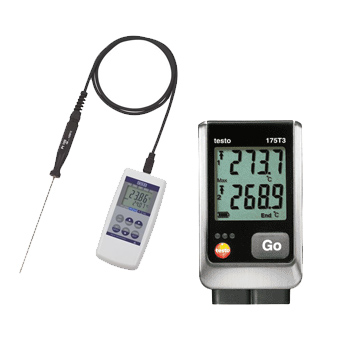
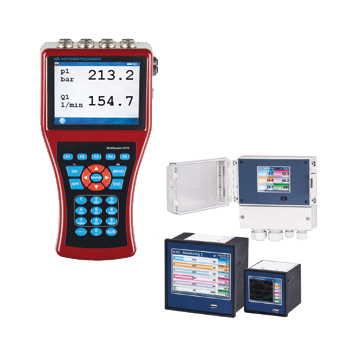
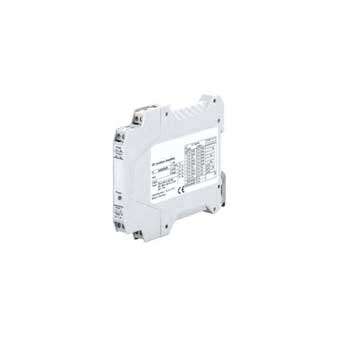
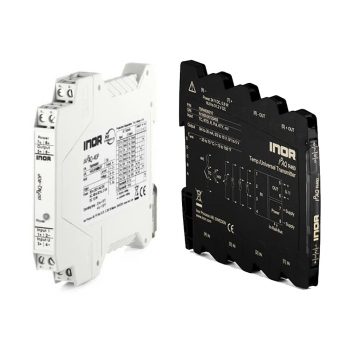
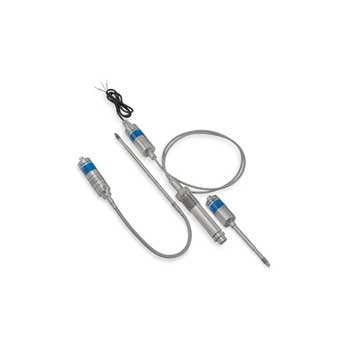
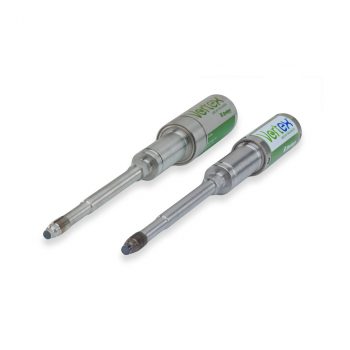
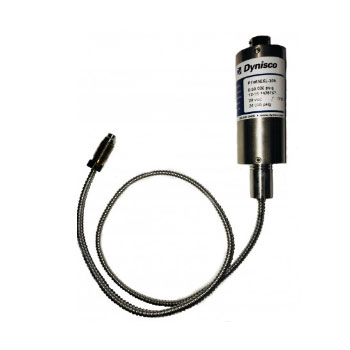
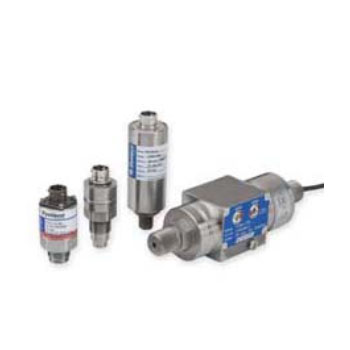
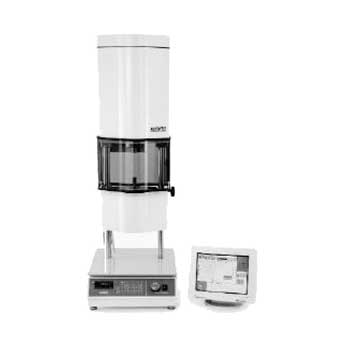
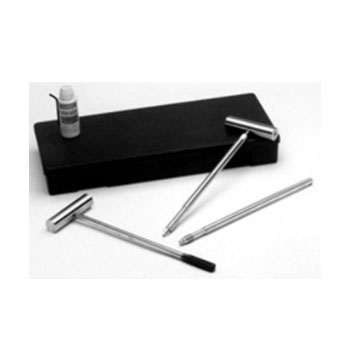
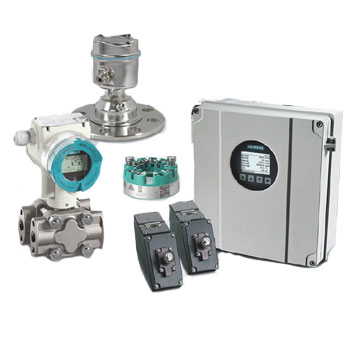
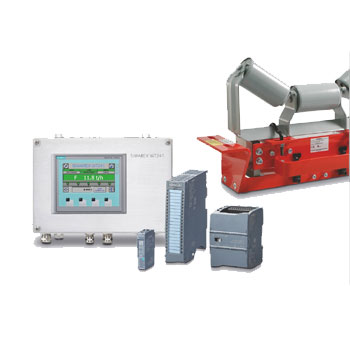
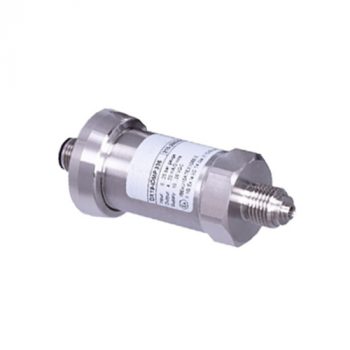
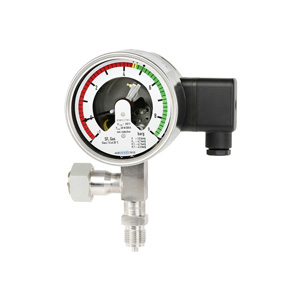
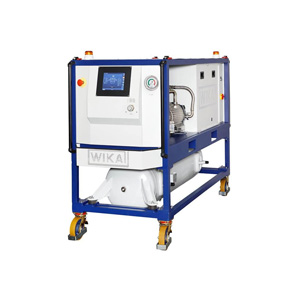
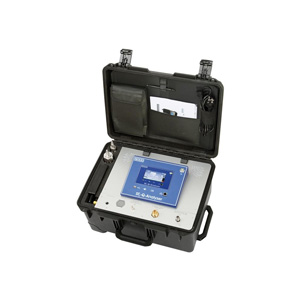
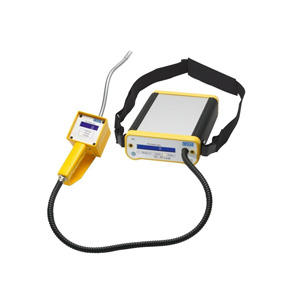
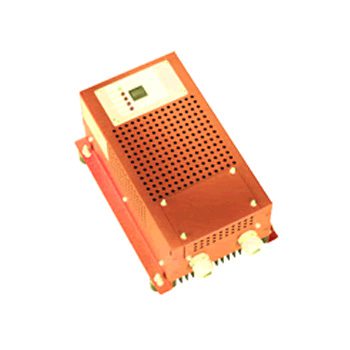




















- Pressure range 500 to 1150 hPa (14.75 to 34 inHg)
- High stability ±0.05 hPa per year typical
- Precision ±0.1 hPa Including all errors: NLHR (non linearity, hysteresis, and repeatability), zero & span setting, and thermal error
- Output 4.5 V TTL square wave. Frequency 25 to 40 kHz.
- Two compact barb-fitting options for integration into weather stations
Datasheet |
- Single-channel pressure controller housing
- Compatible with any interchangeable PACE CM module
- Ideal for end-of-line tests as well as laboratory and workshop environments due to compact design and high control stability
- Highest precision: Measurement accuracy up to 0.001% of full scale (FS) for the most demanding calibration and testing applications.
- Pressure range: 25 mbar – 210 bar
- Industry-leading controller performance (speed, accuracy, and stability) for both small and large volumes
- Highest measurement accuracy with minimal measurement uncertainty (12-month specification)
- Completely redesigned user interface with larger display area
- Simple and intuitive menu structure with context-sensitive help
- Test bench connectivity with HDMI monitor output, mouse and keyboard
- “Drop-in” replacement for PACE5000 with backward compatibility of control modules
- Improved diagnostic tools
- Windows USB driver with automatic installation
- Standards-compliant communication: GPIB IEEE-488, RS232, SCPI-99, USBTMC, LXI 1.6 standard (VXI-11 & HiSLIP), NI IVI-C and LabVIEW-certified instrument drivers
Datasheet |
User Manual |
- Dual-channel pressure controller housing
- Can operate with two CM modules in single, auto-ranging, or dual mode
- No restriction on pressure ratio between channels
- High flexibility – suitable for both industrial and laboratory use
- Highest precision: Measurement accuracy up to 0.001% of full scale (FS) for the most demanding calibration and testing applications.
- Pressure range: 25 mbar – 210 bar
- Industry-leading controller performance (speed, accuracy, and stability) for both small and large volumes
- Highest measurement accuracy with minimal measurement uncertainty (12-month specification)
- Completely redesigned user interface with larger display area
- Simple and intuitive menu structure with context-sensitive help
- Test bench connectivity with HDMI monitor output, mouse and keyboard
- “Drop-in” replacement for PACE5000 with backward compatibility of control modules
- Improved diagnostic tools
- Windows USB driver with automatic installation
- Standards-compliant communication: GPIB IEEE-488, RS232, SCPI-99, USBTMC, LXI 1.6 standard (VXI-11 & HiSLIP), NI IVI-C and LabVIEW-certified instrument drivers
Datasheet |
User Manual |
- Total accuracy of 3 Pa / 0.03 mbar using Druck TERPS resonant silicon technology
- Configurable for a wide range of applications with 1, 2, or 3 reference sensors from 200 kPa to 21.1 MPa
- Comprehensive yet easy-to-use platform—from laboratory barometer to practical calibration standard
- Compact, robust transfer standard ideal for on-site testing and interlaboratory comparisons
- Versatile performance maintained over a wide range of environmental conditions and test media
- Precision of 10 ppm Full Scale (FS)
- Long-term stability up to 15 ppm Full Scale (FS) per year
- Optional barometric reference available
Datasheet |
User Manual |
- Utilizes Druck's unique range of resonant pressure sensor technology
- Pressure ranges 750-1150 mbar (10.9-16.7 psi, 75-115 Kpa), absolute
- Choice of precision up to 0.020 mbar or 0.0002901 psi
- Long term stability of 0.05 mBara/0.00072515 psi per annum
- Selectable numeric or graphic display
- High resolution touch screen operation
- Intuitive icon driven task menu structure
- Airfield task as standard: Display QFE, QFF or QNH in pressure units or as altitude in feet or meters
- Leak test option
- Switch test/analogue output option
- Switch test/voltage free contact option
- RS232, IEEE connectivity, Ethernet and USB as standard
- Min/max/average display
- Compatible with software packages
- 28 selectable pressure units plus 4 user defined units
- Various service support options available
Datasheet |
Calibration Manual |
- Choice of enclosures and interchangeable control modules
- Configurations with single, dual, or auto-range control modules
- High-speed pressure control – 5 seconds to fill 300 CC*
- Up to 210 bar (3000 psi / 21 MPa) gauge and absolute pressure
- Precision up to 0.001 % of full scale (FS) over the calibrated temperature range
- Accuracy – see CM3 accuracy table:
- 2, 3.5 bar: 0.0016 % of reading + 0.0033 % FS
- 8–71 bar: 0.0011 % of reading + 0.0026 % FS
- Long-term stability from 0.001 % of full scale (FS)
- Optional barometric reference
- Utilizes DRUCK’s new, unique sensor range
- 28 selectable pressure units and four user-defined units
- Switch test, leak test, test program, burst test, analog output, and voltage-free (dry contact) relays
- Aeronautical option
- Negative calibration of the instrument included as standard
- High-resolution color touchscreen for operation
- Intuitive, task-oriented menu structure
- Compatible with software packages
- RS232, IEEE connectivity, Ethernet, and USB as standard
Datasheet |
User Manual |
- Dual-channel pressure controller housing (for use with two PACE CM control modules)
- Supports single, dual, and auto-range pressure control
- High pressure control speed – fills 300 cm³ in just 5 seconds*
- Pressure ranges up to 210 bar (3000 psi / 21 MPa), gauge and absolute
- Precision up to 0.001% of full scale (FS) over the calibrated temperature range
- Long-term stability from 0.001% of full scale (FS)
- Optional barometric reference available
- 28 selectable pressure units and four user-defined units
- Automated functions: switch test, leak test, test program, burst test
- Analog output signals and voltage-free (dry contact) relay outputs
- Aeronautical option for pressure, altitude, airspeed, Mach number, and rate of climb (PACE 6000 only)
- Negative calibration of the measurement range included as standard
- 7-inch color touchscreen with VGA resolution
- Intuitive, task-based menu navigation
- Compatible with calibration and control software
- RS232, IEEE-488, Ethernet, and USB as standard communication interfaces
- Modular system with interchangeable CM control modules
- Wide selection of pressure ranges and accuracy classes (Standard, High, Premium, Reference)
- Digital control for high stability and fast response times
Datasheet |
User Manual |
Calibration Manual |
- Single or multiple pressure range configurations available
- Up to three pressures displayed simultaneously
- Utilizes Druck’s innovative piezo-resistive and resonant pressure sensor technology
- Pressure measurement ranges up to 1000 bar (14,500 psi / 100 MPa)
- Precision selectable up to 0.001% Full Scale (FS)
- Long-term stability up to 0.001% FS per year
- Optional barometric reference
- Airfield task as standard with barometer option: Display QFE, QFF, or QNH in pressure units or altitude in feet/meters
- Negative gauge calibration included as standard
- Data logging as standard with on-screen replay
- Selectable numeric or graphic display
- High-resolution touchscreen
- Intuitive icon-driven menu structure
- Switch test/analogue output option
- Switch test/voltage-free contact option
- Aeronautical option
- Leak test option
- RS232, IEEE, Ethernet, and USB interfaces as standard
- Min/Max/Average value display
- Compatible with software packages
- 28 selectable pressure units plus 4 user-defined units
- Various service and support options available
Datasheet |
User Manual |
- Selection of chassis and interchangeable control modules
- Configurations with single, dual, or auto-range control modules
- High-speed pressure control – 5 seconds to fill 300 cm³*
- Up to 210 bar (3000 psi / 21 MPa) gauge and absolute pressure
- Precision up to 0.001% full scale (FS) over the calibrated temperature range
- Accuracy:
- 2, 3.5 bar absolute: 0.0004% reading + 0.0027% FS
- 8–71 bar absolute: 0.0011% reading + 0.0026% FS
- Long-term stability from 0.001% FS
- Optional barometric reference
- Utilises Druck’s new, unique range of piezo-resistive and TERPS pressure sensor technology
- 28 selectable pressure units and four user-defined units
- Options for switch test, leak test, test program, burst test, analogue output, and volt-free contacts
- Aeronautical option available
- Negative gauge calibration included as standard
- High-resolution color touchscreen operation
- Intuitive, icon-based task-driven menu structure
- Compatible with calibration and control software packages
- RS232, IEEE, Ethernet, and USB interfaces included as standard
Datasheet |
Datasheet |
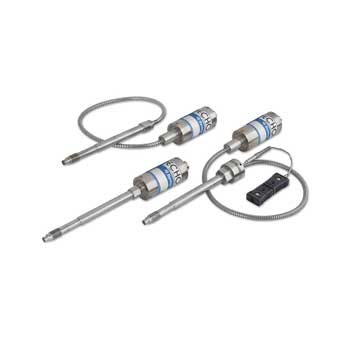
- High precision: ±0.01% full scale (FS) over compensated temperature range
- High stability: ±100 ppm FS per year
- Wide temperature range: up to –40°C to +125°C (–40°F to 257°F)
- Media-isolated construction – suitable for use in harsh environments
- Multiple output configurations: RS-232, RS-485, USB 2.0, CAN Bus, frequency, and diode (TTL)
- Wide selection of pressure and electrical connections to meet specific requirements
Datasheet |
- High Precision, ±0.01% FS over compensated temperature range
- High Stability, ±50 ppm FS/year (typical)
- Wide temperature range, up to -55 to +125°C (-67 to 257°F)
- Multiple Output configurations, RS232, RS485, USB 2.0, CAN Bus, Frequency & Diode (TTL)
- Wide selection of pressure & electrical connections to suit specific requirements
- Low acceleration effects
Datasheet |
User Manual |
- High precision, ±0.01% of full scale over the compensated temperature range
- High stability, ±100 ppm of full scale per year
- Wide temperature range, -40 °C to +125 °C (-40 °F to 257 °F)
- Media-isolated design, suitable for use in harsh environments
- Multiple output configurations: RS-232, RS-485, frequency and diode (TTL)
- Selection of pressure and electrical connectors to meet specific requirements
Datasheet |
User Manual |
- Accuracy up to 0.025 % IS-50
- Measuring range from -1 ... +400 bar (-15 ... +6,000 psi)
- Output mode 250 Hz (4 ms) response time
- Streaming output mode in IEEE-754 format
Datasheet |
User Manual |
- Pressure ranges: from 0 ... 25 mbar up to 0 ... 2,890 bar [0 ... 0.36 up to 0 ... 42,000 psi]
- Accuracy down to 0.008 % of IS (IntelliScale)
- External pressure ranges from 25 mbar ... 1,000 bar [0.36 ... 15,015 psi]
- Precision 0.004 % FS
- Removable/interchangeable sensors
Datasheet
|
User Manual
|
- Indication of altitude and airspeed and rates
- Ps, Pt / Qc ranges
- Altitude uncertainty: +/- 3 ft. at sea level
- RVSM compliant
- RS-232 and ethernet standard
Datasheet
|
User Manual
|
- Accuracy: 0.020 % FS
- Measuring range: 25 mbar ... 1,001 bar [10 inH2O ... 15,015 psi]
- Temperature compensation: 0 ... 50 °C [32 ... 122 °F]
- RS-232 or RS-485 communication
- Rugged and compact design
Datasheet
|
User Manual
|
- Metrological accuracy: 0.025 % FS on the 4 ... 20 mA output
- Measuring range: 25 mbar ... 1,001 bar [10 inH₂O ... 15,015 psi]
- Voltage supply from DC 15 ... 28 V
- Temperature compensation: -20 ... +75 °C [-4 ... +167 °F]
- NAMUR NE43-compliant
Datasheet
|
User Manual
|
- Accuracy up to 0.01 % IS-50
- Measuring range from -1 ... 400 bar (-15 ... 6,000 psi)
- RS-232 or RS-485 interface
- Compact design
Datasheet
|
User Manual
|
- Accuracy: 0.008 % IS-33
- Measuring range: 25 mbar ... 1,001 bar [10 inH2O ... 15,015 psi]
- Temperature compensation: 0 ... 50 °C [32 ... 122 °F]
- RS-232 or RS-485 communication
- Rugged and compact design
Datasheet
|
User Manual
|
Stationary Precision Pressure Instruments – Reference Quality for Lab & Test Bench
Stationary precision pressure instruments deliver top accuracy and stability for calibration labs, test benches, end-of-line tests, and quality assurance. From reference transmitters and precision digital test gauges to automated pressure controllers, they cover tasks from vacuum/low pressure to high pressure with traceable documentation and interfaces for system integration.
ICS Schneider Messtechnik supports you with range and accuracy selection, media compatibility, connections (G/NPT/flange) and integration (USB/RS-232/RS-485/Ethernet, IO-Link/Modbus), including calibration concepts and accessories (pressure sources, manifolds, snubbers, diaphragm seals).
FAQ on Stationary Precision Pressure Instruments
Answers on selection, accuracy, temperature influence, connections, media, calibration, software, and integration into laboratory and test-bench environments.
How do stationary instruments differ from mobile precision devices?
Stationary units prioritize long-term stability, lowest drift, mains power, and automation (remote control/SCPI/bus). Mobile solutions focus on portability and battery runtime.
What accuracies are typical?
| Class | Total error (typ.) | Use case |
|---|---|---|
| Standard reference | ±0.05…0.02% of span | QA/incoming inspection |
| High-end | ≤ ±0.01% of span | Laboratory/near-primary |
| Controller | Control accuracy + sensor error | Automated sequences |
Which sensing technologies are used?
Piezoresistive (low ranges, high resolution), thin-film (robust, wide ranges), resonant/quartz (highest stability), and deadweight testers as lab primary standards.
How does temperature impact measurement uncertainty?
Outside the temperature-compensated range error grows. Choose devices with a defined TC spec and documented total error across your ambient window; stabilize room conditions.
Absolute, gauge, or differential—what should I choose?
Gauge for hydraulic/pneumatic tests, absolute for vacuum/barometry/environment, differential (Δp) for filters/leak/flow—each with the appropriate reference connection.
Which connections and media are supported?
| Connection | Standard | Media note |
|---|---|---|
| G 1/4 / G 1/2 | ISO 228 | Common for oil/water/air |
| ¼″ NPT / ½″ NPT | ASME | US / oil & gas |
| Flange / Tri-Clamp | EN/ASME | Hygienic/process with diaphragm seal |
How do I plan pressure range and overpressure?
Cover the working range and add 20–50% headroom. For pulsation, use a pressure snubber. Never exceed the instrument’s overload/burst limits.
What interfaces exist for automation?
USB, RS-232/RS-485, Ethernet, often SCPI/Modbus, plus digital I/O for triggers. For IIoT/IT integration, route via an edge gateway to MQTT/HTTPS.
How often should I calibrate?
Typically annually; for stringent QA semi-annually. After overload/events, verify immediately and record as-found/as-left.
How do I build the uncertainty budget?
Identify contributors (reference, temperature, resolution/noise, tightness, medium) and combine via root-sum-square (RSS); consider setup effects (hose volume, valves).
What matters for media and materials?
316L stainless steel is standard; for aggressive media consider Hastelloy®/Monel® and appropriate seals (FKM/EPDM/PTFE). Use diaphragm seals for hygienic/CIP/SIP applications.
Do I need a pressure controller instead of a hand pump?
For automated sequences, fine ramps, stable setpoints, and repeatability, a pressure controller is ideal. Hand pumps suit manual, occasional checks.
How do I avoid errors due to leakage?
Use high-quality quick couplings/seals, low-leak valves, pre-stabilize the system, and document the leak rate (e.g., mbar/min).
What IP ratings and power supplies are typical?
Labs: IP40–IP54; industrial benches: up to IP65. Power: mains (100–240 V AC) or 24 V DC for transmitters.
Which software functions are helpful?
- Test sequencer (points/ramps, dwell times)
- Live uncertainty calculation & reporting
- Drivers (COM/LAN) and CSV/JSON/PDF export
How do I integrate the device with my QA system?
Connect via provided drivers/SDK; store measurements versioned and traceable; implement user roles and audit logs.
Do you offer support for selection, setup, and documentation?
Yes—covering device & range sizing, connection/media concepts, calibration certificates, test procedures, and integration support.

Datasheet
Datasheet
Datasheet