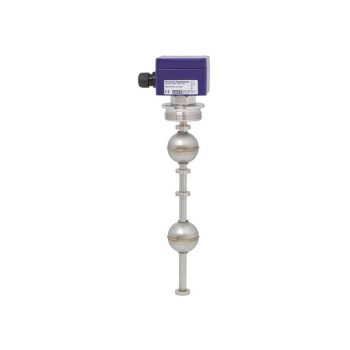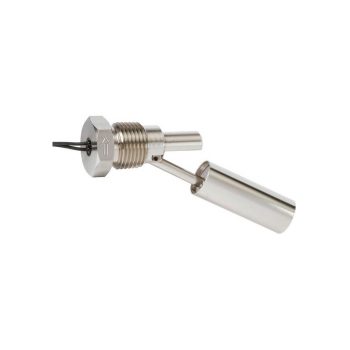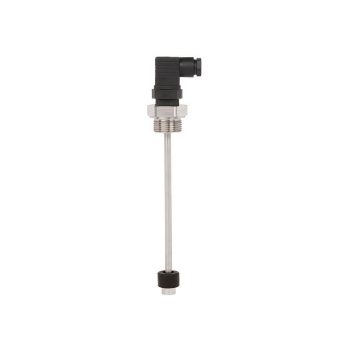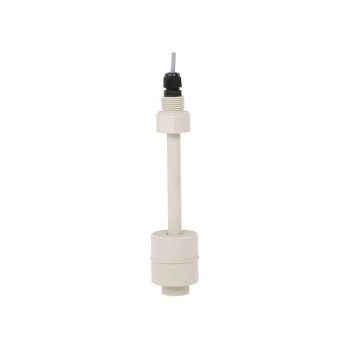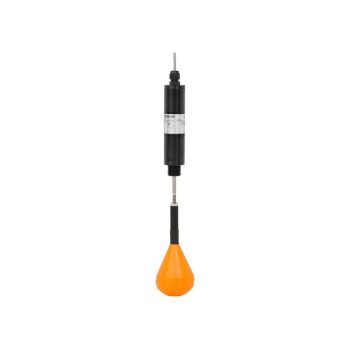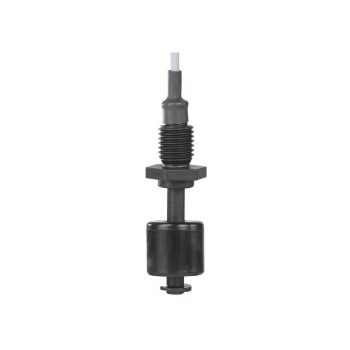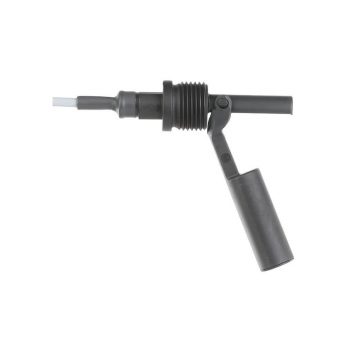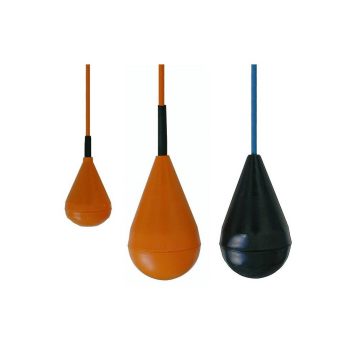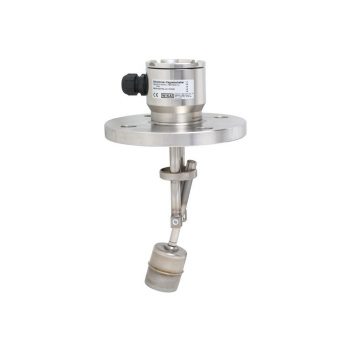
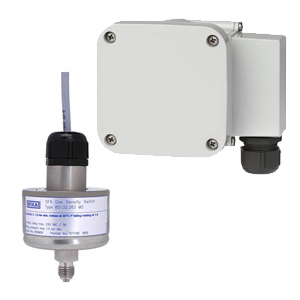
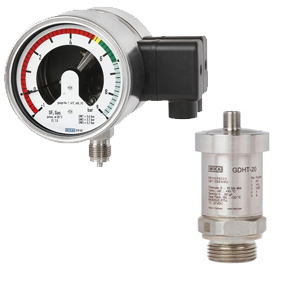
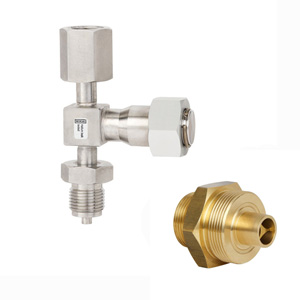

























- Freely selectable switch position through fixing the float switch at the required level
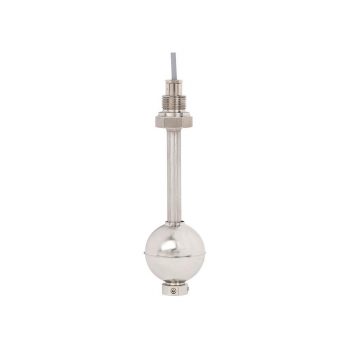
- Large range of application due to the simple, proven functional principle
- For harsh operating conditions, long service life
- Operating limits: - Operating temperature: T = -30 ... +150 °C - Operating pressure: P = Vacuum up to 40 bar - Limit density: ρ ≥600 kg/m3
Datasheet |
User Manual |
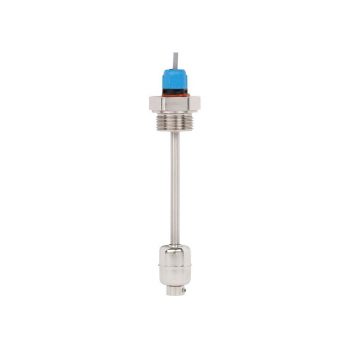
- Large range of application due to the simple, proven functional principle
- For harsh operating conditions, long service life
- Operating limits: - Operating temperature: T = -50 ... +350 °C - Operating pressure: P = Vacuum up to 40 bar - Limit density: ρ ≥ 300 kg/m3
- Wide variety of different electrical connections, process connections and materials
- Explosion-protected versions
Datasheet |
User Manual |
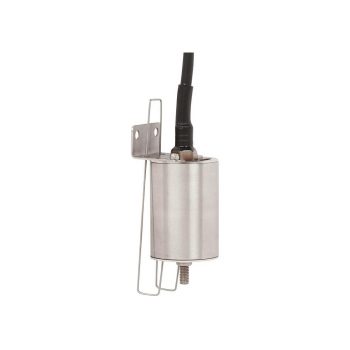
- Lateral installation in the tank
- Operating limits:- Operating temperature: T = -40 ... +120 °C- Operating pressure: P = 5 bar - Limit density: ρ ≥800 kg/m3
- Plastic and stainless steel versions
- Space-saving installation
- Switch consists of only one component
Datasheet |
User Manual |
- Maximum reliability thanks to high-quality reed contacts
- Very high variety and customer-specific solutions possible
- Simple and fast installation
Datasheet |
User Manual |
- Highest reliability in aggressive media
- Optimum process safety thanks to SMD production
- Simple and fast installation
Datasheet |
User Manual |
- Media compatibility: Oil, water, diesel, refrigerants and other liquids
- Level: Up to 3 switching outputs, freely definable as normally open, normally closed or change-over contact
- Temperature: 1 bimetal temperature switch or Pt100/Pt1000, accuracy: Class B
- Potential-free switching reed contacts
Datasheet |
User Manual |
- Media compatibility: Oil, diesel, refrigerants and other liquids
- Level: Up to 4 switching outputs, freely definable as normally open, normally closed or change-over contact
- Level and temperature: Up to 3 switching outputs, freely definable as normally open, normally closed or change-over contact and 1 bimetal temperature switch or Pt100/Pt1000, accuracy: Class B
- Potential-free switching reed contacts
Datasheet |
- Robust stainless steel case to protect against mechanical damage
- Durable and resistant marine cable
- With manual test device (optional)
Datasheet |
User Manual |
- Adjustable switch position through screw-adjustable float
- Switch rod actuator, potential-free reed switch
- Switch contact freely definable as normally closed, normally open or change-over contact
- Also reliable in strongly contaminated media
Datasheet |
User Manual |
- From customisation to design-in solution
- Low variance by local adjustment of the normally open/n ormally closed switching function via rotation of the float
- Various materials and up to 109 switching cycles guarantee a long service life
Datasheet |
User Manual |
- From customisation to design-in solution
- Low variance by local adjustment of the normally open/normally closed switching function via rotation of the float
- Various materials and up to 109 switching cycles guarantee a long service life
Datasheet |
User Manual |
- For waste water, sewage and heavily soiled liquids
- Environmentally friendly, mercury- and lead-free
- PP housing
- High mechanical and electrical durability of micro-switch
- Suitable for use in hazardous areas Ex zone 0, 1 and 2
Datasheet |
User Manual |
- Large range of application due to the simple, proven functional principle
- For harsh operating conditions, long service life
- Operating limits: - Operating temperature: T = -120 ... +350 °C - Operating pressure: P = Vacuum to 232 bar - Limit density: ρ ≥ 500 kg/m3
- Stainless steel and plastic versions
- Explosion-protected versions
Datasheet |
User Manual |
Float Switches – precise point level detection by WIKA / KSR Kuebler
Float switches from WIKA / KSR Kuebler reliably detect min/max levels in tanks, vessels and pits—a simple, rugged solution without a continuous transmitter. Depending on the model they use magnet/Reed, microswitch or Hall sensing and can be mounted on a vertical guide tube or as a side-entry switch.
Features (model-dependent): 1–6 setpoints, reversible logic (min/max), outputs PNP/NPN/relay/Namur, options for ATEX/IECEx, SIL, hygienic design (clamp/Varivent), wetted parts in 316L/1.4571, duplex, Hastelloy®, titanium or PTFE/PVDF, process connections G/NPT, flange, clamp.
ICS Schneider Messtechnik assists with sizing (density/viscosity, chemical compatibility), setpoint definition, materials, certification and PLC/SCADA integration.
FAQ on Float Switches (WIKA / KSR Kuebler)
Answers on principle, selection, setpoints, installation, hygiene/ATEX/SIL, outputs and best practices.
How does a float switch work?
A magnet-equipped float moves with level and actuates Reed contacts or a microswitch at defined heights. The result is a binary signal (on/off) for min, max or intermediate alarms.
Vertical guide tube or side-entry—what fits best?
Vertical designs allow multiple setpoints on one rod (top or bottom entry). Side-entry (tilt/flap floats) suit single thresholds and simple retrofits.
How many setpoints are possible?
Depending on series, typically 1 to 6. Spacings are factory-fixed per your specification.
Min/Max or fail-safe—how is this configured?
Many devices offer reversible logic (de-energized-safe as min or max). Wiring/parameterization selects NO/NC or quiescent/working current behavior.
Which media are suitable?
All liquids with sufficient buoyancy: water, oils, chemicals, fuels, food & beverage. For aggressive or hygienic media choose PTFE/PVDF or 316L variants.
How does density (ρ) affect the setpoints?
Switch height is slightly density-dependent. For notable ρ changes (temperature/medium), adapt the design or add a correction in the PLC.
What are the hygienic design options?
Flush, crevice-free connections (clamp/Varivent), 316L, polished surfaces, FDA/EU 1935/2004-grade seals, CIP/SIP resistance and full conformity documents.
Are ATEX/IECEx & SIL versions available?
Yes—many series are offered in Ex i/Ex d (Zones 0/1/2, 20/21/22) and up to SIL2/3. Document proof-test intervals and use fault-tolerant evaluation.
What temperature/pressure limits apply?
Model-dependent from low pressure to process pressure and from cryogenic to high temperature. Check the specific datasheet for exact p/T limits.
Which electrical outputs are supported?
Relay, PNP/NPN, Namur (Ex i) and in some cases IO-Link for setup/diagnostics. Connect via M12/circular plugs or terminal box; follow EMC best practices.
How do I select materials and gaskets?
| Component | Material | Typical use |
|---|---|---|
| Wetted parts | 316L, 1.4571, duplex, Hastelloy®, titanium, PTFE/PVDF | Hygiene, chemicals, seawater |
| Seals | EPDM, FKM, PTFE, FFKM | Aqueous, oils/solvents, chemicals/high T |
| Float | Stainless steel, PTFE, foamed/filled | Chosen for ρ/viscosity/compatibility |
Where should I position the switches?
- Min protection: below pump outlet/suction, in a calm zone.
- Max protection: keep distance to the roof for cleaning/service.
- Side-mounted: slightly downward angled, away from inlets/flow.
What repeatability/hysteresis can I expect?
Typically ±2…5 mm repeatability depending on design and medium. Mechanical hysteresis prevents chatter with waves/sloshing.
How is wiring done?
Per terminal plan: 2-/3-wire for PNP/NPN/Namur, changeover for relays. Use shielded cabling and proper bonding for EMC.
Can I implement window/two-point control?
Yes—use two setpoints on the guide tube or two devices to realize fill/drain hysteresis.
Maintenance & cleaning—what’s sensible?
Keep the guide tube clean, remove fouling, check tightness and mounts. In hygienic service verify cleaner compatibility with materials.
Typical pitfalls & quick fixes
- Float sticks → check alignment, clean deposits, correct orientation
- Wrong density assumed → adjust ρ, review float selection
- False trips from flow → relocate, add delay in PLC
- EMC issues → shielded routing, separate power/signal
Do you support selection & commissioning?
Yes. We define setpoints, choose materials/connections, provide certificates and integrate the switch into PLC/SCADA including fail-safe logic.


Datasheet