


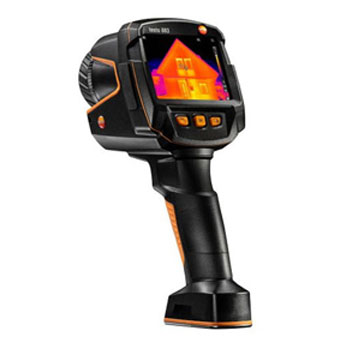



















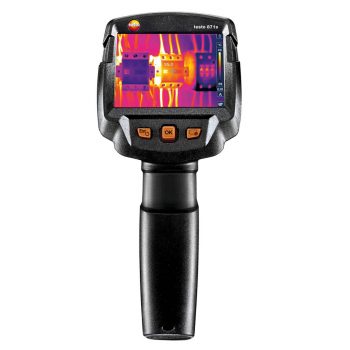
- Image quality with IR resolution of 240 x 180 pixels (with testo SuperResolution technology 480 × 360 pixels)
- Thermal sensitivity of 0.08 °C
- Recording and documentation of ambient conditions via radio probe (humidity/temperature probe or clamp meter)
- Free analytical software for creating professional reports
- Fast measurement with fixed focus
- App for analysis and creating on-site measurement reports
 Datasheet Datasheet |
| User Manual |
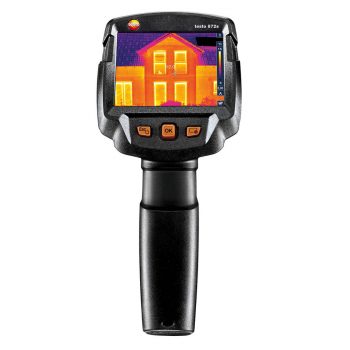
Testo 872 thermal imager, 320 x 240 pixels (SuperResolution technology 640 x 480 pixels), Bluetooth / WLAN, ± 2 ° C; ± 2% of reading, laser marker • Highest image quality: IR resolution of 320 x 240 pixels thanks to Testo SuperResolution technology 640 x 480 pixels • Precise measurement: thermal perception of 0.06 ° C. • Smart and wireless: Use your mobile device with the free Testo thermography app and listen wirelessly to the measured values from the testo 770-3 current probe and the testo 605i humidity measuring device • Integrated laser marker - also seen exactly as a measuring point in the thermal image SuperResolution technology 640 x 480 pixels Field of view: 42 ° x 30 ° Bluetooth / WLAN Complaints: ±2°C, ±2% of the measured value
| Datasheet |
| User Manual |
| User Manual |
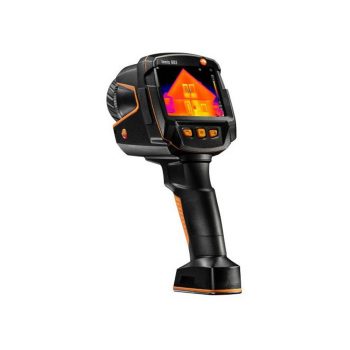
- Image quality with IR resolution of 320 x 240 pixels (with testo SuperResolution technology 640 × 480 pixels)
- Thermal sensitivity <0.04 °C
- Full control: Manual focus and interchangeable lenses
- Free analytical software for creating professional reports
- Measurement site recognition and automatic image management
- App for analysis and creating on-site measurement reports
|
Datasheet
|
|
User Manual
|
|
User Manual
|
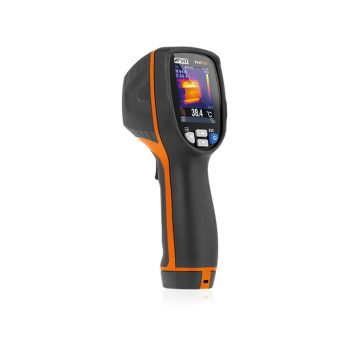
bluetooth
80x80 pixels
with feveralarm 32/42 °C
range complete -20/380°C
accuracity: ±0.5
|
Datasheet
|
|
Bedienungsanleitung
|
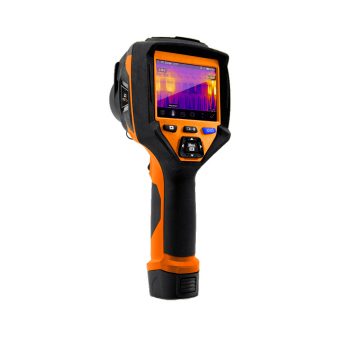
Touchscreen thermal imager
with video and picture in picture function,
384x 288 pixels (thermal image),
Measuring range: -20 ... + 400 ° C,
manual focus
|
Datasheet
|
|
User Manual
|
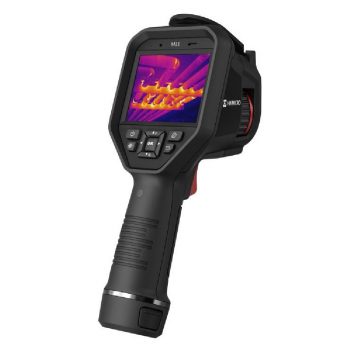
- High sensitivity thermal module with 192 × 144 resolution
- Supports multiple palettes
- High quality optical module with 8 MP resolution
- Bi-spectrum image fusion, picture-in-picture preview
- Wide temperature measurement range: -20°C to 550°C
- High temperature measurement accuracy: Max. (± 2°C/3.6°F, ± 2%), for ambient temperature 15°C to 35°C (59°F to 95°F) and object temperature above 0°C (32°F)
- 640 × 480 resolution 3.5'' LCD touch display
- Long-distance laser light supplement for thermography targets
- LED light supplement makes the device a torch in required scenarios
- 1.0x to 8.0x continuous digital zoom
- Supports remote album access, download and quick report with APP
 Datasheet Datasheet |
|
Flyer
|
| User Manual |
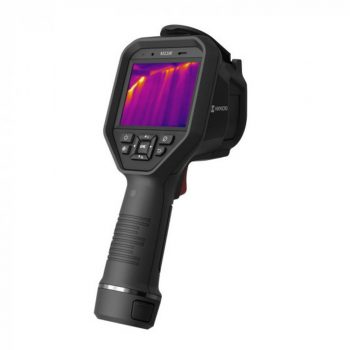
- High sensitivity thermal module with 192 × 144 resolution
- Supports multiple palettes
- High quality optical module with 8 MP resolution
- Bi-spectrum image fusion, picture-in-picture preview
- Wide temperature measurement range: -20°C to 550°C
- High temperature measurement accuracy: Max. (± 2°C/3.6°F, ± 2%), for ambient temperature 15°C to 35°C (59°F to 95°F) and object temperature above 0°C (32°F)
- 640 × 480 resolution 3.5'' LCD touch display
- Long-distance laser light supplement for thermography targets
- LED light supplement makes the device a torch in required scenarios
- 1.0× to 8.0× continuous digital zoom
- Supports remote album access, download and quick report with APP
| Datasheet |
|
Flyer
|
| User Manual |
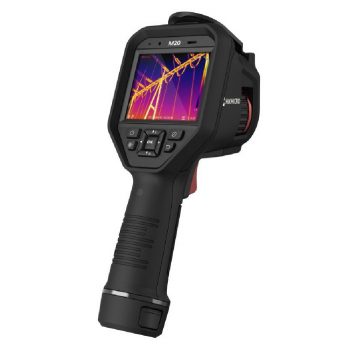
- High sensitivity thermal module with 256 × 192 resolution
- Supports multiple palettes
- High quality optical module with 8 MP resolution
- Bi-spectrum image fusion, picture-in-picture preview
- Wide temperature measurement range: -20°C to 550°C
- High temperature measurement accuracy: Max. (± 2°C/3.6°F, ± 2%), for ambient temperature 15°C to 35°C (59°F to 95°F) and object temperature above 0°C (32°F)
- High-calibre 640 × 480 resolution 3.5'' LCD touch display
- Long-distance laser light supplement for thermography targets
- LED light supplement makes the device a torch in required scenarios
- Supports 1×, 2×, 4× and 8× digital continuous zoom
- Support remote album access, download and quick report with APP
| Datasheet |
|
Flyer
|
| User Manual |
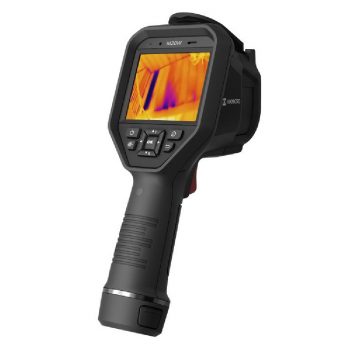
- High sensitivity thermal module with 256 × 192 resolution
- Supports multiple palettes
- High quality optical module with 8 MP resolution
- Bi-spectrum image fusion, picture-in-picture preview
- Wide temperature measurement range: -20°C to 550°C
- High temperature measurement accuracy: Max. (± 2°C/3.6°F, ± 2%), for ambient temperature 15°C to 35°C (59°F to 95°F) and object temperature above 0°C (32°F)
- High-calibre 640 × 480 resolution 3.5'' LCD touch display
- Long-distance laser light supplement for thermography targets
- LED light supplement makes the device a torch in required scenarios
- Supports 1×, 2×, 4× and 8× digital continuous zoom
- Support remote album access, download and quick report with APP
| Datasheet |
|
Flyer
|
| User Manual |
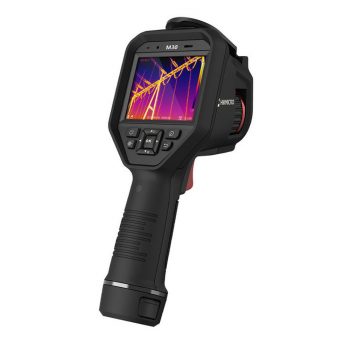
- High sensitivity thermal module with 384 × 288 resolution
- Leading thermal image processing technology: Adaptive AGC, DDE, 3D DNR
- Supports multiple palettes
- High quality optical module with 8 MP resolution
- Bi-spectrum image fusion, picture-in-picture preview
- Wide temperature measurement range: -20°C to 550°C
- High temperature measurement accuracy: Up to ± 2°C, ± 2%
- High-calibre 640 × 480 resolution 3.5'' LCD touch display
- Long-distance laser light supplement for thermography targets
- LED light supplement makes the device a torch in required scenarios
- Supports 1×, 2×, 4× and 8× digital zoom
| Datasheet |
|
Flyer
|
| User Manual |
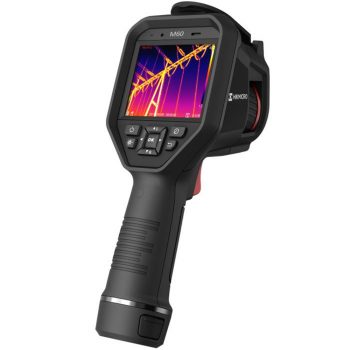
- High sensitivity thermal module with 640 x 480 resolution
- SuperIR up to 1280 x 960 (1,228,800 pixels)
- Supports multiple palettes
- High quality optical module with 8 MP resolution
- Bi-spectrum image fusion, picture-in-picture preview
- Wide temperature measurement range: -20 - 650°C
- High temperature measurement accuracy: Max. (± 2°C/3.6°F, ± 2%), for ambient temperature 15°C to 35°C (59°F to 95°F) and object temperature above 0°C (32°F)
- 640 x 480 resolution 3.5'' LCD touch display
- Long-distance laser light supplement for thermography targets
- LED light supplement makes the device a torch in required scenarios
- 1.0x to 8.0x continuous digital zoom
- Supports remote album access, download and quick report with APP
| Datasheet |
|
Flyer
|
| User Manual |
