


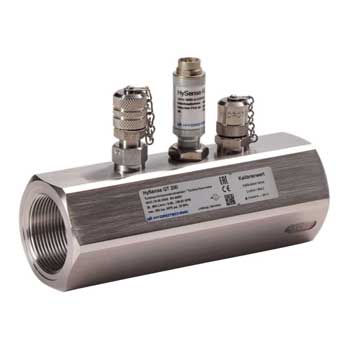
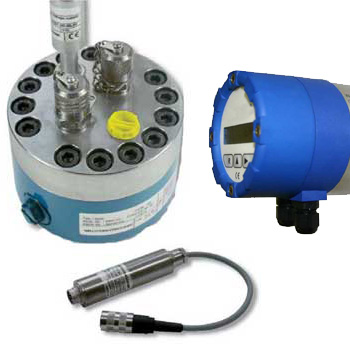
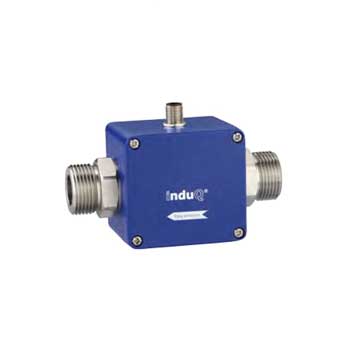
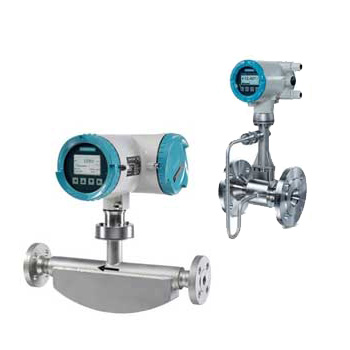
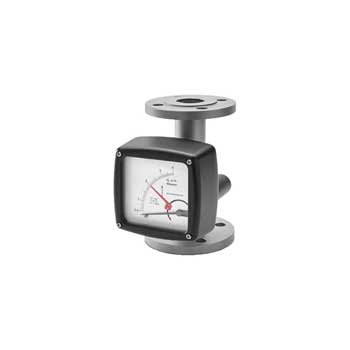
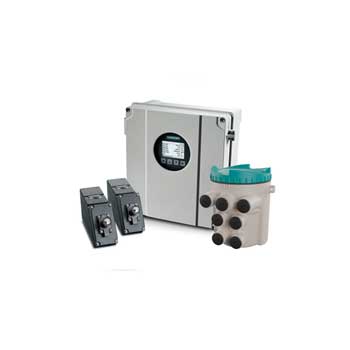
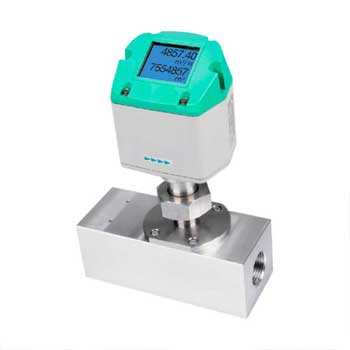
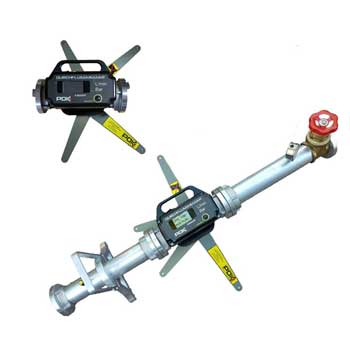
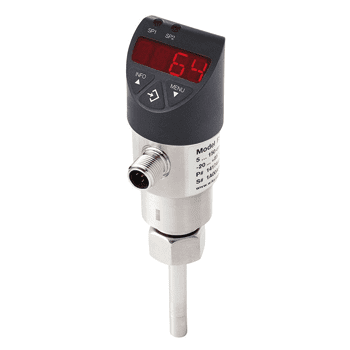
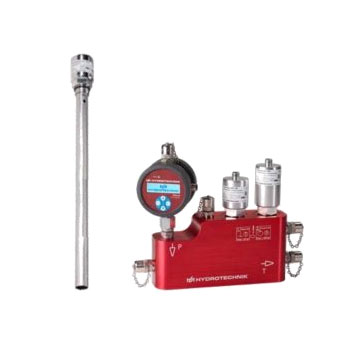
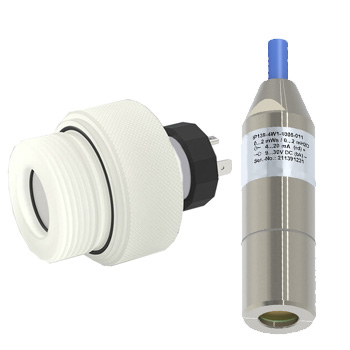
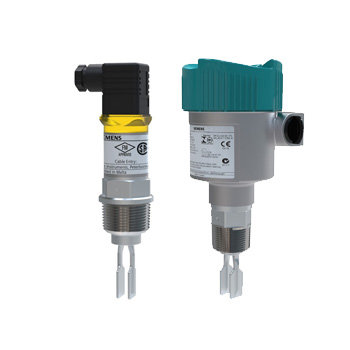
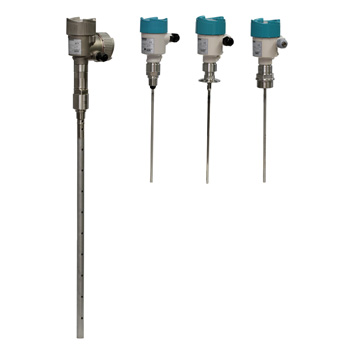
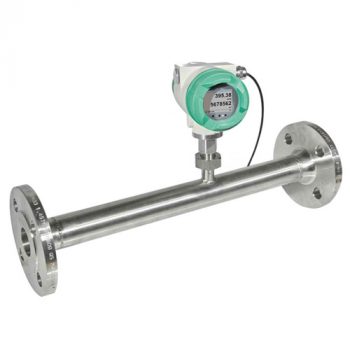
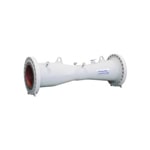
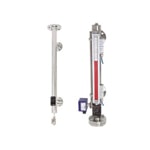
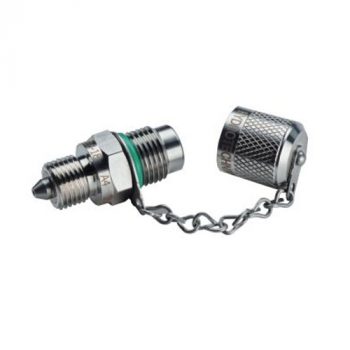
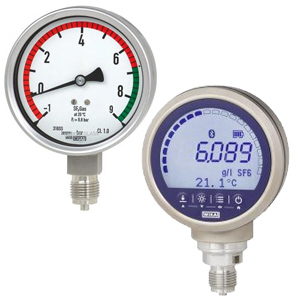





























- Ready-to-use compact design to minimise installation effort - therefore no volume corrector required
- Provides Flow, Total consumption, Temperature and Pressure
- Differential pressure sensor element with unique sensitivity, measures highly accurately at < 2 m/s
- Large flow measuring range with extended measuring span thanks to the use of measuring sections with a reduced inner diameter
- Smaller inlet sections due to the use of an averaging pitot tube
- Robust design, no moving parts
- Sensor head can be removed for calibration
 Datasheet Datasheet |
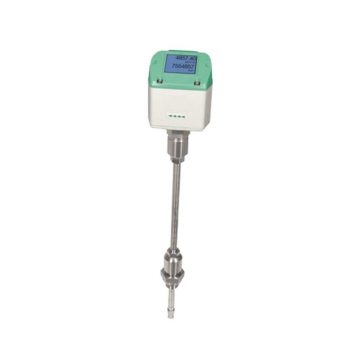
- Measurement of mass flow direct output of standard volume flow
- Highly accurate at small as well as higher flow rates
- Pressure and temperature compensated by the thermal mass flow principle
- Quick and easy installation via a ½" ball valve
- No moving parts, thus low maintenance
- Vanishingly low pressure drop due to vanishingly low blockage of the diameter
- Can be used for compressed air and non-corrosive gases such as nitrogen, oxygen, argon, helium, etc.
 Datasheet Datasheet |
| User Manual |
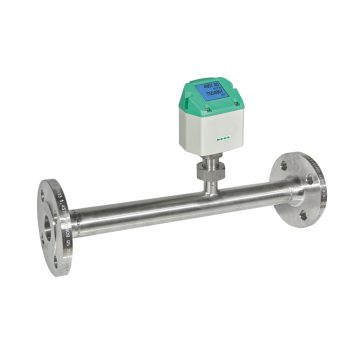
- Measurement of mass flow rate, output of standard volume flow rate
- High accuracy for both small and large flows
- Pressure and temperature compensated by the thermal mass flow principle
- Easy installation and removal of the sensor, the integrated measuring section can remain in the line for cleaning or recalibration of the sensor and can simply be closed with a sealing cap
- No moving parts, therefore low maintenance
- Vanishingly low pressure loss due to vanishingly low blockage of the diameter
- Can be used for compressed air and non-corrosive gases such as nitrogen, oxygen, argon, helium, etc.
| Datasheet |
| User manual |
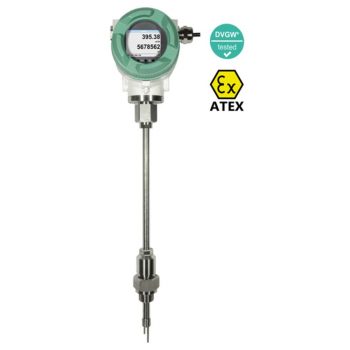
- All wetted parts are made of stainless steel, especially for applications with high demands on cleanliness and surface quality
- Rough industrial applications can be realized due to robust aluminum housing
- Recommended for flammable gases such as natural gas, hydrogen, biogas, etc. due to ATEX or DVGW approval
- Measurement of mass flow rate, direct output of standard volume flow rate
- Highly accurate at small as well as large flows
- Pressure and temperature compensated by the thermal mass flow principle
- Quick and easy installation via a standard ½'' ball valve
- No moving parts, therefore low maintenance
- Vanishingly low pressure loss due to vanishingly low blockage of the diameter

| Datasheet |
| User manual |
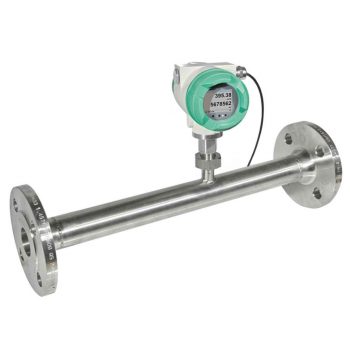
Flow meter VA 570 is supplied with an integrated measuring section for compressed air and gas pipes. The measuring sections are available in flanged version or with R resp. NPT thread.

| Datasheet |
|
User Manual |
|
User Manual |
|
User Manual |
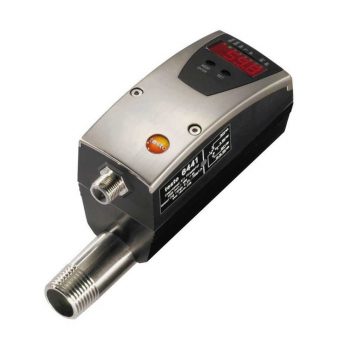
- Transmitter with selectable signal outputs: analog output, pulse output, 2 switching outputs
- Integrated totalling function (totaliser) for calculating the total consumption
- High accuracy: defined inner diameter (DN15) enables adjustment to standard volumetric flow
- Easy to install and to operate
testo 6441 compressed air counter with integrated inflow/outflow, diameter DN15 (1/2), with analog, pulse and switch output
|
Datasheet
|
|
User Manual
|
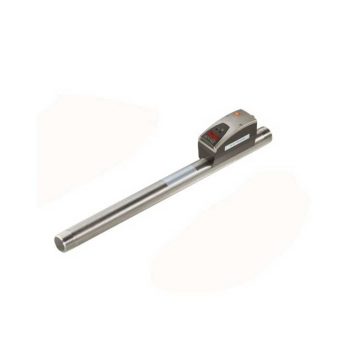
- Transmitter with selectable signal outputs: analog output, pulse output, 2 switching outputs
- Integrated totalling function (totaliser) for calculating the total consumption
- High accuracy: defined inner diameter (DN25) enables adjustment to standard volumetric flow
- Easy to install and to operate
testo 6442 compressed air counter with integrated inflow/outflow, diameter DN25 (1), with analog, pulse and switch output
|
Datasheet
|
|
User Manual
|
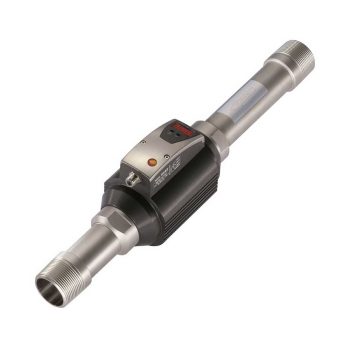
- Transmitter with selectable signal outputs: analog output, pulse output, 2 switching outputs
- Integrated totalling function (totaliser) for calculating the total consumption
- High accuracy: defined inner diameter (DN25) enables adjustment to standard volumetric flow
- Easy to install and to operate
testo 6442 compressed air counter with integrated inflow/outflow, diameter DN25 (1), with analog, pulse and switch output
|
Datasheet
|
|
User Manual
|
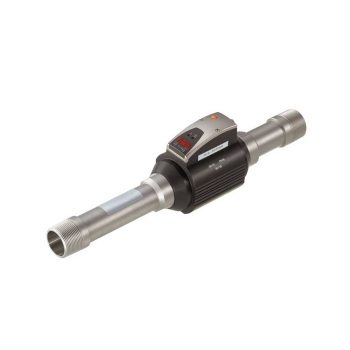
- Transmitter with selectable signal outputs: analog output, pulse output, 2 switching outputs
- Integrated totalling function (totaliser) for calculating the total consumption
- High accuracy: defined inner diameter (DN50) enables adjustment to standard volumetric flow
- Easy to install and to operate
testo 6444 compressed air counter with integrated inflow/outflow, diameter DN50 (2), with analog, pulse and switch output
|
Datasheet
|
|
User Manual
|
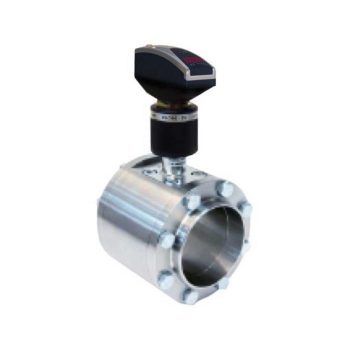
- Transmitter with selectable signal outputs: analog output, pulse output, 2 switching outputs
- Integrated totalling function (totaliser) for calculating the total consumption
- Flexible mounting with measuring block, pipe clamp or as a measurement fitting
- Easy operation with a variety of options (signal outputs, physical unit, etc.)
testo 6446 compressed air counter for larger diameters, without probe removal, selectable diameters DN65 (2 1/2)/DN80 (3)/DN100 (4)/DN125 (5)/DN150 (6)/DN200 (8)/DN250 (10), with analog, pulse and switch output
|
Datasheet
|
|
User Manual
|
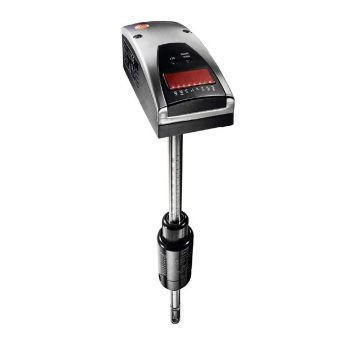
- Transmitter with selectable signal outputs: analog output, pulse output, 2 switching outputs
- Quick, safe assembly/disassembly of the bar probe thanks to reverse running protection and ball valve
- Assembly of the whole transmitter possible under pressure
- Easy operation with a variety of options (signal outputs, physical unit, etc.)
testo 6448 compressed air counter for the determination, monitoring and reporting of compressed air consumption
|
Datasheet
|
|
User Manual
|
