








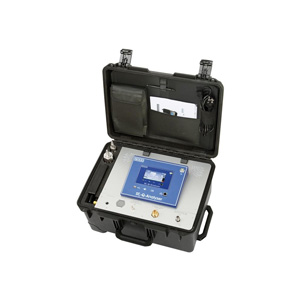
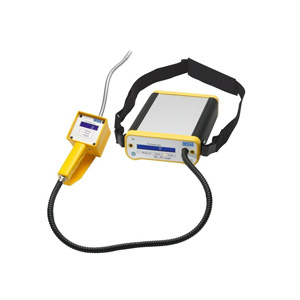
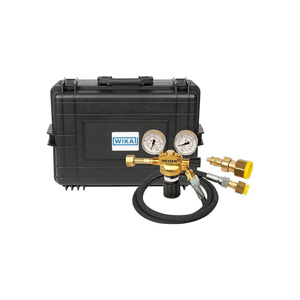
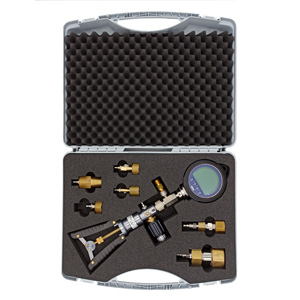
























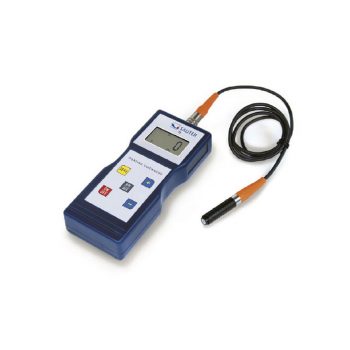
- External sensor for difficult-to-access measurements
- Base plate and calibration foils included
-
 Delivered in a hard carrying case
 - Offset-Accur: This function allows you to adjust the instrument precisely on the locally measured range by a two-point calibration. This results in a superior accuracy of approx. 1 % of the measured value
- Selectable measuring units: µm, inch (mil)
- Auto-Power-Off
- SAUTER TB 2000-0.1F.: Specifically designed for the automobile industry, Precision standard 5 % of measured value
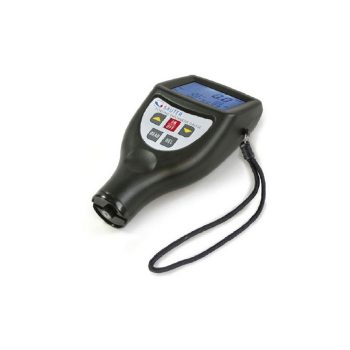
- Ergonomic design for easy handling
- Data interface RS-232, included
- Base plate and calibration foils included
-
Delivered in a hard carrying case
- Offset-Accur: This function allows you to adjust the instrument precisely on the locally measured range by a two-point calibration. This results in a superior accuracy of approx. 1 % of the measured value
- Selectable measuring units: µm, inch (mil)
 SAUTER TC 1250-0.1FN-CAR.:
- Specifically designed for the automobile industry
- Automatic recognition of measuring mode (F or N): "point and shoot"
- Simple and convenient 1-key operation
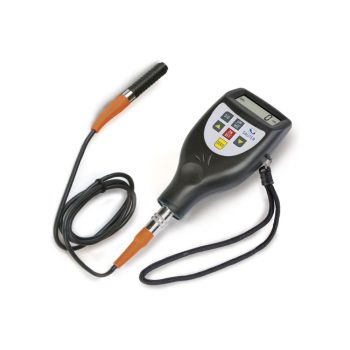
- External sensor for difficult-to-access measurements
- Data interface RS-232, included
- Base plate and calibration foils included
-
Delivered in a hard carrying case
- Offset-Accur: This function allows you to adjust the instrument precisely on the locally measured range by a two-point calibration. This results in a superior accuracy of approx. 1 % of the measured value
- Selectable measuring units: µm, inch (mil)
- Auto-Power-Off
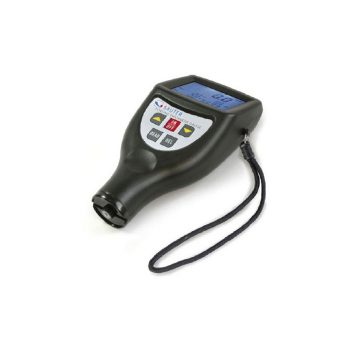
Digital coating thickness gauge TF Premium measuring devices for paint coating, lacquer coating etc.
-
LCD display, backlit, display of all information at a glance
- Offset-Accur: This function allows you to adjust the instrument precisely on the locally measured range by a two-point calibration. This results in a superior accuracy of approx. 1 % of the measured value
- Scan mode allows continuous measurement or single point measuring mode
- Mini Statistics Kit: displays the measured result, the average value and the max and the min value
- Internal memory up to 99 values
- Selectable measuring units: µm, inch (mil)
- Base plate and calibration foils included
- Data interface RS-232 standard
-
Delivered in a hard carrying case
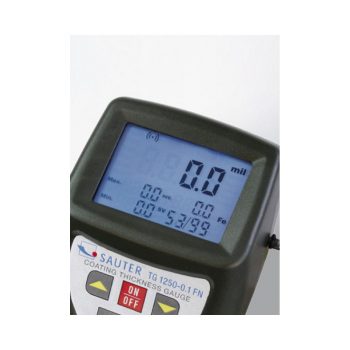
Digital coating thickness gauge TG Premium measuring devices for paint coating, lacquer coating etc.
-
LCD display, backlit, display of all information at a glance
- Offset-Accur: This function allows you to adjust the instrument precisely on the locally measured range by a two-point calibration. This results in a superior accuracy of approx. 1 % of the measured value
- Scan mode allows continuous measurement or single point measuring mode
- Mini Statistics Kit: displays the measured result, the average value and the max and the min value
- Internal memory up to 99 values
- Selectable measuring units: µm, inch (mil)
- Base plate and calibration foils included
- Data interface RS-232 standard
- Delivered in a hard carrying case
- External sensor for difficult-to-access measurements
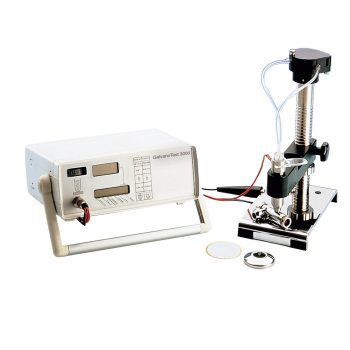
- 8 de-plating speeds from 0.3 to 40 µm / min
- Measuring surface ranging between 0.25 and 8 mm²
- Measuring range between 50 nm and 75 µm / 0.002 – 3 mils
- An electrolyte beaker (accessory) to measure wires
- Variable shut-down speeds to measure alloy zones
- A wide range of special accessories for measurements on small components and wires
 Datasheet Datasheet
|
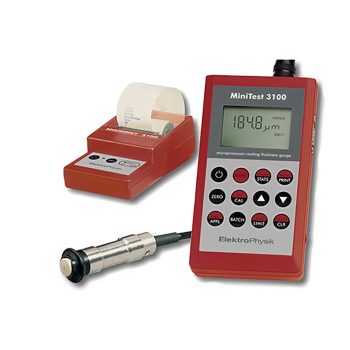
- 0 – 50mm for non-magnetic coatings on steel
- 0 – 100mm for insulating coatings on non-ferrous metals
- 10 – 200µm for copper coatings on insulating base materials
- 0 – 1600µm for powder coatings on steel and non-ferrous metals
|
Datasheet
|
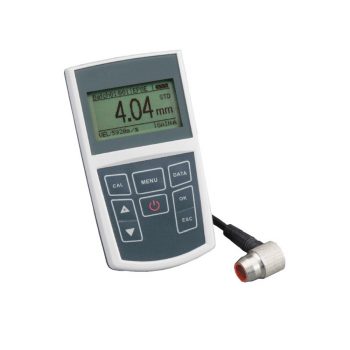
- Non-destructive wall thickness measurement ranging between 0.65 mm and 500 mm
- High measurement precision and repeatability
- High resolution of 0.01 mm
- Scan mode with 10 measurements per second
- Low voltage memory
- Minimum mode to detect thinning due to erosion or selective/pitting corrosion
- Alarm mode with optical and acoustic signals to indicate exceeded limit values
- Differential mode to indicate deviation from set value
- Saving and evaluation of measured values by built-in data logger
|
Datasheet
|
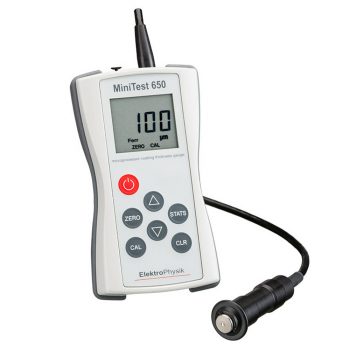
- Sandblasted steel
- Heavy duty corrosion protection in ship building
- Offshore installations and mining facilities
- Plasma-sprayed surfaces
|
Datasheet
|
|
Datasheet
|

|
Datasheet
|
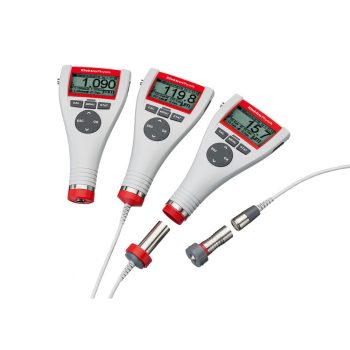
- external, interchangeable probes connected via cable
- saves up to 10,000 measurement values in 10 groups
|
Datasheet
|
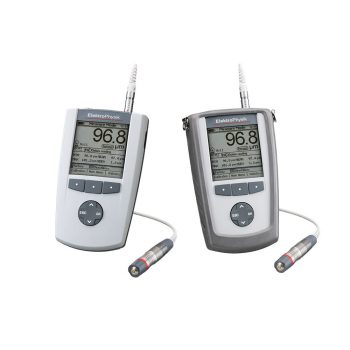
- Precision in coating thickness measurement of up to 100 mm / 4 inches
- Increased accuracy and reproducibility by sensor-integrated digital signal processing (SIDSP®)
- Universal probes with automatic substrate detection for quick measurements on steel and nonferrous metals
- Wear resistant probes with practically unlimited service life
- Optimal temperature compensation
- High precision characteristic curves with up to 50 data points in the factory calibration
- User guidance in 4 languages, others under preparation
- Infrared data transmission (IrDA) to PC and printer
| Datasheet |
- interchangeable probes
- the probes can be connected internally as well as externally by cable and also without cable via Bluetooth
- saves up to 100,000 measurement values in 100 groups
|
Datasheet
|
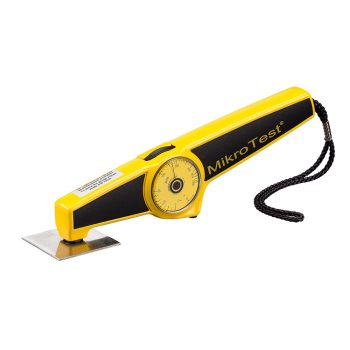
- Heavy-duty zinc die-cast housing
- Magnet with long-lasting durability owing to the ElektroPhysik manufacturing process
- Measuring range up to 20 mm
- Can be used in all positions because of the weight compensation: horizontal, vertical, overhead
- Measurement also possible on curved surfaces
- Battery-free operation
| Datasheet |
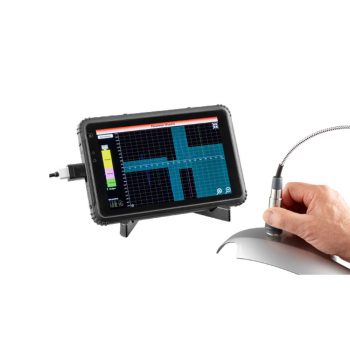
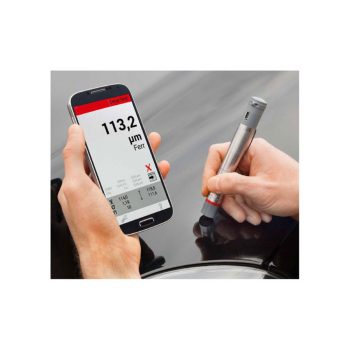
- Quick evaluation of the measuring signal, high accuracy and repeatability owing to the sensor-integrated digital 32-bit signal processing (SIDSP®)
- Over 40 measuring values per minute: start, wait for 1 second, done.
- Mere 5 mm measuring area enables gathering measurement on tiny and curved parts
|
Datasheet
|

- High precision measurement
- Stable measurement data readout
- Integrated data logger
- Universal probe with a broad measuring range
- Functional design of device and software
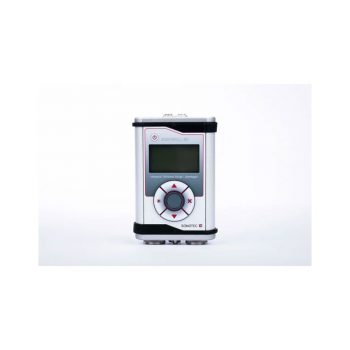
- Stable measurement output
- Integrated data logger
- Integrated calibration block
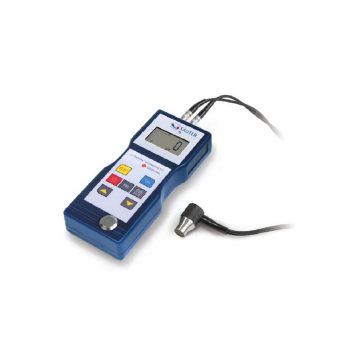
- External sensor for difficult-to-access measurements
- Base plate for adjustment included
- Auto-Power-Off
- Selectable measuring units: mm, inch
- TB 200-0.1US-RED. can only analyse these materials: cast iron, aluminium, copper, brass, zinc, quartz glass, polyehylene, PVC, grey cast iron, nodular cast iron, steel
-
Delivered in a hard carrying case
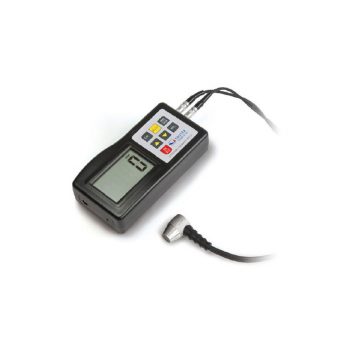
- External sensor for difficult-to-access measurements
- Data interface RS-232 included
- Base plate for adjustment included
- Selectable measuring units: mm, inch
-
Delivered in a hard carrying case
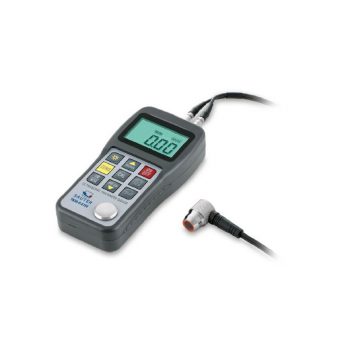
- External sensor
- USB data interfaces as standard
- Scan mode (10 measurements per sec.) or single point measuring mode possible
- Internal memory for up to 20 files (with up to 100 values per file)
- Selectable measuring units: mm, inch
- Two measuring modes to determine material thickness:
- - Pulse-echo mode
- - Echo-echo mode
- Determining the actual thickness of materials regardless of any coating which might be present. In this way, the wall thickness of pipes, for example can be determined in a non-destructive manner, i.e. without having to remove the coating
- Echo-echo measurements are only possible with the measuring head included as part of the delivery (ATU-US12, see accessories)
-
Delivered in a hard carrying case
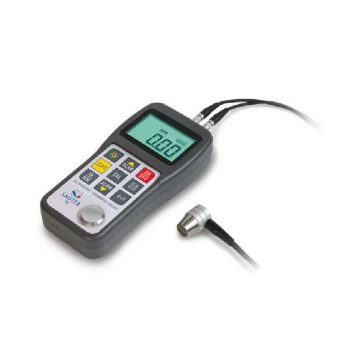
- External sensor
- USB data interfaces as standard (only for models with readout [d] = 0,01 mm)
- Scan mode (10 measurements per sec.) or single point measuring mode possible
- Internal memory for up to 20 files (with up to 100 values per file)
- Selectable measuring units: mm, inch
-
Delivered in a hard carrying case
|
Datasheet
|
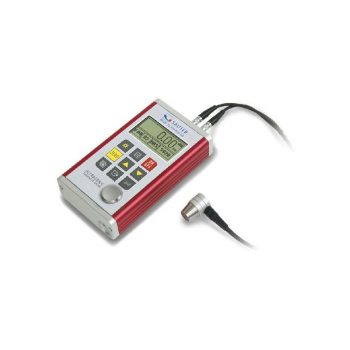
- External sensor for difficult-to-access measurements
- Base plate for adjustment included
-
Data interface RS-232
-
Delivered in a hard carrying case
- Scan mode (10 measurements per sec.) or single point measuring mode possible
- Internal memory for up to 20 files (with up to 100 values per file)
- Function to set limits, programming of Max./Min., in pull and push direction, with output of audible and optical signal. Ideal mode for efficient and accurate testing of standard parts
- Selectable measuring units: mm, inch
- Robust metal housing
|
Datasheet
|

Coating / Material / Wall Thickness Measurement Instruments
Thickness measurement instruments are used for non-destructive determination of material, wall or coating thickness based on physical measuring principles — such as ultrasound, eddy current or magnetic induction. They allow reliable measurement of metal, plastic, coatings, paints or multilayer systems without damaging the workpiece. Typical instruments provide a wide measurement range, automatic material selection or material presets, data storage, MIN/MAX and interface options for documentation and process monitoring.
What exactly does a thickness gauge measure?
A thickness gauge determines the thickness of a material or coating in millimeters (mm) or micrometers (µm). It can measure the wall thickness of a pipe, the total thickness of a plate or the coating thickness of paint or plating. Depending on the device, the result refers to the base material thickness or the coating layer thickness.
How do ultrasonic thickness gauges work?
Ultrasonic thickness gauges emit a short pulse of ultrasound into the material. The pulse is reflected from the back wall and received by the sensor. By measuring the time of flight and using the material’s sound velocity, the thickness is calculated. Proper operation requires correct material parameters and good acoustic coupling via coupling medium (e.g. gel).
What are magnetic and eddy current coating thickness gauges?
Magnetic or eddy current coating thickness gauges measure the thickness of non-magnetic coatings on metallic substrates. They use magnetic attraction or changes in eddy currents between the probe and metal base to determine the distance — and thus the coating thickness. This method is particularly suited for paints, plastics, powder coatings or galvanic layers on steel or iron.
What measurement ranges are typical?
Depending on the instrument, ranges vary from a few micrometers (typical for paint or coating thickness) up to several centimeters (e.g. metal sheets, pipe walls). Ultrasonic gauges commonly cover ranges from 0.5 mm up to 300 mm or more, while coating thickness gauges typically cover 0–2000 µm.
Why is the choice of measurement method important?
Because the measurement principle depends on material and surface condition: ultrasound measures total material thickness and requires good acoustic contact; magnetic or eddy current instruments measure near-surface coatings on metallic substrates. Using the wrong principle can lead to incorrect readings or no measurement at all.
What role does coupling play in ultrasonic measurement?
An appropriate coupling medium (e.g. gel) ensures air-free transmission of the ultrasound from the probe into the material. Without coupling, ultrasound reflects at the surface and no reliable measurement is possible. Even, adequate coupling and firm sensor contact are essential for accurate results.
Can the same device measure different materials?
Yes — many modern instruments allow material preselection or automatic material detection (e.g. steel, aluminum, plastic) and adjust the sound velocity or measurement parameters accordingly. However, for coating thickness measurement using magnetic or eddy current methods, the substrate must be metallic and conductive.
Are measurements on curved or rough surfaces possible?
Yes — ultrasonic devices often also work on slightly curved surfaces as long as there is sufficient coupling and secure probe contact. For strongly curved, uneven or rough surfaces the accuracy can decrease. Coating thickness gauges generally operate better on smooth, flat surfaces.
How accurate are thickness gauges?
Accuracy depends on device and measuring method. For ultrasound, typical specifications are ±(0.5 % of reading + 0.1 mm); for coating thickness gauges often ±(1–2 % of reading + a few micrometers). For µm-scale coating measurements deviations of a few µm are common; for mm-scale wall thickness accordingly larger absolute deviations occur.
Where are thickness measurements commonly applied?
Common applications include inspection of pipes and vessels, corrosion monitoring, determination of sheet or plate thicknesses, quality control of coatings (paint, powder, plating), final inspection in manufacturing, traceability of material conditions, and maintenance or damage diagnostics in case of wear or material thinning.
Why is regular calibration important?
Over prolonged use, sensors may drift and material parameter settings may change slightly. Regular calibration ensures measurement accuracy and provides traceable, documented results — especially important when quality requirements or audit compliance are involved.
Which additional functions are useful in thickness gauges?
Useful features include data logging, auto-range selection, MIN/MAX memory, averaging, storage for series of measurements, interfaces (USB / RS232), analog or digital outputs and traceable calibration certificates. These support batch measurements, documentation and integration into quality or inspection systems.
Are there limitations when measuring through coatings or surface layers?
Yes — very thick or highly attenuating coatings can severely damp ultrasound, making measurement impossible. Magnetic or eddy current methods require a metallic, conductive substrate — insulating or non-conductive bases cannot be measured in this way.
What environmental conditions should be considered during measurement?
Temperature, humidity and surface condition affect sound velocity and coupling efficiency. Extreme temperatures or wet/contaminated surfaces can lead to measurement errors. Therefore, materials should be temperature-stable and clean before measurement, and appropriate coupling and preparation must be ensured.
Can a thickness gauge replace destructive testing?
In many cases yes — non-destructive thickness measurement allows rapid, non-invasive inspections without material loss. For highly specialized or very accurate assessments, destructive cross-section testing may still be required — especially when internal defects or layer structure must be analyzed.