













































-
legal for trade
-
easy and quick installation with SIWAREX mounting units
-
options for use in hazardous areas are in preparation
Datasheet
|
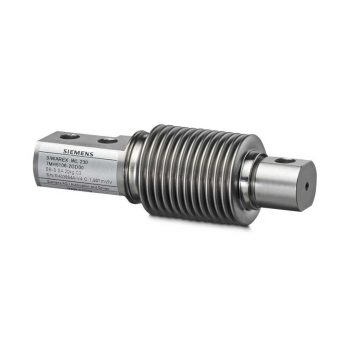
Siemens - Bending Beam Load Cells – Robust Load Sensors for Tanks, Silos & Industrial Weighing Systems
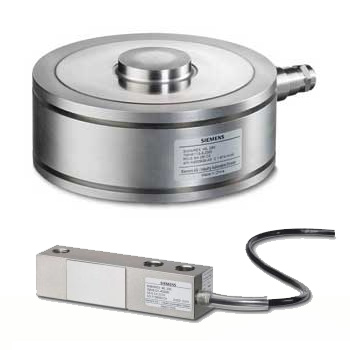
Bending beam load cells use an elastic metal beam that bends under load. Strain gauges bonded to the beam detect the resulting deformation and convert it into an electrical signal. Typical applications include tank and silo weighing, hopper scales, industrial platforms, vehicle and truck scales, and multi-cell industrial weighing systems.
The product range includes standard bending beam designs, reinforced models with high overload capacity, fixed-end mounting concepts, and stainless-steel hermetically sealed versions with IP67/IP68 protection. Combined with mounting modules, junction boxes, and suitable weighing electronics, ICS Schneider Messtechnik offers complete system solutions—from engineering and load cell selection to calibration and integration into your PLC/SCADA environment.
FAQ About Bending Beam Load Cells
Answers regarding selection, design, accuracy, installation, protection classes, calibration, and typical industrial applications.
What is a bending beam load cell?
A bending beam load cell consists of a metal beam that elastically bends under load. Strain gauges bonded to the beam detect small deformations, which are converted into an electrical signal proportional to the applied weight.
Where are bending beam load cells typically used?
Common applications include tank and silo weighing, hopper weighing, industrial platforms, multi-cell scale systems, and vehicle/truck weighing solutions, where high robustness and stable mechanical design are essential.
What criteria should be considered when selecting a bending beam load cell?
Important factors include the required rated load (vessel weight + maximum product load + safety margin), number of load cells, mechanical design constraints (side loads, tilting forces), accuracy requirements (industrial vs. legal-for-trade), and environmental conditions such as temperature, humidity, washdown, or ATEX requirements.
What accuracy classes are common for bending beam load cells?
Many industrial bending beam load cells comply with OIML R60 accuracy classes, such as C3 or C6. System-level accuracy also depends on mechanical design, installation quality, electronics, and calibration.
What must be considered when installing a bending beam load cell?
The load cell must be mounted on a stable, flat, and torsion-free surface. Side loads and uplift forces should be controlled with appropriate mounting hardware. Overload protection and uplift prevention are recommended to ensure long-term stability and safety.
How should side loads or lateral forces be handled?
Side loads can cause significant measurement errors or even damage. A stress-free mechanical layout, proper clearance for movement, and symmetrical force introduction help to minimize these unwanted effects.
Which protection classes and materials are available?
For demanding environments, stainless-steel, hermetically sealed versions with protection ratings IP67, IP68, or IP69K are available. For standard industrial areas, IP66/67 is often sufficient.
Can a bending beam load cell be used in legal-for-trade applications?
Yes. Many bending beam load cells are OIML-approved and suitable for legal-for-trade installations when used together with approved weighing electronics and proper calibration. The entire weighing system must meet the conformity requirements.
How is a tank or silo weighing system calibrated?
Calibration is performed by applying known test loads (test weights or reference liquid filling) and adjusting zero and span. Multiple calibration points are recommended. Final verification includes tests for linearity, repeatability, and documentation of results.
What are typical sources of error with bending beam load cells?
- Insufficient structural stiffness or poor mounting surfaces
- Rigid connections applying force to the load cell (pipes, cables, mechanical linkages)
- Uneven load distribution or dynamic disturbances such as vibration
- Temperature gradients or direct sun exposure on part of the structure
What advantages do bending beam load cells offer compared to other load cell types?
Bending beam load cells are highly robust, support large loads, are ideal for multi-cell weighing systems, and offer excellent price-performance for industrial weighing tasks. They are also mechanically easy to integrate into existing structures.
How many load cells are typically used in multi-cell weighing systems?
Most tank or platform systems use three or four load cells to distribute the load evenly. The exact number depends on platform size, tank geometry, and structural requirements. All load cells must be aligned and equally loaded.
How can I integrate a bending beam load cell into my automation system?
The load cell is connected to a weighing transmitter that converts the mV/V bridge signal into a standardized output such as 4–20 mA, 0–10 V, or a digital protocol. For multi-cell setups, signals are combined using a junction box. The transmitter output can then be integrated into PLC/SCADA systems.
What temperature considerations are important?
Temperature changes may affect both zero and span. Choose a load cell with proper temperature compensation, ensure uniform thermal conditions, and avoid hot spots or direct heat exposure on the weighing structure.
Does ICS Schneider Messtechnik provide support for selection and configuration?
Yes. ICS Schneider offers advisory support for selecting the right bending beam load cell, mechanical design of the weighing structure, integration with weighing electronics, and calibration and documentation assistance.
How can I request a quotation?
You can add products to the inquiry list on the product page or contact ICS Schneider Messtechnik directly via phone or email. Provide details like application, load range, tank or platform dimensions, and environmental requirements to receive a tailored quotation.


Datasheet