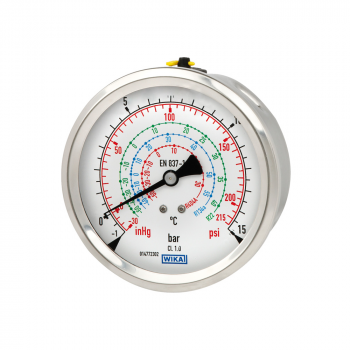


























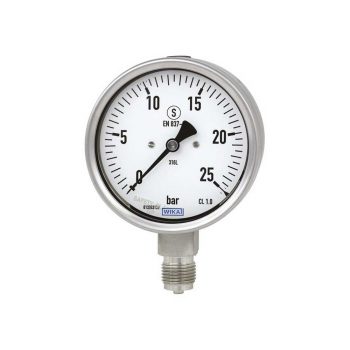
- Safety version with solid baffle wall designed in compliance with the requirements and test conditions of EN 837-1
- Excellent load-cycle stability and shock resistance
- Completely from stainless steel
- Scale ranges from 0 … 0.6 to 0 … 1,600 bar

 Datasheet Datasheet |
| User Manual |
| User Manual |
| User Manual |
| User Manual |
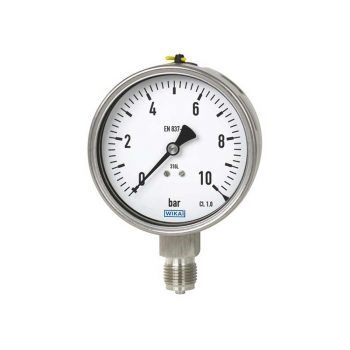
- Excellent load-cycle stability and shock resistance
- All stainless steel construction
- German Lloyd approva
- Scale ranges up to 0 … 1,600 bar
| Datasheet |
| User Manual |
| User Manual |
| User Manual |
| User Manual |
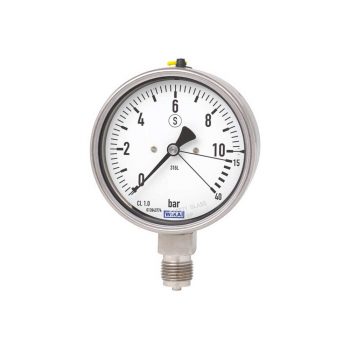
- Overpressure range is indicated completely on scale
- Safety version with solid baffle wall (Solidfront) designed in compliance with the requirements of EN 837-1 and ASME B40.100
- With case filling (model 233.36) for applications with high dynamic pressure loads and vibrations
- Measuring ranges from 0 … 0.6 bis 0 … 40 bar [0 ... 10 to 0 ...600 psi]
|
Datasheet |
| User Manual |
| User Manual |
- Overpressure range is indicated completely on scale
- Safety version with solid baffle wall (Solidfront) designed in compliance with the requirements of EN 837-1 and ASME B40.100
- With case filling (model 233.36) for applications with high dynamic pressure loads and vibrations
- Measuring ranges from 0 … 0.6 bis 0 … 40 bar [0 ... 10 to 0 ...600 psi]
|
Datasheet |
| User Manual |
| User Manual |
- Overpressure range is indicated completely on scale
- Safety version with solid baffle wall (Solidfront) designed in compliance with the requirements of EN 837-1 and ASME B40.100
- With case filling (model 233.36) for applications with high dynamic pressure loads and vibrations
- Measuring ranges from 0 … 0.6 bis 0 … 40 bar [0 ... 10 to 0 ...600 psi]
|
Datasheet |
| User Manual |
| User Manual |
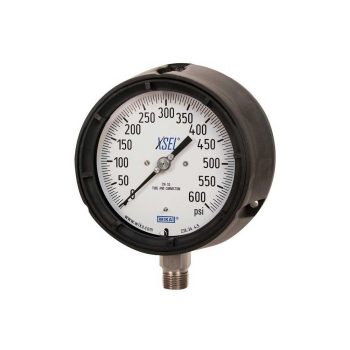
- Excellent load-cycle stability and shock resistance
- Safety version with solid baffle wall designed in compliance with the requirements and test conditions of ASME B 40.100
- With case filling (model 233.34) for applications with high dynamic pressure loads and vibrations
- Scale ranges from 0 … 10 to 0 … 30,000 psi [0 ... 0.6 to 0 ... 2,000 bar]
|
Datasheet |
| User Manual |
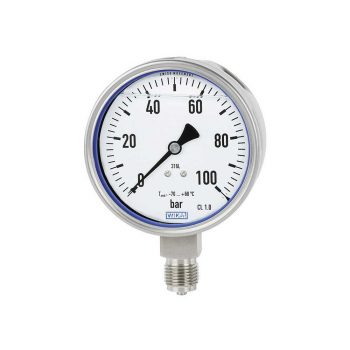
- POLARgauge® - special instrument design for extremely low ambient temperatures down to -70 °C [-94 °F]
- Ingress protection IP66 and IP67
- Completely from stainless steel
- Measuring ranges from 0 ... 0.6 to 0 ... 1,000 bar [0 ... 10 to 0 ... 15,000 psi]
- Case also available in safety level “S3” per EN 837-1
|
Datasheet |
 User Manual User Manual
|
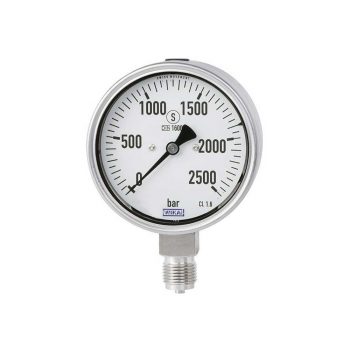
- Safety pressure gauge with solid baffle wall designed in compliance with the requirements and test conditions of the DIN 16001 high-pressure standard
- Wetted parts from stainless steel 316L
- Long service life with static pressure profiles
- Scale ranges: 0 ... 2,000 bar, 0 ... 2,500 bar and 0 … 3,000 bar
| Datasheet |
| User Manual |
- Safety pressure gauge with solid baffle wall designed in compliance with the requirements and test conditions of the DIN 16001 high-pressure standard
- Wetted parts from stainless steel 316L
- Long service life with static pressure profiles
- Scale ranges: 0 ... 2,000 bar, 0 ... 2,500 bar and 0 … 3,000 bar
|
Datasheet
|
|
User Manual
|
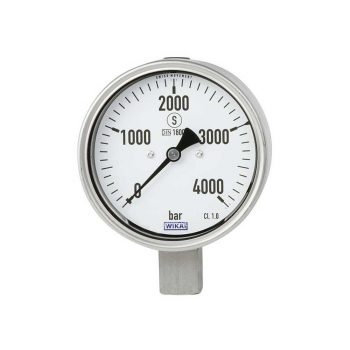
- Safety pressure gauge with solid baffle wall designed in compliance with the requirements and test conditions of the DIN 16001 high-pressure standard
- High load cycle stability, even with dynamic pressure profiles
- High indication accuracy of 1 %, optionally 0.6 %
- Scale ranges from 0 ... 2,000 bar to 0 … 6,000 bar
| Datasheet |
| User Manual |
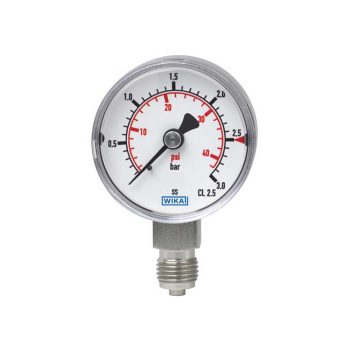
- Case and wetted parts from stainless steel
- Version per EN 837-1 or ASME B40.100
- Cost-effective and reliable
- Scale ranges from 0 ... 1 to 0 … 1,000 bar [0 ... 15 to 0 ... 15,000 psi]
|
Datasheet |
| User Manual |
| User Manual |
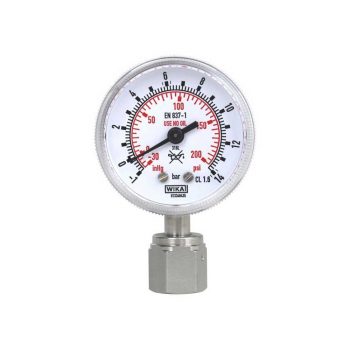
- VCR® compatible face seal fittings
- Helium leak tested
- Electropolished case
- Process connection surface finish Ra ≤ 0.25 μm
| Datasheet |
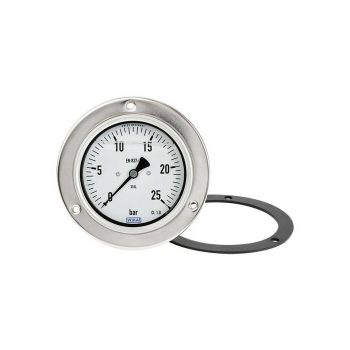
- Fully welded mounting ring to prevent water ingress into the control panel (ingress protection IP66)
- All stainless steel construction
- Optionally as safety version "S3" per EN 837-1
|
Datasheet |
| User Manual |
| User Manual |
| User Manual |
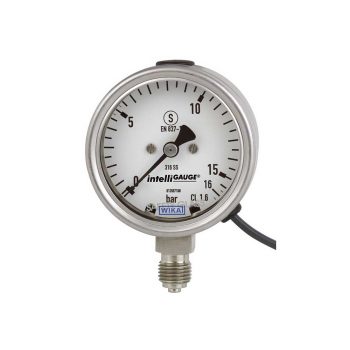
- No configuration necessary due to “plug-and-play”
- Measuring ranges of up to 0 ... 1,000 bar or 0 ... 15,000 psi
- Easy-to-read analogue indication with nominal size 63
- Safety version with solid baffle wall (Solidfront) designed in compliance with the requirements of EN 837-1 and ASME B40.100
- Patents and property rights, e.g. US 8030990, DE 112007000980, CN 101438333
| Datasheet |
| User Manual |
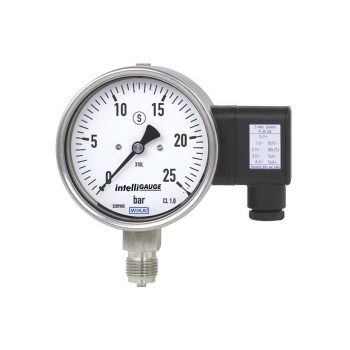
- No configuration necessary due to "plug-and-play"
- Signal transmission per NAMUR
- Measuring ranges 0 ... 0.6 bar to 0 ... 1,600 bar
- Easy-to-read analogue display with nominal size 100 or 160
- Safety version S3 per EN 837
| Datasheet |
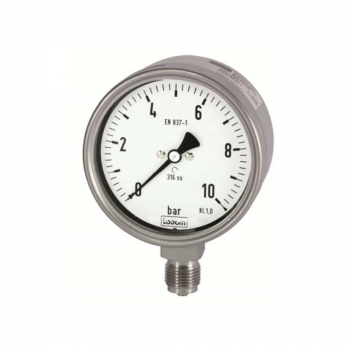
The high-quality stainless steel version has proven itself for measuring gaseous, liquid and aggressive media.
|
Datasheet
|
|
User Manual
|
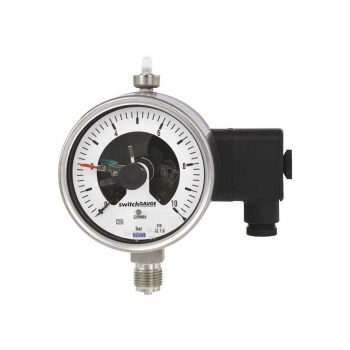
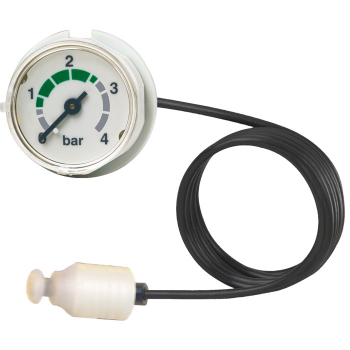
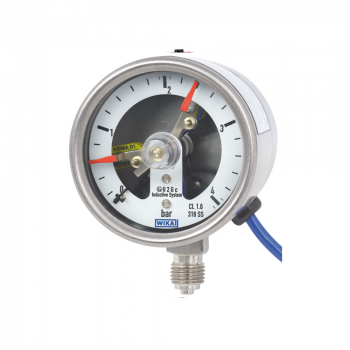
Switch contacts (electrical alarm contacts) make or break circuits dependent upon the pointer position of the indicating measuring instruments.
|
Datasheet |
| User Manual (Pressure gauges with inductive contact) |
| User Manual (Pressure gauges switch contact model) |
| User Manual (Pressure gauges with Reed contact) |