


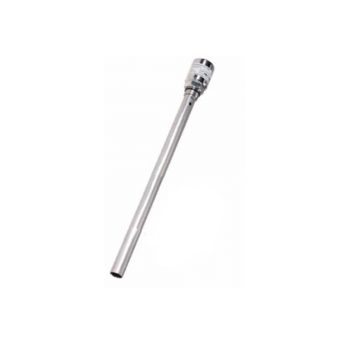
The HySense® CL 1xx is a high intelligence sensor that not only determines oil level precisely, but also measures the following oil condition parameters: relative humidity, relative permittivity, conductivity, and temperature. After a calibration phase, this sensor can evaluate an oil’s condition and output it based on implemented condition algorithms. Moreover, the corresponding analysis application that is implemented in MultiSystem measuring devices makes it enormously easier to operate and use the sensors. Finally, the intuitive menu navigation and the stored oil database both make it easy to quickly acquire, visualize, evaluate, and store oil condition parameters
 Datasheet Datasheet |
| Catalog Excerpt |
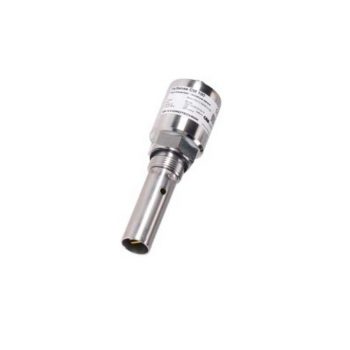
The HySense® CM100 is a high intelligence sensor that measures the following oil condition parameters: relative humidity, relative permittivity, conductivity, and temperature. After a calibration phase, this sensor can evaluate an oil’s condition and output it based on implemented condition algorithms. Moreover, the corresponding analysis application that is implemented in MultiSystem measuring devices makes it enormously easier to operate and use the sensors. Finally, the intuitive menu navigation and the stored oil database both make it easy to quickly acquire, visualize, evaluate, and store oil condition parameters.
|
Datasheet
|
|
Catalog Excerpt
|
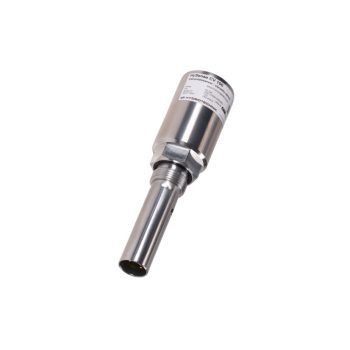
- High intelligent Viscosity sensor, measured variable: viscosity, rel. permittivity and temperature
- 2 configurable Signal Outputs 4…20 mA
- RS232/ CANopen Interfaces
- Internal memory for 7500 data records
- G3/4´´ screw thread
- Max. operating pressure 725 psi
| Datasheet |
| Catalogue Excerpt |
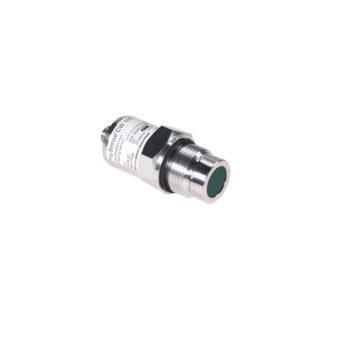
The HySense® CW 100 is a high intelligence sensor that detects wear in the form of ferromagnetic particles. In addition, it is able to determine whether the particles are fine particles in the micrometer range or coarse particles in the millimeter range. Finally, this sensor has a fully automatic particle release function that eliminates the need to clean or maintain it.
| Datasheet |
| Catalog Excerpt |
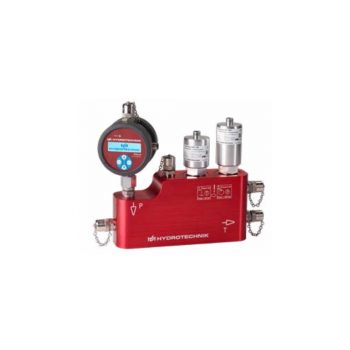
The HySense® CX 197 service measuring kit combines all the oil condition sensors needed for a professional and fast oil condition analysis. As a result of its heavy-duty construction and compact design, combined with MINIMESS® adapters that make setup an absolute breeze, this kit is a perfect fit for mobile use. Moreover, the corresponding analysis application that is implemented in MultiSystem measuring devices makes it enormously easier to operate and use the sensors. Finally, the intuitive menu navigation and the stored oil database both make it easy to quickly acquire, visualize, evaluate, and store oil condition parameters.
| Datasheet |
| Catalog Excerpt |

Oil Condition Sensors – real-time health monitoring for hydraulics, gearboxes & lubrication
Oil condition sensors continuously monitor the quality of hydraulic, gear and lube oils—covering viscosity and temperature, moisture (saturation/ppm), dielectric constant/permittivity (aging/contamination), conductivity, and particles/wear. They enable condition-based maintenance (CBM), failure prevention and higher asset availability.
Depending on model: online viscosity, water-in-oil (relative % or ppm), dielectric constant (oxidation/fuel ingress), conductivity, particle count (ISO 4406) and ferromagnetic wear. Outputs/communications include 4–20 mA, PNP/NPN, Modbus/RS-485, CAN/CANopen, IO-Link, and via gateways MQTT/REST.
ICS Schneider Messtechnik supports sensor selection, installation concepts (main flow/bypass), alert limit definition, calibration and integration into PLC/SCADA/cloud systems.
FAQ on Oil Condition Sensors
Answers on measuring principles, parameters, installation, thresholds, calibration, data interpretation and best practices.
Which parameters can oil condition sensors measure?
| Parameter | Indication | Typical cause |
|---|---|---|
| Viscosity | Film strength/leakage behavior | Aging, shear, dilution (fuel), temperature |
| Water (% saturation/ppm) | Corrosion, cavitation, additive depletion | Condensation, cooler leak, environment |
| Permittivity/dielectric constant | Oxidation, contamination, mixing | Aging, wrong oil, fuel/process fluid ingress |
| Conductivity | ESD/filter behavior | Base oil/additives, aging, water |
| Particles (ISO 4406) | Cleanliness, filter condition | Wear, ingression, filter failure |
| Ferromagnetic wear | Early gearbox/bearing damage | Gear/tooth/bearing abrasion |
| Temperature/density | Compensation, trending context | Operating state, medium change |
How do the measurement principles work?
- Permittivity/dielectric: capacitive sensing; changes indicate oxidation or mixing.
- Moisture: relative saturation (%) or absolute (ppm) via capacitive/polymer sensors.
- Viscosity: resonant/oscillating or thermal transit-time methods (model-dependent), temperature-compensated.
- Particle counting: optical blockage/laser scattering in bypass, or inline optical/DP-based concepts.
- Wear detection: magnetic probes count/weight ferromagnetic debris in real time.
What applications benefit most?
Hydraulic power units, gearboxes, compressors, turbines, injection molding, wind turbines, marine, steel presses and paper machines—where downtime is costly.
How are warning and alarm limits defined?
Based on baseline data (fresh oil), OEM guidance and standards (e.g., ISO 4406 for cleanliness). Example: moisture warning at 60–80% saturation, alarm at >80–90% (oil-type dependent). For permittivity, monitor relative Δε versus the baseline.
Where and how should sensors be installed?
- Return line (good mixing) or bypass with restrictor (stable flow for particle counters).
- Orientation: fully wetted, avoid air entrapment; meet specified flow velocity.
- Serviceability: include isolation/drain for easy sensor swap/cleaning.
Is calibration required?
Factory calibration is standard. For critical service, perform annual recalibration or field verification (e.g., with lab samples). Recording a baseline after oil change is essential for correct trend analysis.
How do I interpret permittivity and conductivity?
A rise in permittivity often indicates oxidation or water; a drop can suggest dilution (fuel). Conductivity affects ESD risk at filters—very low values may require additive or process adjustments.
Which oil types are supported?
Mineral oils, PAO, esters (e.g., HEES), PAG, bio oils—verify compatibility and temperature/pressure limits; some sensors use oil-specific curves.
What should I do on a water alarm?
Safely stop or derate the machine, identify the source (seal/cooler/condensate), dewater (vacuum dehydration/filters), send a lab sample, adjust thresholds if needed and eliminate the root cause.
How strong is the temperature influence?
Significant for viscosity, conductivity and permittivity. Modern sensors compensate temperature, but always evaluate trends in the context of operating temperature.
What communications are available?
4–20 mA (per channel), PNP/NPN alarms, Modbus RTU, CAN/CANopen, IO-Link. Via edge gateways: MQTT/HTTPS to cloud/SCADA.
How do I correlate sensor data with lab results (TAN/TBN, oxidation, soot)?
Online sensors provide trend indicators. For compliance/release decisions keep using laboratory analysis. Calibrate correlations (e.g., permittivity ↔ TAN) against your own oil baseline.
What are typical pitfalls?
- Air bubbles/cavitation → change installation point, prefer return line/calm zone.
- Dead zones/poor mixing → use a bypass with defined flow.
- Wrong oil parameters → set sensor for oil type, capture baseline.
- EMC/cabling → shielded wiring, separate power/signal routing.
How do I maintain the sensors?
Low-maintenance. Periodically inspect connectors/cables, clean any screens/bypass filters, back up firmware/parameters, and follow the calibration plan.
What particle limits are typical?
Per ISO 4406 (e.g., targets like 17/15/12 for hydraulics—application-specific). Configure warning/alarm setpoints and link to filter status.
Are ATEX versions available?
Yes—ATEX/IECEx variants exist. Selection depends on zone (1/2/21/22), protection concept (Ex i/Ex d) and medium/temperature.
How do I start with condition monitoring?
- Identify critical assets (risk/cost).
- Select parameters & a sensor package (moisture, Δε, particles, viscosity).
- Capture a baseline (fresh oil, normal operation).
- Define thresholds and test alarms.
- Integrate into PLC/SCADA/cloud, build dashboards/reports.
What temperature and pressure limits apply?
Typically −20…+120 °C (high-T options higher) and up to ≥ 40 bar operating pressure depending on housing/process connection. Always consult the datasheet.
Do you support selection, commissioning & data interpretation?
Yes. We define sensor setups, support installation/parameterization, configure alerts/dashboards, correlate with lab values and create maintenance guidelines.