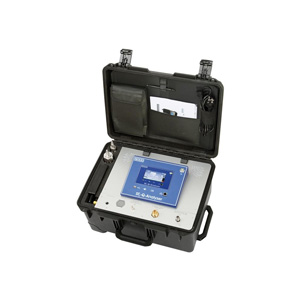
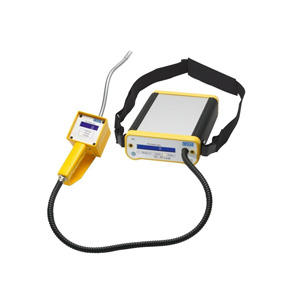
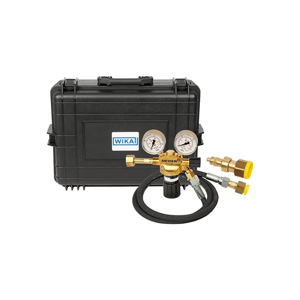
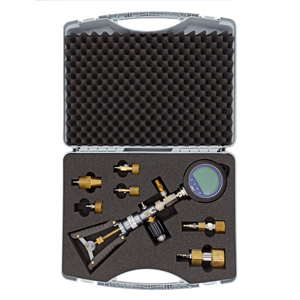
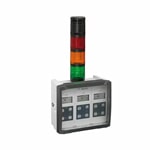
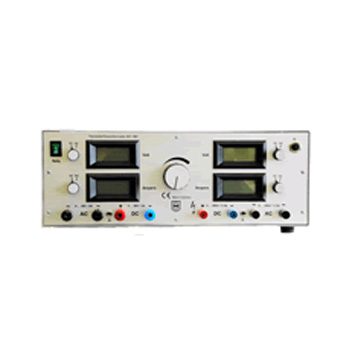
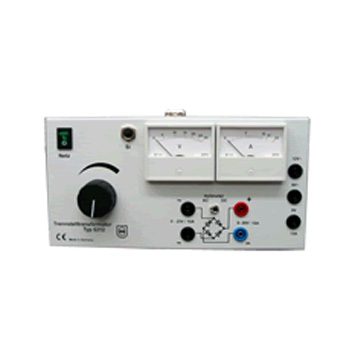
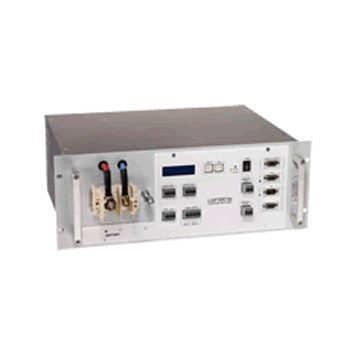
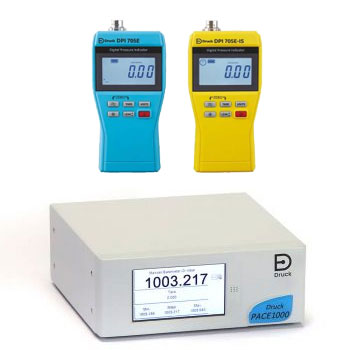
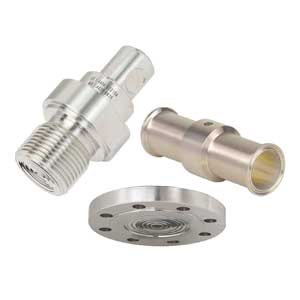
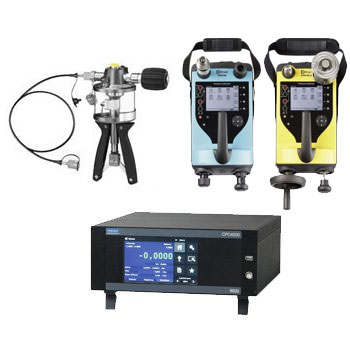
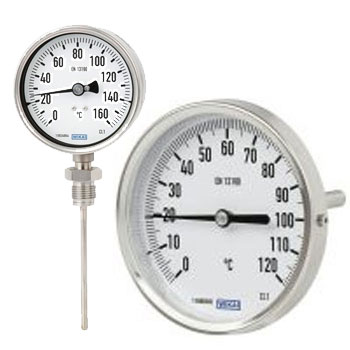
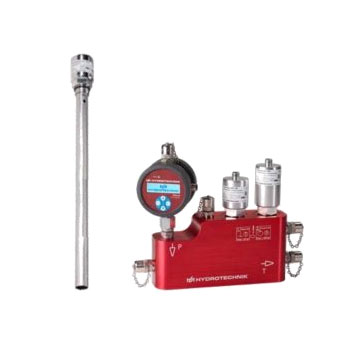
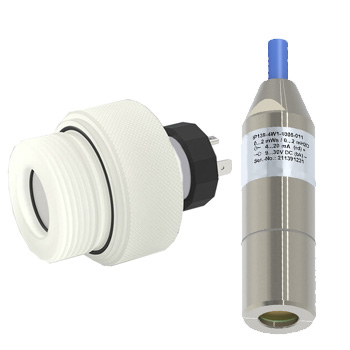
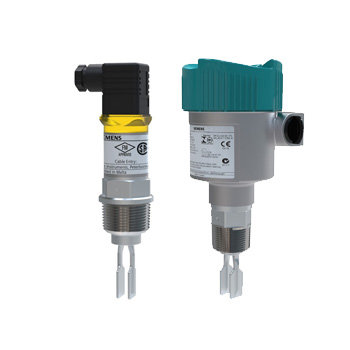
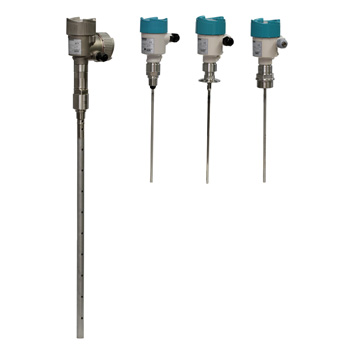
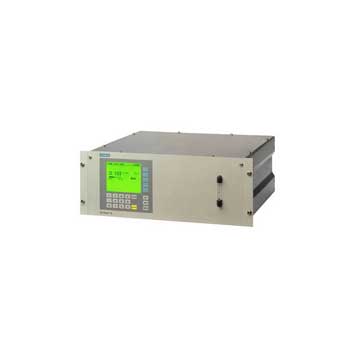
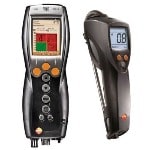
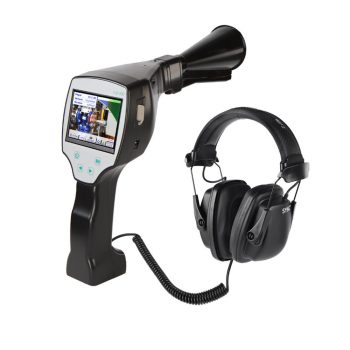
Pressure Controllers – automated pressure generation, control & calibration
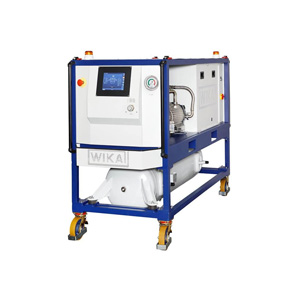
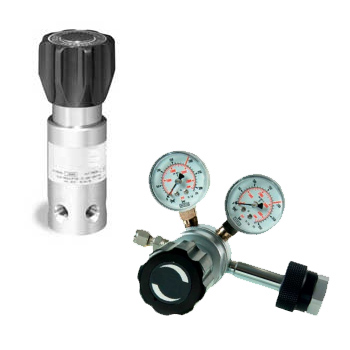
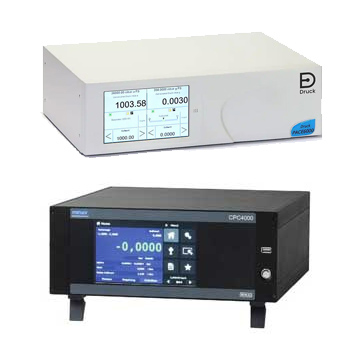
Pressure controllers combine precision pressure generation with closed-loop regulation and automated calibration sequences. They drive setpoints quickly and stably, hold pressure within tight bands, and record results—ideal for laboratory, production and service.
Key features (model-dependent): ranges from vacuum up to 400 bar pneumatically (higher hydraulically), accuracies to ±0.01 % FS/Reading, auto-range, dual/switch range, leak/step/ramp profiles, remote pressure modules, gas/oil/water media paths, interfaces SCPI/Modbus/TCP, HART, Profibus/Profinet, built-in procedures and CMMS/CAQ connectivity.
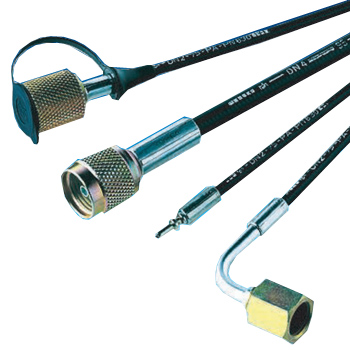
ICS Schneider Messtechnik supplies and integrates controllers including adapter/hose kits, safety concepts, software and traceable calibration (factory/DAkkS).
FAQ on Pressure Controllers
Answers on control methods, accuracy, media, connections, safety, software and best practices.
Why choose a pressure controller over a hand pump plus reference?
It regulates automatically to the setpoint, keeps it stable, and runs sequences—delivering speed, repeatability and fewer operator errors.
Which control modes are common?
| Mode | Description | Use case |
|---|---|---|
| Step | Discrete setpoints with dwell time | Calibration points 0–25–50–75–100 % |
| Ramp | Linear/defined rise | Tightness & stability checks |
| Leak | Hold and measure drift | Leak tests (mbar/min) |
| Sweep | Up/down cycles | Hysteresis & repeatability |
How do I size the range correctly?
Choose a span so your DUT operates within 60–90 % of the controller’s range. For wide spans, use dual-range or remote modules.
What accuracies are realistic?
Depending on model ±0.01…0.05 % FS/Reading. For pass/fail work, target a TUR ≥ 4:1 (e.g., 0.25 % DUT → ≤0.06 % reference).
Which medium should I use—gas or liquid?
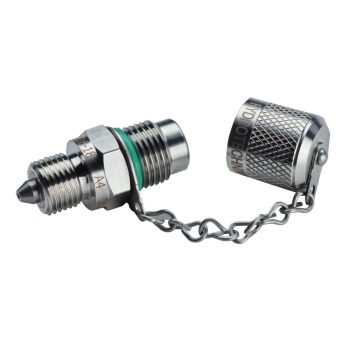
| Medium | Advantages | Notes |
|---|---|---|
| Gas (air/N₂) | Clean, fine control, fast response | Limited max pressure; manage venting safely |
| Hydraulic (oil/water) | High pressures, low compressibility | Ensure compatibility and proper bleeding |
What ports and sealing do controllers use?
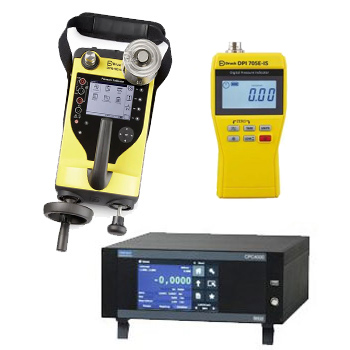
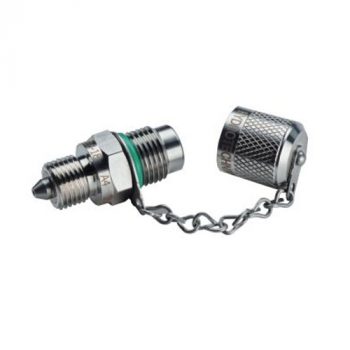
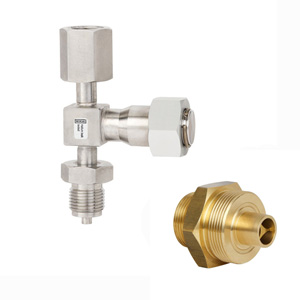
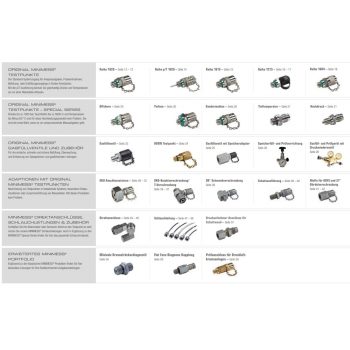
Typical ports: G 1/4 (BSPP), NPT, M20×1.5, sometimes 7/16″-20 UNF. Sealing via O-ring/face seal (BSPP) or taper/cone (NPT/UNF). Avoid tape on sealing faces.
Can a controller handle gauge, absolute and differential?
Many support g/abs (with internal/external barometer). Δp requires a suitable manifold with equalize/isolate and two ports.
How stable is the held pressure?
Gas setups achieve stability down to the Pa–mbar range; hydraulic systems typically within mbar. Minimize temperature and vibration influences.
Is automation/integration possible?
Yes—via SCPI/Modbus/TCP, drivers for LabVIEW/.NET or REST APIs. Integrate sequences, data capture and barcode/asset IDs.
What does a typical calibration procedure look like?
- Connect DUT, select medium, bleed/vent.
- Run a sequence (e.g., 0–25–50–75–100 % up/down).
- Let the controller settle, observe dwell time, record values.
- Adjust DUT if needed; repeat and document as-left.
How are leak tests performed?
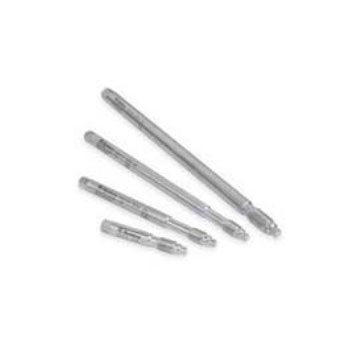
Drive the setpoint, hold regulation, measure drift rate over a defined interval (e.g., mbar/min). Record temperature and compensate if necessary.
Which safety features matter?
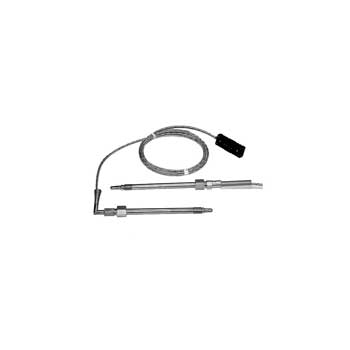
- Overpressure protection/relief, limits and interlocks
- Whip checks and strain relief on lines
- Shields/enclosures for high-pressure work
How do I connect to my QMS?
Export CSV/PDF, use direct CMMS/CAQ links, maintain an audit trail, roles/users, and optional 21 CFR Part 11 e-signatures.
What maintenance is required?
Periodic factory/DAkkS calibration, check seals/filters; keep hydraulic media clean and systems properly vented.
What affects control speed?
System volume, line size, medium (gas faster than liquid), valve/control strategy and target stability band.
Common pitfalls and remedies
- Leaks → clean faces, replace O-rings, torque fittings correctly.
- Slow regulation → reduce hose volume, optimize control band/valve settings.
- Offset → verify units/reference (abs/g), enable barometric correction.
What documentation do you supply?
Calibration certificates (factory/DAkkS), material/media approvals, IQ/OQ checklists, and safety/maintenance guides.
Do you assist with selection, integration and training?
Yes—we size ranges/media, define manifolds/adapters, integrate software/CMMS, train users and provide ready-to-run procedure templates.