
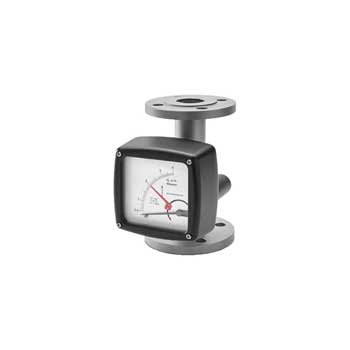
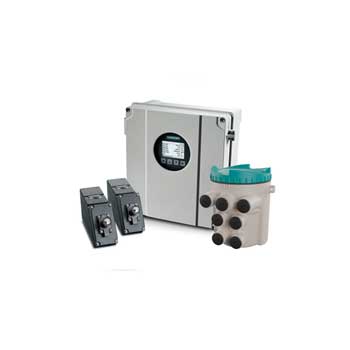
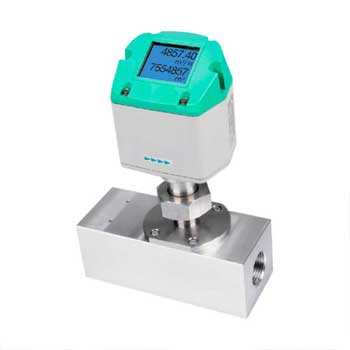
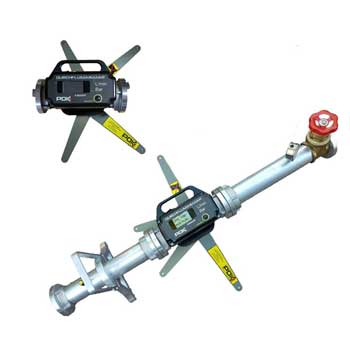
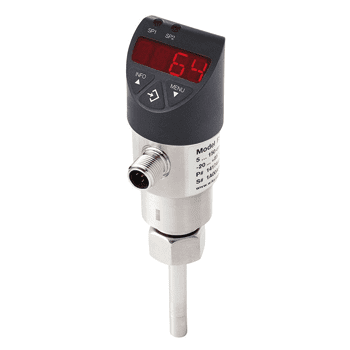
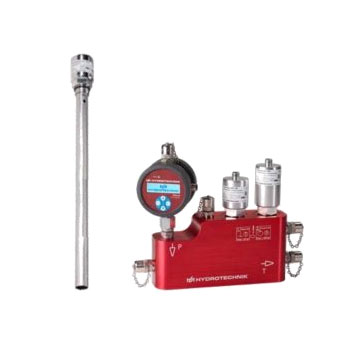
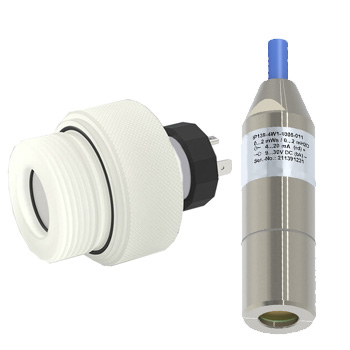
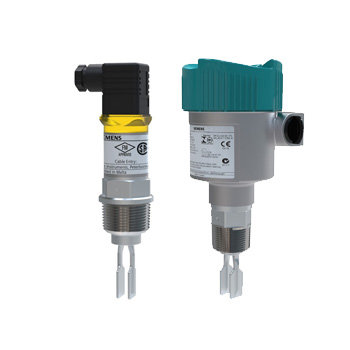
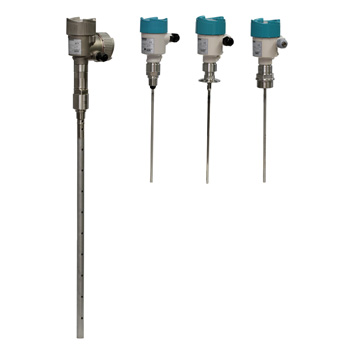
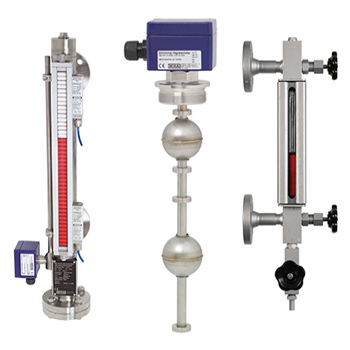
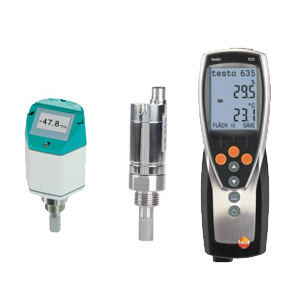
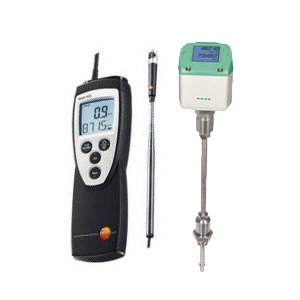
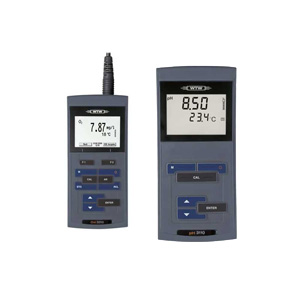
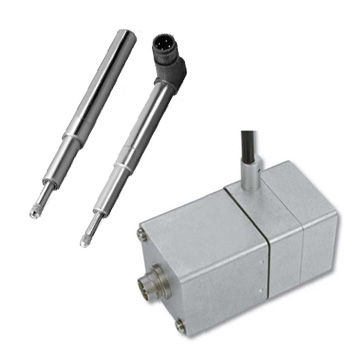
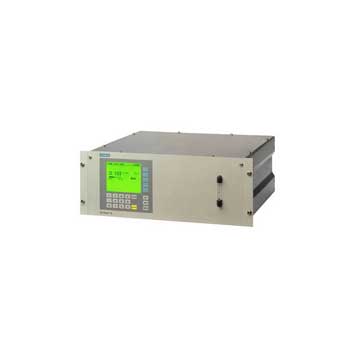
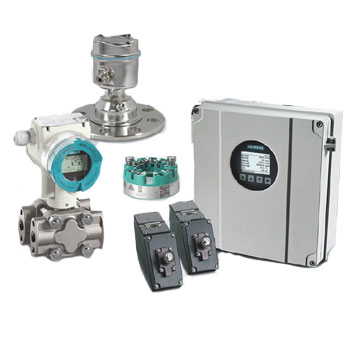
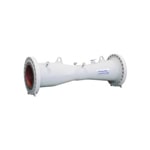
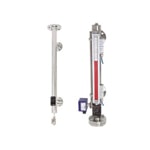
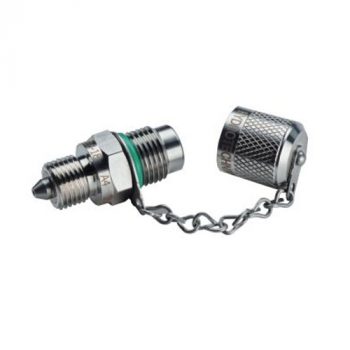
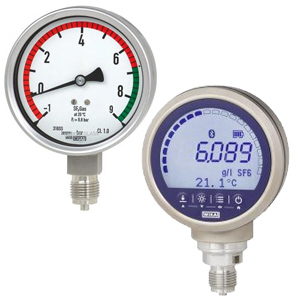
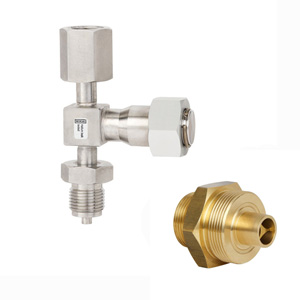















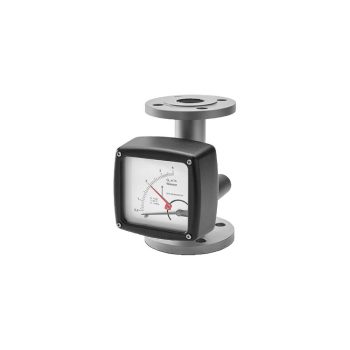
SITRANS FVA 250 Variable Area Flowmeter, made completely for metal, for measurement of liquids and gases.

Datasheet
|
User Manual
|
Variable Area (Rotameter) Flow Meters – simple, robust indication for liquids & gases
Variable area (VA) flow meters, commonly called rotameters, use a tapered tube and a floating float whose height indicates the flow rate on a scale. Benefits: intuitive reading, no power supply, low pressure loss, and cost efficiency—ideal for distribution lines, circulation loops, dosing, lab/pilot plants and utility services (water, air, gases).
Depending on model: glass or plastic tubes, metal tube VA (with magnetic coupling for opaque media/high p/T), limit switches (reed/magnetic), analog/4–20 mA outputs, industrial temperature/pressure ranges, ATEX options and process connections (thread, flange, clamp).
ICS Schneider Messtechnik supports selection/scaling (medium, density/viscosity), materials, installation, calibration and integration into display, alarm and control systems.
FAQ on Variable Area (Rotameter) Flow Meters
Answers on operating principle, accuracy, media, scaling, installation, materials, signaling, calibration and maintenance.
How does a rotameter work?
Flow lifts a float inside a tapered tube. At equilibrium, hydrodynamic force balances weight/buoyancy; the float height corresponds to a defined flow value on the scale.
Which media are suitable?
Clean liquids (water, solutions) and gases (air, nitrogen, process gases). For particles/turbidity, metal-tube VA or upstream filtration is recommended.
What accuracy can I expect?
Typically ±1.6…±5% of full scale depending on design/scaling. Excellent for indication/control; for fiscal-grade accuracy choose other principles.
Glass/plastic vs. metal-tube—what’s the difference?
| Design | Strengths | Typical use |
|---|---|---|
| Glass/plastic tube | Great visibility, economical | Water/air distribution, labs |
| Metal tube (with indicator) | High p/T, opaque media, ATEX | Process plants, steam, chemicals |
How is the scale defined (Nm³/h, L/min, etc.)?
Scales are medium- and condition-specific. Gas flows are given at standard conditions (e.g., 0 °C/1.013 bar) or operating conditions. Changes in density/viscosity/p,T require conversion or re-scaling.
What do float and cone geometry influence?
Float shape/mass (e.g., ball, V-shape, slotted) set linearity, damping and range. The cone angle defines the relationship between height and flow.
What is the correct installation orientation?
Standard is vertical, flow bottom-to-top. Special designs exist for horizontal mounting (metal-tube with magnetic coupling). Avoid vibration and pipe stress.
How large is the pressure drop?
Low to moderate, depending on float, flow rate and viscosity. Verify Δp in the datasheet for sensitive circuits.
How do I select the measuring range?
Normal operating range is typically 20–80% of full scale. Leave headroom; for very wide dynamics use multiple VA meters or control valves.
Can I get alarms/signals?
Yes. Limit switches (reed/magnetic) provide min/max alarms. Many metal-tube VA offer 4–20 mA/HART for remote indication/control, sometimes with switch outputs.
How do density and viscosity affect readings?
Both affect buoyancy and Reynolds number. Deviations from the calibration medium shift the reading—either convert values or re-scale/recalibrate for the actual medium.
What must I consider for gases?
Gases are compressible: specify as Nm³/h (standardized) or operating m³/h. Otherwise pressure/temperature changes lead to misinterpretation.
What materials are available?
- Tubes: borosilicate glass, PSU/PC, stainless steel (metal-tube)
- Floats: stainless steel, Hastelloy®, ceramic, PTFE-coated
- Seals: EPDM, FKM/FPM, PTFE, FFKM—match to the medium
How is calibration done?
Factory calibration with reference media. For critical use, ISO/DAkkS with protocol. In the field: plausibility checks via reference flow/timer.
What temperature/pressure limits apply?
Glass/plastic typically up to +60…+90 °C and PN6…PN10; metal-tube VA significantly higher (e.g., >+200 °C, PN40+). Always see the datasheet.
Are ATEX/SIL options available?
Common for metal-tube VA: ATEX/IECEx and SIL ratings. Choose limit switches accordingly (Ex i/Ex d).
Maintenance & cleaning—what to watch?
VA meters are low-maintenance. Periodically check for fouling/deposits; for glass tubes use compatible cleaners only. Install filters if particles are present.
Typical pitfalls & remedies
- Wrong orientation → mount vertical, flow up
- Different medium/conditions than scaled → convert or re-scale
- Vibration/pulsation → add damping/support, consider metal-tube VA
- Deposits/bubbles → vent, clean, choose suitable materials
Can I use VA meters for control?
Yes—often with an integrated needle valve or an external control valve. For closed-loop control, metal-tube VA provide a 4–20 mA output.
Do you support selection & sizing?
Yes. We review medium, p/T, density/viscosity, range and connection, supply scaled instruments, calibration reports and integrate alarms/signals into PLC/DCS.


Datasheet