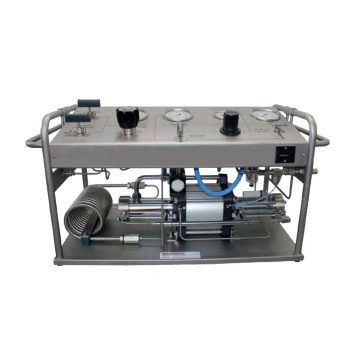
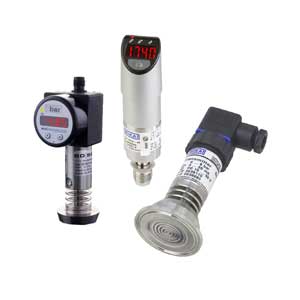
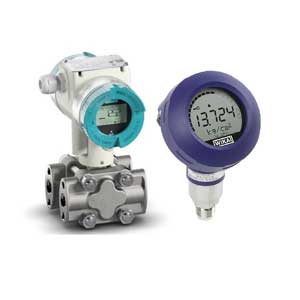
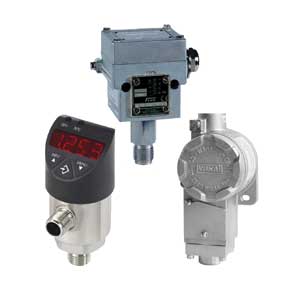
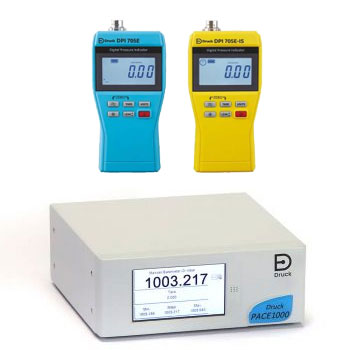
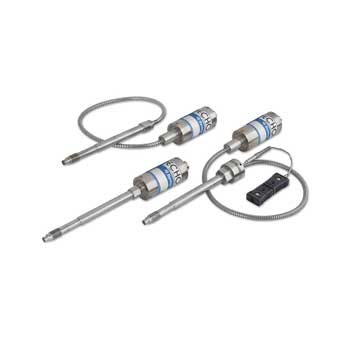
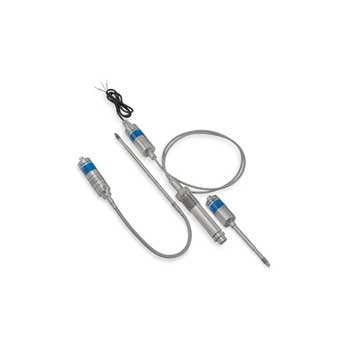
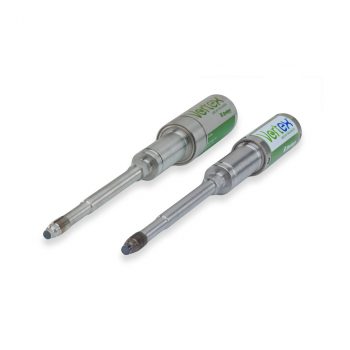
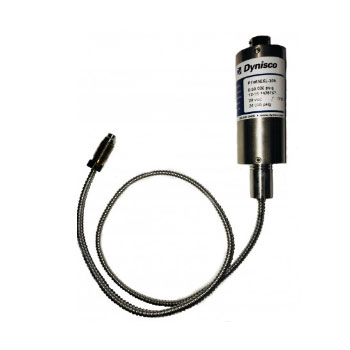
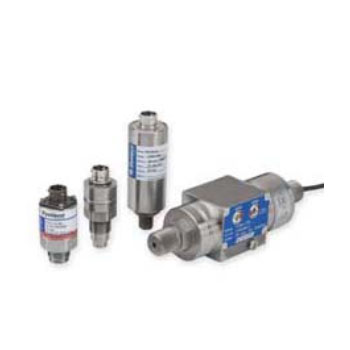
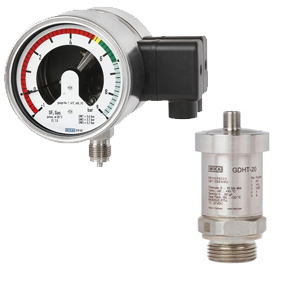
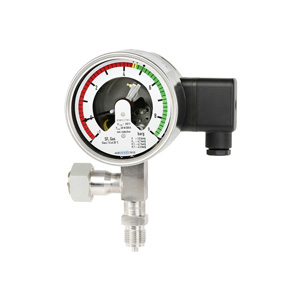
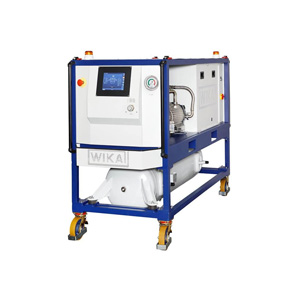
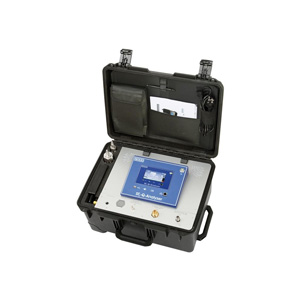
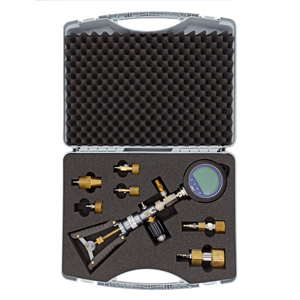
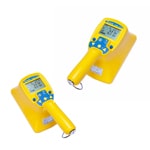
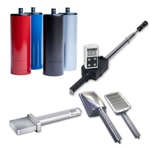
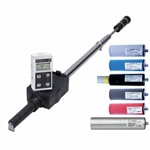
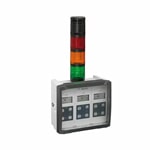

























- Pneumatic range -15 to 1000 psi (-1.0 to 70 bar)
- Hydraulic range -15 to 10,000 psi (-1.0 to 700 bar)
- Easy to maintain
- Configured with common pressure connections
Datasheet |
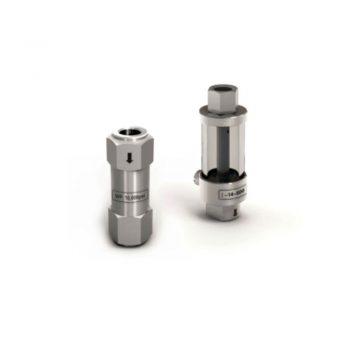
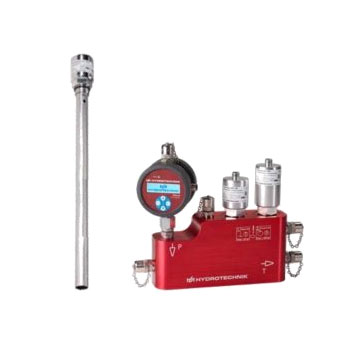
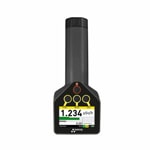
- Pressure connections - 1/8 NPT or BSP male thread for calibrator, 1/8 NPT or BSP female for the user connection.
- Maximum pressure - The system should not be pressurized above 500 psig (35 bar).
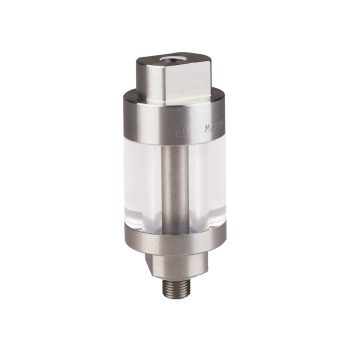
- Orientation - The IDT 600 is designed for use in the vertical position and should be removed from the calibrator during transit.
- Pressure media - Gases compatible with stainless steel, acrylic and nitrile o-ring seals.
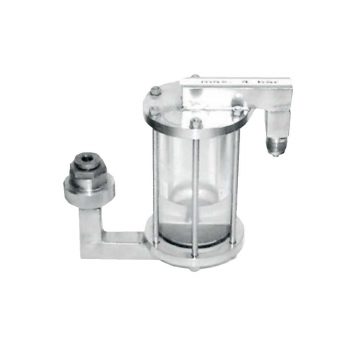
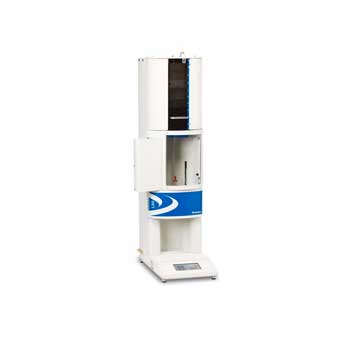
- Simple to use - The IDT 600 is fitted to the calibrator and the device under test is connected to the upper 1/8 NPT or BSP female port. Any dirt or moisture is then trapped inside the transparent chamber giving the operator an opportunity to clean the trap before contamination occurs.
Datasheet |
User Manual |
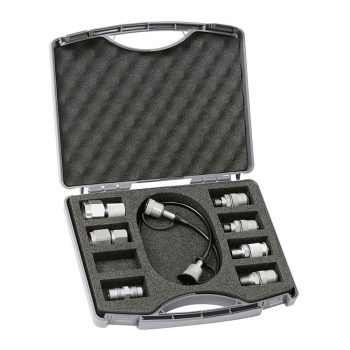
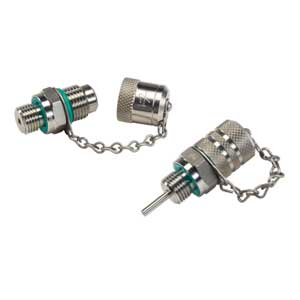
- Plug-in and threaded coupling
- Integrated non-return valve enables leak-free mounting and dismounting
- Tool-free fitting of the threaded connections
Datasheet |
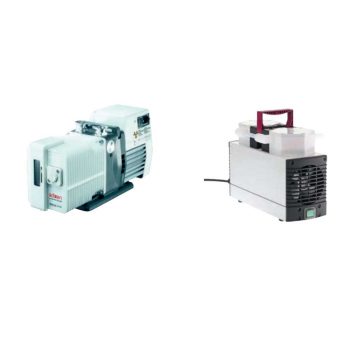
- Vacuum generation
- Vacuum provision for laboratory measuring instruments, pressure manifolds and test benches for testing, calibrating and adjusting
- Vacuum provision for pressure controllers (CPC3000, CPC6000, CPC8000) with absolute-pressure measuring ranges or bidirectional measuring ranges
Datasheet
|
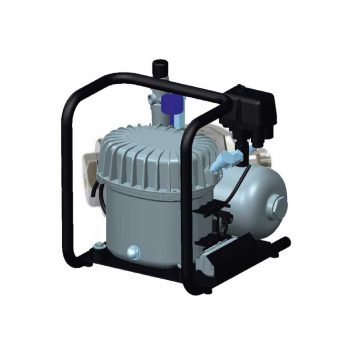
- Pressure generation from atmospheric pressure to 10 bar (150 psi)
- Pressure provision for pressure controllers and laboratory measuring instruments for testing, calibrating and adjusting
- Working pressure supply for pressure controllers (CPC3000, CPC6000, CPC8000) for measuring ranges ≤ 10 bar (150 psi)
- Test pressure supply for low-pressure manifold
Datasheet
|
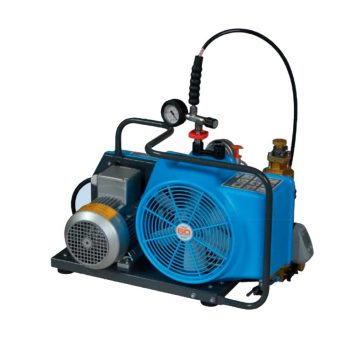
- Pressure generation from atmospheric pressure to 300 bar (4,350 psi)
- Pressure provision for pressure controllers and laboratory measuring instruments for testing, calibrating and adjusting
- Working pressure supply for pressure controllers (CPC4000, CPC6050, CPC8000) for measuring ranges ≤ 300 bar (4,350 psi)
- Test pressure supply for high-pressure manifolds or adjustment benches
Datasheet |
- Compressed-air increase from test air (7 ... 15 bar) (102 ... 218 psi) to 400 bar (6,000 psi)
- Pressure provision for pressure controllers and laboratory measuring instruments for testing, calibrating and adjusting
- Working pressure supply for pressure controllers (CPC8000) for measuring ranges ≤ 400 bar (6,000 psi)
- Test pressure supply for high-pressure manifolds or adjustment benches
Datasheet
|
- Pressure supply of pressure controllers (CPC3000, CPC6000 and CPC8000)
- Test pressure presetting in adjustment and calibration applications
Datasheet
|
The filling glass is used for filling measuring systems with
liquid testing media prior to adjustment or calibration.
The liquid test medium in the filling glass is sucked into the
measuring system by evacuation of the measuring system
and subsequent venting. On the vacuum side it is fitted with
a threaded connection G ½ male and on the measuring
instrument side with a knurled nut M28 x 1.5 with changeable
threaded insert G ½.
Datasheet
|
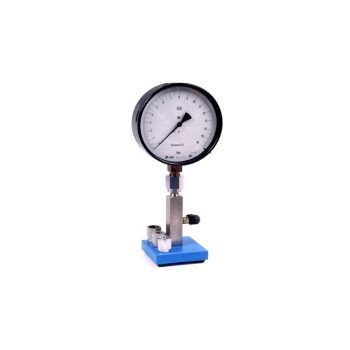
The model 8284 is a robust station for testing pressure gauges. This standard has proven very practical in numerous test set-ups. Supplied with 1/2"" - 3/8"" - 1/4"" - 1/8"" BSP gauge adaptors which can be ""stored"" on the base plate of the Gauge Test Station.
Datasheet
|
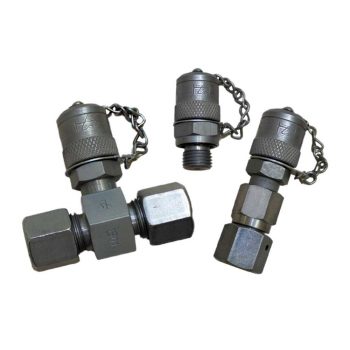
The adapters from the 1215 screw series allow for easy and secure integration of the MINIMESS® coupling into existing hydraulic systems – even with solderless tube fittings according to DIN 2353. Available configurations include:
-
DKO Fitting with Coupling: For direct connection to 24° cone tube fittings – vibration-resistant with an integrated Perbunan O-ring.
-
T-Fitting with Coupling: Adds additional measurement points into existing pipelines – includes cutting ring and union nut.
-
Bulkhead Fitting: Designed for panel or housing mounting, with MINIMESS® coupling on the opposite side.
-
Direct Adapter: Space-saving installation onto G1/4, G1/2, or NPT threads – available with or without check valve.
-
Swivel Adapter: Ideal for flexible connection routing in tight installation spaces.
-
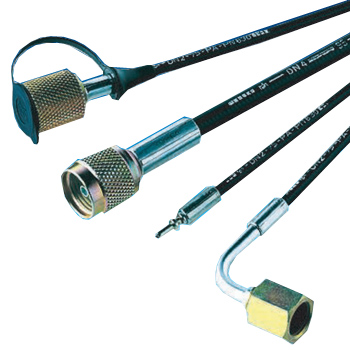
Hose Adapter: Equipped with MINIMESS® 1215 connections on both ends – perfect for mobile or flexible applications.
All variants are rated for operating pressures up to 63 MPa and are available in free-cutting steel or stainless steel, with NBR or FKM seals depending on the application.
Catalog Excerpt |
- Adjustment and calibration of pressure measuring instruments
- Holder for test item and reference instrument
- Pressure control by means of fine metering valves
Datasheet
|
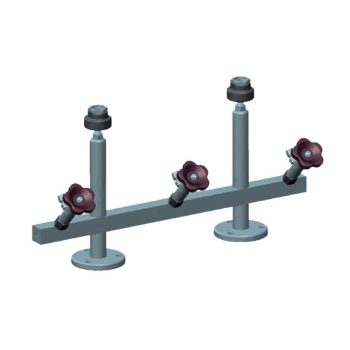
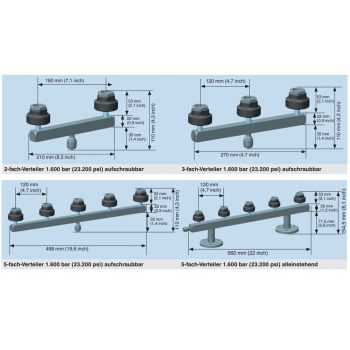
- Adaptation of several test items for testing, calibrating and adjusting
- Test benches
- Adaptation to connection columns, dirt traps or separators
Datasheet
|
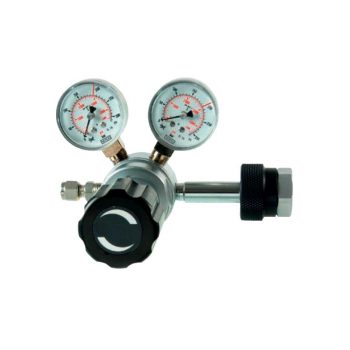
- Medium: for non-corrosive gases up to purity 4.6 / 6.0 (nickel-plated)
- Design: manual connection with O-ring
- Pressure: 200 bar / 400 bar
- Input:DIN477 Part 1
- Outlet: 1/4"-NPT (m)
- Operating temperature: -20°C to +60°C
Datasheet
|
Accessories for Pressure Calibration – adapters, hoses, manifolds & safety
Pressure calibration accessories include adapters/fittings, hose and microbore lines, manifolds / isolation & vent valves, fine volume controllers, filters/separators, reservoirs, whip checks, carry cases and documentation aids. They enable tight, stable and safe test setups—in the lab and in the field.
Typical options: threads BSPP (G), NPT, M20×1.5, 7/16″-20 UNF (microbore), quick couplers, O-ring/face seals or cone seals; pressure/medium rated materials (stainless steel, brass, PTFE, FKM/NBR); IP-rated cases and factory/DAkkS certificates for references.
FAQ on Accessories for Pressure Calibration
Answers on threads, sealing concepts, hoses, manifolds, filters, safety, care and best practices.
Which thread systems are most common?
| System | Example | Seal | Use |
|---|---|---|---|
| BSPP (G) | G 1/4, G 1/2 | O-ring / face seal | Lab/industry, repeatable tightness |
| NPT (taper) | 1/4″-NPT | Thread sealant | Service/field, rugged joints |
| Metric | M20×1.5 | Face/cone | EU process connections |
| UNF (microbore) | 7/16″-20 | Cone/ferrule | High pressure, low volume |
Which sealing concept should I choose?
Face seal + O-ring (BSPP) for fast, repeatable setups; cone/taper (NPT/UNF) for rugged, high-pressure joints; face-seal (metal gasket) for ultra-low leak rates.
What hose types are available and when to use them?
| Hose | Typical rating | Property | Use |
|---|---|---|---|
| Stainless microbore | to 2,000+ bar | Very low expansion | Calibration/test rigs |
| PA/PUR | to ~40 bar | Flexible, light | Pneumatics, field |
| Hydraulic rubber/PE | to 1,000+ bar | Robust, oil-resistant | High pressure |
What are the benefits of quick couplers?
Quick couplers shorten setup time and reduce leak risk. Check pressure rating, media compatibility and drip-free design.
What are manifolds & valve blocks used for?
For differential (Δp) work, equalize/isolate functions, parallel DUT/reference connections, safe bleeding and defined leak/hold tests.
How do I select O-ring and seal materials?
| Material | Temperature | Resistant to | Note |
|---|---|---|---|
| NBR | −20…+100 °C | Oils/grease | Standard, economical |
| FKM (Viton) | −15…+200 °C | Oil/chemicals | Higher T/chemical resistance |
| EPDM | −40…+150 °C | Water/steam | Not oil-resistant |
| PTFE | −60…+260 °C | Chemicals | Low friction, rigid |
Which filters/separators make sense?
Particle filters (5–40 µm) for pneumatics, fine filters & check valves for hydraulics, and water separators ahead of precision regulators—keep media clean and protect references.
Why use fine volume controllers?
They enable mbar-level pressure trimming without overshoot—essential for leak tests and stable calibration points.
How do I plan safe vent/bleed paths?
Route venting via a silencer/line to a safe area; observe Ex-zone rules for gas; provide catch trays/clean handling for liquids.
Which whip checks and strain reliefs do you recommend?
For high pressure use whip checks, tethered straps or safety cables—anchor close to the port to prevent backlash.
How do I size lines correctly?
Keep them as short and small-ID as possible for fast stabilization; for long runs, increase ID. Microbore minimizes compressibility/volume effects.
What torque should I use on fittings?
Follow the manufacturer/standard table. Too little → leaks; too much → seat damage. No tape on sealing faces.
How do I apply head/height corrections?
Δp = ρ·g·Δh. Use manifolds with reference height marks, plan hose routing and document certificate parameters.
How should I store and clean accessories?
- Use dust caps on all ports; store dry and clean.
- Strictly separate media paths (oil/water); flush adapters.
- Inspect seals and keep a spare kit ready.
Which cases/organizers help in daily work?
Foam inserts by thread group, labels/QR per adapter, IP-rated cases with tool tray and document sleeve.
What practical accessory kits do you offer?
- EU/US thread kit: G 1/4, G 1/2, 1/4″-NPT, M20×1.5, UNF 7/16″-20.
- Δp manifold kit: 3/5-valve block, equalize/isolate, bleed.
- High-pressure kit: microbore lines, whip checks, face-seal adapters.
How do I document leak/hold tests efficiently?
Use templates (time, p, T, drift rate), barcode/asset ID and CSV/PDF export; record as-found/as-left separately.
Do you provide consulting & pre-assembly?
Yes—we assemble adapter/hose kits, size manifolds, supply certificates and support QMS integration & training.


Datasheet
Datasheet
Datasheet