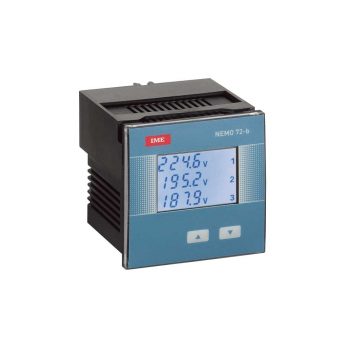
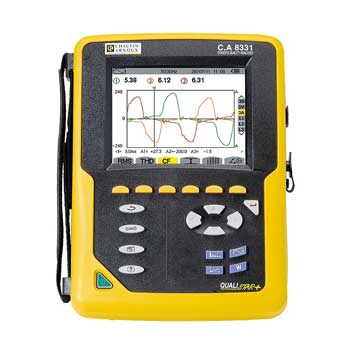
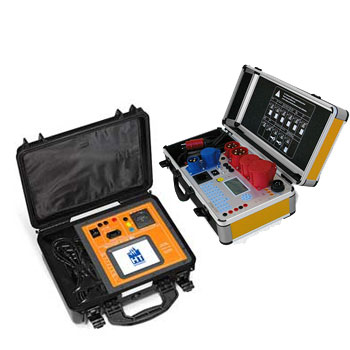
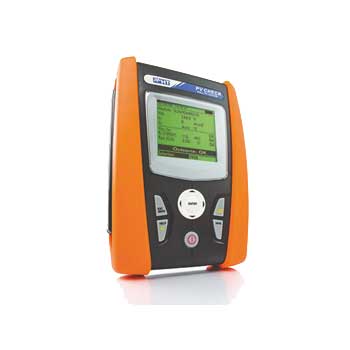
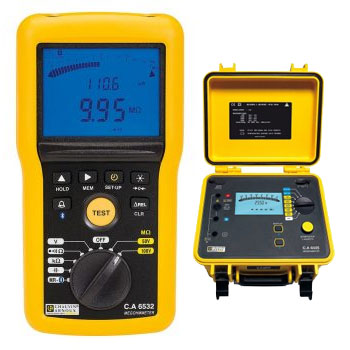
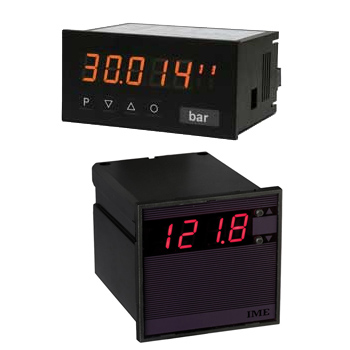
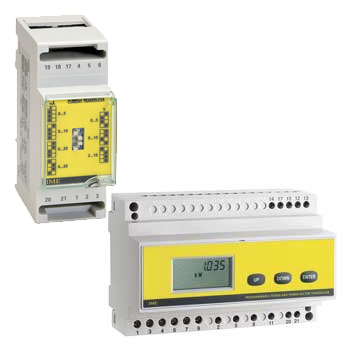
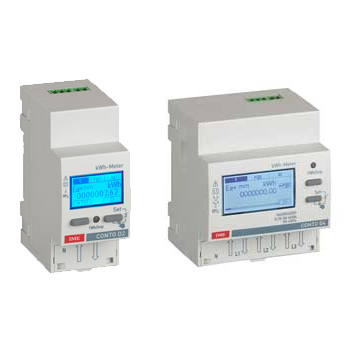
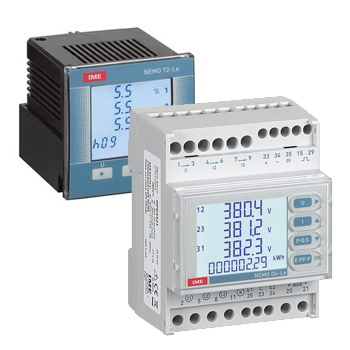
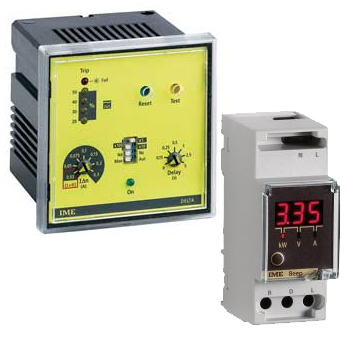
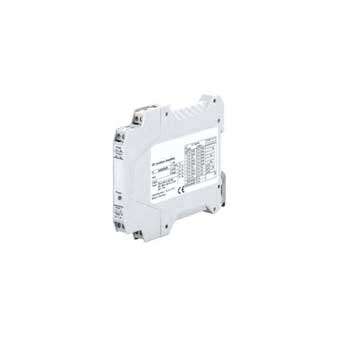
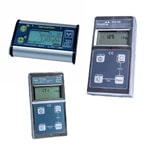





















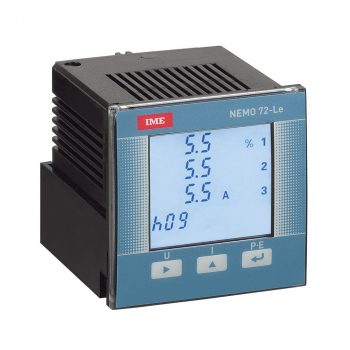
Network monitor for l.v. application with active (cl.0,5) and reactive (cl.1) energy count on 4 quadrants
AUX 20...60 Vdc
OUTPUT S0 Pulse output or 1 alarm contact + RS485 BACNET protocol
FORMAT 72x72 mm
CURRENT 1 and 5 A
VOLTAGE 80...500 V (phase-phase)
VOLTAGE OPTIONS direct or from VT (programmable ratio)
CURRENT OPTIONS from CT (programmable ratio)
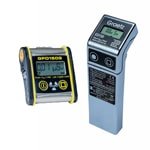
TYPE Network monitor for l.v. application with active (cl.0,5) and reactive (cl.1) energy count on 4 quadrants
MAIN single-phase or three-phase 3/4 wire unbalanced load
DISPLAY LCD rear-lighted
 
Datasheet

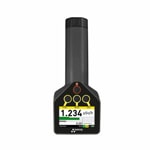
Network monitor for l.v. application
AUX Selfsupplied
OUTPUT without
FORMAT 72x72 mm
CURRENT 1 A
VOLTAGE 340...450 V (phase-phase)
VOLTAGE OPTIONS direct
CURRENT OPTIONS from CT 5…8000A (41 selectable primary ranges)
TYPE Network monitor for l.v. application
MAIN three-phase 3/4 wire unbalanced load
DISPLAY LCD rear-lighted
Datasheet
User Manual


Panel-Mount Energy Meters 72 × 72 mm

“Panel-mount 72 × 72 mm” refers to energy or power meters designed for flush-mount installation in a panel cut-out of 72 mm by 72 mm. These devices are meant for mounting in switchboards, control panels or distribution boards when front-panel space is limited or a clean, compact installation is required. Despite their compact size, they provide essential measurements like voltage, current, power and energy for monitoring consumption or load.

These 72×72-meters are typically static energy meters or multifunction meters — similar to standard meters but in a more compact housing for panel fronts. They support single-phase and three-phase AC networks, either by direct connection or using external current/voltage transformers. Many models offer clear front displays and may provide impulse or communication outputs for data logging or integration in automation systems.

Questions & Answers on 72×72 Panel-Mount Meters

What does “72 × 72 mm” refer to?

The width and height of the front cut-out required in a panel for mounting the meter flush.

Where are 72×72 meters typically used?

In control panels, distribution boards, machine panels, feed-in points or sub-distributions — especially where a compact, neat front-panel installation is required.

Which measurements do they provide?

Electrical energy (e.g. kWh), voltage, current, power; some models also measure reactive energy, total energy or provide additional outputs like impulses or communication ports.

Which networks are supported?

Single-phase and three-phase AC networks. For higher loads or for three-phase systems, external current or voltage transformers can be used.

How are they installed?

A 72×72 mm cut-out is made in the panel front, the meter is inserted and secured so that its front sits flush — giving a clean, compact installation.

How do 72×72 meters compare to DIN-rail meters?

They are front-mounted and more space-efficient at the panel surface, but offer less room behind the panel for wiring. DIN-rail meters sit deeper in the cabinet and allow modular expansion.

Can 72×72 meters handle high currents?

Yes — if designed accordingly or used with external transformers; many models support transformer input for higher loads or three-phase systems.

What are the advantages of using 72×72 panel meters?

Compact front-panel design, easy retrofitting, clear display, neat appearance and simple installation — ideal for distribution or machine panels where space and layout matter.

What are the limitations?

Limited wiring space behind the panel, lower flexibility for upgrades or additional modules compared to modular DIN-rail solutions. Best suited for basic measurement and display functions.

In which applications do 72×72 meters particularly make sense?

In machine control panels, distribution boards, feed-in or sub-metering points, industrial or commercial installations where compact front-mounted metering is required.

Diese Website benutzt Cookies. Wenn du die Website weiter nutzt, gehen wir von deinem Einverständnis aus.