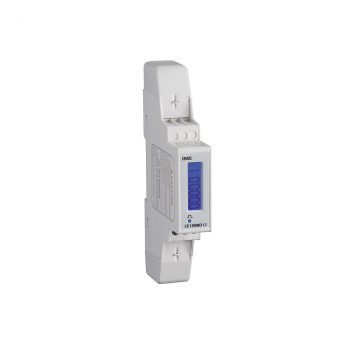
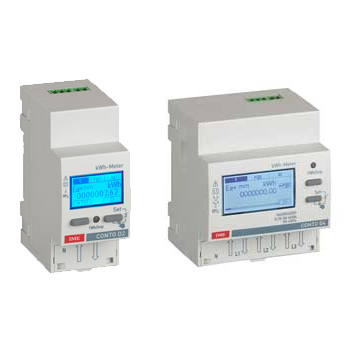














| AUX | Selfsupplied |
|---|---|
| OUTPUT | pulses (Wh) |
| FORMAT | 1 DIN module |
| CURRENT | 5 (32) A |
| VOLTAGE | 230 V |
| VOLTAGE OPTIONS | direct |
| CURRENT OPTIONS | direct |
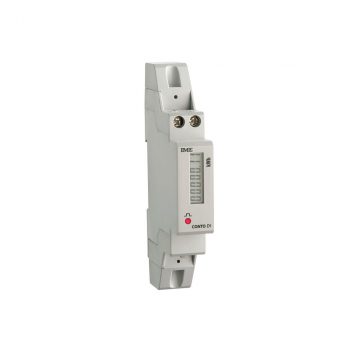
| TYPE | Direct connected active energy meter (class 1) |
| MAIN | single-phase |
Datasheet |
| AUX | Selfsupplied |
|---|---|
| OUTPUT | pulses (Wh) |
| FORMAT | 1 DIN module |
| CURRENT | 5 (32) A |
| VOLTAGE | 230 V |
| VOLTAGE OPTIONS | direct |
| CURRENT OPTIONS | direct |
| TYPE | Direct connected active energy meter (class 1) |
| MAIN | single-phase |
Datasheet |
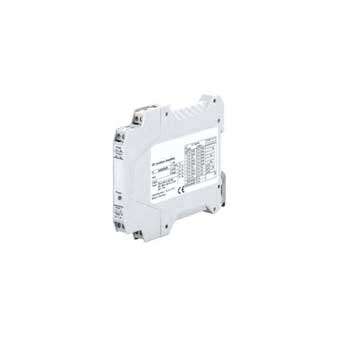
Direct connected active (class B) energy meter
| AUX | Selfsupplied |
|---|---|
| OUTPUT | pulses (Wh) |
| FORMAT | 1 DIN module |
| CURRENT | 5 (45) A |
| VOLTAGE | 230 V |
| VOLTAGE OPTIONS | direct |
| CURRENT OPTIONS | direct |
| TYPE | Direct connected active (class B) energy meter |
| MAIN | single-phase |
Datasheet
DIN-Rail Energy Meters (Rail-Mounted Energy Meters)
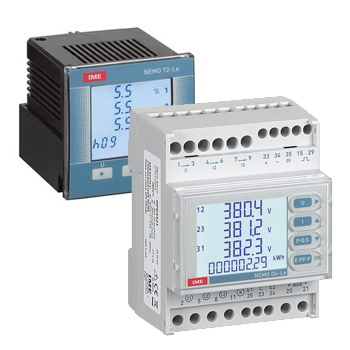
A DIN-rail energy meter is a compact power meter designed for mounting on a standard DIN rail inside control cabinets or distribution panels. It measures electrical energy and often other electrical parameters—current, voltage, power, power factor, frequency, etc.—in a space-saving, module-based format. For higher currents external current transformers can be used. Many models include pulse outputs or digital communication interfaces to integrate with building- or plant-energy-management systems.
Questions & Answers on DIN-Rail Energy Meters
What is a DIN-rail energy meter?
It’s a power meter built for DIN-rail installation, measuring electrical energy and often additional electrical parameters within a compact module.
Why use a DIN-rail meter?
Because it allows space-efficient, modular installation inside switchgear or distribution cabinets, simplifying wiring, maintenance and expansion.
Which types of electrical networks can be measured?
Single-phase and three-phase AC networks; for high currents often in combination with external current transformers (CTs).
Which parameters are typically measured?
Consumed/generated energy (e.g. kWh), power, current, voltage, power factor, and often additional data such as frequency or network quality.
How does the meter handle high loads or currents?
By using external current transformers or suitable internal measurement ranges — enabling safe and accurate measurement even under heavy loads.
How are DIN-rail meters mounted and wired?
The meter snaps onto a standard DIN rail and is wired to the supply network and, if needed, to current transformers — wiring remains tidy and modular.
What are the advantages compared to conventional energy meters?
Smaller size, modular design, easier installation and replacement, better overview and integration in distribution panels, and optional interfaces for monitoring systems.
Are DIN-rail energy meters suitable for industrial applications?
Yes — many are built for industrial environments with high currents, three-phase systems, and demands for precise measurement and robustness.
Can DIN-rail meters output data to control or monitoring systems?
Yes — many offer pulse output or digital interfaces (e.g. Modbus) for integration into building or energy-management systems or automation controllers.
In which applications do DIN-rail energy meters excel?
Energy monitoring in buildings and industrial installations, load tracking, machine and system monitoring, energy management, retrofits, system expansions, or sub-metering in larger installations.