




























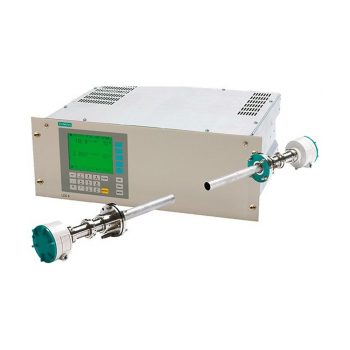
• Little installation effort
  • Minimum maintenance requirements
  • Extremely rugged design
  • High long-term stability through built-in, maintenance-free reference gas cell, field calibration is unnecessary
  • Real-time measurements
Datasheet

  • Process control (chemical industry) 
  • Process optimization (steel industry)
  • Safety monitoring, e.g. measuring minimum or maximum concentration limit for oxygen in explosive proof environment
  • Suitable for use in SIL 1 safety systems to 61508/IEC 61511
  • Combustion control (boilers, municipal waste incinerators)


User Manual


In-situ Continuous Process Gas Analysis

In in-situ continuous process gas analysis, the physical measurement takes place directly in the process gas stream inside the duct or stack. Typical measuring techniques such as tunable diode laser spectroscopy (TDLS) or infrared transmission use wavelength-specific absorption along an optical path to determine gas concentrations. This enables non-contact measurements with very short response times and without complex sample extraction or gas conditioning. In-situ analyzers are particularly suitable for demanding applications with high temperatures, high humidity or corrosive gas compositions.

FAQ

What does in-situ continuous process gas analysis mean?

In-situ means that the measurement is carried out directly in the process line or stack. The analyzer is mounted at the measuring point, the optical beam passes through the gas stream and determines the gas concentration in real time without removing a physical gas sample from the process.

How does in-situ gas analysis differ from extractive gas analysis?

In-situ systems measure directly in the process gas stream, whereas extractive systems withdraw a sample, condition it and analyze it in an external analyzer. In-situ analyzers do not require sampling probes and conditioning systems and offer very short response times, while extractive systems allow complex gas conditioning and combination of different measurement principles in one device.

Which measurement principles are used in in-situ gas analyzers?

Common principles include tunable diode laser spectroscopy (TDLS) and infrared transmission. They use the specific absorption of laser or IR light at certain wavelengths to determine the concentration of components such as O2, NH3, HCl, H2O or CO2 along the optical path.

What are the benefits of in-situ measurement at high temperatures and humidity?

Because the gas does not need to be extracted and cooled, no condensate is formed and the gas composition is not changed by the sampling system. The measurement reflects the real process conditions, which leads to stable and representative results, especially for hot, wet and condensable gas mixtures.

Which gases are typically monitored with in-situ analyzers?

Typical target gases are oxygen (O2) for combustion control and inerting, ammonia (NH3) in DeNOx processes, water vapor (H2O), carbon dioxide (CO2), carbon monoxide (CO), hydrogen chloride (HCl), hydrogen fluoride (HF) and other process components, depending on the installed laser wavelength.

In which industries are in-situ gas analyzers used?

They are deployed in power plants, waste incineration plants, cement kilns, chemical and petrochemical plants, iron and steel production, as well as in flue gas cleaning, DeNOx systems, safety monitoring, process optimization and emissions monitoring.

How is an in-situ gas analyzer installed at the measuring point?

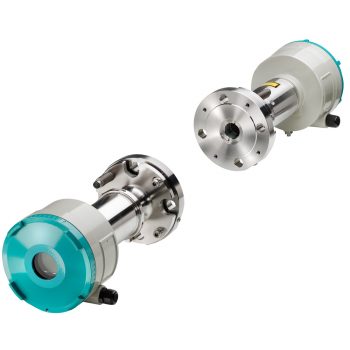
Installation is usually carried out as a cross-duct arrangement with separate transmitter and receiver units on opposite sides of the duct or stack. Alternatively, single-sided configurations with a reflector can be used. Flanges, seals and adjustment devices ensure leak-tight mounting and stable alignment of the optical path.

What are the requirements for the optical measuring path?

The measuring path must be free of large deposits and mechanical obstacles. Windows and optics are often protected with purge air or process gas to minimize contamination. The optical path length is selected so that sufficient absorption is obtained while keeping the usable measuring range and linearity.

How fast do in-situ gas analyzers respond to process changes?

Thanks to direct measurement in the gas stream and the absence of dead volumes in sampling lines, in-situ systems achieve very short T90 response times, typically from one second to a few seconds. This enables highly dynamic control and rapid detection of process upsets.

How is dust loading or contamination handled?

Optics and windows are protected by purge air systems or mechanical shields against dust, soot and particles. Many devices continuously monitor signal intensity to detect contamination at an early stage and to schedule cleaning and maintenance in a planned manner.

Do in-situ analyzers require regular calibration?

Laser-based in-situ analyzers generally offer very good long-term stability and require calibration only at extended intervals. Nevertheless, regular functional checks, zero checks and, if required, span checks with test gases should be defined according to application and applicable regulations.

How are in-situ gas analyzers integrated into process control systems?

The analyzers provide analog outputs, digital contacts and serial or fieldbus interfaces. Common options are 4–20 mA, relay contacts, Modbus, PROFIBUS or PROFINET, so that measurement values, diagnostic data and status information can be transferred directly to control and automation systems.

Which diagnostic and self-monitoring functions are available?

Modern in-situ analyzers continuously monitor internal temperatures, signal intensity, laser current, alignment status and communication. Diagnostic messages indicate contamination, limit violations, internal faults or required maintenance and thus support condition-based service strategies.

Diese Website benutzt Cookies. Wenn du die Website weiter nutzt, gehen wir von deinem Einverständnis aus.