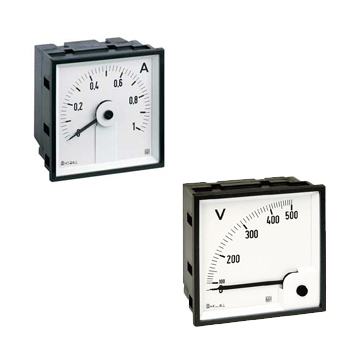
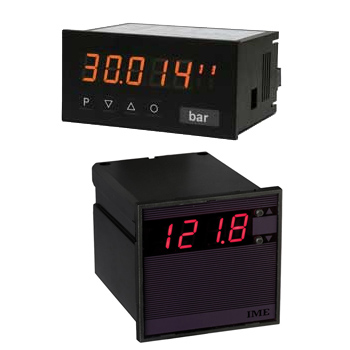
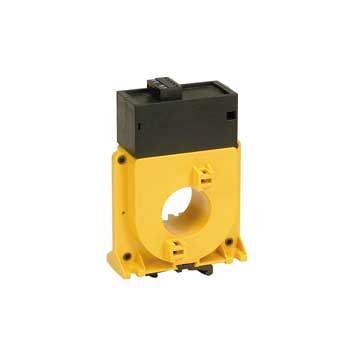
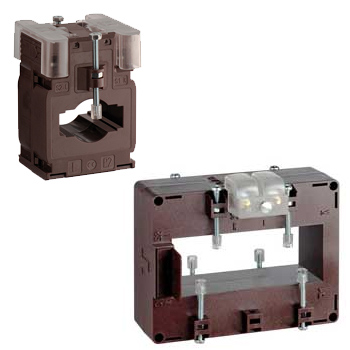
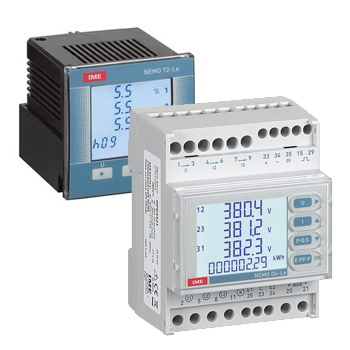
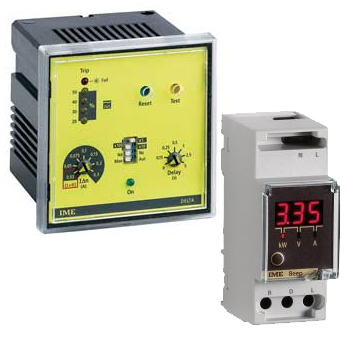
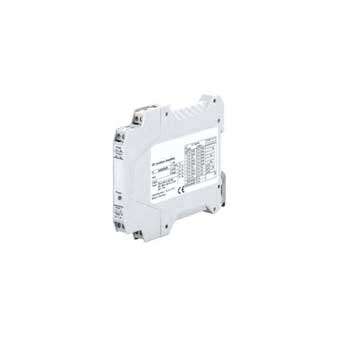
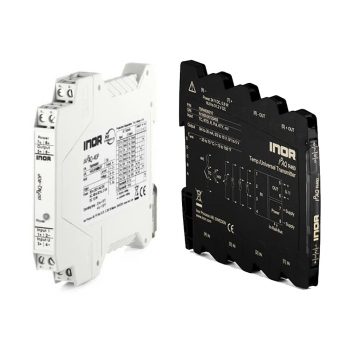
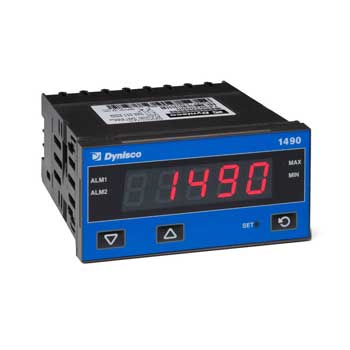























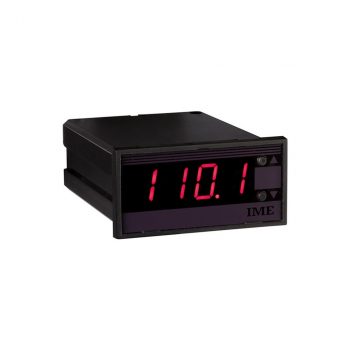
- Digital display for mains frequency
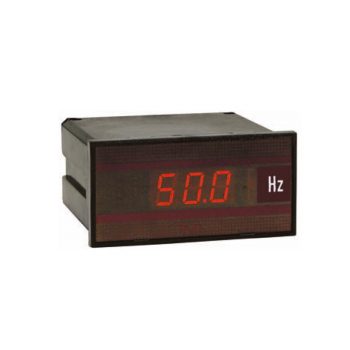
- Dimensions: 72x36mm
- Without border contacts
- Input: 10 ... 100Hz
- Auxiliary voltage: 115V or 230Vca or 240Vca or 20 ... 150Vcc / 48Vca
- Display: direct 10.0 ... 99.9Hz; 3 digits, max.display: 999
Datasheet |
- Digital display for mains frequency
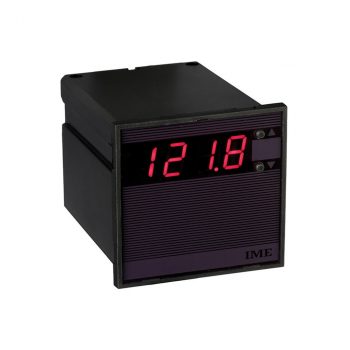
- Dimensions: front frame 96x48mm
- Without border contacts
- Input: 10 ... 100Hz 100 ... 500V
- Auxiliary voltage: 115V or 230Vac or 240Vac or 20 ... 150Vdc / 48Vac
- Display: direct 10.0 ... 99.9Hz; 3 digits, max.display: 999
Datasheet |
- Digital display for alternating current / CT or alternating voltage RMS (direct input)
- Dimensions: 4 modules DIN
- With or without 2 programmable limit contacts, MIN and / or MAX contact
- Input: 5A or 500V / 1A or 500V
- Auxiliary voltage: 24Vac or 115Vac or 230Vac or 240Vac or 20 ... 150Vdc / 48Vac or 150 ... 250Vdc
- Display: 5 ... 8000A (38 ranges adjustable) / direct 500V; 3 digits, max display: 999
Datasheet |
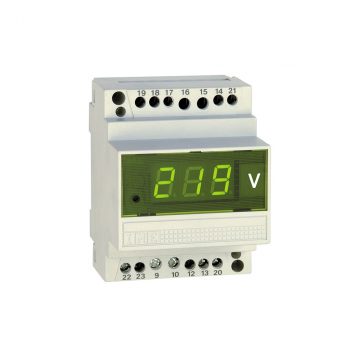
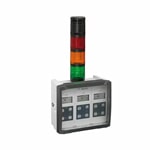
- Digital display for mains frequency
- Dimensions: 4 modules DIN
- With or without 2 programmable limit contacts, MIN and / or MAX contact
- Input: 10 ... 100Hz 100 ... 500V
- Auxiliary voltage: 24Vac or 115Vac or 230Vac or 240Vac or 20 ... 150Vdc / 48Vac or 150 ... 250Vdc
- Display: direct 0 ... 99.9 / 0 ... 500V; 3 digits, max display: 999
Datasheet
|
Digital Frequency Panel Meters
Digital frequency panel meters are electronic measurement instruments designed to determine the frequency of an AC signal and display it digitally on LED or LCD screens. They work by counting the number of signal cycles within a defined time interval and converting that value into a precise frequency reading in hertz (Hz). Thanks to digital signal processing, they offer high accuracy, stable readings and fast response times, making them superior to traditional analog frequency meters.
F&A
What is a digital frequency panel meter?
A digital frequency panel meter measures the frequency of an AC signal and displays the value numerically. It is built for installation in control panels, switchboards and industrial monitoring systems.
How does a digital frequency meter work?
The device conditions the incoming AC signal, then counts the number of cycles within a fixed gate time. The resulting count is converted into a frequency value (Hz), which is shown on the digital display. This method ensures reliable and accurate readings.
What frequency ranges can be measured?
Typical meters cover standard mains frequencies (e.g. 45–65 Hz) as well as extended ranges up to several kilohertz or more, depending on the device model.
What advantages do digital frequency meters offer?
They provide precise numeric readings, eliminate pointer-reading errors, respond quickly to frequency changes and maintain accuracy even under fluctuating or distorted signal conditions.
Where are digital frequency panel meters used?
They are used in power distribution, grid monitoring, generator sets, industrial control panels, automation systems, motor control and any application requiring continuous frequency supervision.
Which display and output options are available?
Most devices use LED or LCD displays. Some models include alarm or relay outputs for frequency deviation, adjustable display modes or communication interfaces for remote monitoring.
What should be considered when selecting a digital frequency meter?
Key factors include input voltage range, supported frequency range, measurement accuracy, display type, panel cutout size and optional features such as alarms or communication ports.
Can digital frequency meters replace analog ones?
Yes — they provide higher accuracy, easier readability and often additional functions, making them a superior replacement for traditional analog frequency meters in most applications.
Are there any limitations?
Digital meters require an internal supply voltage for electronics and display. Very noisy signals, rapid fluctuations or highly distorted waveforms may reduce accuracy unless the instrument is specifically designed for such environments.


Datasheet